a dish from greece —
Corfiot Sofrito
How this dish came to life
Cultural significance
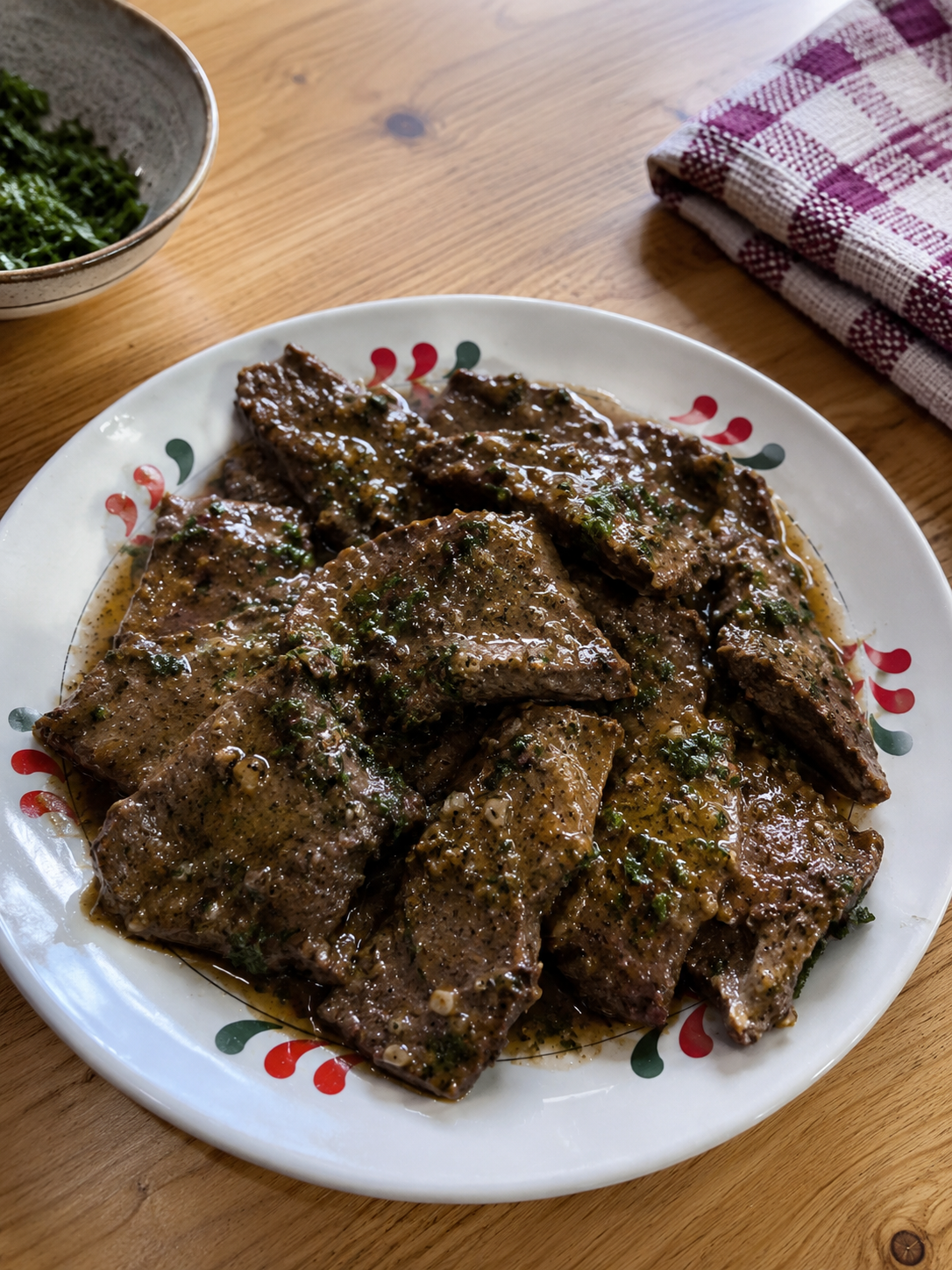
Sofrito is one of the four *pastitsada*-family dishes that make Corfu's kitchen recognisably different from mainland Greek cooking — alongside pastitsada itself, bourdeto, and bianco. All four are Venetian in bone structure and Ionian in soul. Sofrito is the most delicate of them: no tomato, no heat, no smoke — just olive oil, garlic, vinegar, wine, and parsley, coaxed over a low flame until the beef is practically silk. It is the Sunday-lunch dish of Corfu, served with mashed potatoes, rice, or thick cut chips to soak up the pale, herby sauce.
step by step
Instructions
- 1
Ask the butcher to slice the beef topside into thin steaks about 1 cm thick, or slice it yourself against the grain. Pat each slice dry with kitchen paper — dry meat colours; wet meat steams.
- 2
Spread the flour on a wide plate and lightly coat each beef slice, patting off the excess. This thin film of flour is what makes the sauce silky at the end — it thickens as the meat braises.
- 3
Heat the olive oil in a wide heavy pan or shallow casserole over medium-high heat until shimmering. Working in batches — never crowd the pan — fry the beef slices for 1–2 minutes on each side, just until golden. You are searing for colour and flavour, not cooking them through. Lift onto a plate as you go.
- 4
Lower the heat right down to medium-low. Add the chopped garlic to the same pan and cook gently, stirring, for 1–2 minutes — you want it soft and fragrant. Absolutely do NOT let it brown; burnt garlic will ruin the whole dish. Pull the pan off the heat if it starts to colour.
- 5
Deglaze with the white vinegar, standing back — it will bubble up in a fierce puff of steam. Scrape the bottom of the pan with a wooden spoon to lift up all the caramelised bits from the beef. Let the vinegar bubble for about 30 seconds to tame the sharp edge.
- 6
Return all the beef slices to the pan, layering them flat if possible. Pour in the white wine, let it bubble for 1–2 minutes until the alcohol steam disappears.
- 7
Add enough stock or water to come about halfway up the meat — don't drown it, or you'll dilute the sauce. Season with salt and plenty of freshly cracked black pepper.
- 8
Cover with a lid, drop the heat to the lowest simmer possible — just the occasional bubble — and cook for 60–90 minutes, turning the beef slices carefully every 20 minutes and adding a small splash of stock if the pan gets too dry. The beef is done when it yields easily to the back of a spoon and the sauce is glossy and pale.
- 9
In the last 5 minutes, stir in most of the chopped parsley, saving a generous handful for serving. Taste and adjust the seasoning — the sauce should be bright with vinegar, rounded by wine, and green with parsley.
- 10
Serve the beef slices layered on a warm platter, spoon over every last drop of the sauce, and finish with the reserved fresh parsley showered on top. Serve with mashed potatoes, buttery rice, or thick-cut chips to catch the sauce. A dry white wine — a Corfiot *Kakotrigis* if you can find one, otherwise a good Robola — is the traditional pairing.
tips from the village —
Wisdom from grandmothers
- 01Thin slices, not chunks. Sofrito is not a stew. The beef is cut across the grain into 1-cm slices so it stays elegant on the plate and cooks through in an hour, not four.
- 02Coat in flour just before frying, never in advance. If you flour the meat too early, the flour turns to paste on the surface and slides off in the pan.
- 03Do NOT brown the garlic. This is the single make-or-break moment. Garlic in Sofrito must be gently softened, not fried to gold. Burnt garlic will turn the whole sauce bitter — pull the pan off the heat if you have to.
- 04Vinegar first, wine second. The vinegar hits the hot pan and deglazes; the wine goes in afterwards to soften the vinegar's edge. Do it in the wrong order and the sauce will taste harsh.
- 05Low and slow. The lowest simmer your hob can hold. If it's bubbling actively, it's too hot — the beef will go stringy. Aim for the occasional lazy blup at the surface.
- 06Half-cover, don't drown. The sauce should reduce as the meat cooks. If it looks watery at the end, uncover for the last 10 minutes and let it tighten.
- 07Save some parsley for the end. Half in the pot for depth, half showered raw over the platter for brightness and colour. Both matter.
- 08Better the next day. Sofrito rests beautifully — the flavours deepen and the sauce sets into something almost jelly-like. Reheat gently, do not boil.
- 09Serve with something to soak the sauce. Corfiots argue passionately about the correct accompaniment: mashed potato camp, rice camp, chip camp. All three are correct. Whatever you choose, don't waste a drop.
Related recipes
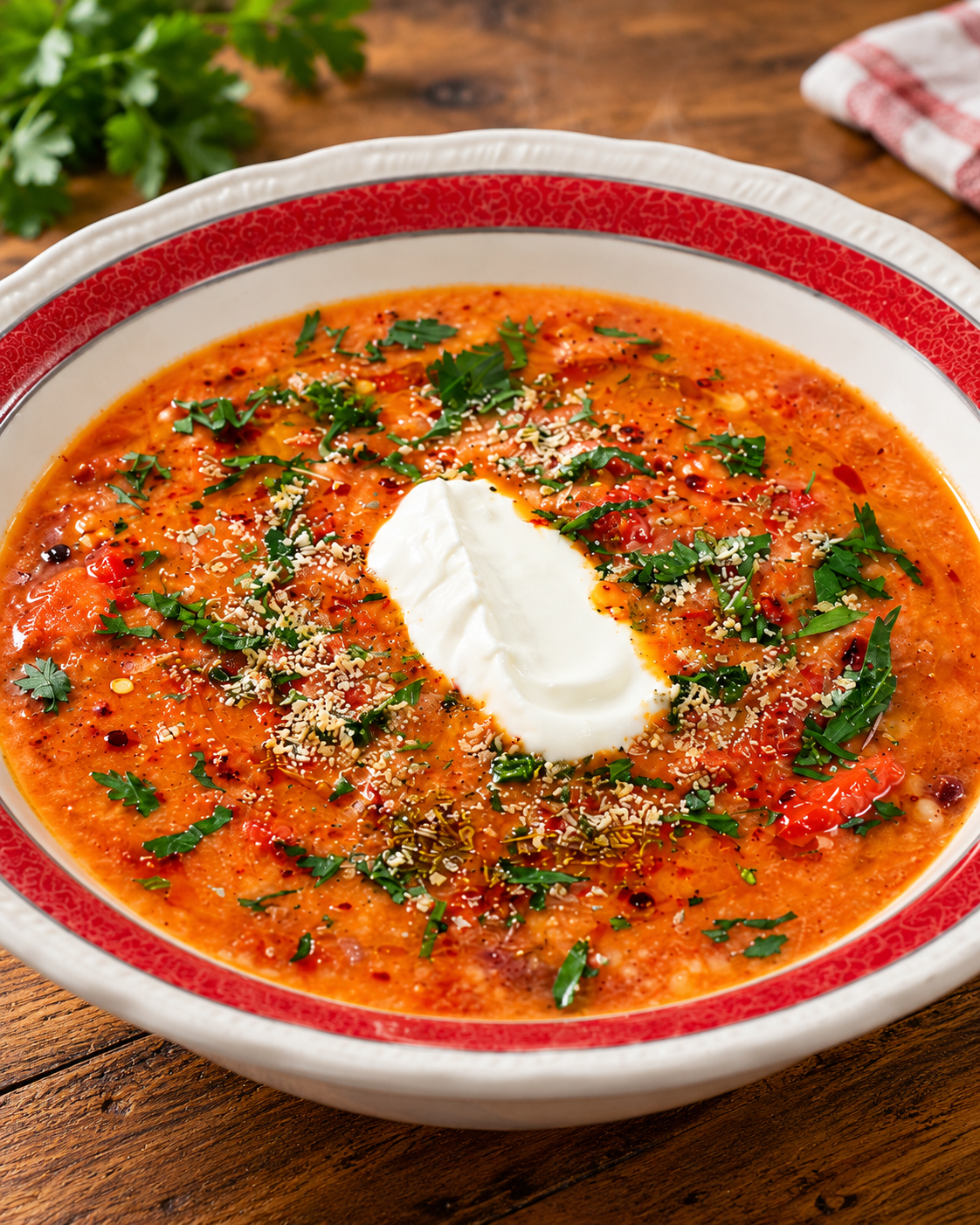
Kokkinistos Trahanas with Yogurt
Sour trahana simmered in a spicy tomato broth until creamy, served with cool Greek yogurt, boukovo and wild oregano — one humble food, countless traditions.
Read the story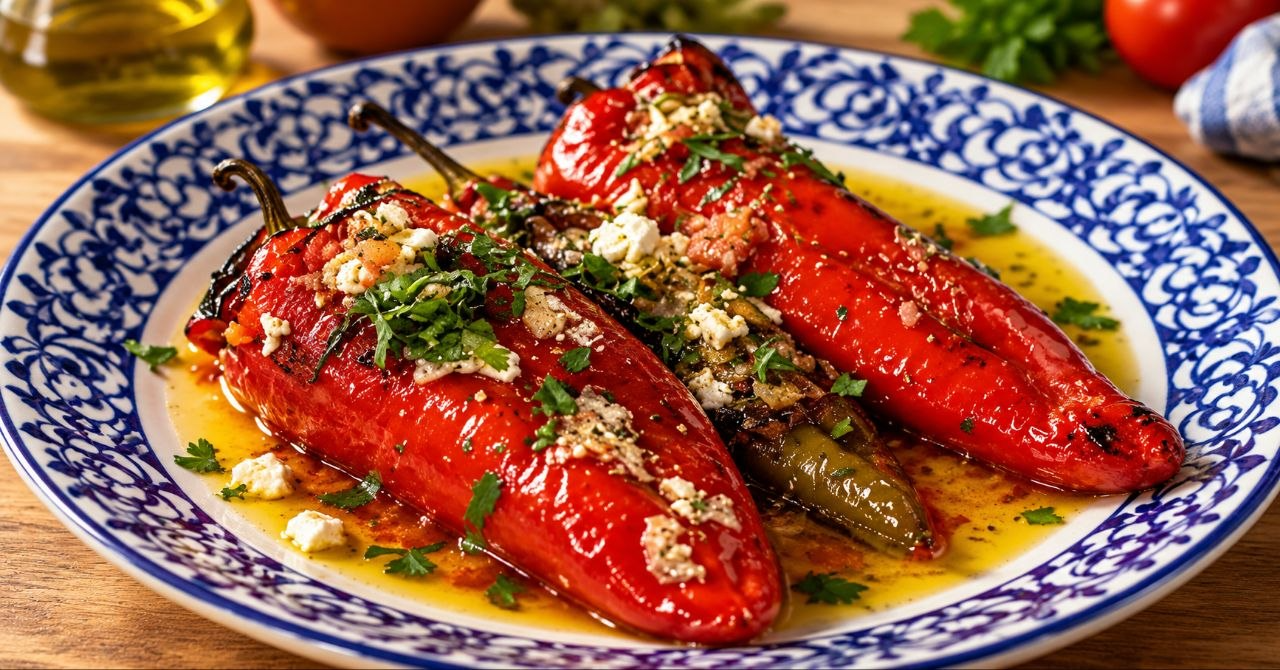
Stuffed Horn Peppers
Horn peppers stuffed with feta, tomato, garlic and wild oregano, baked until soft and caramelised — an American ingredient that became a Greek kitchen staple.
Read the story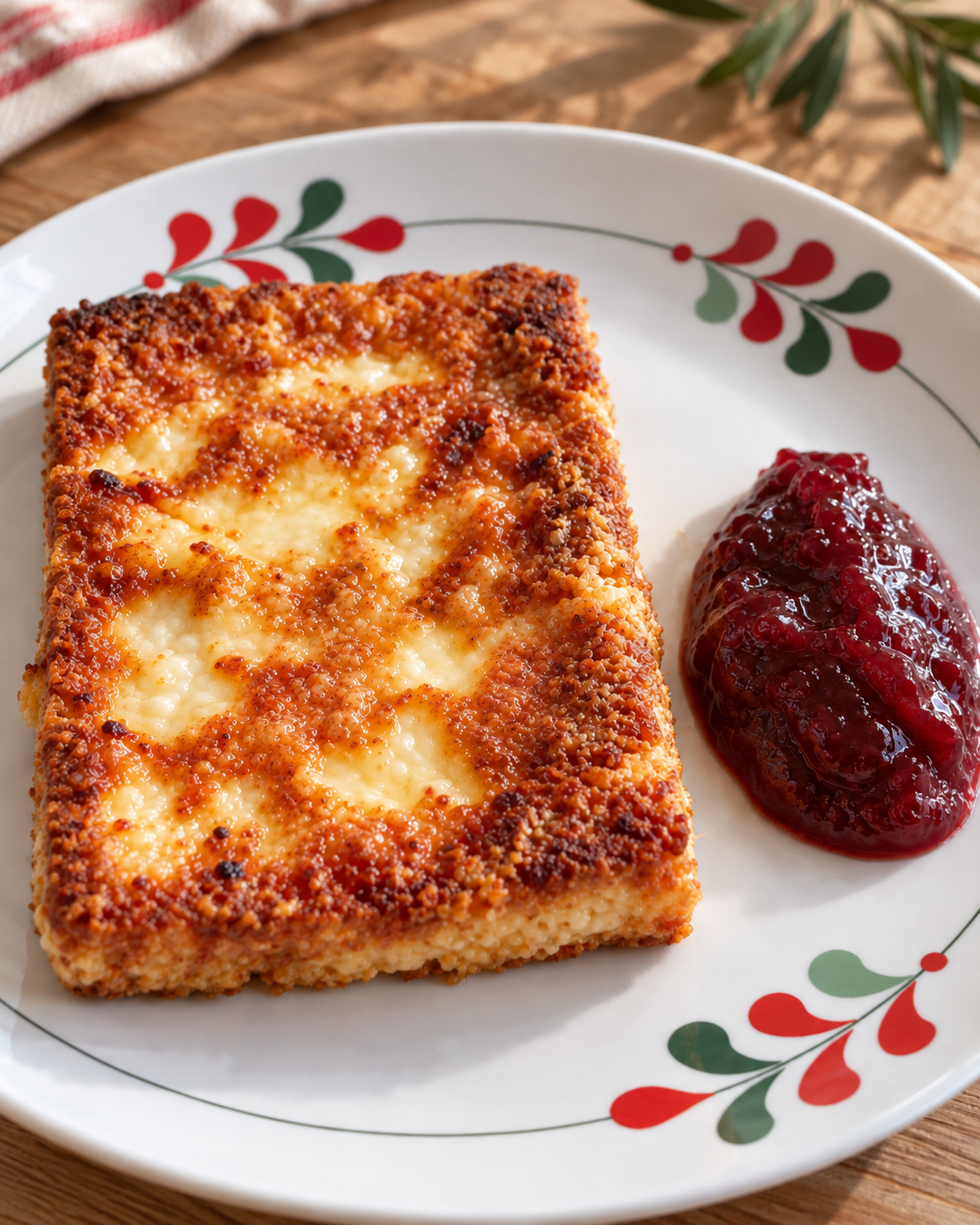
Saganaki with Grape Jam
Golden fried cheese, crisp outside and molten within, served with a slow-cooked grape jam brightened with lime — the taverna classic named after its little pan.
Read the story