How this dish came to life
Cultural significance
Civilizations disappeared and a volcano reshaped the island, but this humble dish remained.
step by step
Instructions
- 1
Place the fava in a strainer and rinse thoroughly under plenty of water to remove any impurities.
- 2
Roughly chop the red onion and sauté it in a pot with a little olive oil until slightly softened.
- 3
Add the fava and bay leaf, then cover with water or stock. Simmer until the fava is completely tender, regularly skimming off any foam that rises to the surface.
- 4
Once tender, remove the bay leaf and blend until smooth and creamy.
- 5
For the caramelized onions: thinly slice the white onions into half-moons.
- 6
Heat equal amounts of olive oil and butter in a pan. Add the onions and cook over medium-low heat until soft, caramelized, and beautifully golden.
- 7
Deglaze with a little vinegar or white wine and allow it to evaporate.
- 8
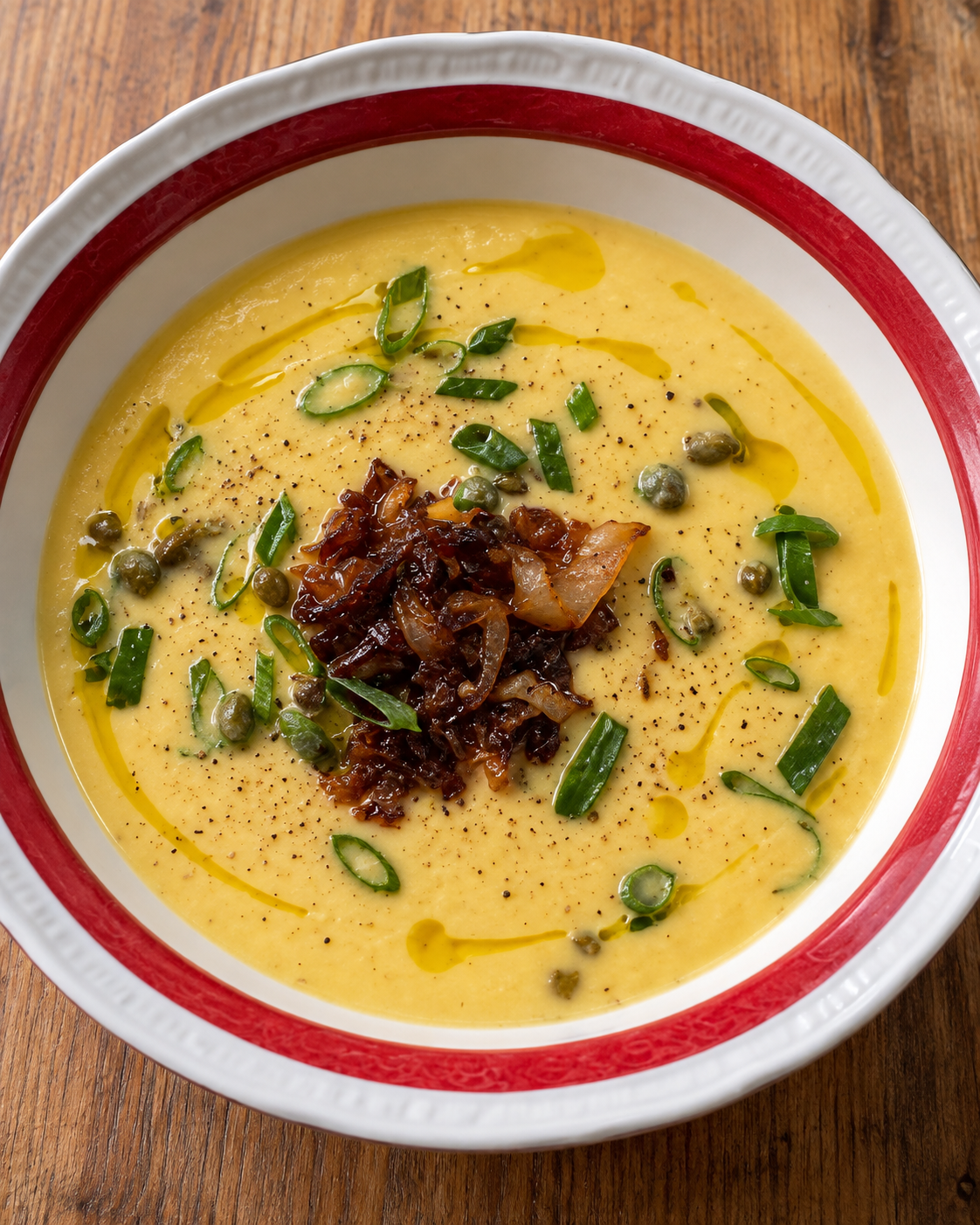
Serve the creamy fava topped with the caramelized onions, capers, the green part of the spring onion, a drizzle of olive oil, and freshly ground black pepper. Finish with toasted pine nuts if you like.
tips from the village —
Wisdom from grandmothers
- 01Skim the foam patiently — that's the difference between muddy and silky fava.
- 02Blend it while still hot; it tightens as it cools, so keep it a touch looser than you want it.
- 03The caramelized onions want time, not heat — low and slow until they're the colour of dark honey.
- 04In Santorini they'd tell you: yesterday's fava, reheated with a little water, is even better.
Related recipes
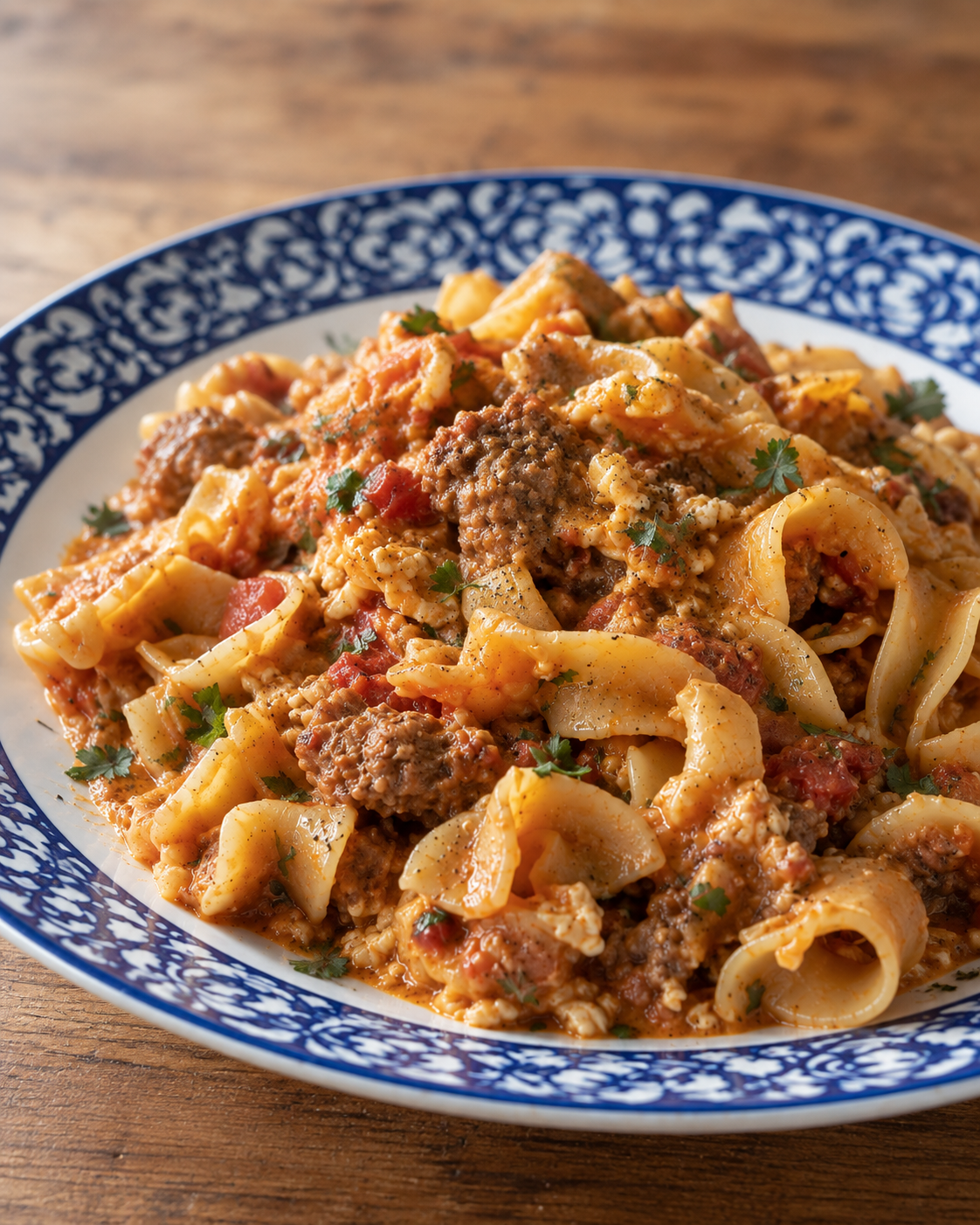
Hilopites with Sausages & Eggs
Greece's village egg pasta simmered with sausages, peppers and tomato, finished with eggs stirred through for creaminess — topped with feta and wild oregano.
Read the story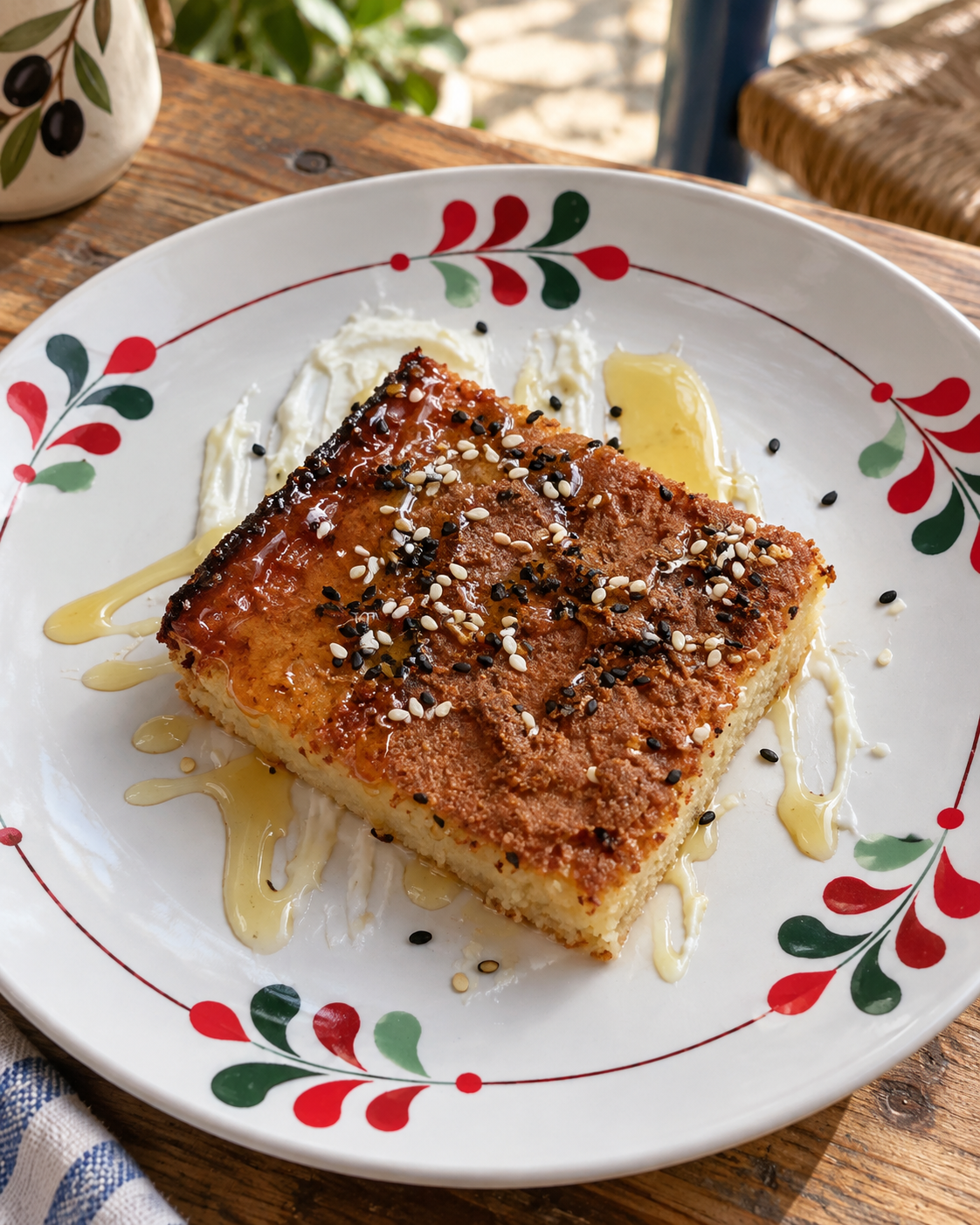
Melopita
The honey pie of Sifnos — fresh anthotyro, honey and eggs baked without pastry into a soft, golden custard. Ranked the world's number one sweet pie by TasteAtlas.
Read the story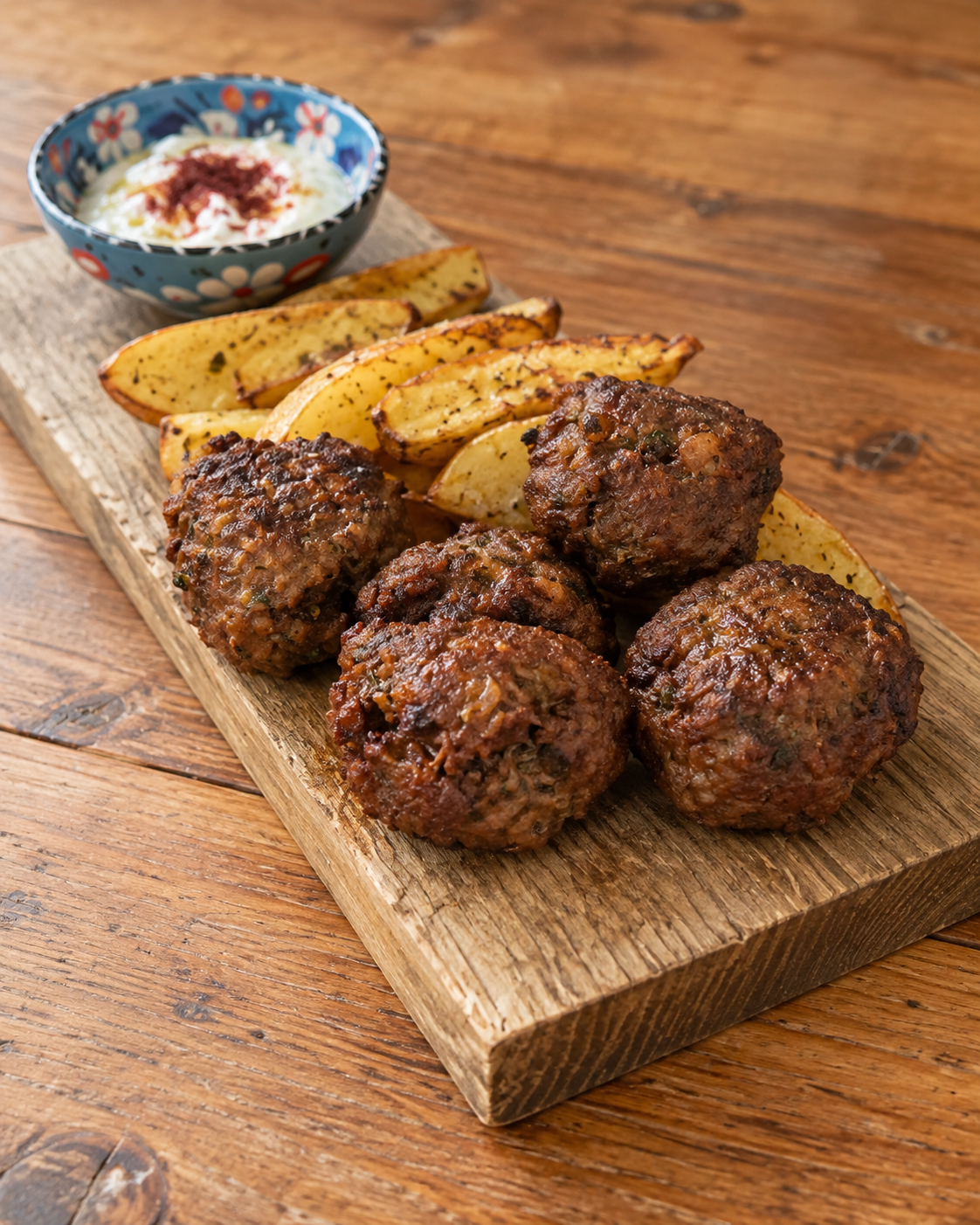
Keftedakia
Golden fried Greek meatballs with mint, lemon, cumin and wild oregano — an idea that travelled from Persia to every Greek island and family table.
Read the story