a dish from greece —
Gemista (Greek Stuffed Tomatoes & Peppers)
How this dish came to life
Cultural significance
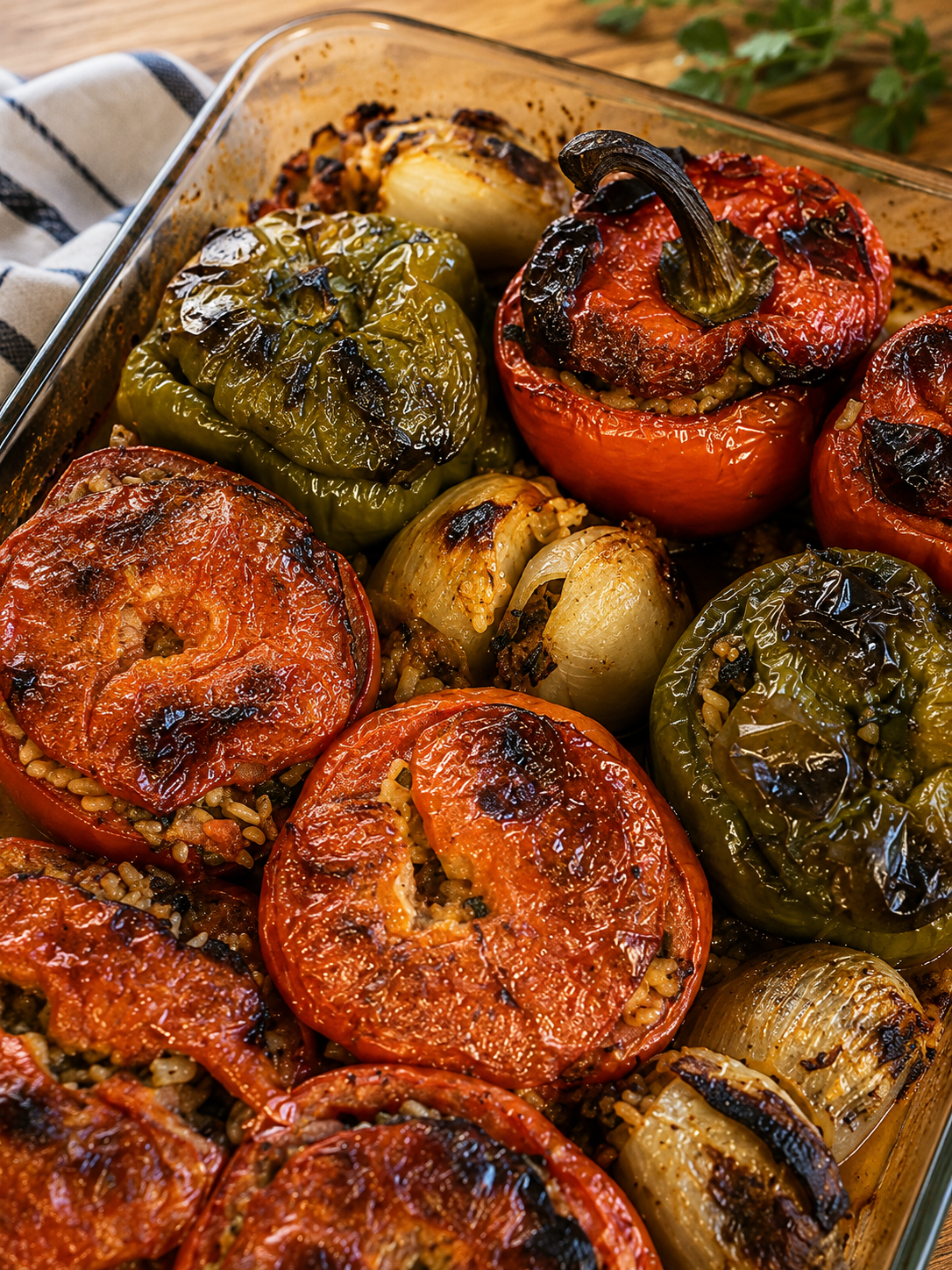
Gemista sits at the heart of Greek summer cooking — the season when the garden gives more than the family can eat, and everything ripe needs a home. It belongs to the great Greek tradition of *ladera* (olive oil–based baked dishes) and *tapsi* cooking (one big roasting tin), and it is arguably the most photographed dish on the Greek table: a mismatched tray of red, yellow, green, and orange vegetables, each one collapsed slightly under its own weight, blistered and shining with olive oil. It is served warm, room temperature, or (best) cold from the fridge the next day — always with feta on the side.
step by step
Instructions
- 1
Preheat the oven to 180°C (355°F) top and bottom heat.
- 2
Slice the tops off the tomatoes with a small sharp knife — set the tops aside; they become the lids at the end. Using a spoon, carefully scoop out the flesh into a bowl, leaving a shell about 5 mm thick. Do not pierce the bottom. Roughly chop the reserved tomato flesh — this goes into the filling and is one of the most important flavours.
- 3
Slice the tops off the peppers, keeping them attached at one edge like a hinged lid if possible, or setting aside as lids. Scoop out the seeds and white membranes. Set the pepper shells aside.
- 4
Arrange the empty tomato and pepper shells in a large baking tray, side by side, so they support each other. Season the inside of each tomato with a small pinch of salt, sugar, black pepper, and a drizzle of olive oil — this seasons the shell as it cooks. Halve the two whole onions and tuck them in the gaps between the vegetables.
- 5
Finely chop the red onion, the garlic, and grate the carrot.
- 6
Heat a good glug of olive oil in a large heavy pan over medium-high heat. Add the ground beef and cook, breaking it up with a wooden spoon, until deeply browned — 5–6 minutes. Lift the beef out onto a plate and set aside.
- 7
Add another splash of olive oil to the same pan if it looks dry, then add the rice. Toast the rice, stirring, for 1–2 minutes — you're waking up the starch, not browning it. It should smell faintly toasted.
- 8
Add the chopped red onion, grated carrot, and minced garlic. Sauté for another 2–3 minutes until the onion softens and the carrot starts to turn.
- 9
Return the browned beef to the pan and stir in the tomato paste, cooking it out for 1 minute until it darkens and caramelises against the pan.
- 10
Pour in the white wine and let it bubble hard for 1 minute until the alcohol steam disappears.
- 11
Add the reserved chopped tomato flesh and the water. Bring to a gentle simmer and cook for about 5 minutes — the rice should still be slightly undercooked (about 70%), because it will finish cooking inside the vegetables in the oven.
- 12
Pull the pan off the heat. Stir in a generous drizzle of olive oil, the ground cumin, the chopped mint, parsley, and dill. Season with salt, plenty of black pepper, the teaspoon of sugar, and the tablespoon of vinegar. Taste — it should be brightly seasoned, herby, and slightly under-salted at this stage because the flavours will concentrate in the oven.
- 13
Spoon the filling into the tomato and pepper shells until each is about three-quarters full — do NOT overfill; the rice will expand and burst the tops. Cap each vegetable with its reserved lid.
- 14
Spoon any leftover filling into the gaps of the tray around the vegetables — this becomes a rustic herby pilaf that soaks up all the pan juices. Drizzle the whole tray generously with more olive oil.
- 15
Bake at 180°C for 25 minutes. The rice softens, the vegetables collapse slightly, the flavours marry.
- 16
Increase the oven to 200°C (390°F) and bake for another 10–15 minutes, until the tops of the peppers are blistered and the tomato skins are dark, wrinkled, and almost jammy at the edges. This is the caramelisation stage — it's what turns gemista from good to great. If you like a darker char, another 5 minutes won't hurt.
- 17
Let the tray rest on the counter for 15 minutes — this is essential. Fresh out of the oven the rice is still setting; give it a moment.
- 18
Serve warm, at room temperature, or cold the next day (Greek tradition says the cold-tomato-out-of-the-fridge version is the best). Always with a wedge of feta on the side, a slice of village bread, and a scatter of extra mint over the top.
tips from the village —
Wisdom from grandmothers
- 01Ripe but firm tomatoes only. Overripe tomatoes collapse during hollowing; unripe ones don't have the sweetness that makes the shell taste of anything. Look for tomatoes that give slightly under pressure but still hold their shape.
- 02Don't waste the tomato flesh. Chop it and stir it into the filling — this is where half the flavour lives. Throwing it away is one of the classic mistakes.
- 03Season the shells before filling. A pinch of salt, sugar, pepper, and olive oil inside each tomato and pepper is what makes the vegetable itself taste alive. Otherwise you have a bland shell around a delicious filling.
- 04Undercook the rice on the stove. It will finish cooking inside the vegetables in the oven — cook it fully on the stove and it will turn to porridge in the tray. Aim for about 70% cooked when you take the pan off the heat.
- 05Three-quarters full, no more. The rice needs room to expand as it absorbs the vegetable juices. Fill to the brim and the lids will lift off and the whole thing will burst.
- 06Fill the tray with leftover filling. Don't discard leftover rice mixture — spread it in the gaps between the vegetables. It cooks alongside as its own herby pilaf and catches all the pan juices.
- 07The two-temperature bake. Twenty-five minutes at 180°C to cook everything through, then ten minutes at 200°C to caramelise the tops. Skip the high-heat stage and the dish looks pale and undercooked; the caramelised tops are half the point.
- 08Rest before serving. Fifteen minutes on the counter. The rice absorbs the last of the tray juices and the flavours settle. Cutting into it straight from the oven means you lose that settling.
- 09Better cold, actually. Any Greek family will tell you gemista is at its peak the next day, straight from the fridge, with a slice of feta and a piece of bread. The flavours deepen overnight and the olive oil sets — it's an entirely different, better dish.
- 10Feta on the side is not optional. Salt-and-milk feta cuts the sweetness of the tomatoes and rounds out the meal.
Related recipes
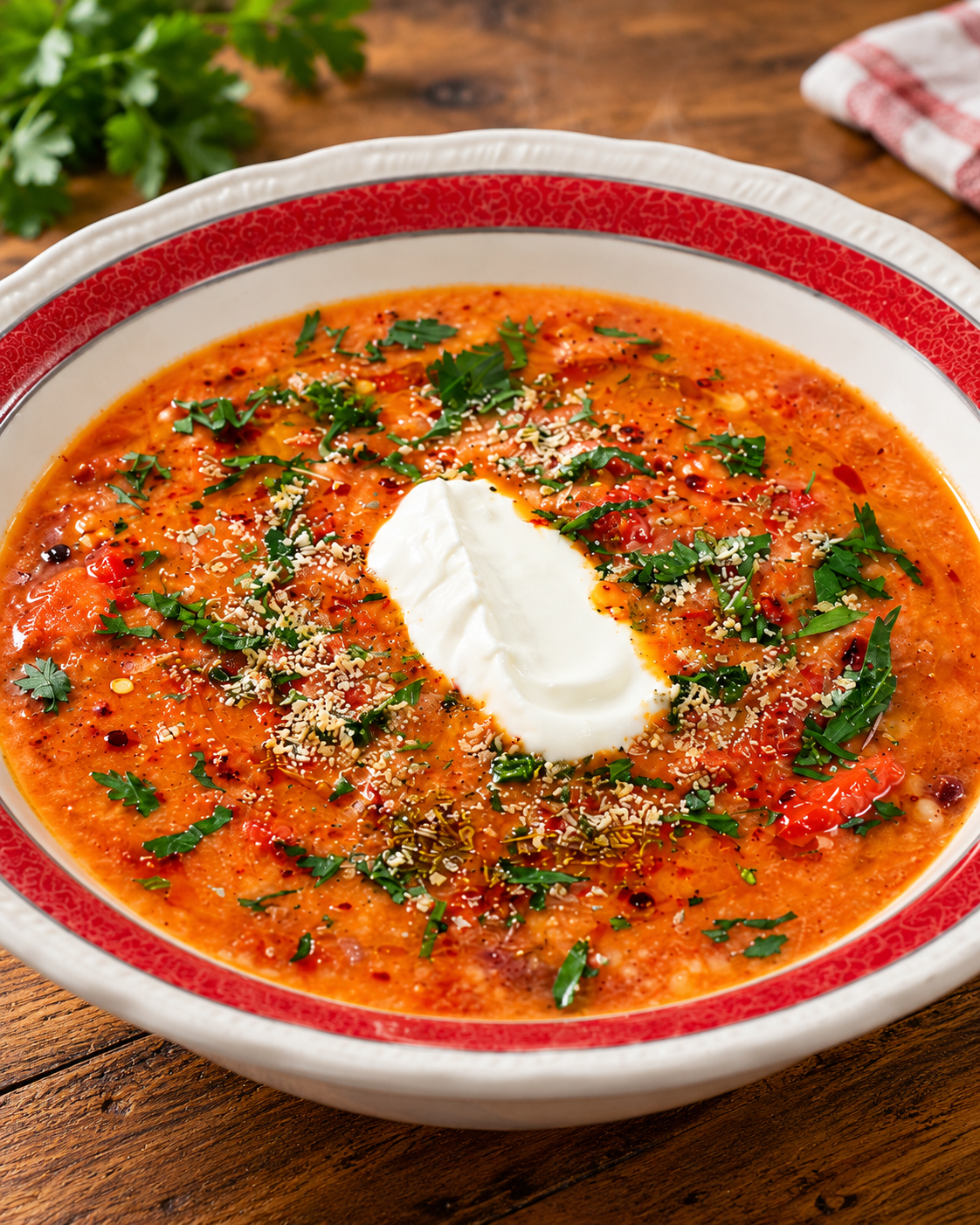
Kokkinistos Trahanas with Yogurt
Sour trahana simmered in a spicy tomato broth until creamy, served with cool Greek yogurt, boukovo and wild oregano — one humble food, countless traditions.
Read the story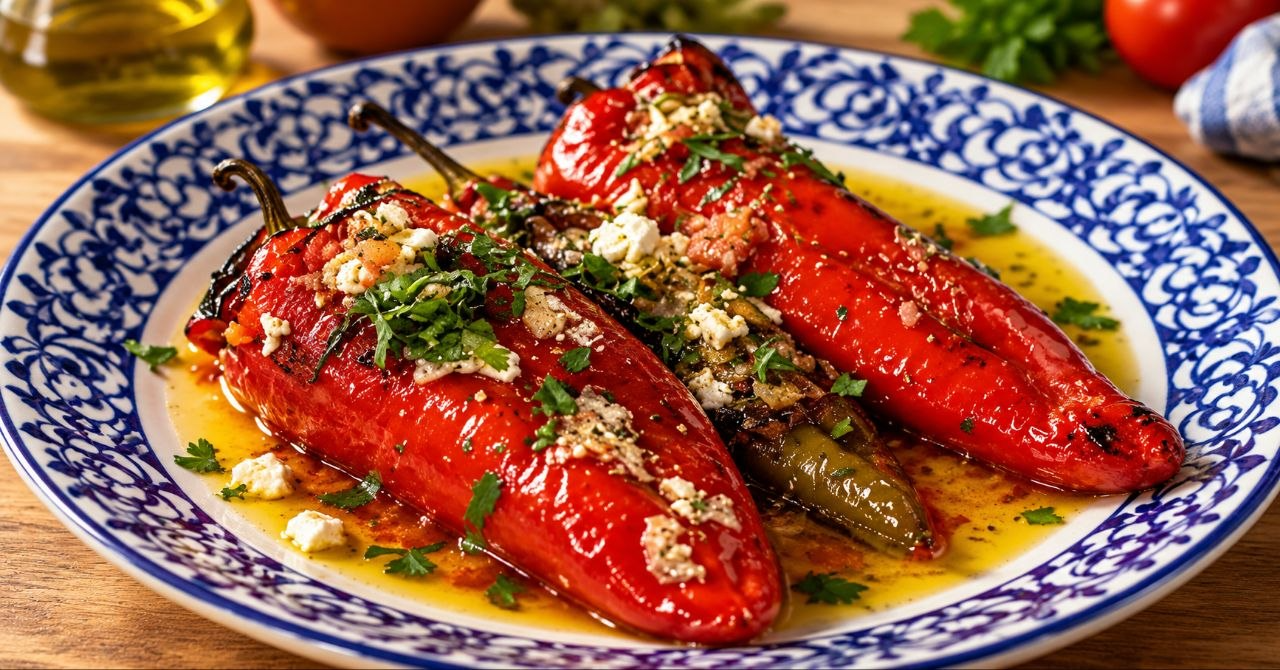
Stuffed Horn Peppers
Horn peppers stuffed with feta, tomato, garlic and wild oregano, baked until soft and caramelised — an American ingredient that became a Greek kitchen staple.
Read the story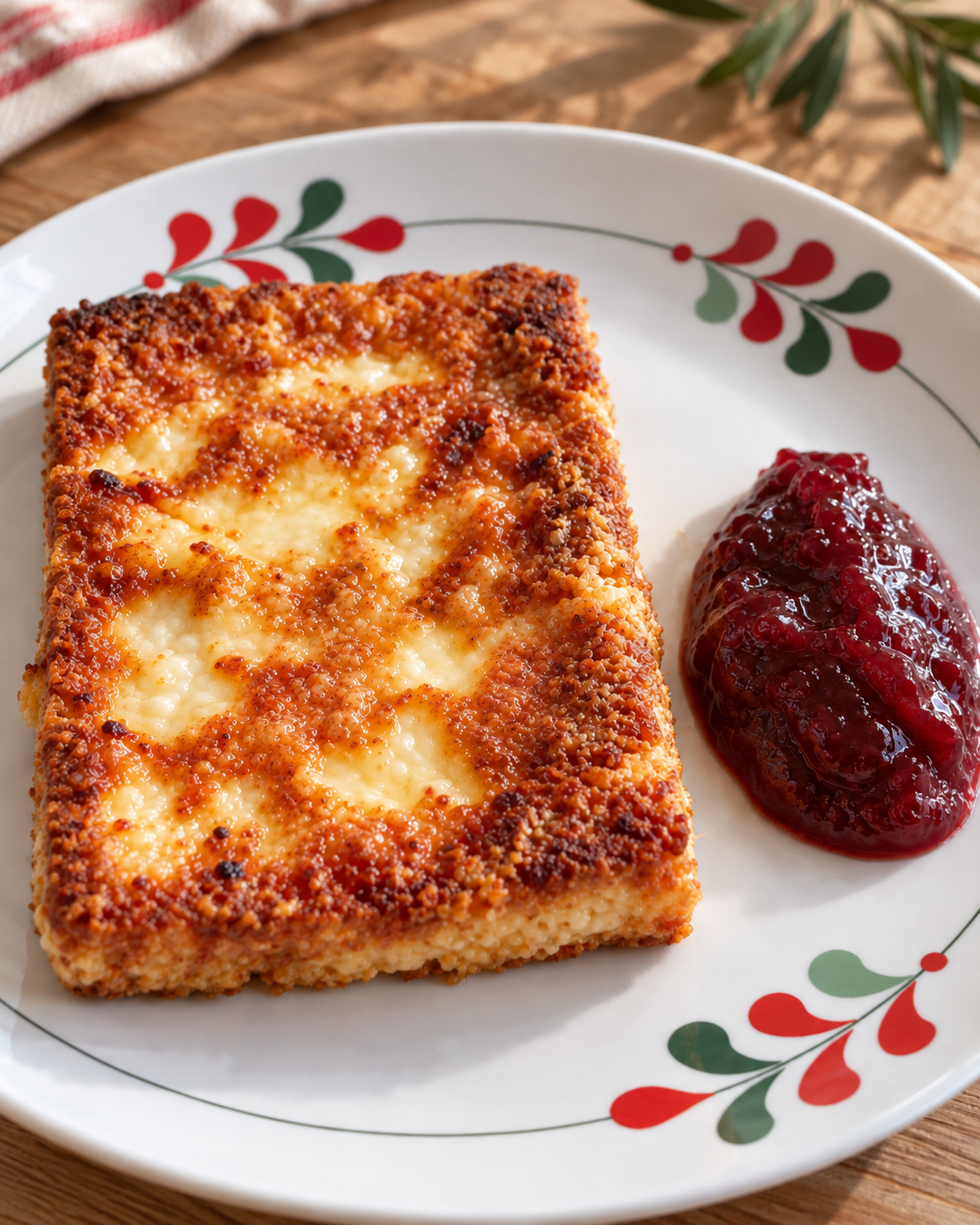
Saganaki with Grape Jam
Golden fried cheese, crisp outside and molten within, served with a slow-cooked grape jam brightened with lime — the taverna classic named after its little pan.
Read the story