a dish from greece —
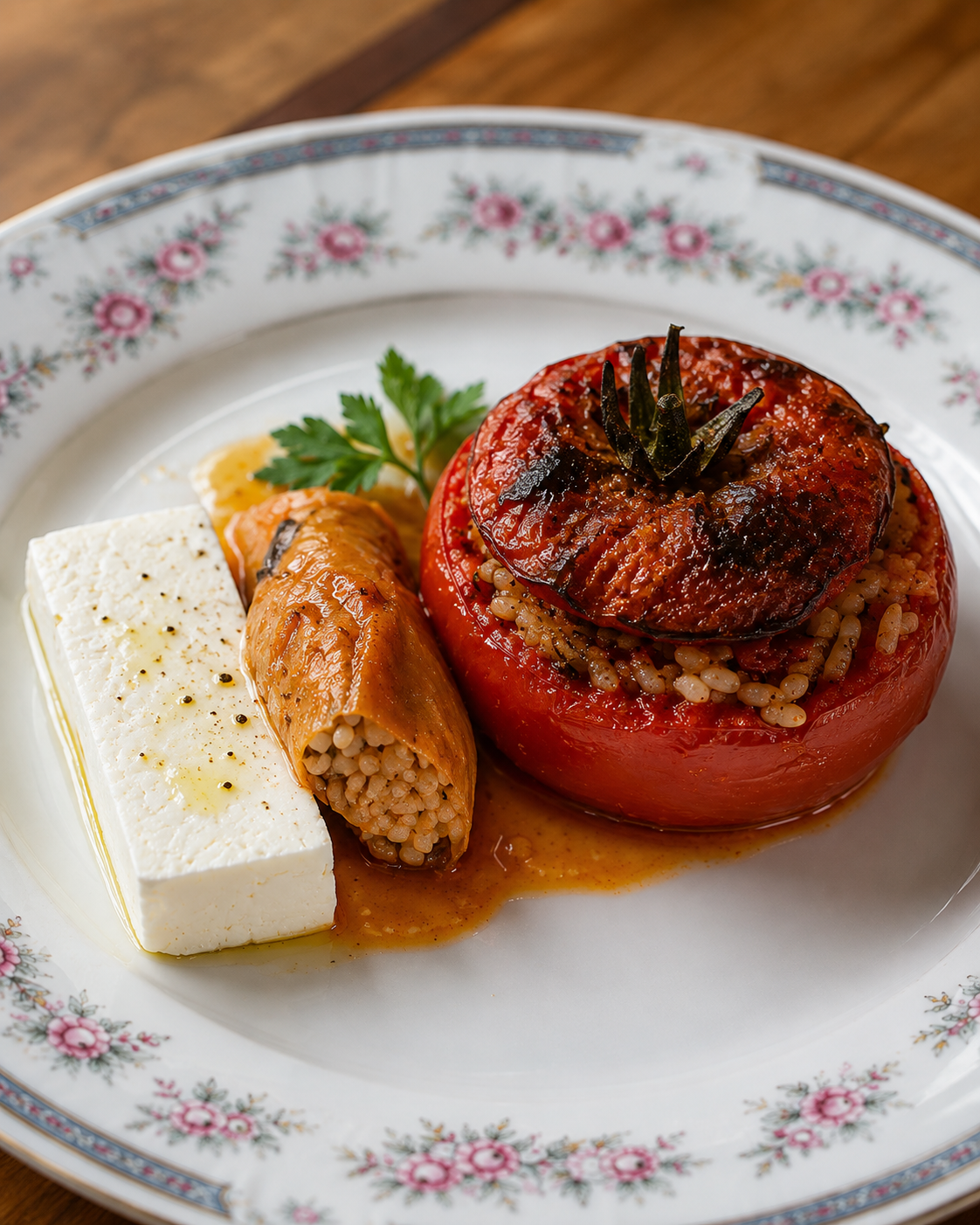
Gemista Orfana
How this dish came to life
Cultural significance
Gemista Orfana remain one of the true tastes of the Greek summer — proof that some of the country's most beloved dishes were born from simplicity rather than luxury. More than stuffed vegetables, they tell a story of resourcefulness, tradition, and the flavors that have brought Greek families together for generations.
step by step
Instructions
- 1
Open all the vegetables and keep their tops as little lids. Scoop out the flesh of the tomatoes and set it aside.
- 2
Sauté the chopped onion, garlic, and the white part of the spring onions. Add the rice and the tomato paste.
- 3
Once the rice is well sealed and glossy, add water and the reserved tomato flesh. Give it two boils — the rice should stay slightly underdone and the mixture loose, so it has moisture left to finish cooking in the oven.
- 4
Finish the filling with the pine nuts and raisins, adjust the seasoning with salt, pepper, vinegar and sugar, and fold in the finely chopped herbs.
- 5
Fill the vegetables with the rice mixture and cap them with their lids.
- 6
Just before baking, drizzle the gemista with olive oil and sprinkle with salt and a little sugar.
- 7
Bake at 180°C for 30 minutes, then raise to 220°C for another 15 minutes — or until the vegetables are beautifully caramelised.
tips from the village —
Wisdom from grandmothers
- 01The pinch of sugar on top isn't optional — it's what gives the tomatoes that deep, caramelised skin.
- 02Keep the filling loose and slightly wet; dry filling means dry gemista.
- 03The raisins and pine nuts are the old island touch — sweetness and crunch in every bite.
- 04Serve lukewarm, never hot. Gemista taste better after they've rested — even better the next day.
Related recipes
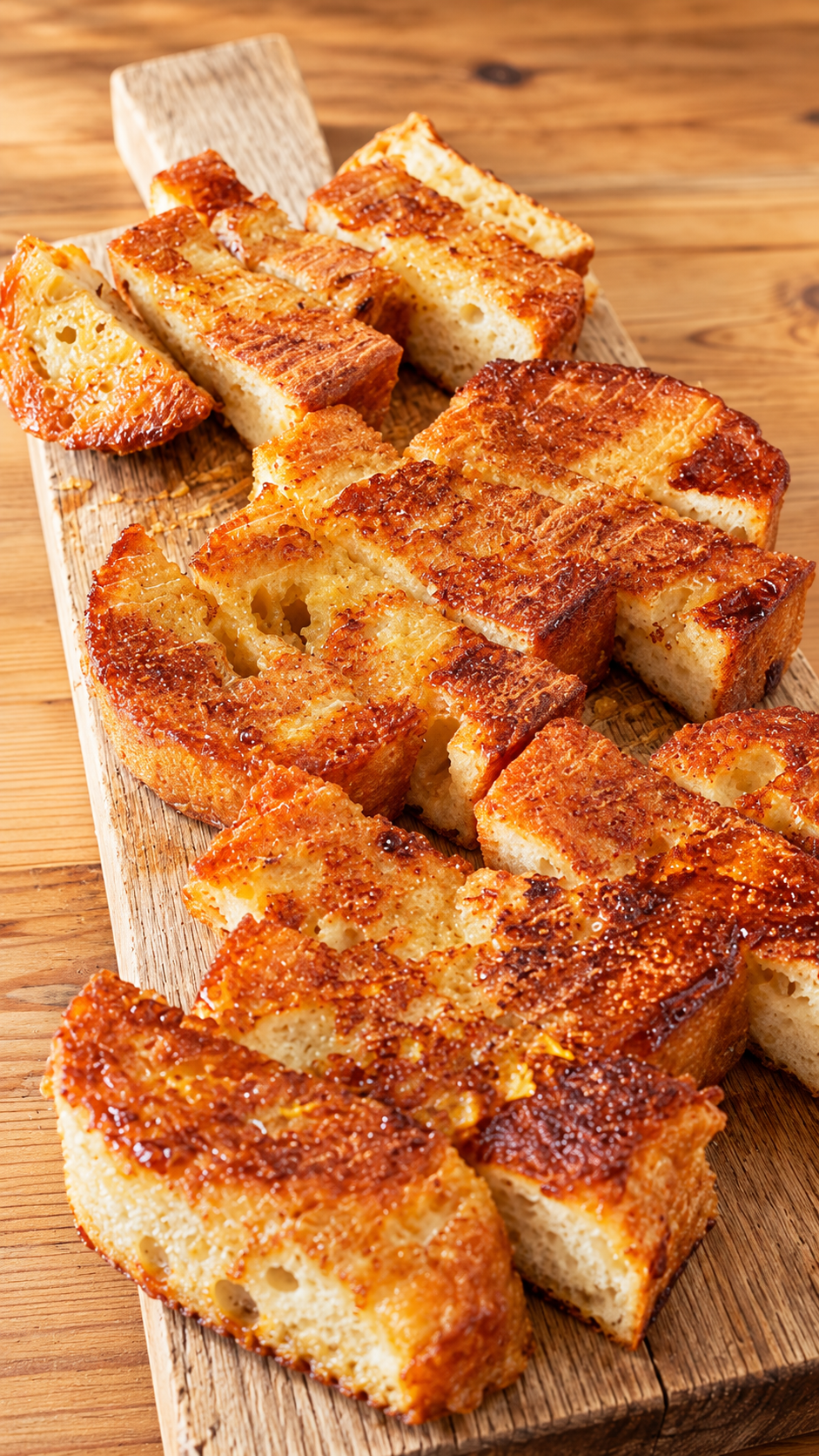
Avgofetes
Greek egg-fried bread — yesterday's loaf dipped in egg and milk, fried golden in olive oil and served with honey and cinnamon. Older than French toast.
Read the story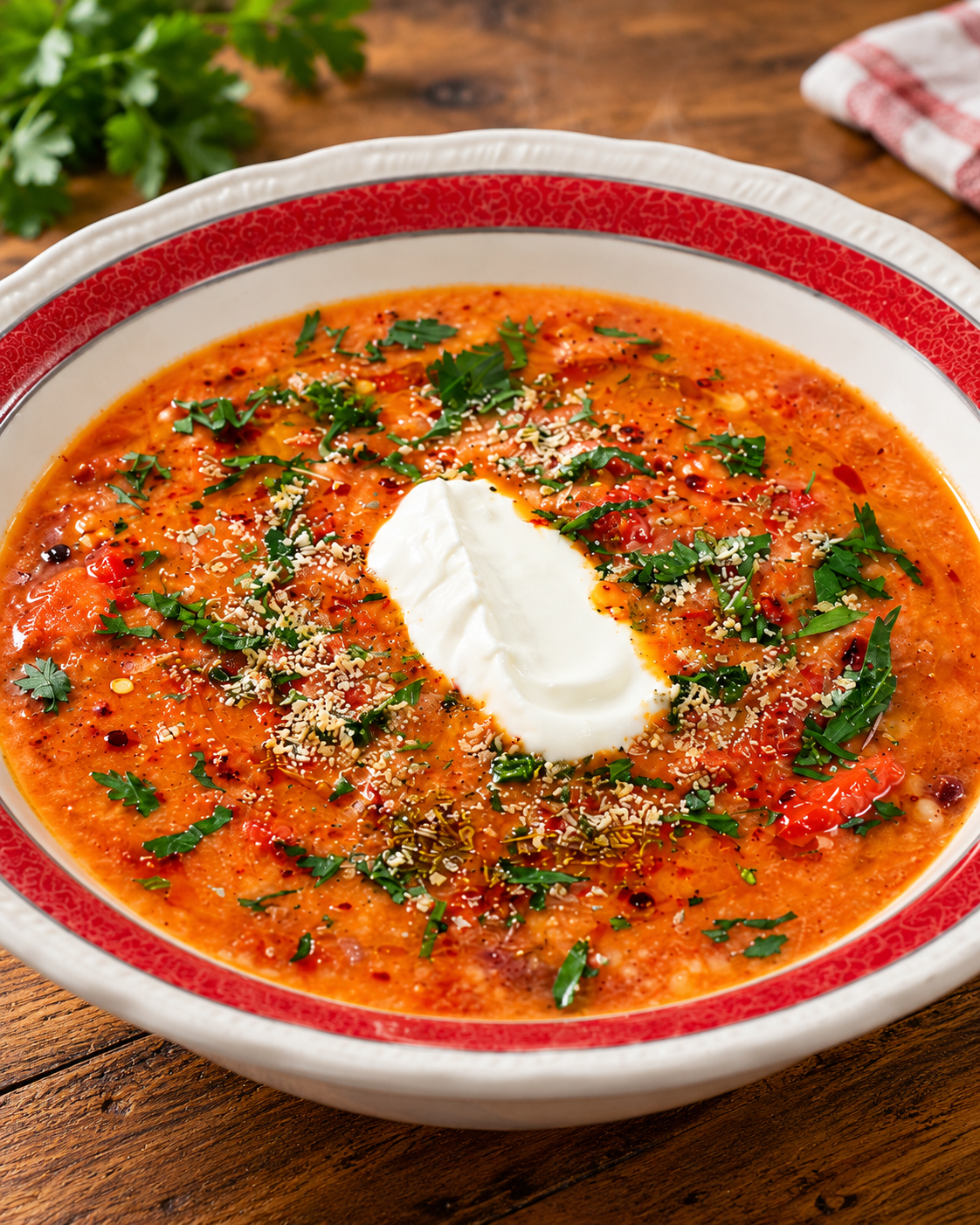
Kokkinistos Trahanas with Yogurt
Sour trahana simmered in a spicy tomato broth until creamy, served with cool Greek yogurt, boukovo and wild oregano — one humble food, countless traditions.
Read the story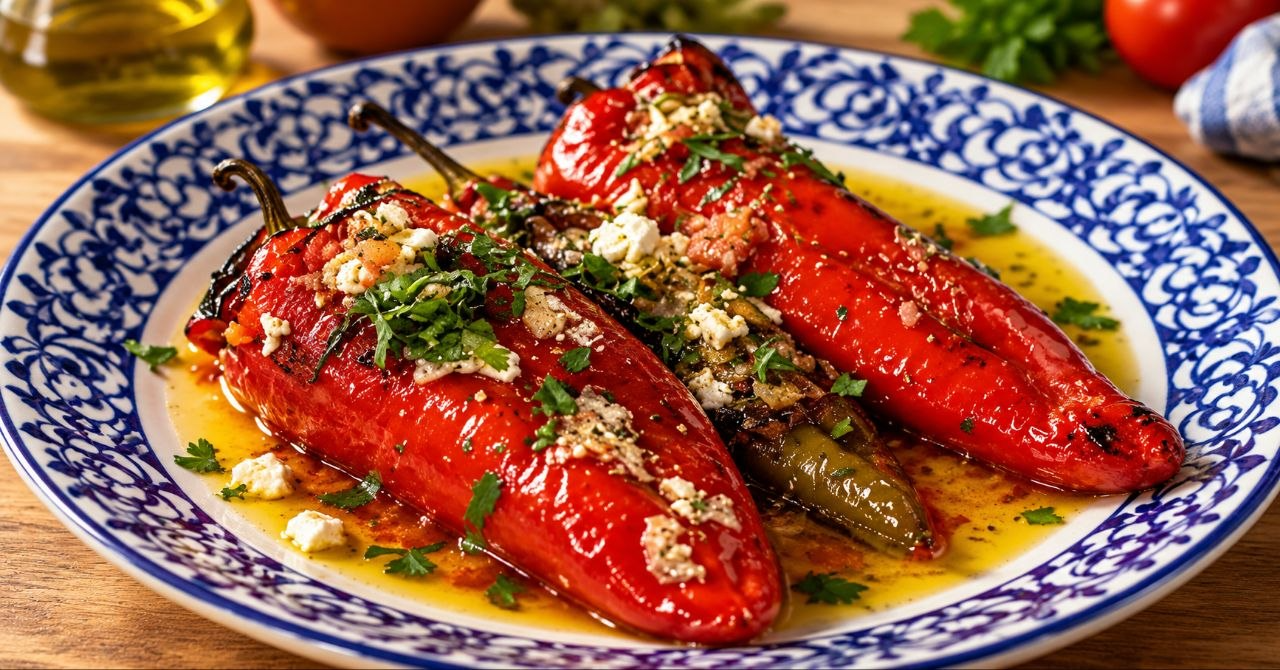
Stuffed Horn Peppers
Horn peppers stuffed with feta, tomato, garlic and wild oregano, baked until soft and caramelised — an American ingredient that became a Greek kitchen staple.
Read the story