a dish from greece —
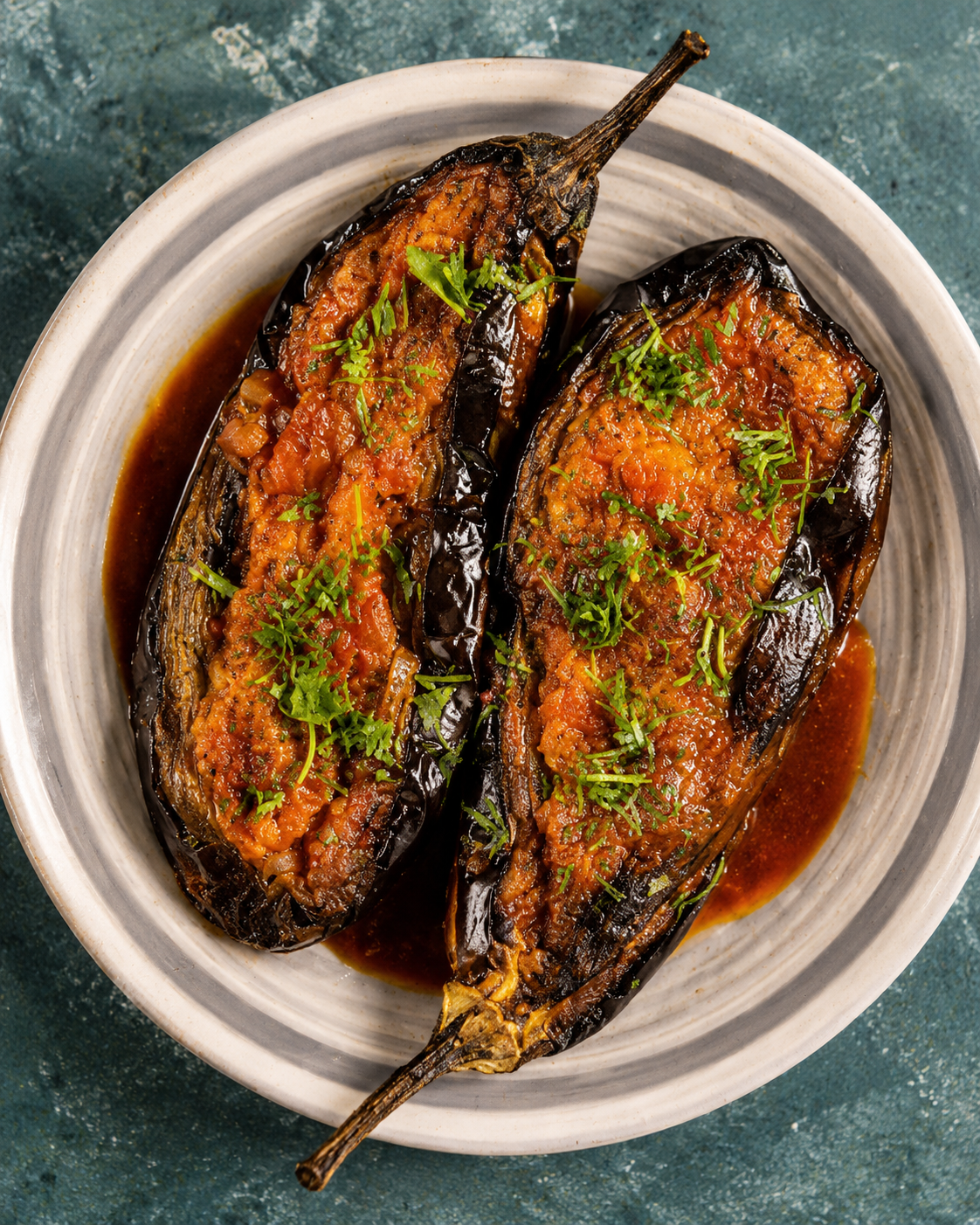
Imam Bayildi
How this dish came to life
Cultural significance
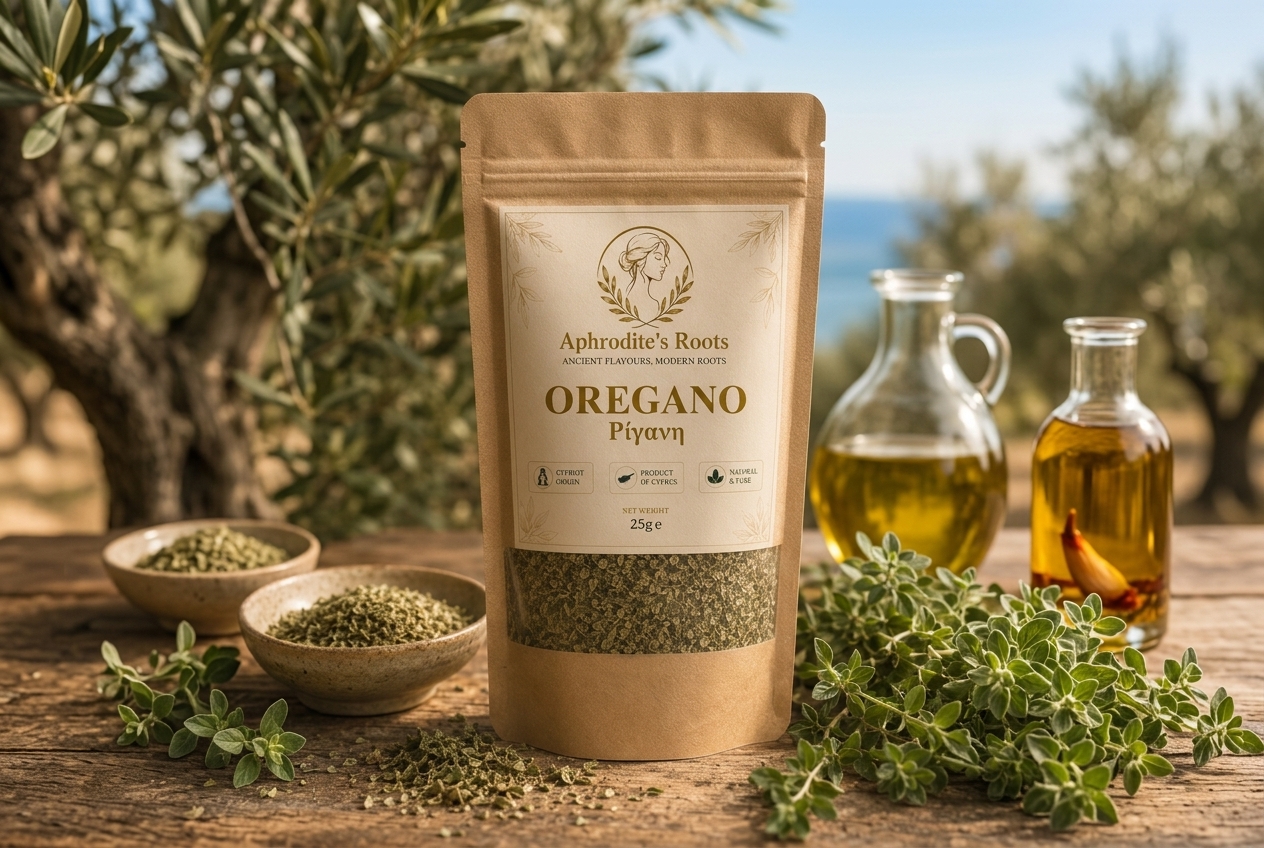
Imam Bayildi is one of the clearest surviving examples of the shared Greek-Turkish table that stretched for centuries across the Aegean. It belongs simultaneously to Istanbul and to Athens, to the wooden spoons of Cappadocian grandmothers and to the marble kitchens of the Ottoman court. In Greek homes it is a *mesogeiako* dish above all — Mediterranean in the deepest sense: eggplant, olive oil, tomatoes, garlic, herbs, patience. It is a staple of Greek Orthodox fasting periods and summer suppers, eaten warm or (better) at room temperature the next day, with feta, bread, and Aphrodite's Roots oregano showered over the top. A dish that carries a whole geography in its scent.
step by step
Instructions
- 1
Wash and dry the eggplants but keep the stems on — they look beautiful on the plate and help hold the eggplant together in the oven. With a small sharp knife, score each eggplant lengthwise from stem to base, cutting deep enough to open a wide pocket but not through to the other side.
- 2
Fill a large bowl with cold water and a generous handful of sea salt. Submerge the eggplants (weigh them down with a plate if they float) and leave for 20–30 minutes. The salt water pulls out any bitterness and — just as importantly — softens the flesh so the pockets open easily to receive the filling.
- 3
While the eggplants soak, make the filling. In a large bowl, combine the canned diced tomatoes, the grated fresh tomatoes, the tomato paste, and the sliced onions and garlic. Add half the chopped parsley, the cumin, paprika, sugar, a generous pinch of salt, and plenty of black pepper. Pour in about half the olive oil and mix thoroughly with your hands or a wooden spoon. Taste and adjust — it should be seasoned assertively, sweet and savoury together.
- 4
Preheat the oven to 200°C (fan 180°C / 390°F).
- 5
Drain the eggplants and press each one gently between kitchen towels to squeeze out the excess water — this is important, or the dish will end up watery in the oven. Arrange them side by side, cut side up, in a large baking tray or shallow casserole. Widen the pockets gently with a spoon.
- 6
Fill each eggplant pocket generously with the tomato-onion mixture, pressing it in with your fingers so it goes deep into the flesh. Any leftover filling — and there will be some — spoon around the eggplants in the tray. Nothing goes to waste.
- 7
Drizzle the remaining olive oil over the top (more than you think — this dish belongs to the *ladera* family, so olive oil is the whole point). Squeeze the juice of the two lemons over everything, then pour the cup of water into the tray around, not over, the eggplants.
- 8
Cover the tray tightly with foil and bake for 45 minutes. This first, covered stage steams the eggplants soft.
- 9
Remove the foil and continue baking uncovered for another 25 minutes, or until the tops of the filling are deeply caramelised, the eggplant skins are shining and blistered, and the tray juices have thickened into a glossy sauce. If the sauce reduces too quickly, add another splash of water.
- 10
Let the tray rest on the counter for 10 minutes before serving — the eggplants continue to relax and absorb the oil, and the flavours come together.
- 11
To serve: place two eggplant halves on each plate, spoon over the tray juices generously, and finish with crumbled feta, a snowfall of Aphrodite's Roots oregano, fresh parsley, and one last drizzle of good olive oil. Eat warm or (better) at room temperature the next day with crusty bread to mop the plate.
tips from the village —
Wisdom from grandmothers
- 01Don't skimp on the olive oil. Imam Bayildi belongs to the *ladera* family — literally, *the ones with olive oil*. The oil is not a cooking medium here, it's an ingredient. Use the best you have.
- 02Salt-water soak, not sweat. Some cooks salt the eggplant flesh and let it drip — traditional Imam Bayildi asks for a saltwater bath instead. It softens without drying, and the pockets stay wide open for the filling.
- 03Grate the fresh tomatoes on a box grater. Skin the tomatoes by rubbing them against the coarse side of the grater until only the papery skin is left in your hand — this is the trick that gives you real tomato pulp with no peel, no chopping, and no waste.
- 04Cook the onions inside the eggplant, not in a pan. That's the secret of Imam Bayildi vs stuffed eggplant — the onions and garlic go in raw and confit-slowly in the eggplant juices, olive oil, and lemon. They come out sweet and jammy, not fried.
- 05Better the next day. Like most *ladera*, this dish is arguably at its best after a night in the fridge, brought back to room temperature. The olive oil sets, the flavours deepen, and the whole thing becomes richer.
- 06Serve it at room temperature. Greek grandmothers will insist. Straight from the fridge kills the olive oil; scorching hot masks the sweetness. Warm-to-room is where it lives.
- 07The Aphrodite's Roots finish. Wild Cypriot mountain oregano and a snow of feta at the end is what turns this from a good vegetable dish into something you remember. Don't skip the shower of oregano at the table.
- 08Eat with bread, not rice. Crusty village bread, torn by hand, dragged through the olive-oil-and-tomato juices at the bottom of the tray. That is the whole dish.
Related recipes
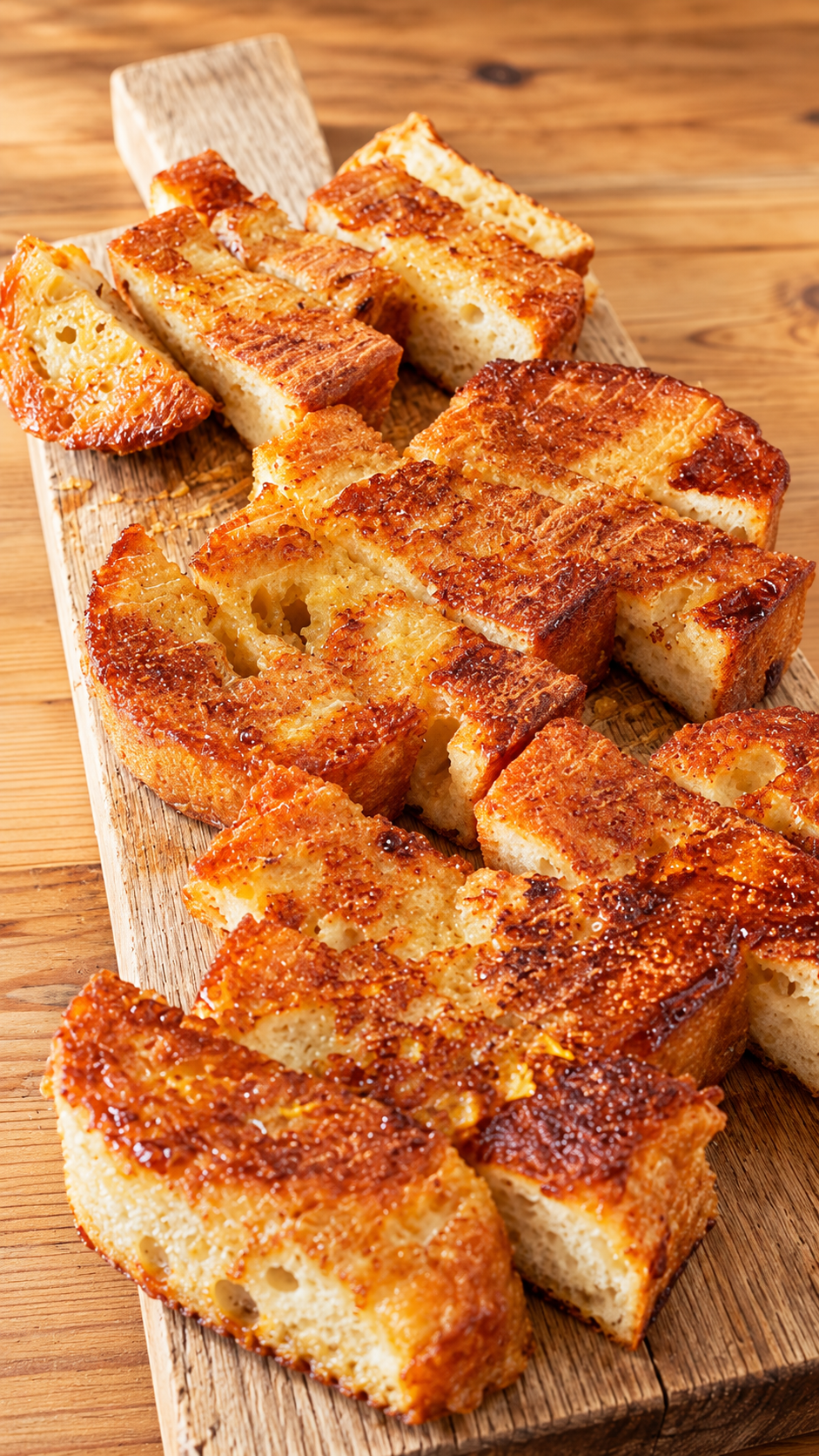
Avgofetes
Greek egg-fried bread — yesterday's loaf dipped in egg and milk, fried golden in olive oil and served with honey and cinnamon. Older than French toast.
Read the story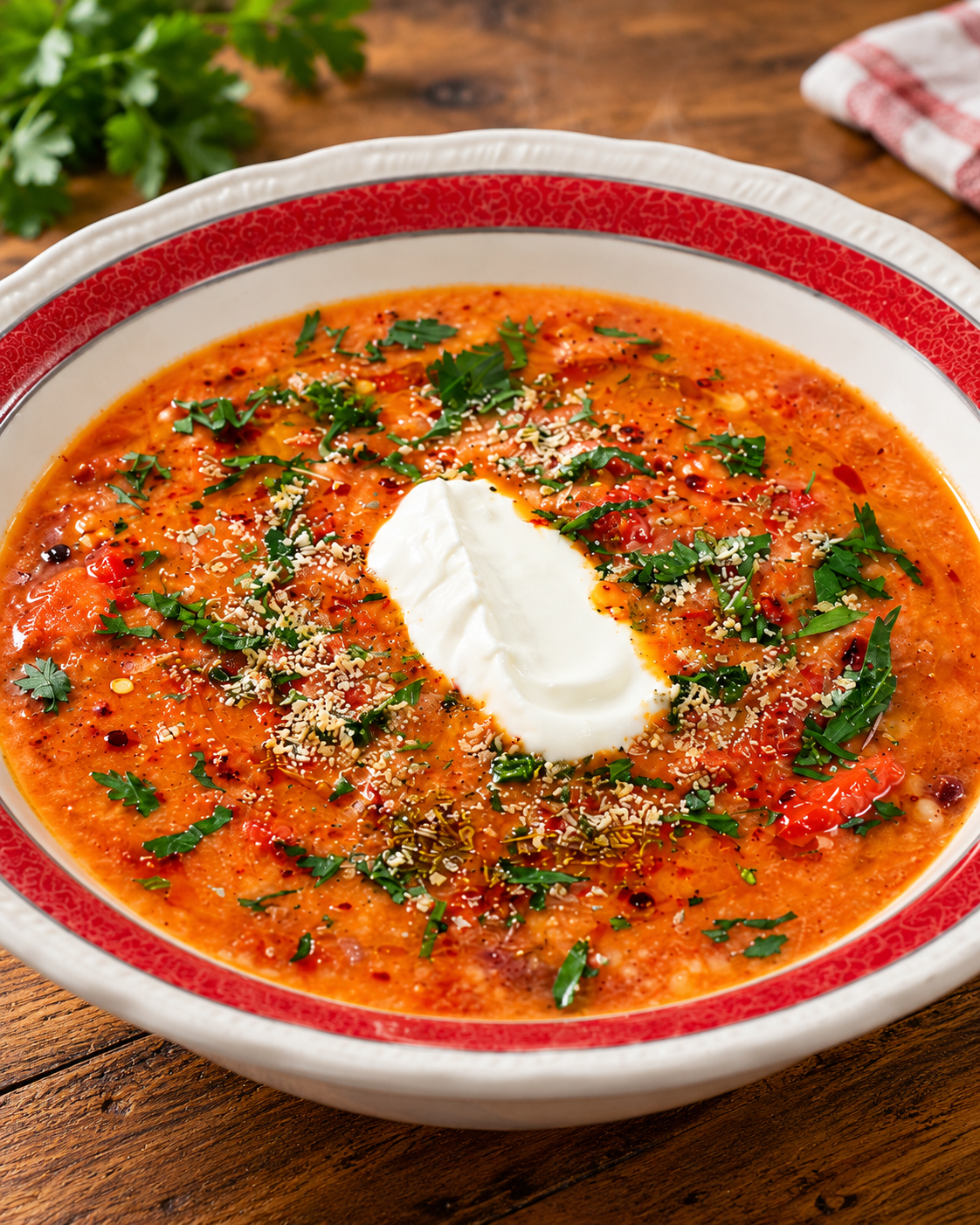
Kokkinistos Trahanas with Yogurt
Sour trahana simmered in a spicy tomato broth until creamy, served with cool Greek yogurt, boukovo and wild oregano — one humble food, countless traditions.
Read the story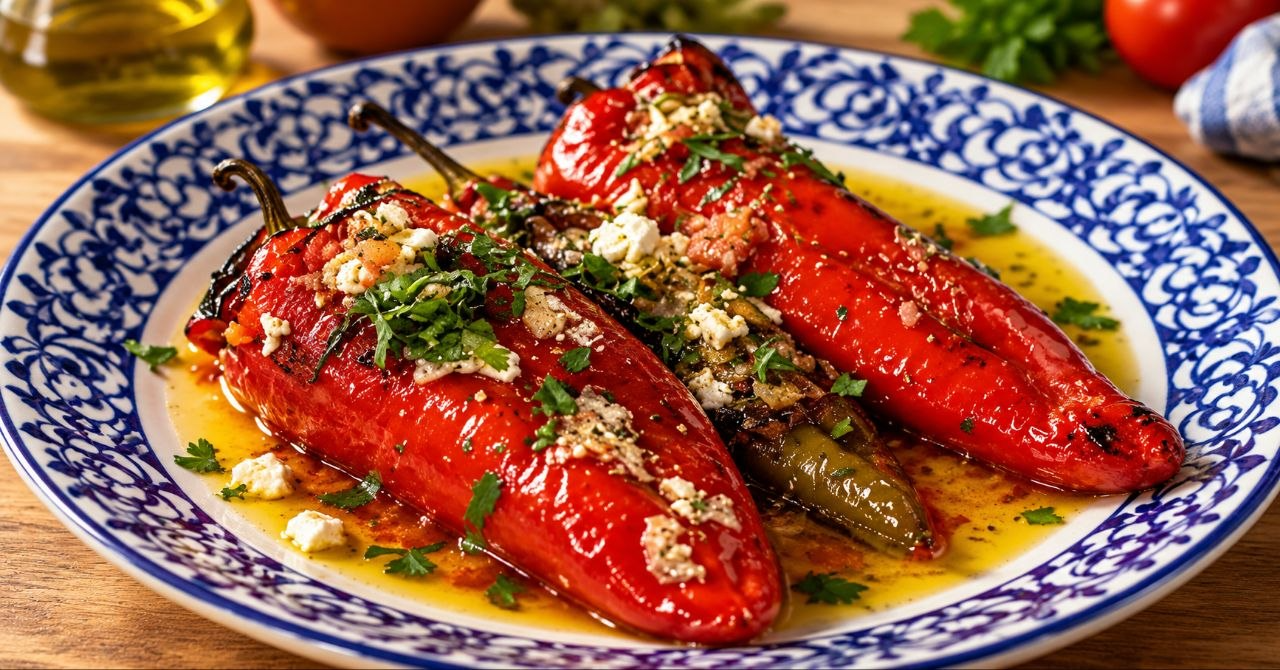
Stuffed Horn Peppers
Horn peppers stuffed with feta, tomato, garlic and wild oregano, baked until soft and caramelised — an American ingredient that became a Greek kitchen staple.
Read the story