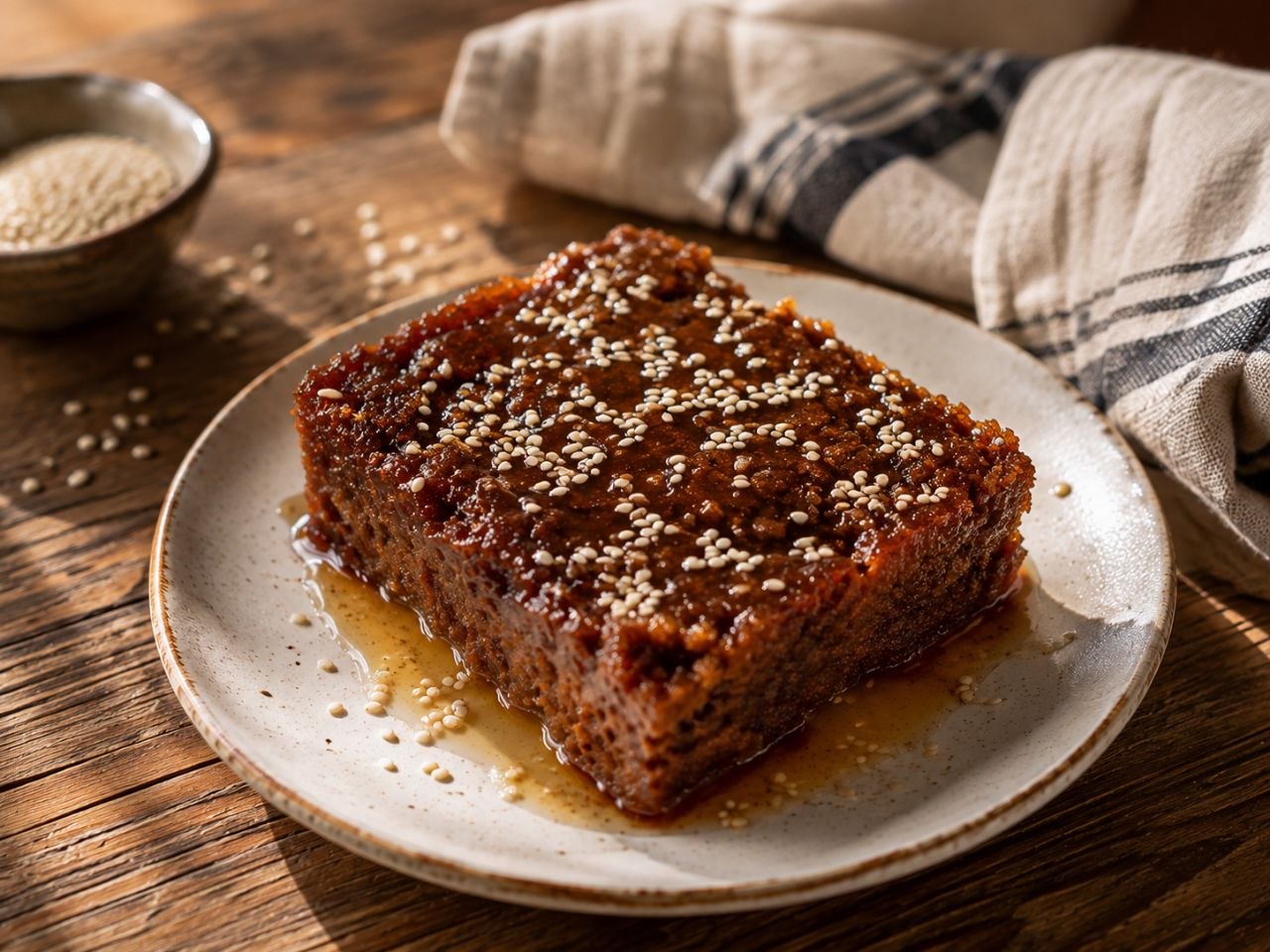
How this dish came to life
Cultural significance
Karpuzenia is a reminder of the philosophy behind so much Greek island cooking: take what the land gives you, waste as little as possible, and turn simple ingredients into something worth sharing.
step by step
Instructions
- 1
Preheat the oven to 170°C and grease a round baking pan, about 32 cm in diameter.
- 2
Remove the watermelon rind and seeds, then cut the flesh into roughly 2 cm cubes.
- 3
Place the watermelon in a large bowl and gently mix with the sugar, olive oil, and cinnamon.
- 4
Gradually add the flour, mixing gently until incorporated and you have a loose batter similar to crêpe batter.
- 5
Immediately pour into the prepared pan, level the surface, and generously sprinkle with sesame seeds.
- 6
Bake for approximately 1 hour, until lightly golden around the edges.
- 7
Remove from the oven and, while still hot, drizzle the honey evenly over the entire surface.
- 8
Allow it to cool completely before cutting into pieces. Store in the refrigerator.
tips from the village —
Wisdom from grandmothers
- 01The riper the watermelon, the better — this is the pie that saves the fruit you'd otherwise throw away.
- 02Taste the batter before baking; if your watermelon is very sweet, hold back some of the sugar.
- 03Pour the batter into the pan immediately after mixing — the watermelon keeps releasing juice as it sits.
- 04The honey must go on while the pie is still hot so it soaks in instead of sitting on top.
Related recipes
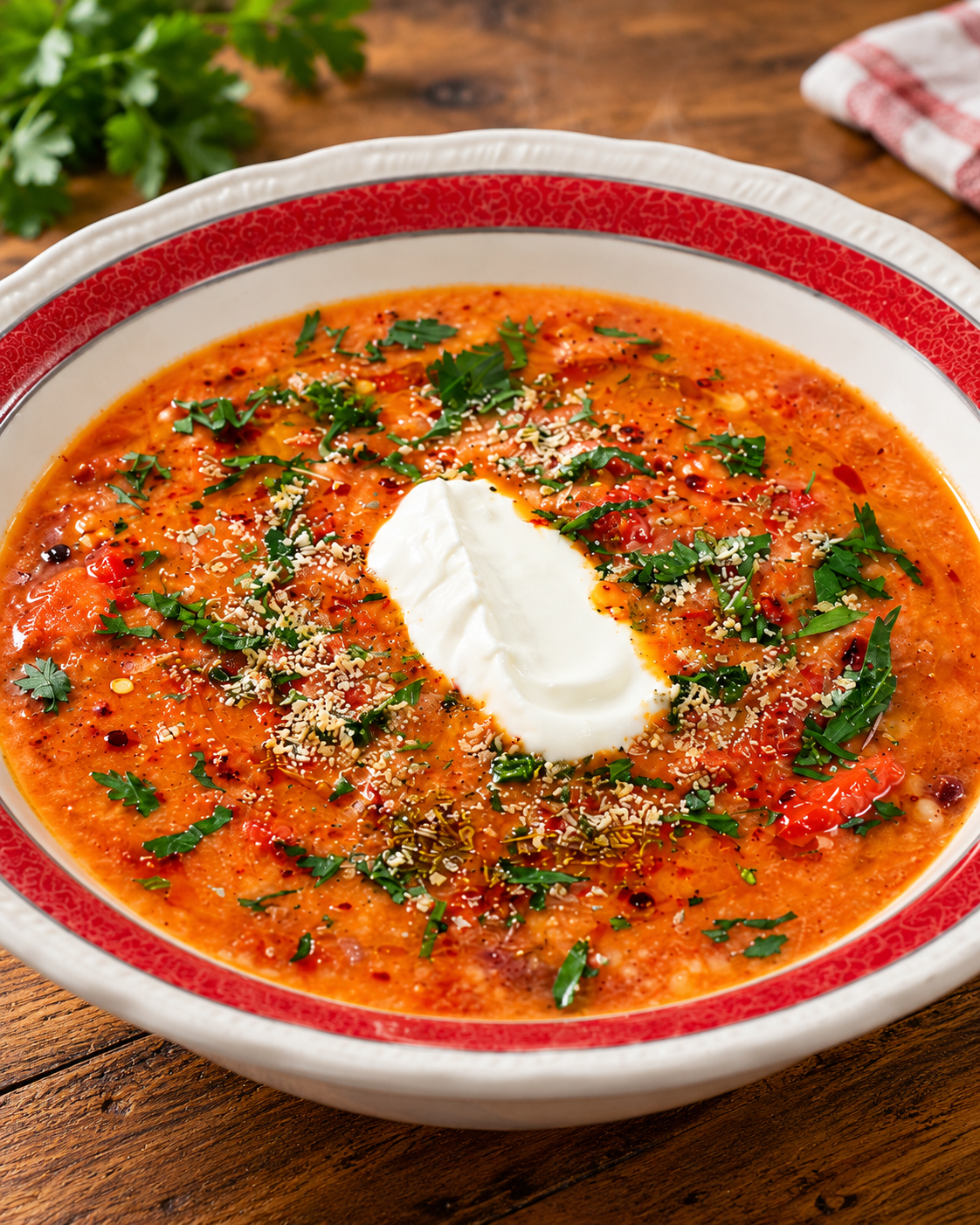
Kokkinistos Trahanas with Yogurt
Sour trahana simmered in a spicy tomato broth until creamy, served with cool Greek yogurt, boukovo and wild oregano — one humble food, countless traditions.
Read the story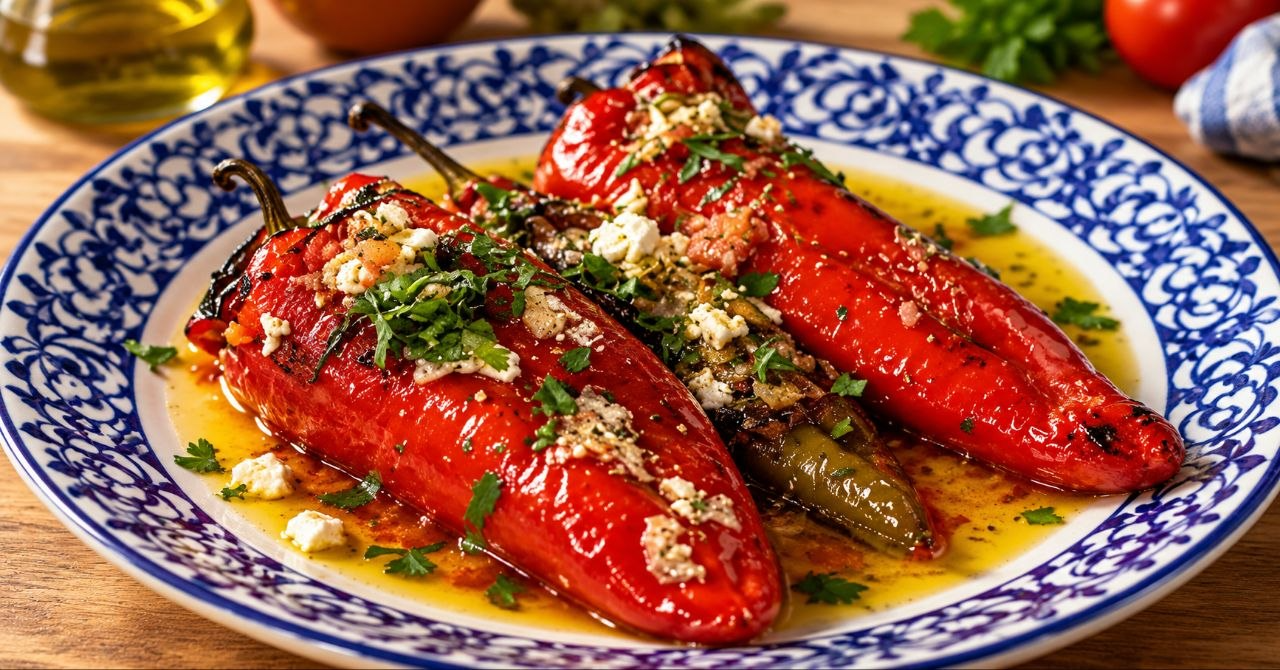
Stuffed Horn Peppers
Horn peppers stuffed with feta, tomato, garlic and wild oregano, baked until soft and caramelised — an American ingredient that became a Greek kitchen staple.
Read the story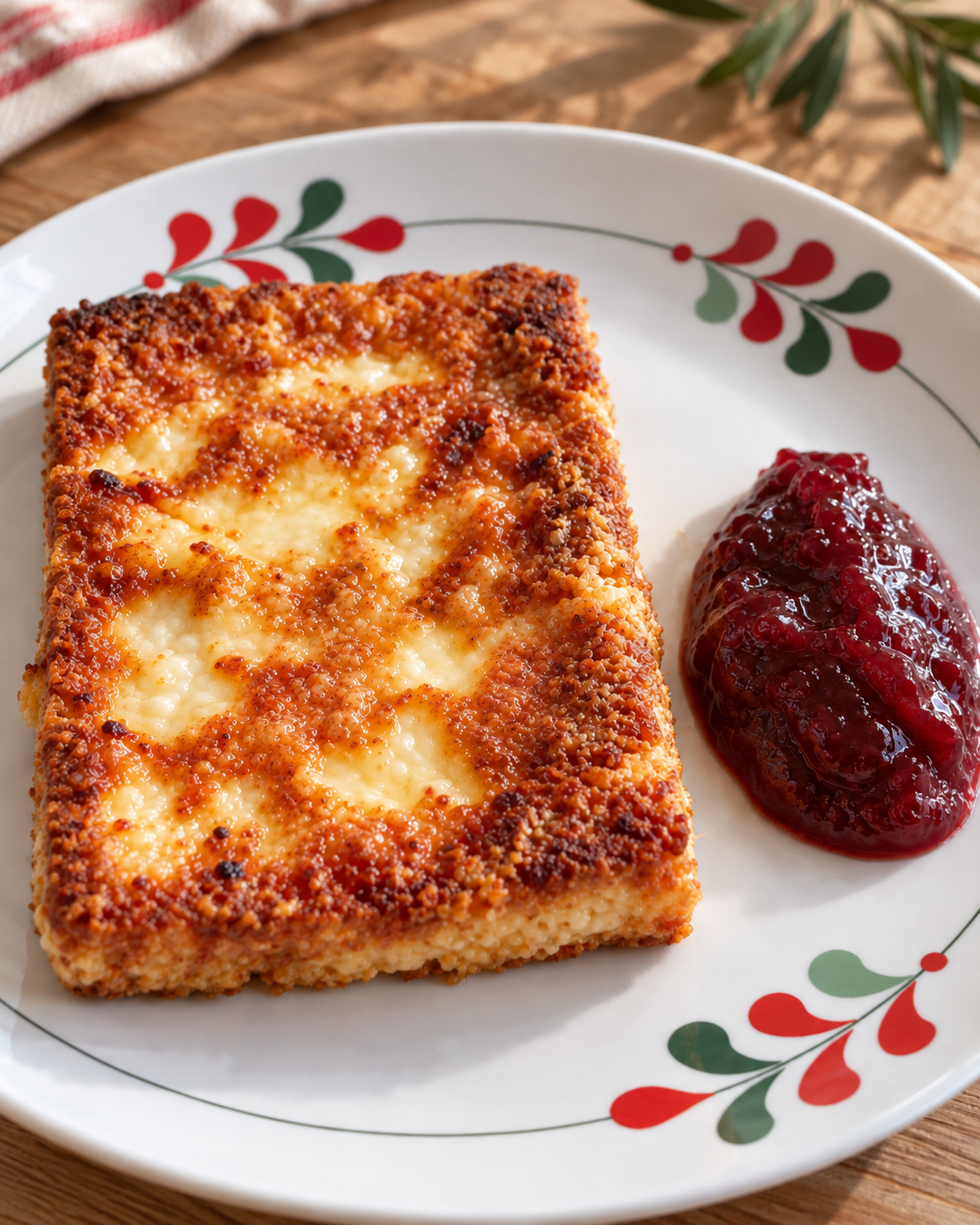
Saganaki with Grape Jam
Golden fried cheese, crisp outside and molten within, served with a slow-cooked grape jam brightened with lime — the taverna classic named after its little pan.
Read the story