How this dish came to life
Cultural significance
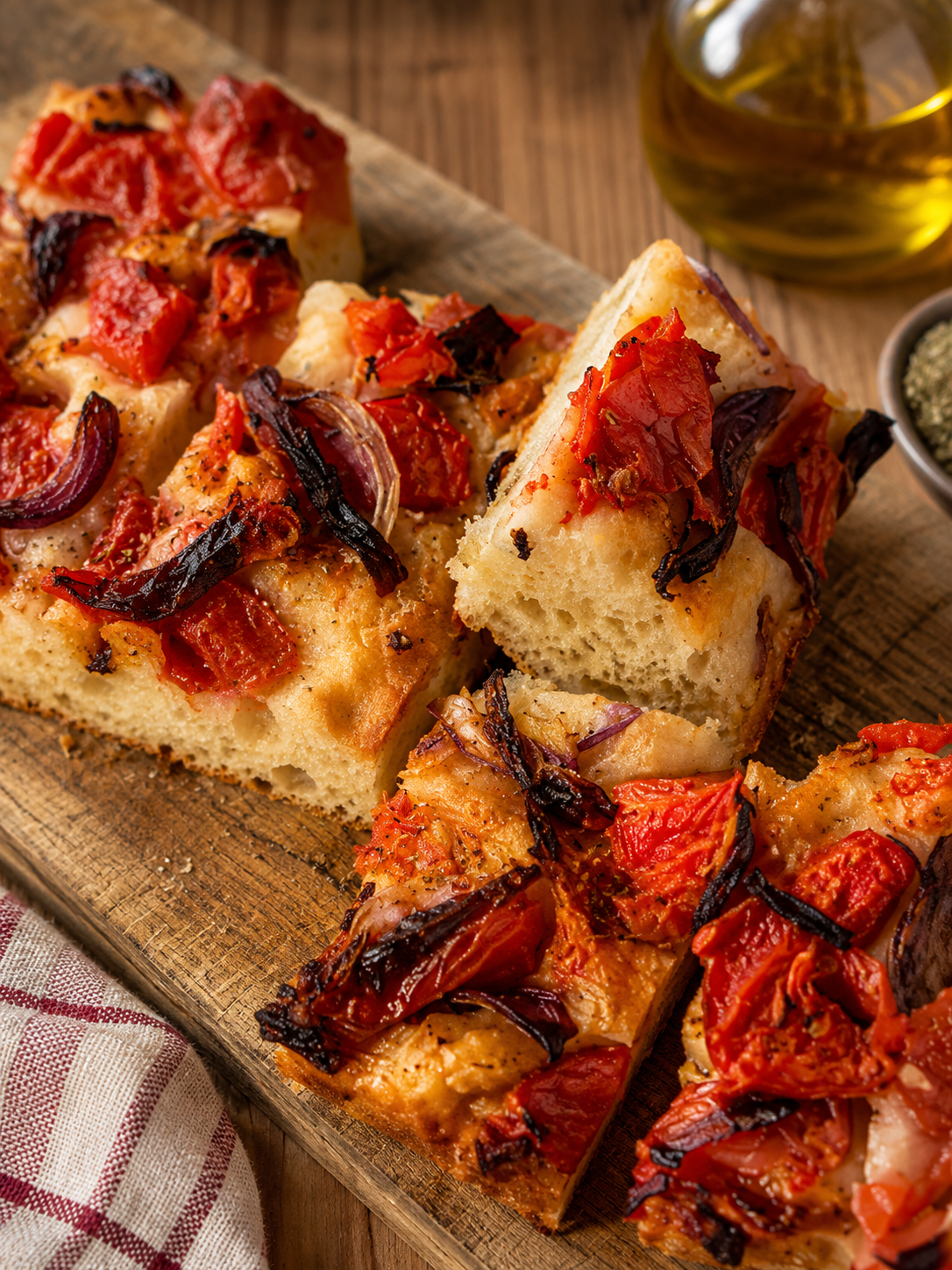
Ladenia is Greece's earliest and most enduring answer to focaccia and pizza — a Cycladic island bread that predates its Italian cousins in spirit, if not in written record. It belongs to Kimolos and Milos the way *pastitsada* belongs to Corfu — a dish so specific to place that eating it feels like a small act of geography. It is a bread that carries the whole island in its scent: the salt of the Aegean wind, the sun-warm tomatoes from the volcanic soil, the wild oregano from the hills above the harbours, and the generous olive oil that gives it its name.
step by step
Instructions
- 1
Make the dough. Put the flour into a large bowl. In a small jug, mix a little of the lukewarm water with the two pinches of sugar and the yeast. Leave it to sit for 5–10 minutes until you see it foam up on the surface — that's the yeast waking up. If nothing happens, your yeast is dead; start again with fresh.
- 2
Add the activated yeast mix and 4 tbsp olive oil to the flour, then gradually pour in the remaining lukewarm water along with the salt. Knead in the bowl (or on a lightly floured surface) for 8–10 minutes until you have a smooth, soft dough — slightly moist and elastic, but not sticky enough to cling to your hands.
- 3
Rub the dough all over with a little olive oil, place it back in the bowl, and cover with cling film or a damp tea towel. Leave it to rise in a warm spot until doubled in size — about 45–60 minutes.
- 4
While the dough rises, dice the tomatoes and slice the red onions into thin half-moons. Set both aside — do not pre-cook them; the whole idea of Ladenia is that the topping cooks in the oven on top of the bread, releasing its juices down into the dough.
- 5
Preheat the oven to 200°C (390°F) top and bottom heat.
- 6
Once the dough has doubled, generously oil a large baking tray (roughly 30 x 40 cm) with olive oil — really coat it, base and sides, because the crust bakes in that oil and turns golden from the bottom up.
- 7
Transfer the dough into the tray and, with oiled hands, gently press and stretch it out until it fills the whole tray evenly. Don't work it hard — just press it out with your fingertips, letting it relax as you go. If it springs back too much, cover with a towel for 5 minutes and try again.
- 8
Scatter the diced tomatoes evenly across the top, then the sliced onions. Press them down gently into the dough with your fingers so they sink slightly into the surface. This is what stops them rolling off during baking and helps them collapse into the bread.
- 9
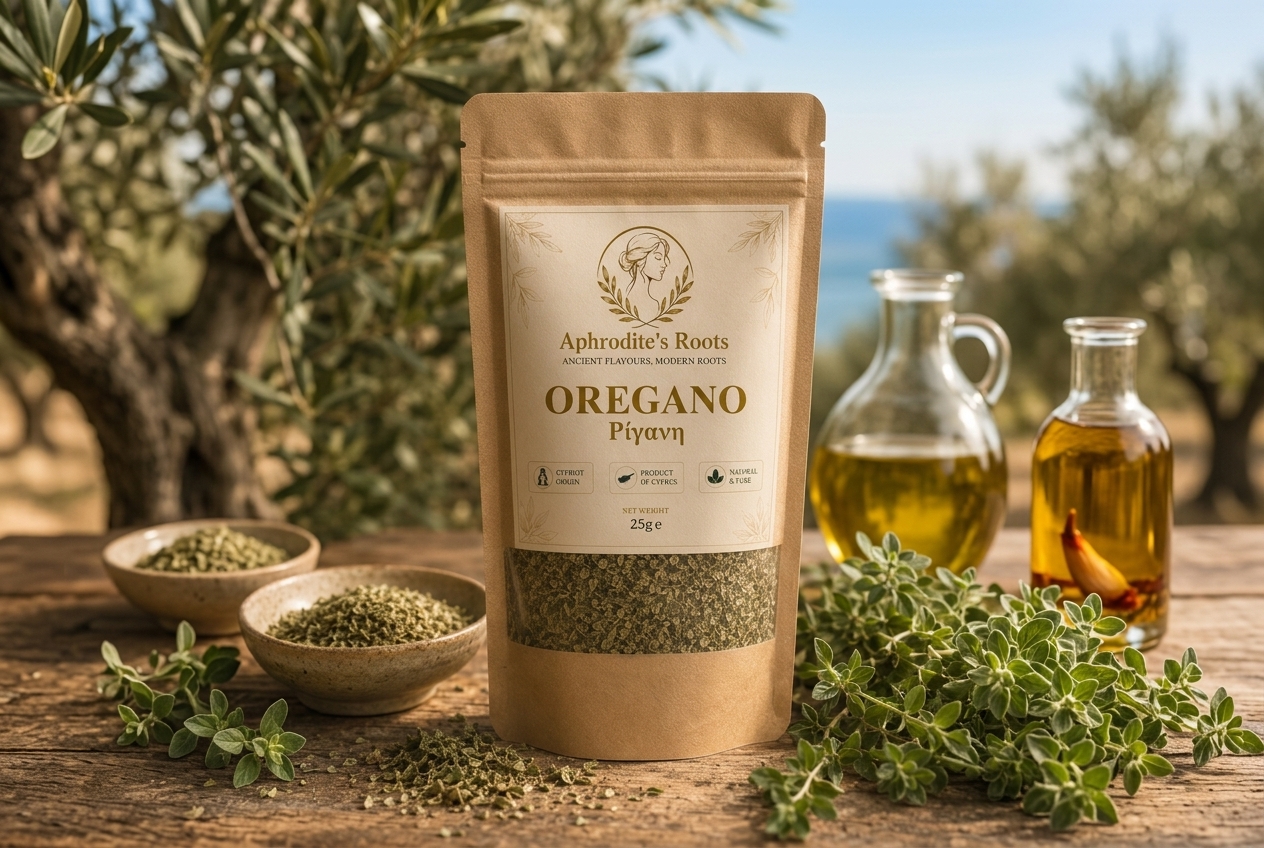
Season generously with sea salt and black pepper, sprinkle the teaspoon of oregano evenly over the surface, and finish with a very generous drizzle of olive oil over the whole tray — more than you think, because Ladenia deserves its name.
- 10
Bake for 35–45 minutes, until the crust is deep golden brown, the tomatoes have collapsed and their edges are dark and almost jammy, and the onions are caramelised and beginning to char at the tips. Every corner should sizzle.
- 11
Take out of the oven and drizzle one more slick of olive oil across the top while it's still hot. Let it rest for 10 minutes — this is when the bread relaxes and drinks the last of the topping juices.
- 12
Cut into generous rustic squares and serve warm, at room temperature, or even the next day for lunch. A cold glass of white wine, a bowl of olives, and a bit of feta on the side — this is a Kimolian afternoon in one dish.
tips from the village —
Wisdom from grandmothers
- 01Don't skip the sugar in the yeast starter. It's food for the yeast — a small pinch wakes it up in minutes and tells you if it's alive before you commit half a kilo of flour to the bowl.
- 02Lukewarm water, not hot. If the water is too hot for your finger, it will kill the yeast. Aim for a temperature that feels neutral — neither warm nor cool.
- 03Salt goes in after the yeast is activated. Salt directly on yeast kills it. Add the salt with the second pour of water, after the yeast has already been mixed into the flour.
- 04Coat the tray in oil like you mean it. Ladenia — *the oily one* — bakes in olive oil at the base. This is where the crackly, deep-gold crust comes from. A shy pour = a pale flat pancake.
- 05Use red onions, not white. Red onions carry more sweetness and mellow beautifully into caramel when they bake. White onions can be sharp and stringy under the oven's heat.
- 06Don't pre-cook the topping. Kimolians put the raw tomatoes and onions straight onto the dough and let them cook on top in the oven — their juice sinks into the bread and flavours it from above.
- 07Firm ripe tomatoes, not soft ones. Overripe tomatoes turn to sauce and the crust goes soggy. Choose fruit that still has a little snap to it — the oven does the rest.
- 08The last drizzle of oil, out of the oven, is not optional. It's what turns Ladenia from a rustic focaccia into itself.
- 09Better the next day. Wrap what's left in a clean tea towel — never plastic — and eat cold with a slice of feta and a black olive. Fishermen took it to sea like this for centuries.
Related recipes
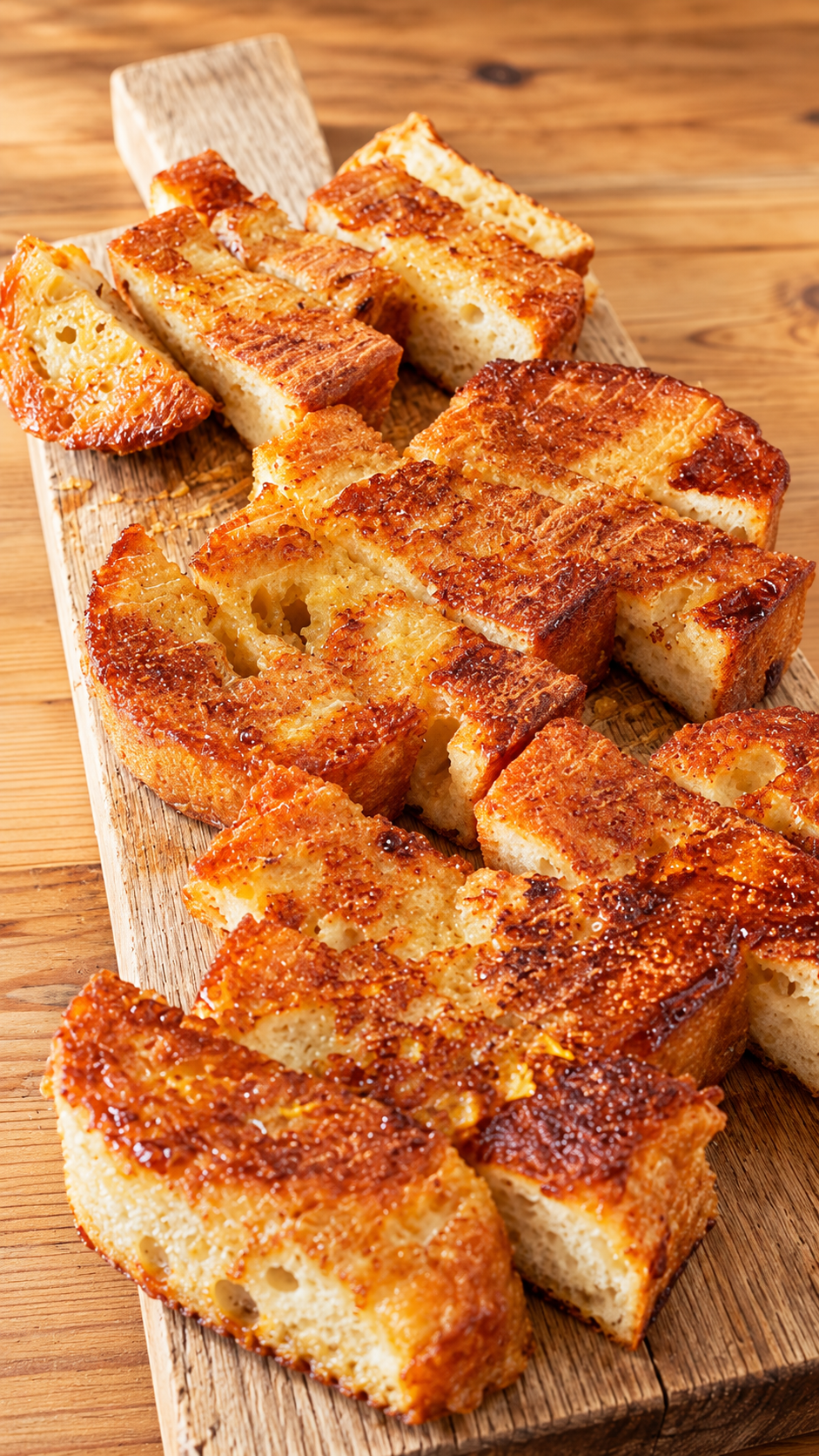
Avgofetes
Greek egg-fried bread — yesterday's loaf dipped in egg and milk, fried golden in olive oil and served with honey and cinnamon. Older than French toast.
Read the story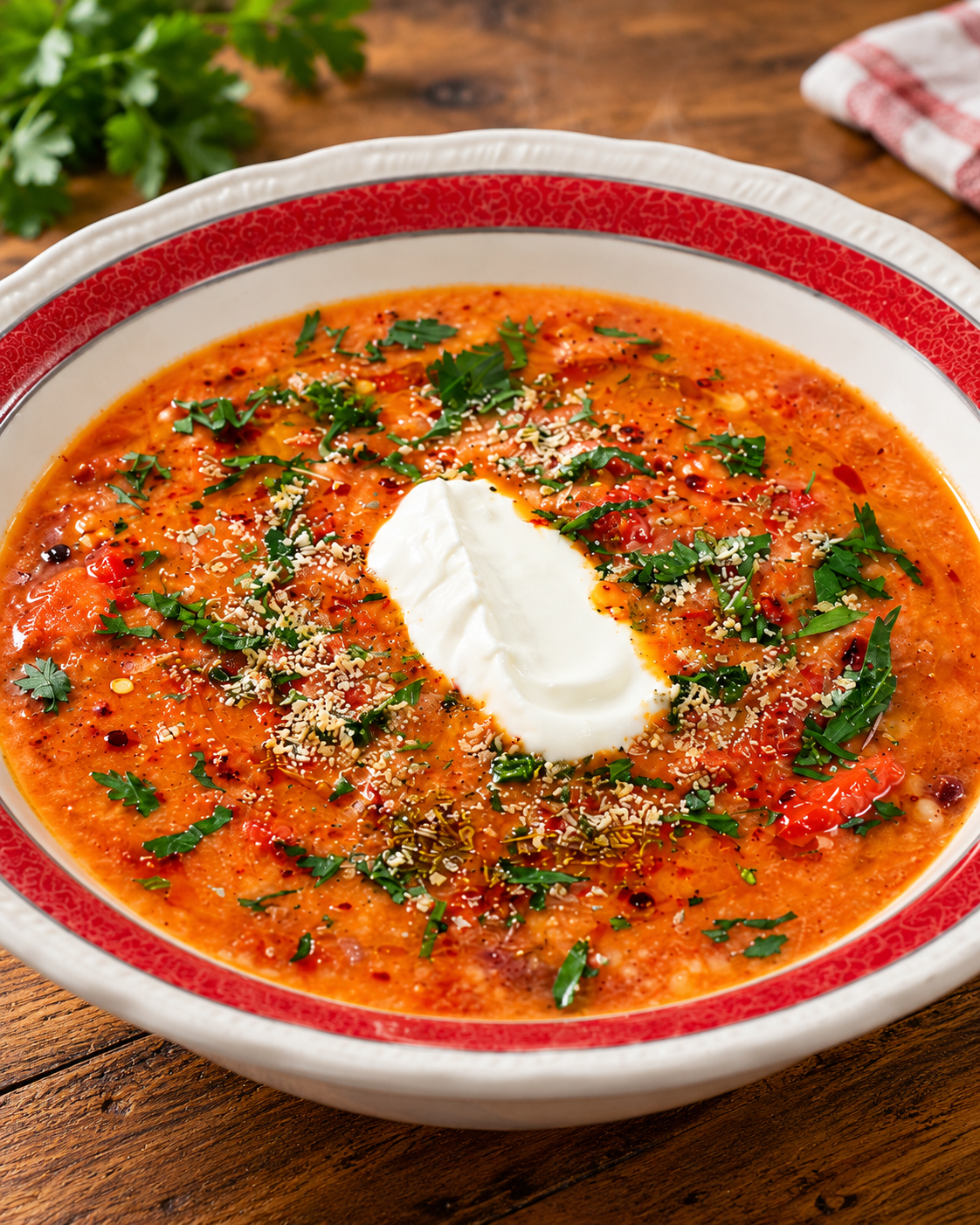
Kokkinistos Trahanas with Yogurt
Sour trahana simmered in a spicy tomato broth until creamy, served with cool Greek yogurt, boukovo and wild oregano — one humble food, countless traditions.
Read the story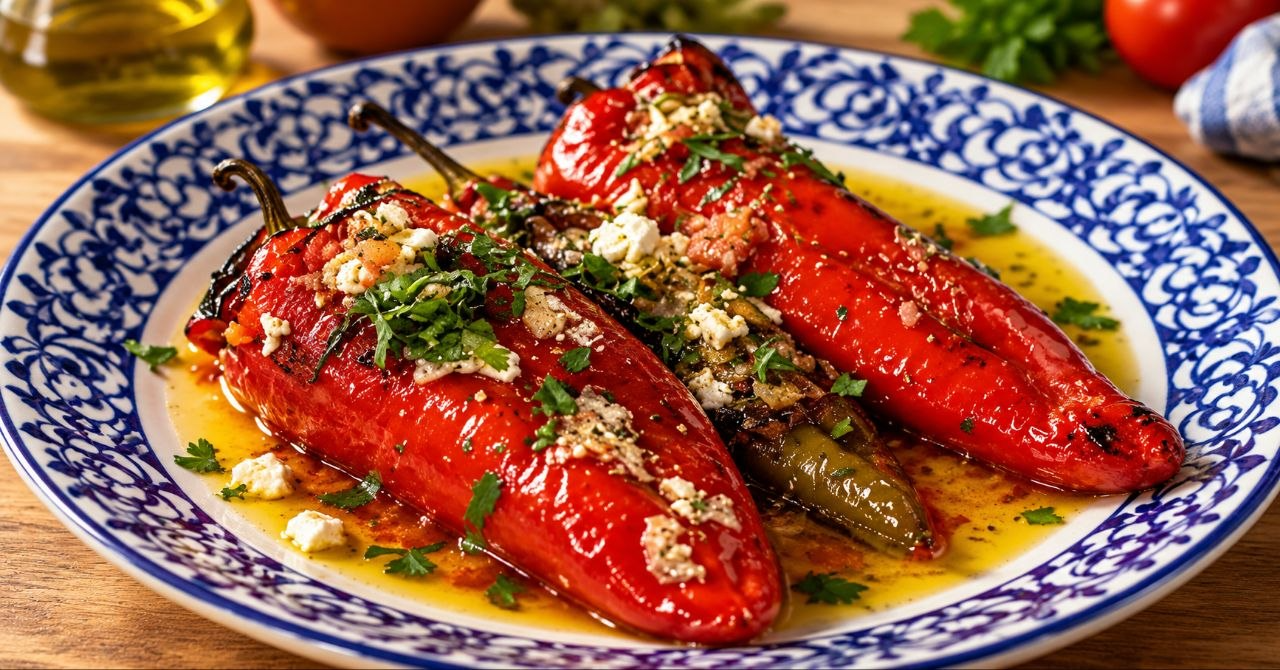
Stuffed Horn Peppers
Horn peppers stuffed with feta, tomato, garlic and wild oregano, baked until soft and caramelised — an American ingredient that became a Greek kitchen staple.
Read the story