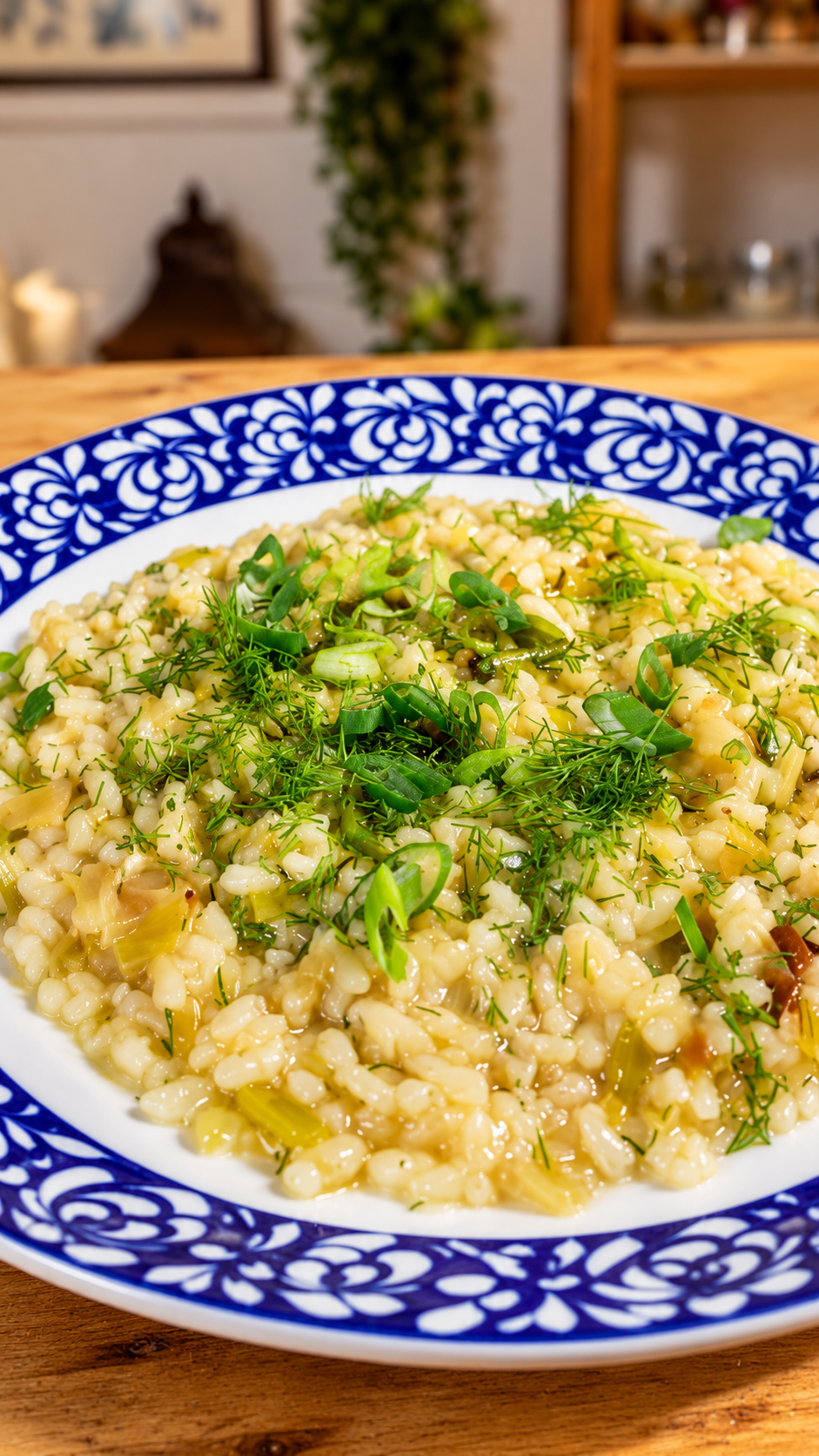
a dish from greece —
Lemon Prasorizo with Dill
How this dish came to life
Cultural significance
Prasorizo belongs to the great family of Greek ladera and rice dishes — proof that a garden, a pot, and a little patience were always enough to gather a family around the table.
step by step
Instructions
- 1
Wash the leeks thoroughly. Finely chop the white and light-green parts. Keep a little of the tender green part, thinly slice it, and set aside for the end. Discard any tough outer leaves.
- 2
If you prefer fluffy rice with separate grains, rinse the rice under cold water to remove excess surface starch, then drain well.
- 3
Melt the butter in a wide pot over medium-low heat. Add the finely chopped leeks with a pinch of salt. Cook gently, stirring regularly, until soft, sweet, and lightly caramelized.
- 4
Add the onion and cook until softened. Add the garlic and cook for another 30 seconds.
- 5
Stir in the rice and cook for 1 minute. Add the vegetable stock or water, using approximately 1–1½ parts liquid for every 1 part rice, measured by volume. Adjust the amount according to the rice you use.
- 6
Bring to a full boil, then reduce the heat, cover, and simmer gently for about 15 minutes, or until the rice is tender. Add a little more vegetable stock or water if needed.
- 7
Once the rice is cooked, remove from the heat. Stir in the olive oil, lemon zest, and lemon juice to taste. Adjust the salt and black pepper.
- 8
Fold in the reserved thinly sliced leek greens for a little crunch and freshness.
- 9
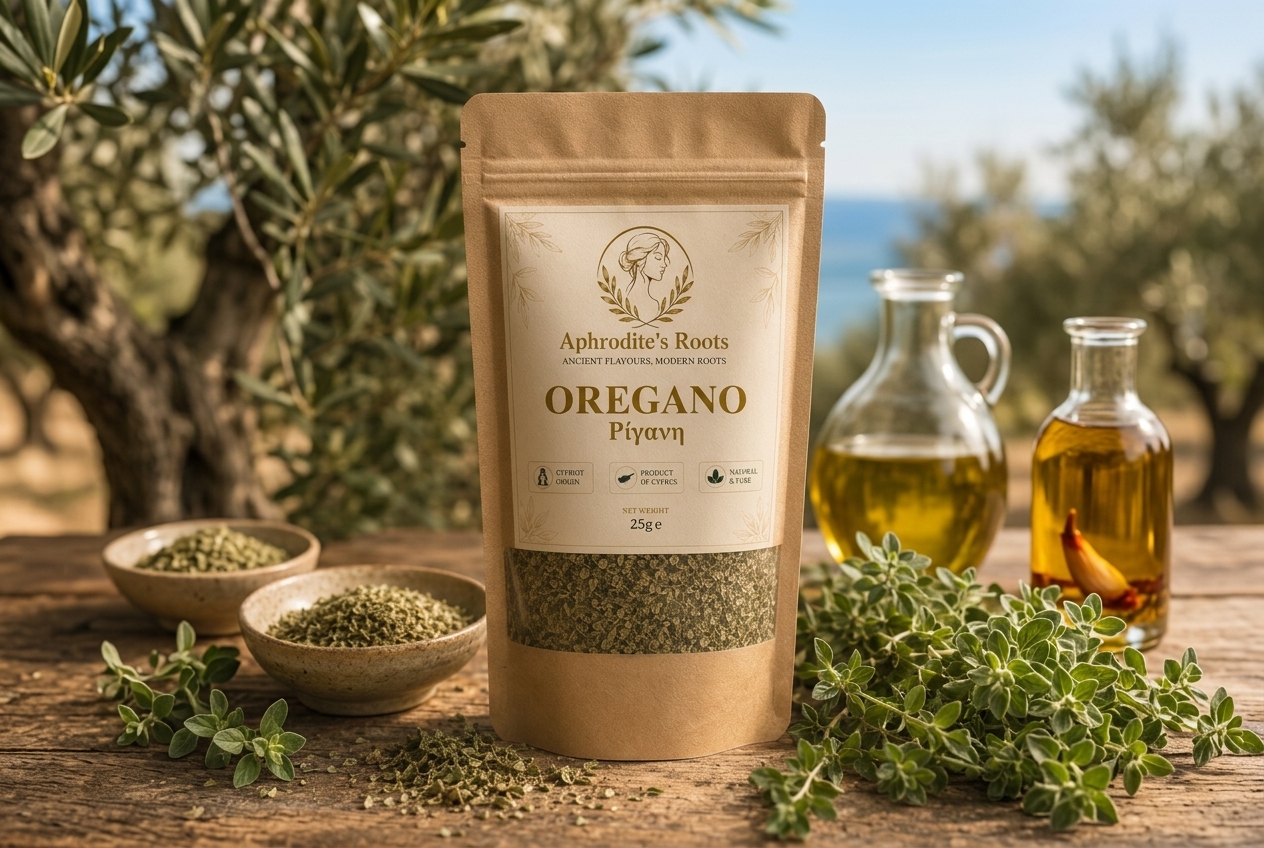
Serve with freshly chopped dill and a sprinkle of Aphrodite's Roots oregano.
tips from the village —
Wisdom from grandmothers
- 01The leeks want time, not heat — low and slow until sweet is the whole dish.
- 02Add the lemon off the heat; boiled lemon turns bitter, fresh lemon sings.
- 03The raw leek greens folded in at the end are the fresh crunch that wakes the pot up.
- 04A spoonful of feta on top makes it a northern-Greek winter dinner.
Related recipes

Avgofetes
Greek egg-fried bread — yesterday's loaf dipped in egg and milk, fried golden in olive oil and served with honey and cinnamon. Older than French toast.
Read the story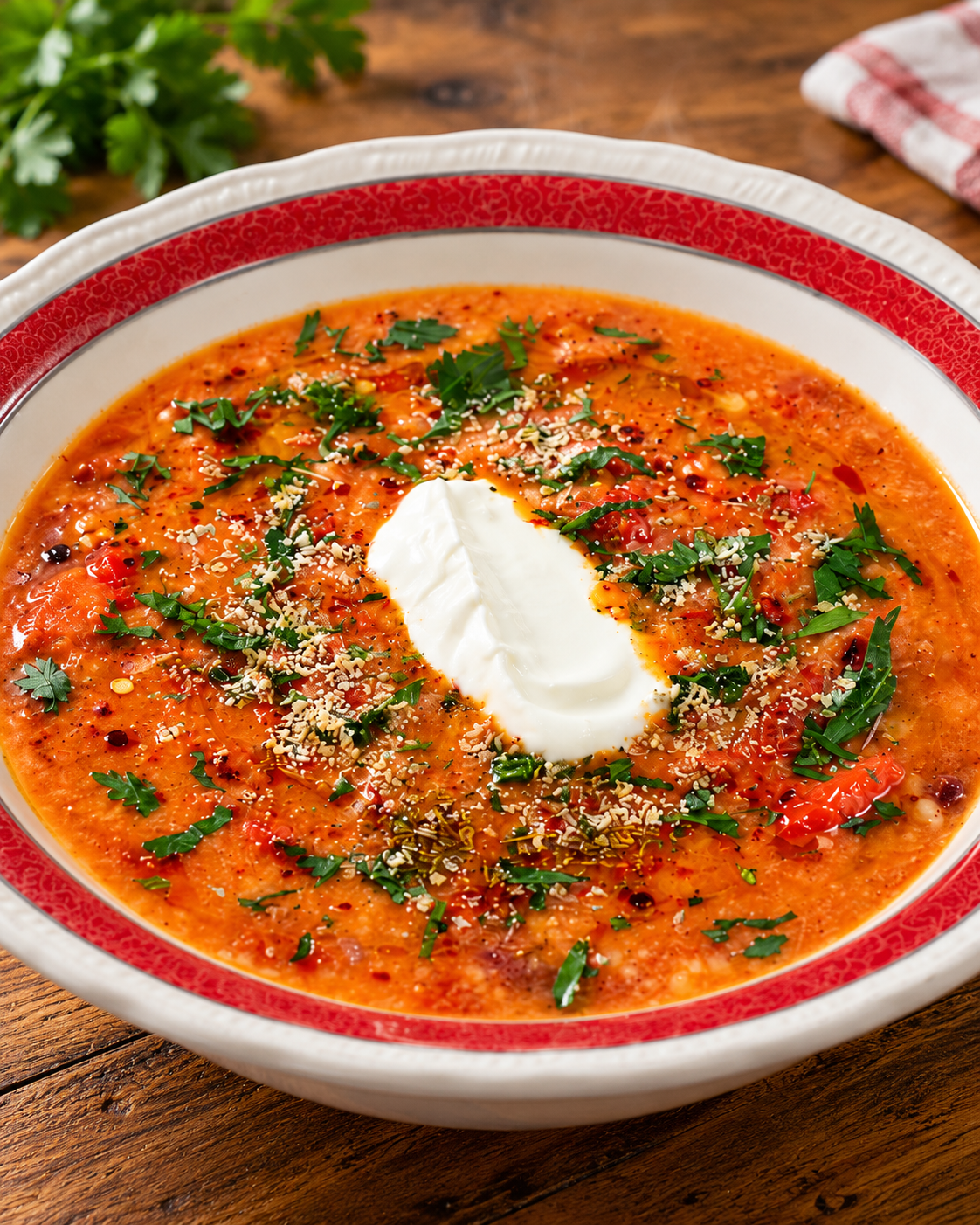
Kokkinistos Trahanas with Yogurt
Sour trahana simmered in a spicy tomato broth until creamy, served with cool Greek yogurt, boukovo and wild oregano — one humble food, countless traditions.
Read the story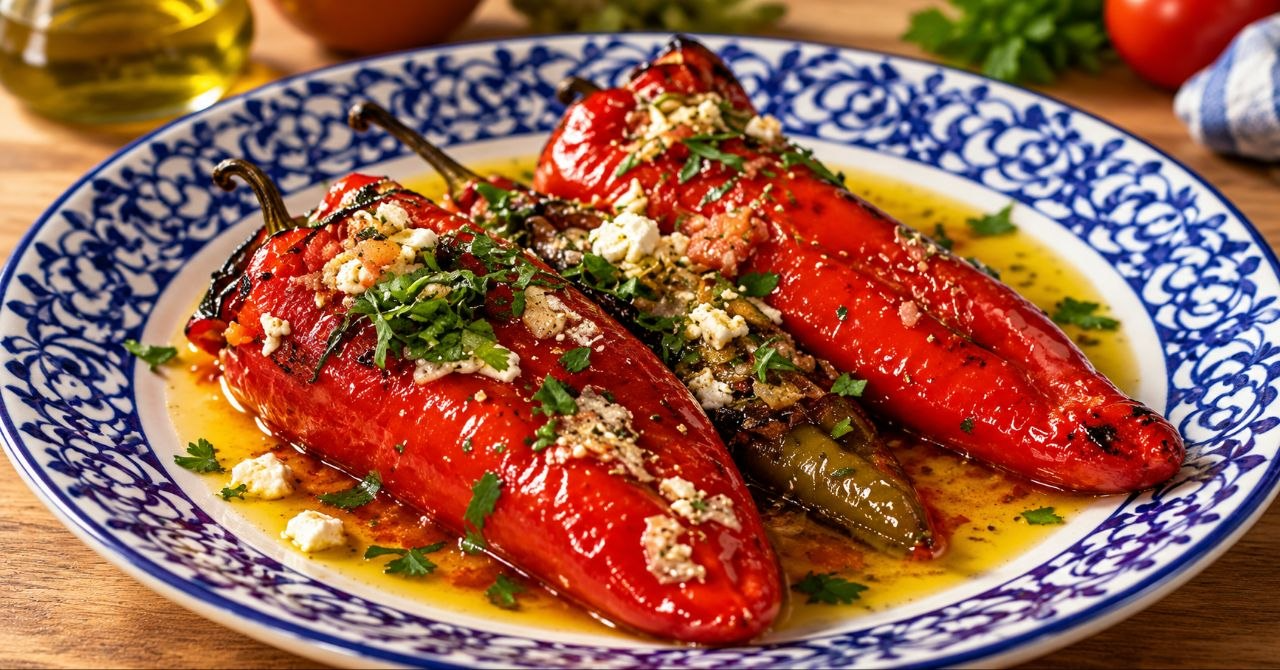
Stuffed Horn Peppers
Horn peppers stuffed with feta, tomato, garlic and wild oregano, baked until soft and caramelised — an American ingredient that became a Greek kitchen staple.
Read the story