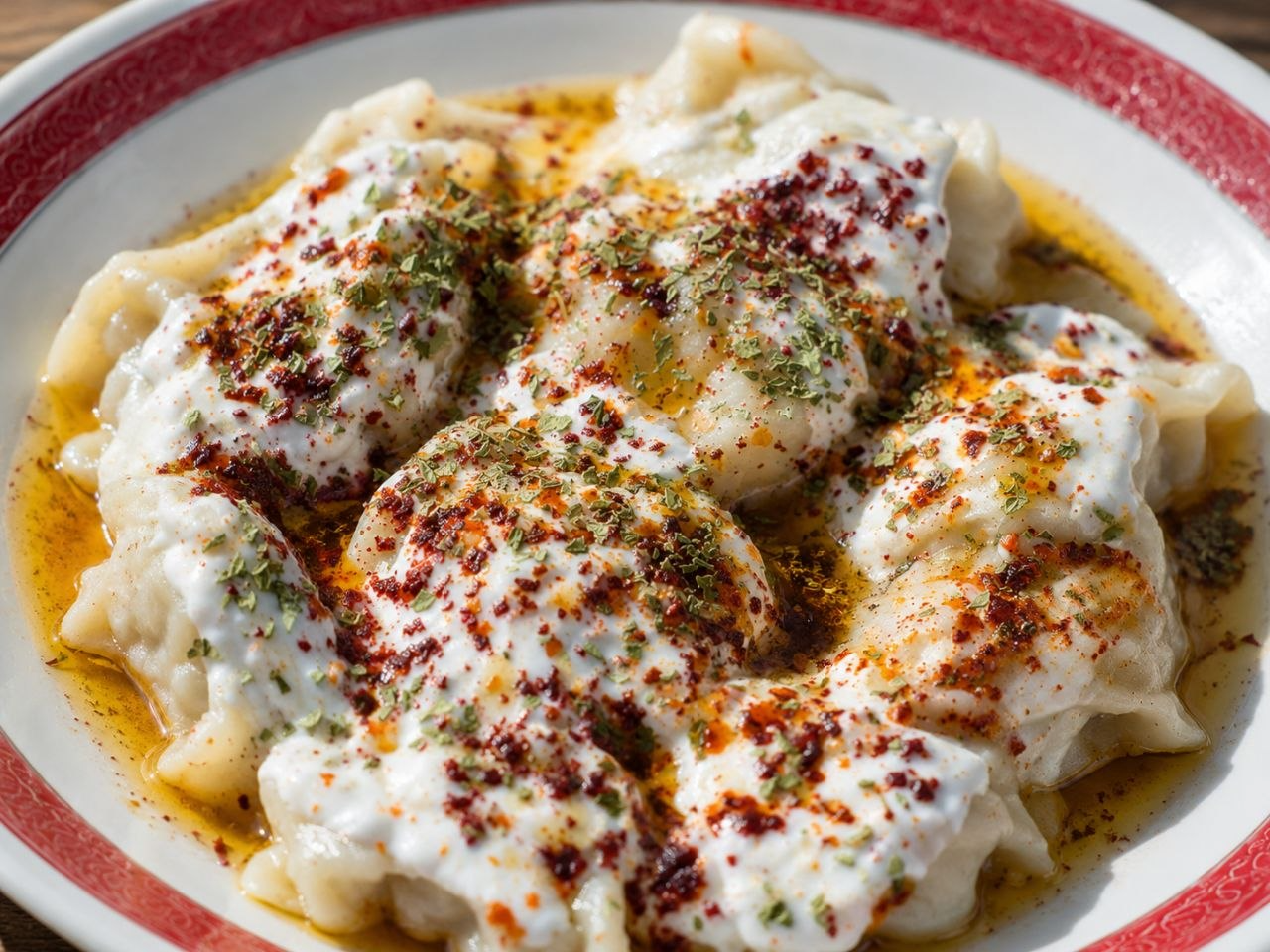
How this dish came to life
Cultural significance
Manti is one of the most enduring symbols of the Pontic Greek diaspora — a dish carried out of the Black Sea in the pockets of refugees and rebuilt in the kitchens of Macedonia, Athens, and Thessaloniki after 1923. For Pontic and Cappadocian Greek families, the act of folding manti is itself a memorial: an afternoon spent at the table with mothers, aunts, and grandmothers, hands moving in rhythm, language and lineage passed down along with the dough. The dish belongs to a shared Mediterranean and Central Asian dumpling family that includes Turkish *mantı*, Armenian *manti*, Korean *mandu*, and Chinese *jiaozi* — proof that food, more than any flag or border, remembers where people came from.
step by step
Instructions
- 1
Make the dough. Sift the flour into a wide bowl and mix in the salt. Crack in the egg, pour in most of the water, and bring everything together with your hands. Add the remaining water gradually — the dough should be firm but smooth, not sticky. Knead on the counter for 8–10 minutes until elastic and silky.
- 2
Wrap the dough in clingfilm or cover with a damp cloth and let it rest for at least 30 minutes at room temperature. This rest is non-negotiable — it relaxes the gluten and is the only way to roll the dough paper-thin without it tearing.
- 3
While the dough rests, make the filling. In a bowl, combine the ground beef, grated onion (squeeze out the excess juice first — too much liquid will burst the pouches), cumin, a generous pinch of salt, and plenty of black pepper. Mix with your hands until completely smooth and uniform — almost like a paste. Set aside in the fridge.
- 4
Divide the rested dough into 3–4 pieces (it's easier to roll in batches). On a lightly floured surface, roll the first piece out as thin as you can — ideally 1–2 mm. You should almost be able to see your hand through it.
- 5
Cut the sheet into small squares, about 3 x 3 cm. Pontic-style manti are tiny — the closer to a fingertip, the more authentic. Don't worry about perfection; size will even out as you go.
- 6
Place a small pea-sized amount of filling in the centre of each square. Lift the four corners up and pinch them firmly together at the top to form a small pouch — like a tiny gift. Press the seams gently so they hold but don't squash the pouch flat.
- 7
Lay the finished manti on a lightly floured tray, not touching each other, while you finish the rest of the dough. (At this stage, you can also bake them at 160°C for 10 minutes until lightly dried, which is the Pontic way of preserving them — they keep for weeks.)
- 8
Bring a wide pot of well-salted water to a gentle simmer — not a rolling boil, or the pouches will burst. Drop the manti in batches and cook for 5–7 minutes, until they float and the dough is tender.
- 9
While the manti cook, prepare the yogurt sauce. In a bowl, whisk the yogurt with the grated garlic if using. Ladle a few spoonfuls of the hot manti cooking water into the yogurt and whisk — this loosens it and brings it close to body temperature so it won't shock cold over the hot dumplings.
- 10
Melt the butter in a small pan over medium heat until it just turns golden and smells nutty. Take it off the heat and stir in the paprika and Bükovo — be quick, the residual heat is enough; do not let the spices burn or they will turn bitter.
- 11
Lift the manti out of the water with a slotted spoon and arrange them on a wide warm plate. Spoon the warm yogurt generously over the top. Pour the hot spiced butter all over — it should sizzle slightly as it hits the yogurt.
- 12
Finish with a heavy snowfall of dried mint and sumac. Eat immediately, while everything is hot and the layers — pasta, meat, cool yogurt, hot butter, herb, acid — are still in motion against each other.
tips from the village —
Wisdom from grandmothers
- 01Roll the dough as thin as you possibly can. The Pontic ideal is paper — when the manti are tiny, the dough should disappear under the filling, not dominate it. If you can't roll it that thin by hand, use a pasta machine on the second-thinnest setting.
- 02Drain the grated onion. Onion holds an enormous amount of water and will turn your filling soupy. Squeeze it firmly in a clean cloth or with your hands before mixing into the beef.
- 03Salt the filling well. The beef is sealed inside the dough and gets no salt from the cooking water — under-seasoned filling is the most common mistake.
- 04Cook in gentle water, not a rolling boil. Aggressive boiling will tear the seams of these tiny pouches. A bare simmer is plenty.
- 05Temper the yogurt. Adding a ladle of hot cooking water before serving stops the yogurt from splitting under the hot butter and gives it the slightly silky, looser texture Pontic manti is known for.
- 06Brown the butter before adding the paprika. The nuttiness of brown butter is half the soul of the dish — but pull it off the heat before the paprika and Bükovo go in, or the spices will burn instantly and turn the whole sauce bitter.
- 07Make a double batch. This is the recipe Pontic grandmothers made for an entire afternoon, with several generations around the table. Halve the work by inviting people to help fold — that is how manti was meant to be made.
- 08Freeze the extras. Lay the uncooked manti on a tray, freeze until solid, then transfer to a bag. Cook from frozen — just add 2–3 extra minutes to the boil.
Related recipes
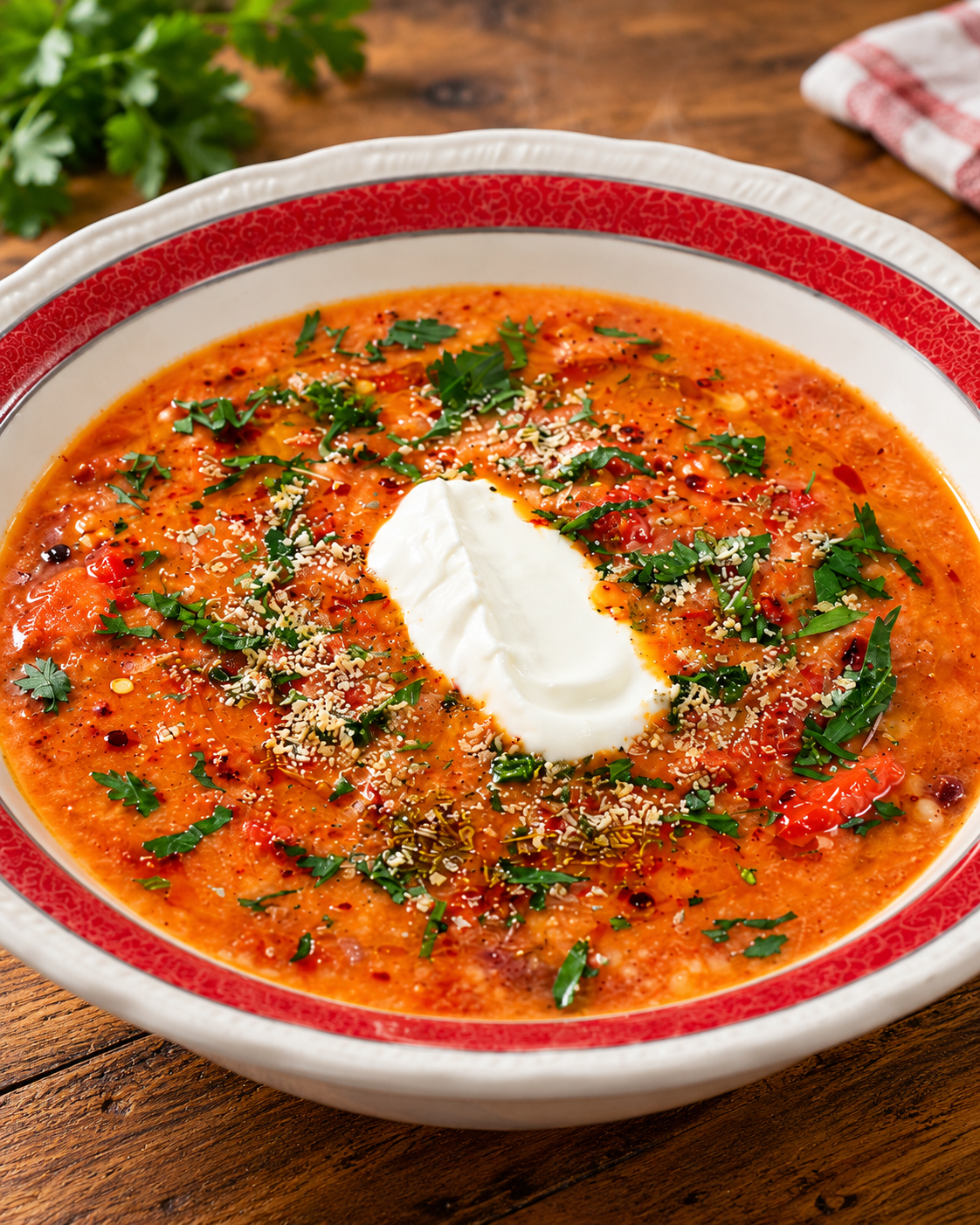
Kokkinistos Trahanas with Yogurt
Sour trahana simmered in a spicy tomato broth until creamy, served with cool Greek yogurt, boukovo and wild oregano — one humble food, countless traditions.
Read the story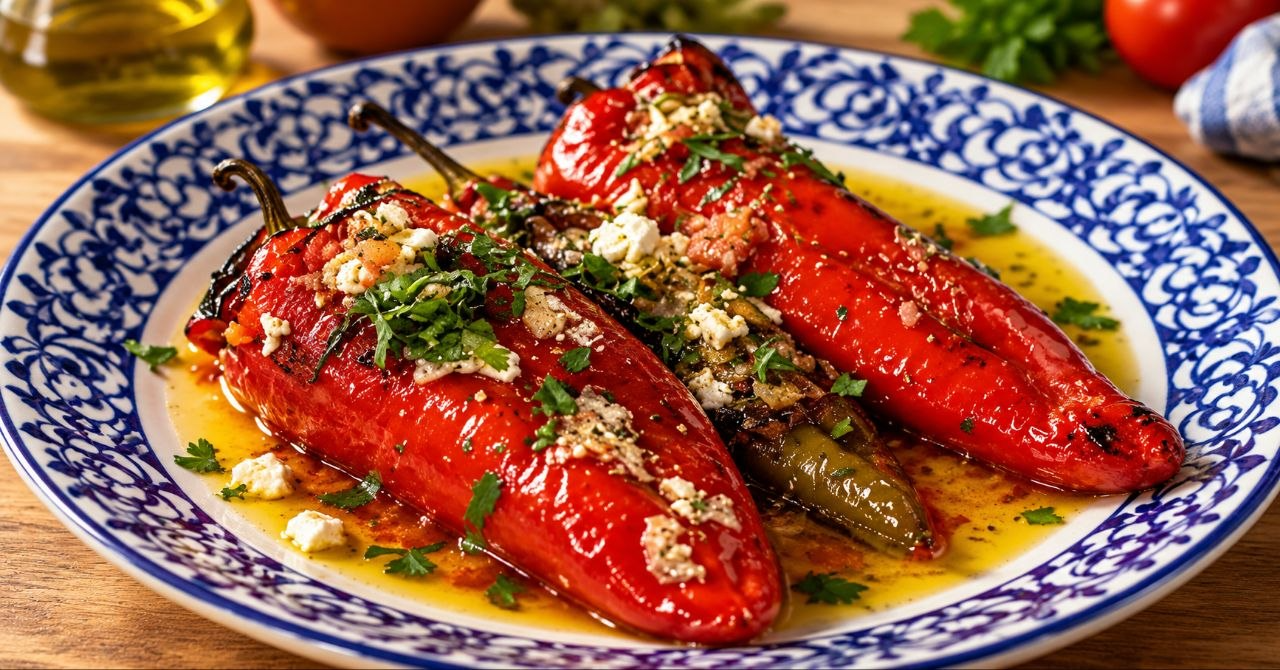
Stuffed Horn Peppers
Horn peppers stuffed with feta, tomato, garlic and wild oregano, baked until soft and caramelised — an American ingredient that became a Greek kitchen staple.
Read the story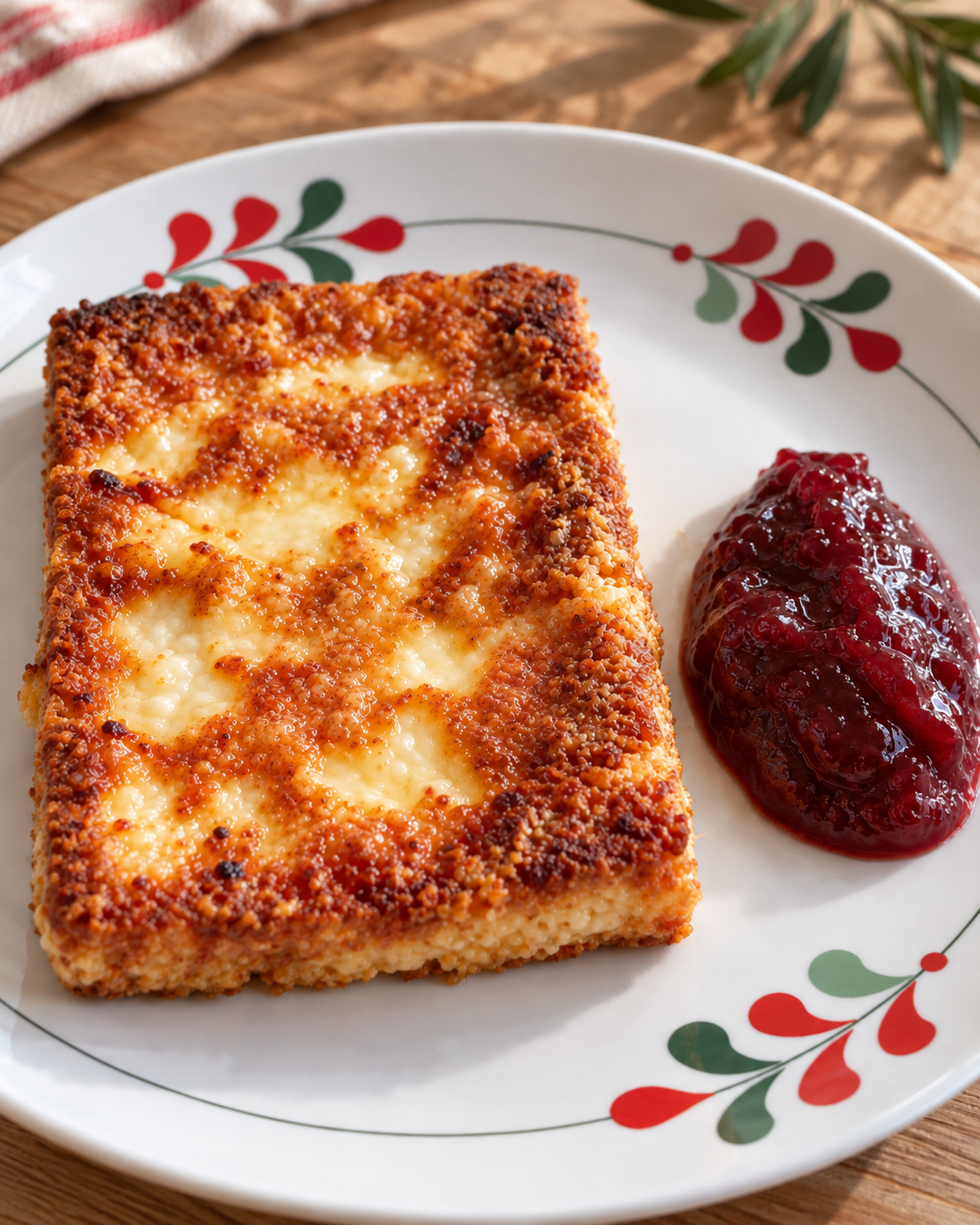
Saganaki with Grape Jam
Golden fried cheese, crisp outside and molten within, served with a slow-cooked grape jam brightened with lime — the taverna classic named after its little pan.
Read the story