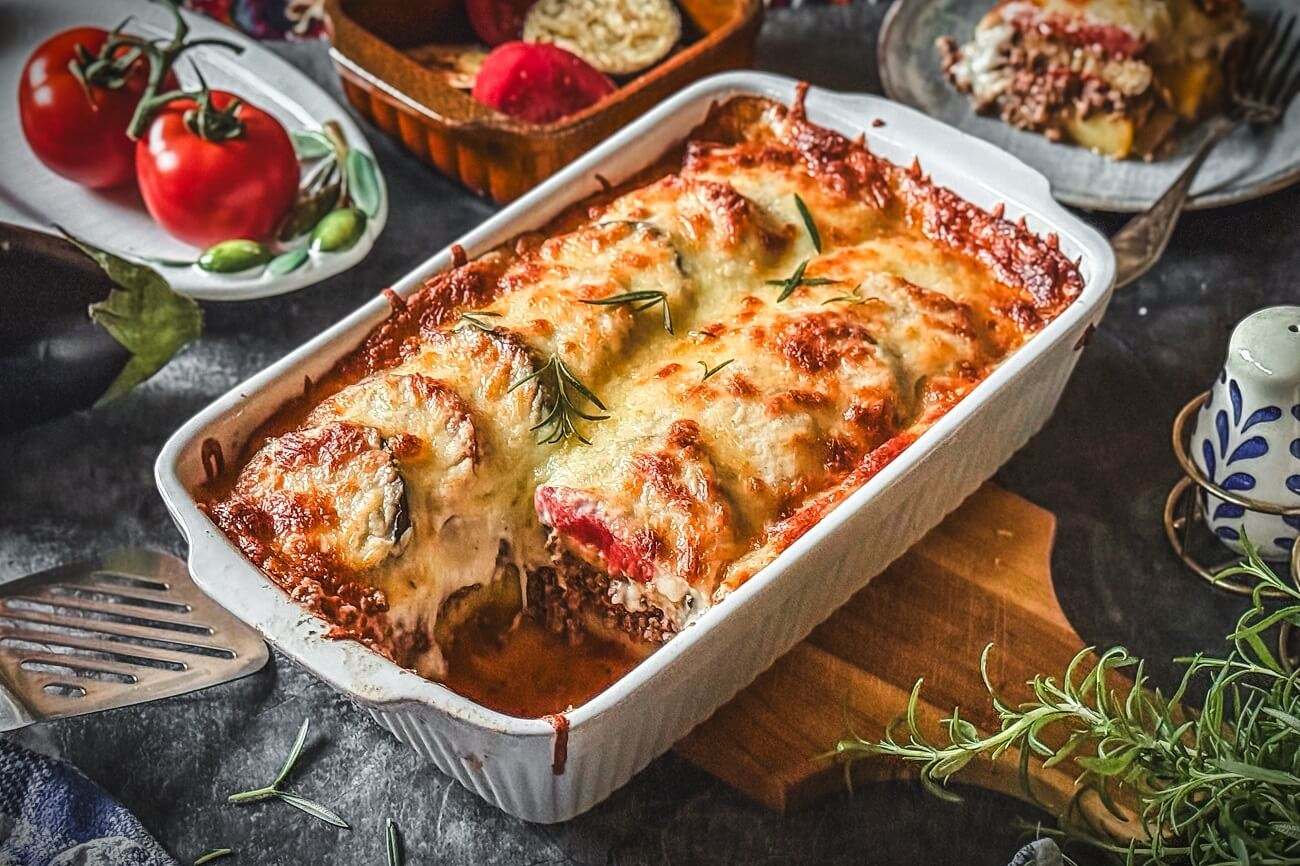
How this dish came to life
Cultural significance
Moussaka is one of the cornerstone dishes of modern Greek cuisine — the country's emblematic baked casserole, served at family gatherings, name days, Easter Sundays, and any time a Greek wants to show off the kitchen. Its layered structure (potatoes, meat, eggplant, béchamel) is the Greek take on a Mediterranean tradition that stretches across the Levant, but the cinnamon, the wine, and the proudly cheesy crust make it unmistakably ours.
step by step
Instructions
- 1
Salt the eggplant slices and let them sit in a colander for 30 minutes to release their bitter juices. Pat dry with paper towel before frying.
- 2
Heat sunflower oil (about 1.5 cm deep) in a heavy pan over medium-high heat. Fry the potato slices in batches until deeply golden on both sides. Drain on paper. Repeat with the eggplants — they take less time and absorb more oil, so don't crowd the pan. Set both aside.
- 3
Make the meat sauce: heat a drizzle of olive oil in a wide pan over medium-high heat. Sear the ground beef in batches until well browned, then lift it out of the pan and set aside.
- 4
Lower the heat. Add the chopped onion and a pinch of salt to the same pan and cook gently for 5 minutes until soft. Add the garlic for the last minute.
- 5
Stir in the tomato paste and cook for a full minute until it darkens slightly — this is the difference between a good moussaka and a great one.
- 6
Return the seared beef to the pan. Deglaze with the red wine, scraping the bottom of the pan, and let it bubble away for 2 minutes.
- 7
Pour in the tomato sauce. Add the bay leaf, cinnamon and allspice. Season with salt and pepper. Lower the heat and simmer uncovered for 20–25 minutes, until thick, glossy and round. Fish out the bay leaf.
- 8
Make the béchamel: melt the butter in a heavy pan over medium-low heat. Whisk in the flour and cook for a full minute — the roux should smell biscuity, never browned.
- 9
Slowly pour in the warm milk, whisking constantly, until smooth. Cook gently for 5–7 minutes, whisking often, until the sauce thickens enough to coat the back of a spoon. Off the heat, season with nutmeg, salt and white pepper.
- 10
Heat the oven to 180°C / 355°F. Assemble in a deep baking dish: a layer of fried potatoes at the bottom, a thick layer of meat sauce on top, then the fried eggplants in a single overlapping layer.
- 11
Pour the béchamel evenly over the eggplants, smoothing the top with a spatula. Scatter the grated cheese generously across the surface.
- 12
Bake for 45–60 minutes, until the top is deeply golden and bronzed and the edges are bubbling slightly.
- 13
Rest the moussaka for at least 20 minutes before cutting — non-negotiable. Cut too early and the layers slide; rest it and they hold like a cathedral.
tips from the village —
Wisdom from grandmothers
- 01Salt the eggplants before frying. Skip this and the dish will be heavy and bitter.
- 02Cook the tomato paste for a full minute before adding the liquid — that minute is the depth of the meat sauce.
- 03Use warm milk for the béchamel. Cold milk into a hot roux makes lumps every time.
- 04Rest the moussaka at least 20 minutes before cutting. This is the rule no Greek grandmother breaks.
- 05Yesterday's moussaka is better than today's. Make it ahead, refrigerate overnight, and reheat at 160°C — the layers set even more beautifully.
Related recipes
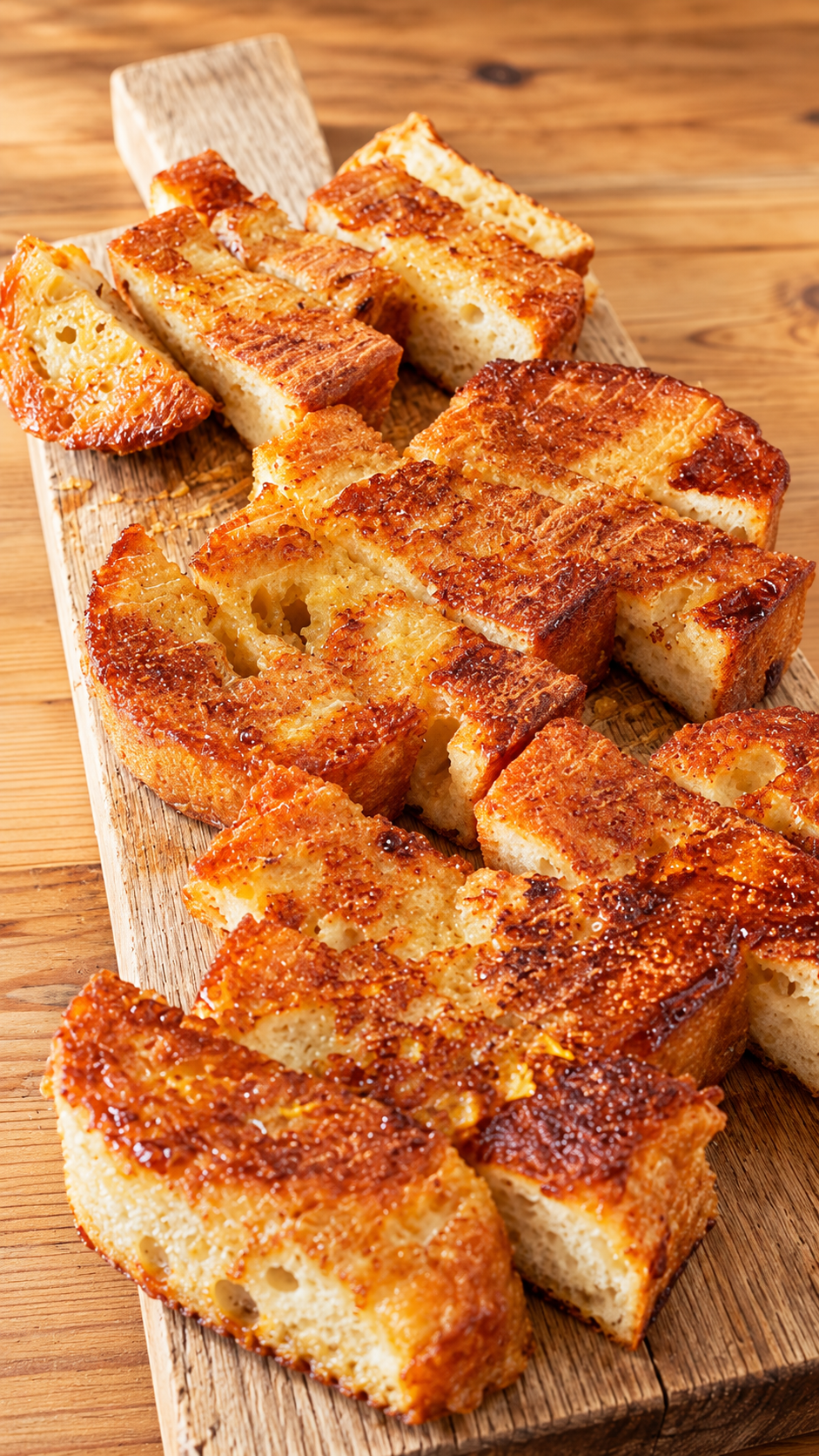
Avgofetes
Greek egg-fried bread — yesterday's loaf dipped in egg and milk, fried golden in olive oil and served with honey and cinnamon. Older than French toast.
Read the story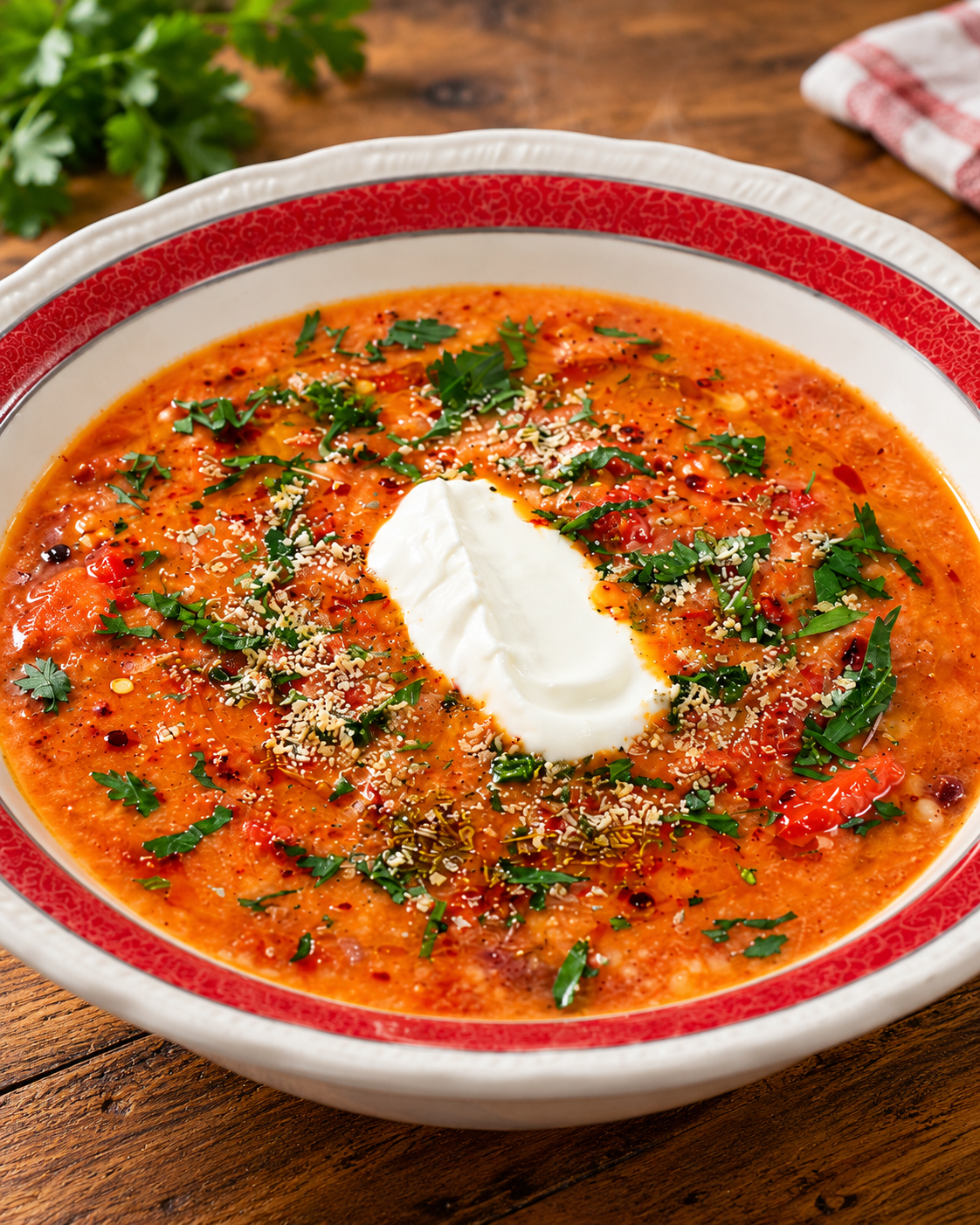
Kokkinistos Trahanas with Yogurt
Sour trahana simmered in a spicy tomato broth until creamy, served with cool Greek yogurt, boukovo and wild oregano — one humble food, countless traditions.
Read the story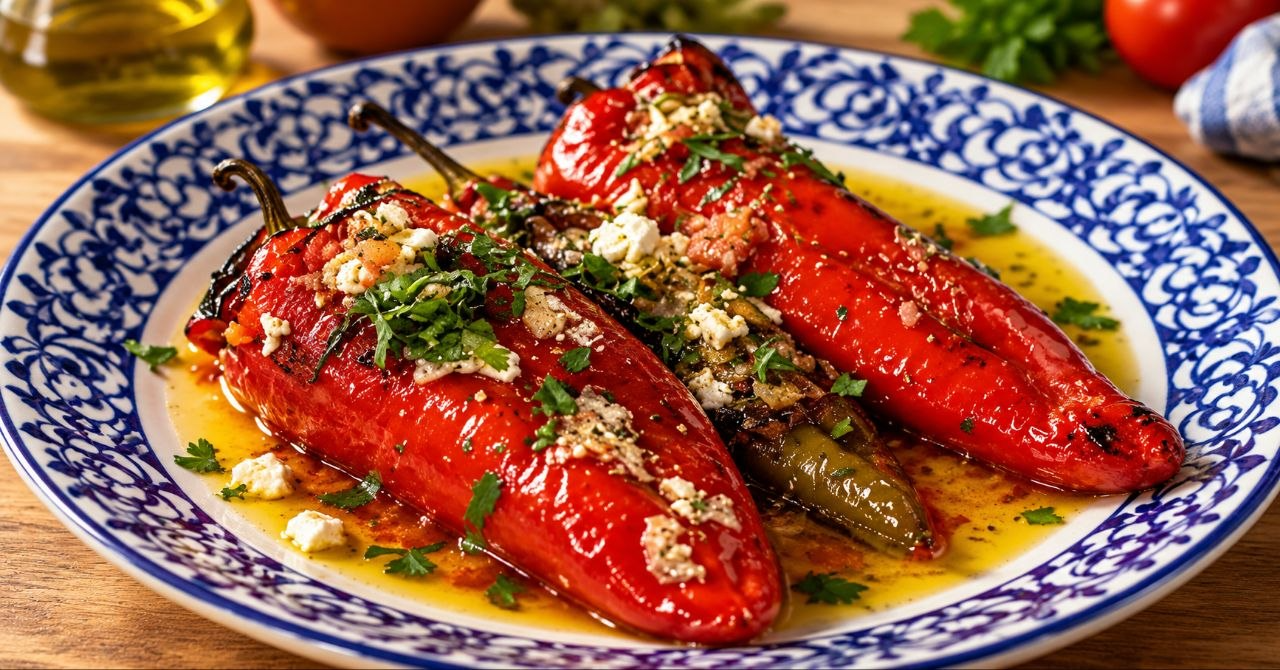
Stuffed Horn Peppers
Horn peppers stuffed with feta, tomato, garlic and wild oregano, baked until soft and caramelised — an American ingredient that became a Greek kitchen staple.
Read the story