How this dish came to life
Cultural significance
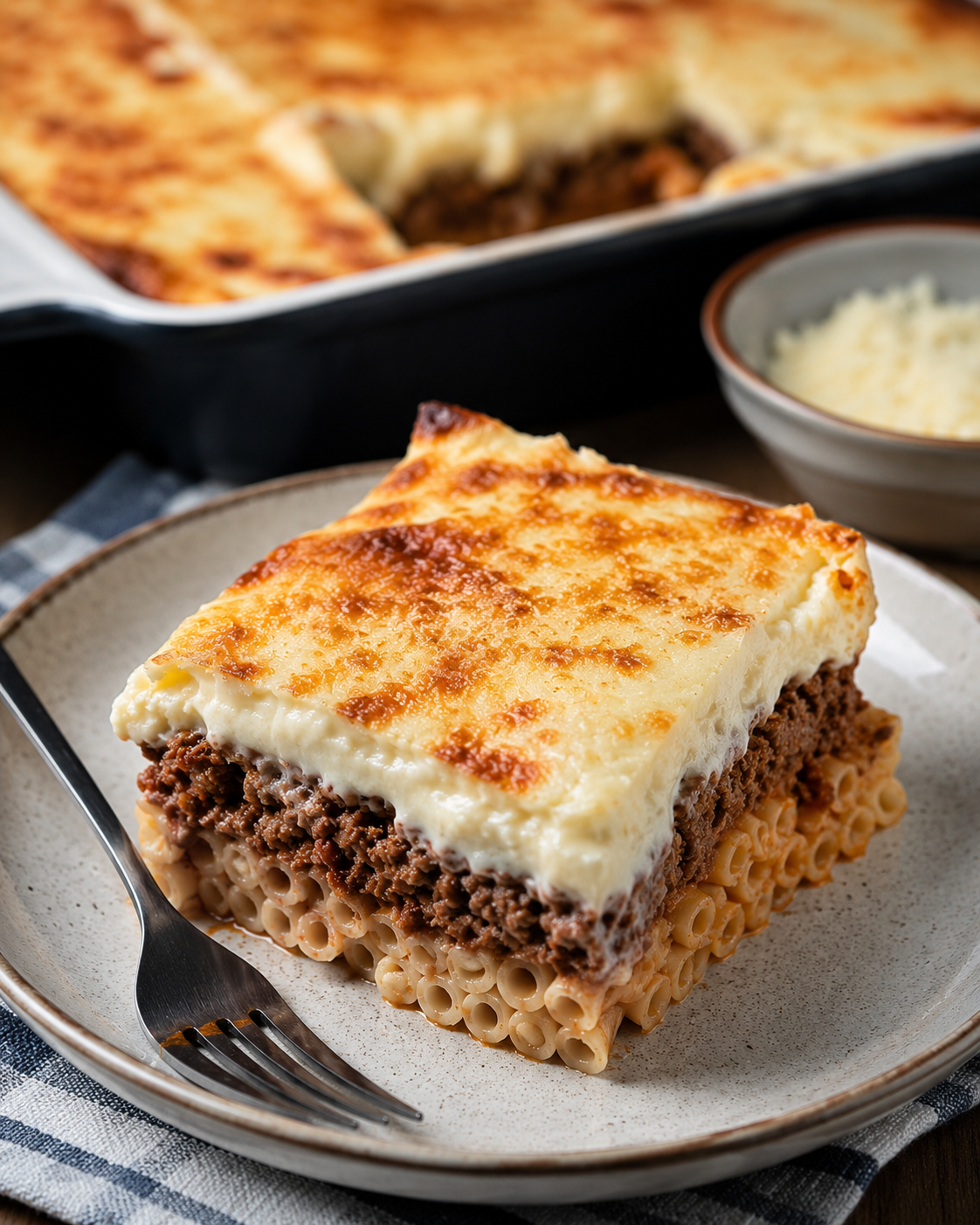
Pastitsio sits at the top of the Greek tavla — the Sunday lunch table — alongside moussaka and roasted lamb. It is comfort food elevated to occasion food: not something you throw together on a Tuesday, but the dish that says *we are all here, and we have time*. Every family has their own version — some richer with cheese, some heavier on the cinnamon, some with a hidden layer of grated kefalotyri between the pasta and the meat — and every grandmother is convinced hers is the right one.
step by step
Instructions
- 1
Boil the Fortunato pasta in plenty of well-salted water until slightly under al dente — about 2 minutes less than the packet says. It will finish cooking in the oven. Drain, toss with a tiny drizzle of olive oil to stop it clumping, and set aside.
- 2
In a large heavy pan, heat a splash of olive oil over high heat and sear the minced meat in batches — don't crowd the pan. You want colour, not steamed grey meat. Break it up as it browns, then lift it out onto a plate.
- 3
Lower the heat to medium. Add another splash of olive oil to the same pan and sauté the chopped onion for 5–6 minutes until soft and translucent. Add the garlic and cook another minute until fragrant.
- 4
Return the browned meat to the pan. Add the tomato paste and stir it through, cooking for 2–3 minutes — it should darken and start sticking to the base of the pan. This step is what gives the sauce its depth; don't rush it.
- 5
Deglaze with the red wine, scraping up all the caramelised bits from the bottom. Let the alcohol bubble hard for 1–2 minutes until the harsh smell disappears.
- 6
Add the concassé tomatoes and the chicken stock. Stir in the bay leaves, cumin, allspice, and cinnamon stick. Season with salt, black pepper, and the teaspoon of sugar (it balances the acidity of the tomato — trust it).
- 7
Bring to a gentle simmer, then lower the heat to the barest bubble and cook uncovered for 40–45 minutes, stirring occasionally, until the sauce is thick, glossy, and the fat has risen to the top. Fish out the bay leaves and cinnamon stick. Stir in the chopped parsley. Taste and adjust seasoning.
- 8
While the sauce simmers, make the béchamel. Warm the milk in a saucepan until steaming but not boiling — this stops it from seizing when it hits the roux.
- 9
In another heavy-based saucepan, melt the butter over medium heat until it foams. Add the flour and whisk continuously for 2 minutes to cook out the raw taste — the roux should smell like biscuits, not paste. Do not let it brown.
- 10
Take the roux off the heat and add the warm milk slowly, a ladle at a time, whisking hard between each addition until fully incorporated. This is the only trick to a lump-free béchamel — patience with the first three ladles. Once smooth, put it back on medium-low heat and stir constantly with a wooden spoon until it thickens to the consistency of thick custard, about 8–10 minutes.
- 11
Remove the béchamel from the heat. Let it cool for 2–3 minutes, then whisk in the egg yolks one at a time — if the sauce is too hot the yolks will scramble. Season generously with salt, a little white pepper, and freshly grated nutmeg. It should taste bold; it will mellow in the oven.
- 12
Preheat the oven to 180°C (fan) / 200°C conventional. Butter a large deep baking tray (approximately 30 x 40 cm).
- 13
Layer 1: Spread half the pasta into the buttered tray, arranging the tubes lengthwise if using long pasta. Sprinkle with a generous handful of grated cheese — this glues the pasta together.
- 14
Layer 2: Spoon the meat sauce evenly over the pasta, right into the corners. Press it down gently with the back of the spoon so it fills the gaps between the tubes.
- 15
Layer 3: Cover with the remaining pasta and press down again. Another handful of grated cheese on top.
- 16
Layer 4: Pour the béchamel over the top in an even blanket, using a spatula to smooth it into every corner. Sprinkle the remaining cheese across the surface.
- 17
Bake for 45–55 minutes, until the top is deeply golden and blistered in places — the darker the better. If it's not colouring enough, hit it with the grill for the last 3–4 minutes, watching carefully.
- 18
Take it out and — this is the most important step — let it rest on the counter for a full 20–25 minutes before cutting. This is not optional. It lets the layers set. Cut into generous squares, serve with a horiatiki salad and a glass of red wine, and don't be shy with the portions.
tips from the village —
Wisdom from grandmothers
- 01Half beef, half pork is the traditional Greek mix — the pork brings the fat and depth, the beef brings the body. All-beef works but is drier.
- 02Cook the sauce until you see the fat separate to the top. That's the visual cue that the sauce is done — before that, it's still watery and the flavours haven't married.
- 03Undercook the pasta. It will keep cooking in the oven while it soaks up the meat juices and béchamel. Fully cooked pasta in the tray means mushy pasta on the plate.
- 04Warm the milk before it hits the roux. Cold milk on hot roux is how you get lumps. This is the single trick that separates a smooth béchamel from a bad one.
- 05The egg yolks go in off the heat. Add them while the béchamel is still boiling and you'll scramble them. Let it cool a couple of minutes first.
- 06Season the béchamel boldly. It will taste under-seasoned by itself — but between the meat and the pasta it needs to hold its own. Salt, nutmeg, white pepper — don't be shy.
- 07Rest before cutting. The 20 minutes on the counter are the difference between neat squares and a delicious puddle. Set a timer if you have to.
- 08It's better the next day. Pastitsio's flavours deepen overnight. Cut it, refrigerate, reheat covered at 160°C for 20 minutes. Some families argue it should never be served on the day it's made.
- 09Freezes brilliantly. Cut into portions, wrap each in foil, freeze. Reheat straight from frozen at 170°C, covered, for 45 minutes.
Related recipes
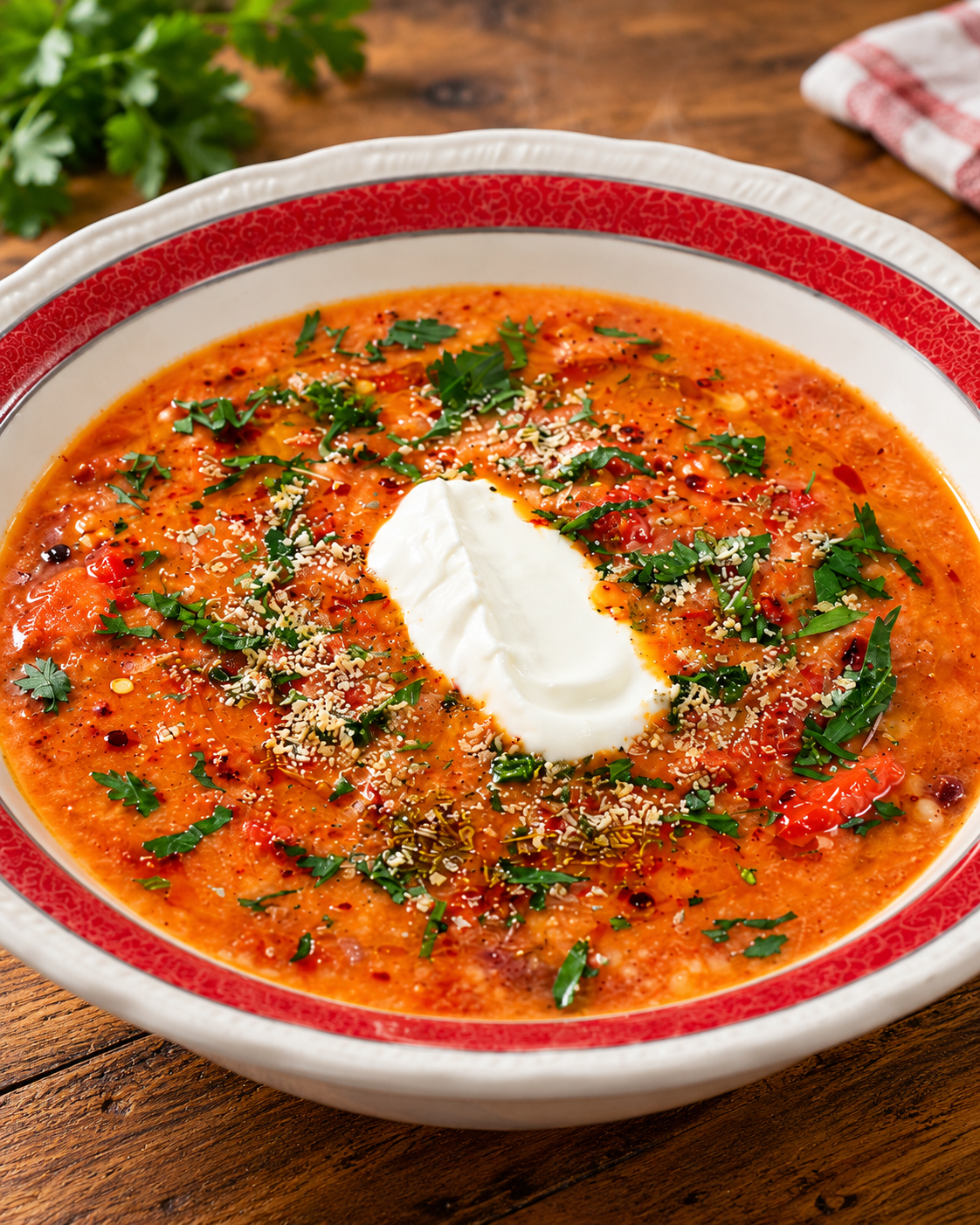
Kokkinistos Trahanas with Yogurt
Sour trahana simmered in a spicy tomato broth until creamy, served with cool Greek yogurt, boukovo and wild oregano — one humble food, countless traditions.
Read the story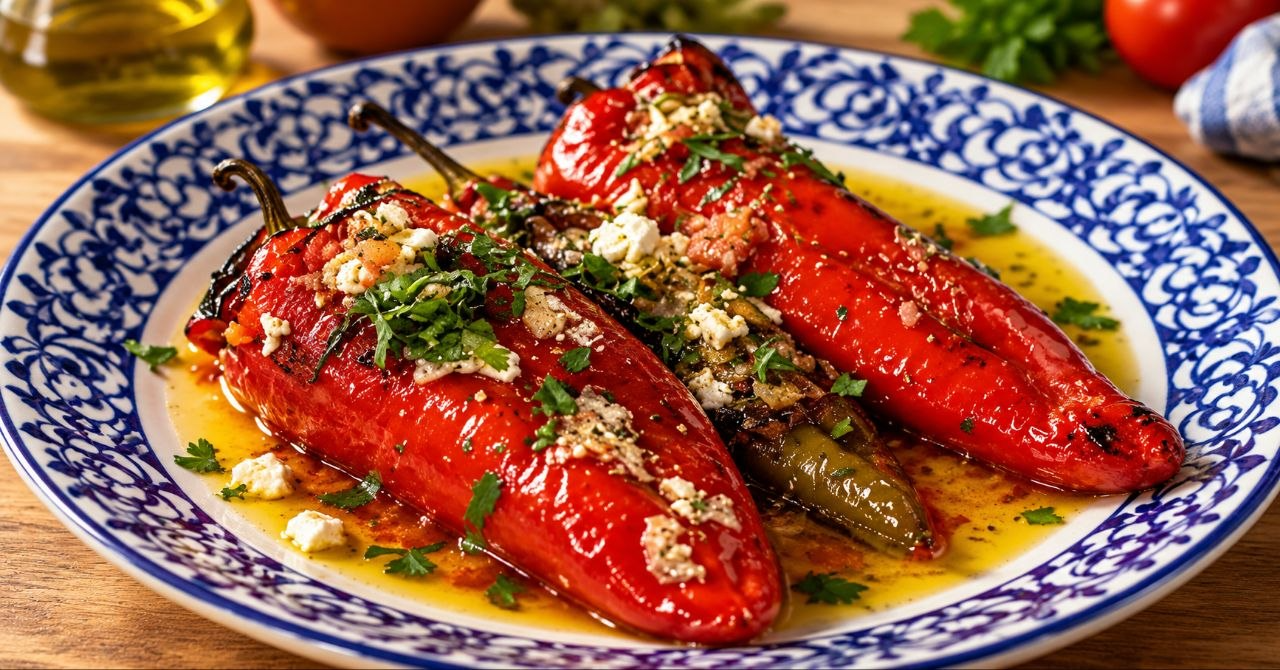
Stuffed Horn Peppers
Horn peppers stuffed with feta, tomato, garlic and wild oregano, baked until soft and caramelised — an American ingredient that became a Greek kitchen staple.
Read the story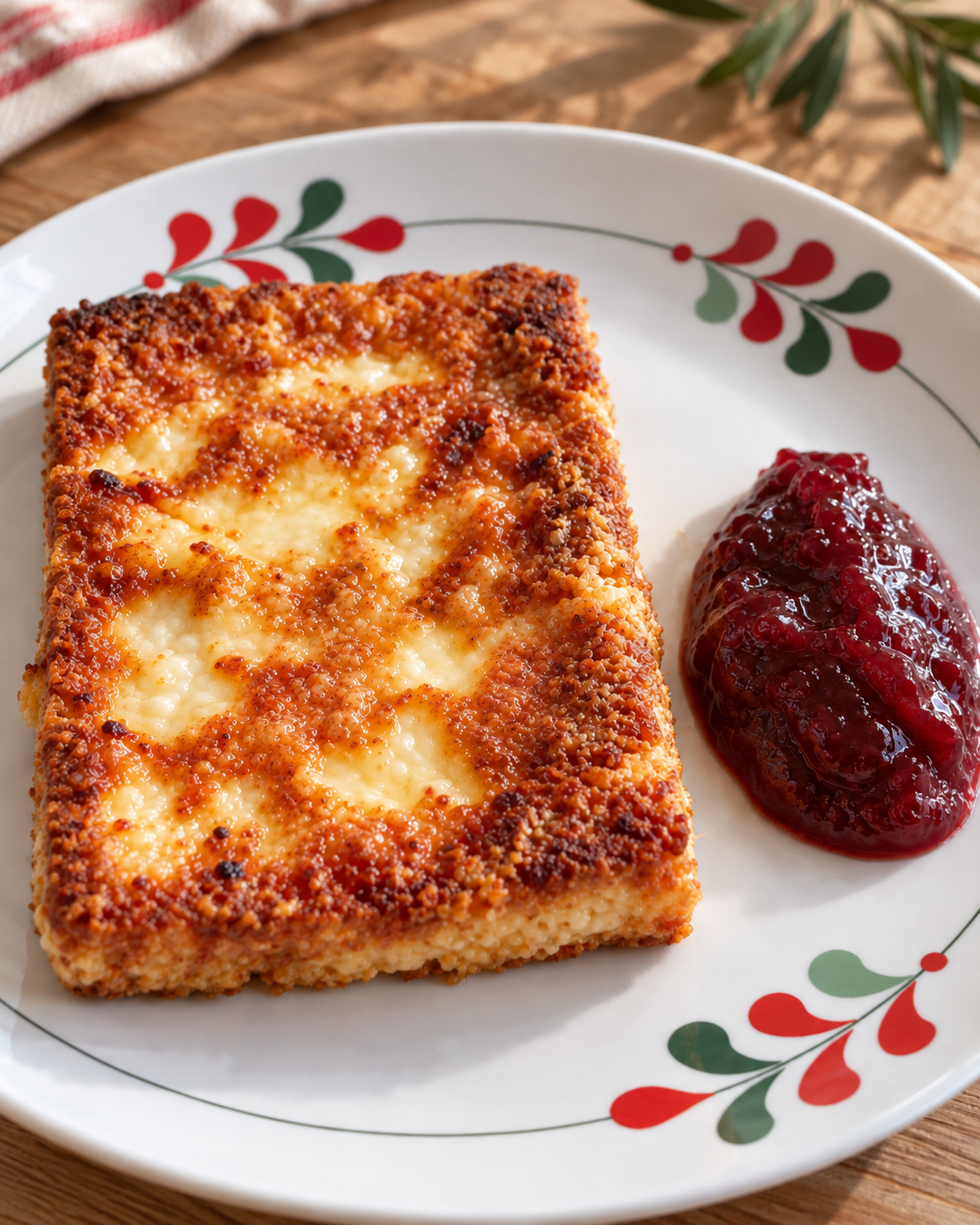
Saganaki with Grape Jam
Golden fried cheese, crisp outside and molten within, served with a slow-cooked grape jam brightened with lime — the taverna classic named after its little pan.
Read the story