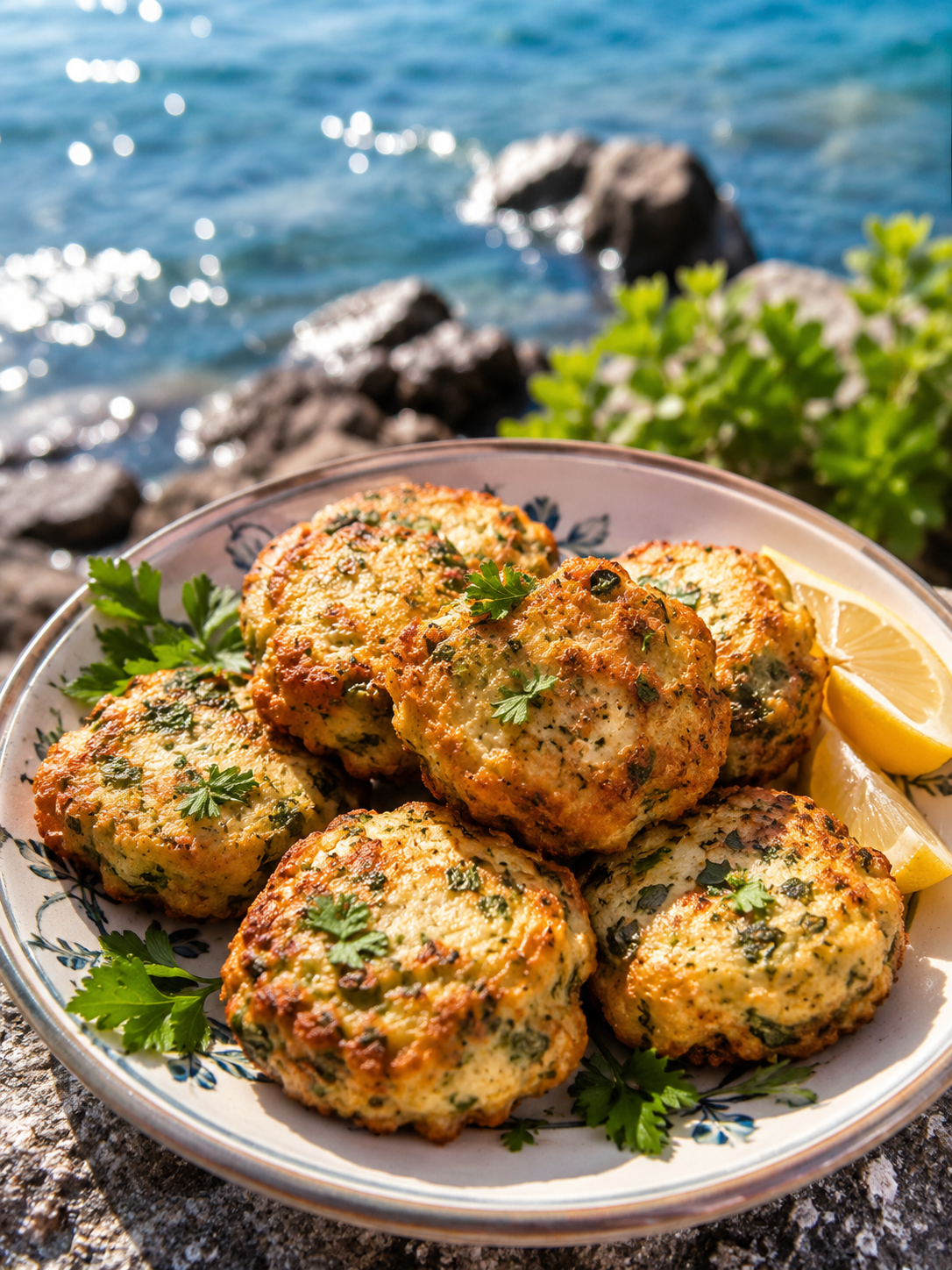
a dish from greece —
Psarokeftedes (Fish Cakes)
How this dish came to life
Cultural significance
Psarokeftedes are one of the oldest continuously-cooked recipes in the Mediterranean — a direct line from Roman *Isicia Marina* through Byzantium and Mount Athos to the taverna table of today. They belong to the same *nose-to-tail*, waste-nothing philosophy that has defined Greek and Cypriot cooking for centuries: whatever came from the sea, the garden, or the animal, you used every piece of. The dish is inseparable from Greek Orthodox fasting — meat-free but never joyless — and from the fishermen's kitchens where the smallest, cheapest fish were turned into something better than the big ones ever could be.
step by step
Instructions
- 1
Check the fish carefully for bones — run your fingers over it against the grain to find any pin bones and pull them out with tweezers. Chop the fish finely with a sharp knife into 3–5 mm pieces. Do NOT use a food processor — it will turn the fish into paste and you'll lose all the texture.
- 2
Grate the onions on the coarse side of a box grater over a bowl (they'll be juicy — good). Grate the garlic. Finely chop all the fresh herbs — parsley, mint, and dill.
- 3
Put the stale bread in a bowl and cover with cold water. Leave for 5 minutes until completely soft.
- 4
In a large mixing bowl, combine the chopped fish, grated onion (with its juice), garlic, all the chopped herbs, cumin, oregano, and eggs. Add the lemon zest and juice.
- 5
Squeeze the excess water out of the bread firmly with your hands — you want it damp, not wet — and crumble it into the bowl.
- 6
Season generously with salt and black pepper — the fish is bland by itself, so you need a firm hand. Mix everything together thoroughly with your hands until the mixture is uniform and holds its shape when pressed. If it feels too wet, add a spoonful more crumbled dry bread.
- 7
Cover the bowl and let the mixture rest in the fridge for 30 minutes. This is not optional — it lets the bread swell, the flavours marry, and the mixture firm up so it fries without falling apart.
- 8
Spread a shallow layer of flour on a plate. Heat a 1-cm layer of oil (roughly half olive oil, half sunflower oil) in a wide heavy frying pan over medium-high heat. The olive oil brings flavour; the sunflower oil raises the smoke point so nothing burns.
- 9
With slightly wet hands (stops the mixture sticking to you), scoop out golf-ball-sized portions of the mixture and flatten each one into a patty about 1.5 cm thick. Drop each patty into the flour, turn to coat both sides, and shake off the excess.
- 10
Fry the cakes in batches — don't crowd the pan — for 3–4 minutes on each side, until deeply golden brown and crisp. They should hiss when they hit the oil. Lower the heat slightly if they colour too fast; the fish needs time to cook through.
- 11
Lift out onto kitchen paper to drain. Sprinkle immediately with a pinch of sea salt while they're still hot.
- 12
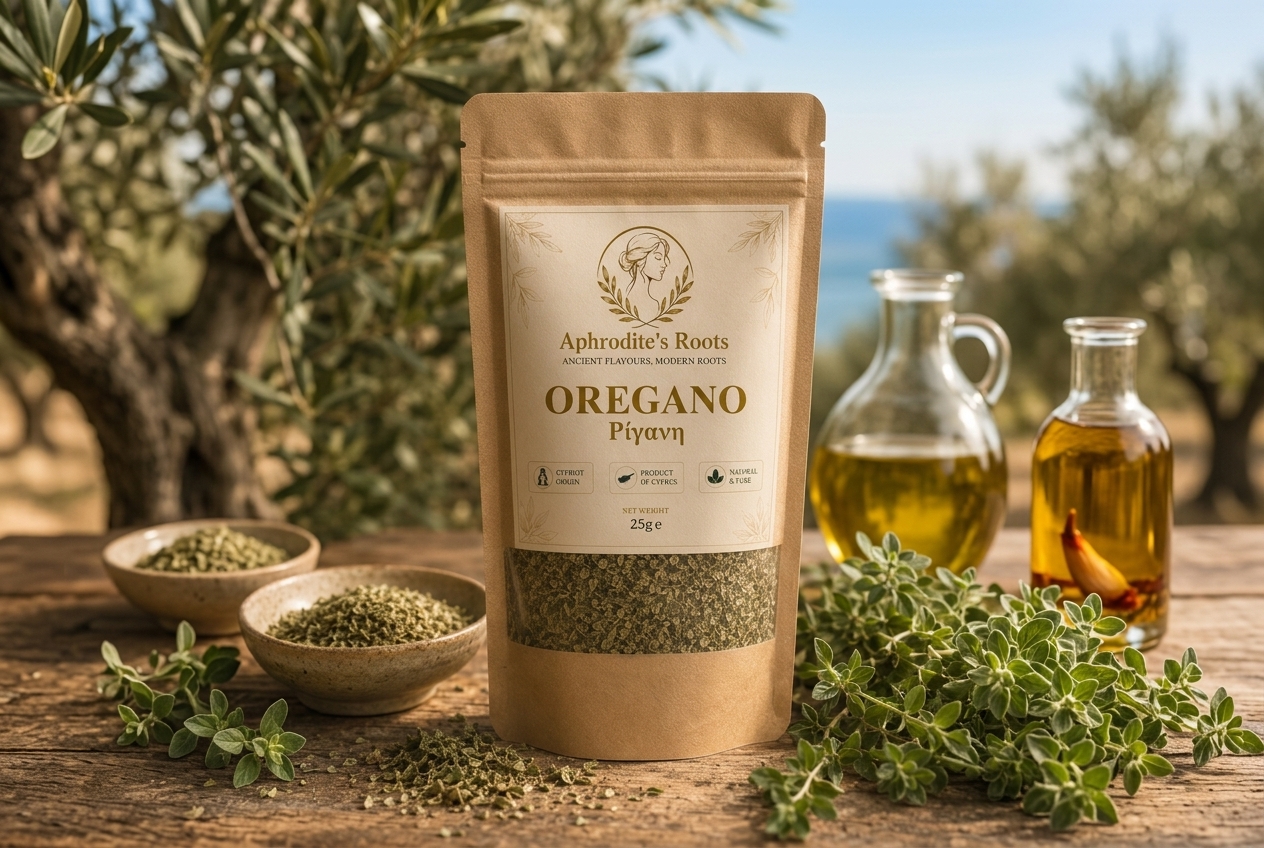
Serve piled on a warm plate with lemon wedges, extra Aphrodite's Roots oregano scattered over the top, and — the traditional accompaniment — a bowl of skordalia (garlic-potato purée) or tzatziki. A cold glass of ouzo or a crisp white wine is not optional.
tips from the village —
Wisdom from grandmothers
- 01Chop, don't blitz. A food processor turns fish into a pale rubbery paste. Hand-chopping keeps the texture, and texture is half the point of psarokeftedes.
- 02Stale bread, not fresh. Fresh bread turns to glue in the mixture. Old, dry bread rehydrated with water gives you the springy, tender crumb that binds the cakes without weighing them down.
- 03Squeeze the bread properly. Wet bread = wet mixture = cakes that fall apart in the pan. Squeeze it hard until it stops dripping.
- 04Let the mixture rest. Thirty minutes in the fridge is when the bread absorbs the fish juices and the mixture goes from loose to shapeable. Skip this and you'll be swearing at the pan.
- 05Hot oil, medium heat. The oil should sizzle the moment the cake touches it. If it doesn't, wait. But then drop the heat to medium so the outside crisps while the inside cooks through.
- 06Half olive, half sunflower. Pure olive oil burns; pure sunflower is flavourless. The 50/50 blend is the taverna trick — flavour and clean colour, both.
- 07Serve them warm, not hot. Straight out of the pan they need 2–3 minutes to relax — the outside stays crisp, the inside firms up, and they taste of the herbs and lemon instead of just heat.
- 08The next-day sandwich. Any leftover cakes go into a split village bread with tzatziki, sliced tomato, and a few leaves of parsley. This is the coastal-Greek fishermen's sandwich, and it may be the best thing psarokeftedes are for.
- 09Use whatever white fish is fresh. This is a nose-to-tail recipe by design — the whole point is to use what the sea gave you that morning. Cod is a modern default; small oily fish like sardines are more traditional and even better.
Related recipes
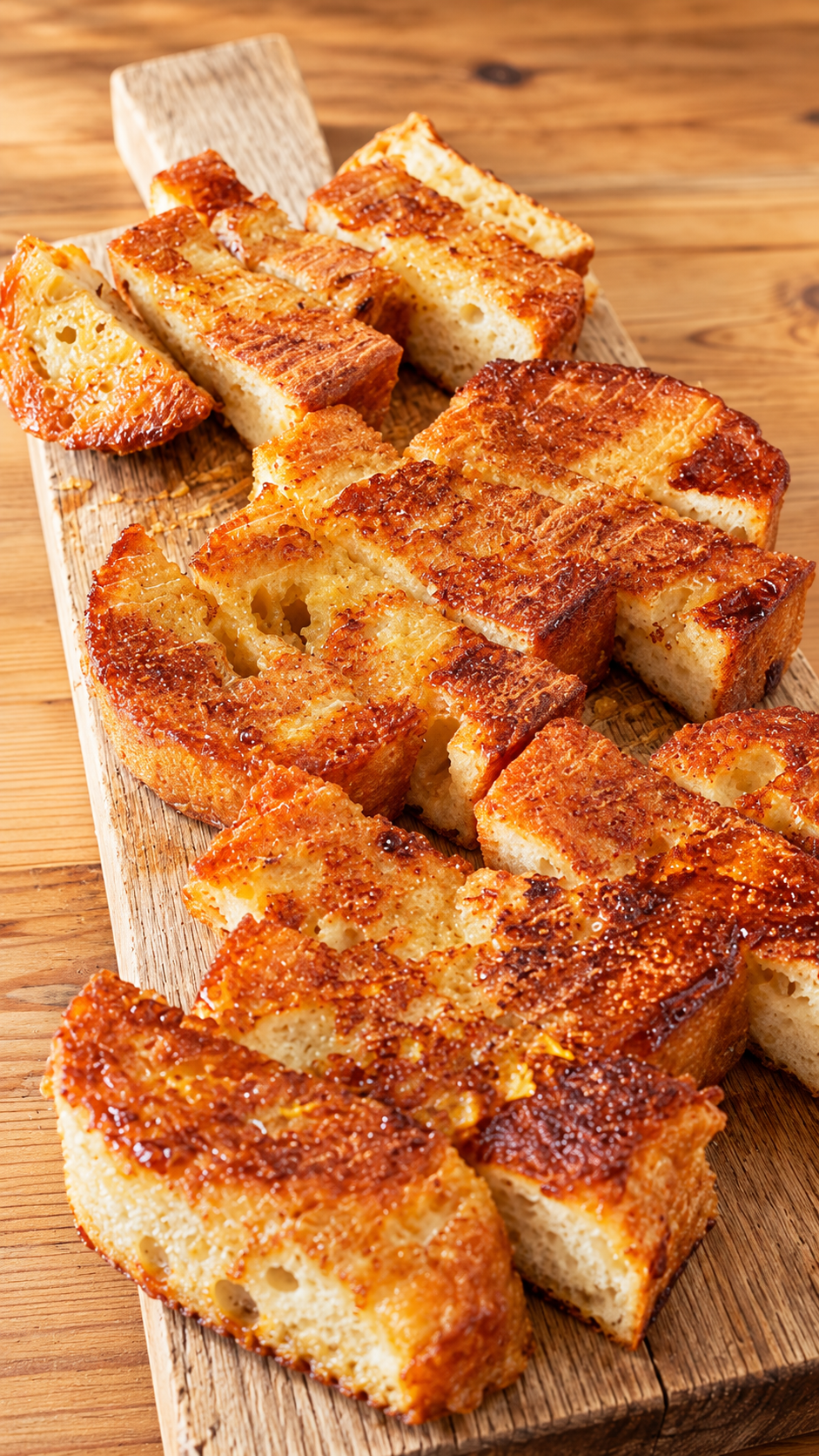
Avgofetes
Greek egg-fried bread — yesterday's loaf dipped in egg and milk, fried golden in olive oil and served with honey and cinnamon. Older than French toast.
Read the story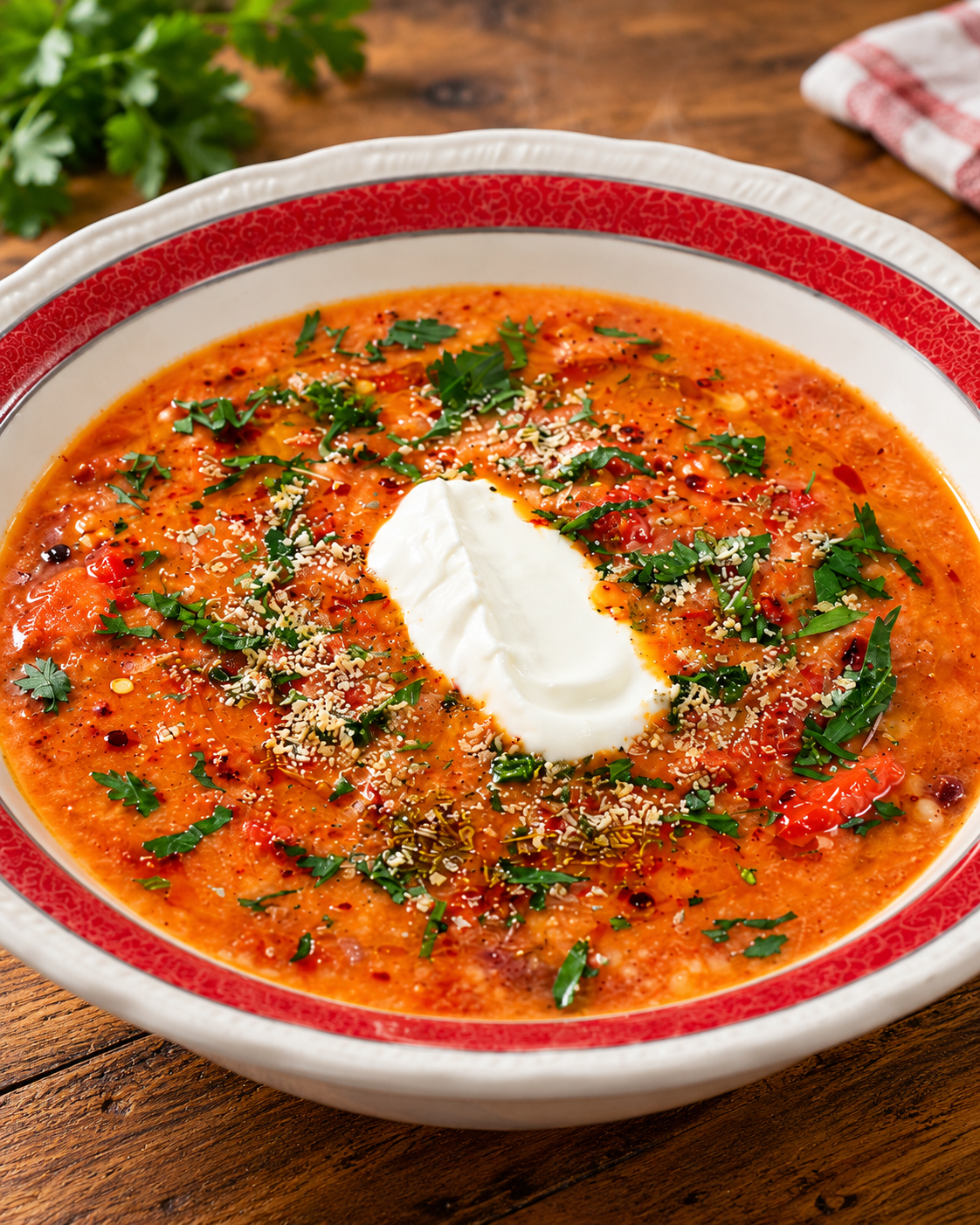
Kokkinistos Trahanas with Yogurt
Sour trahana simmered in a spicy tomato broth until creamy, served with cool Greek yogurt, boukovo and wild oregano — one humble food, countless traditions.
Read the story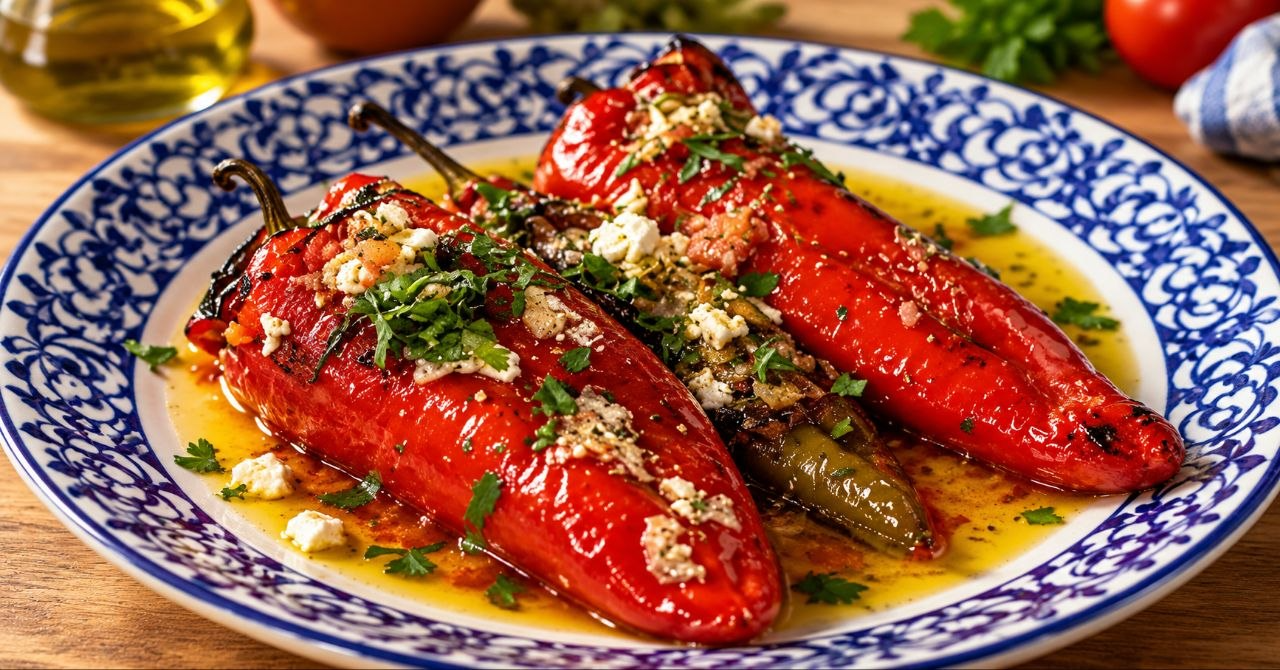
Stuffed Horn Peppers
Horn peppers stuffed with feta, tomato, garlic and wild oregano, baked until soft and caramelised — an American ingredient that became a Greek kitchen staple.
Read the story