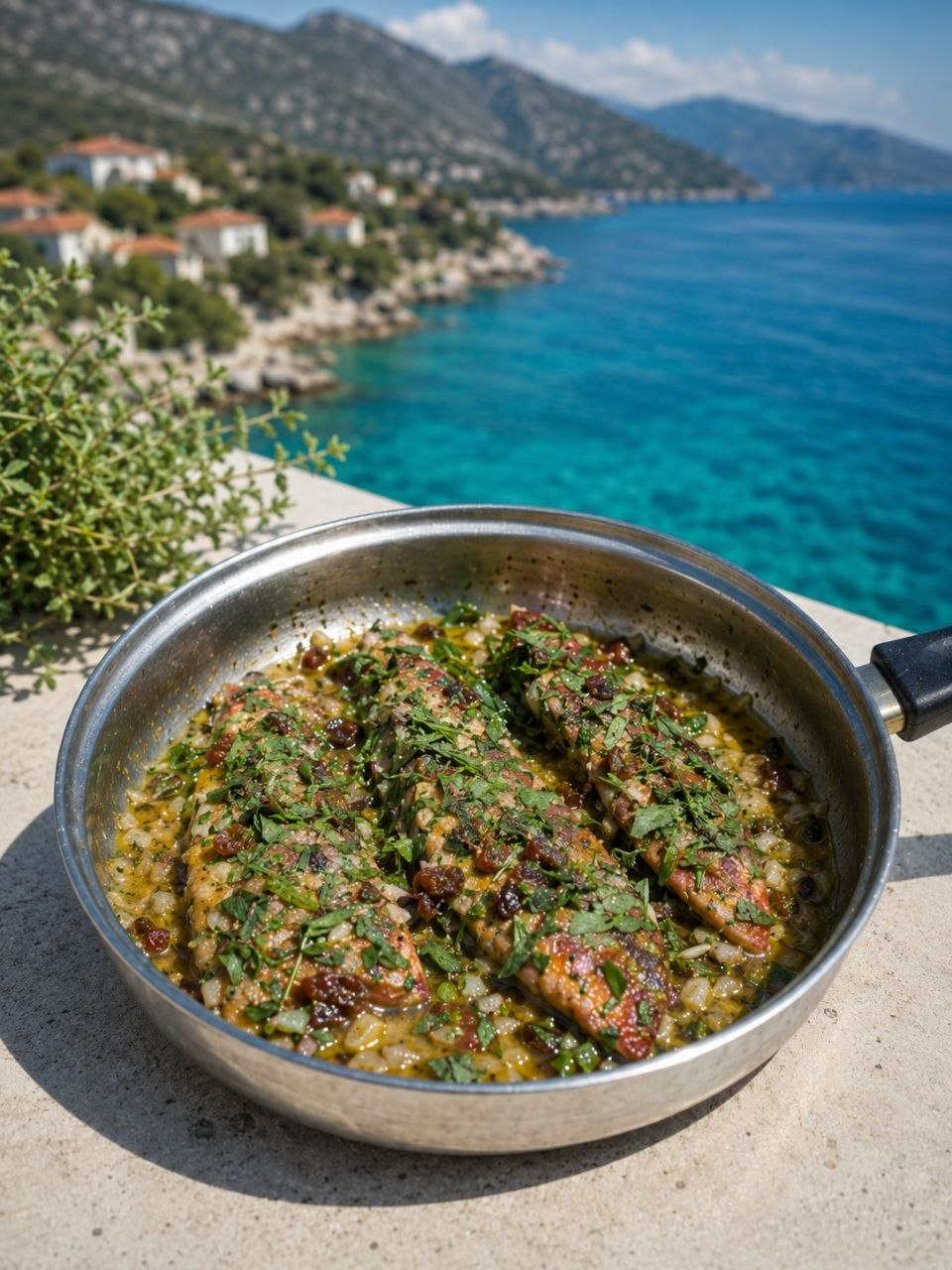
a dish from greece —
Red Mullet Savóro
How this dish came to life
Cultural significance
Savóro is one of the clearest surviving examples of Venetian culinary influence on Greek cooking — a 500-year-old preservation technique that the Ionian Islands absorbed, reshaped, and made entirely their own. In the seaside villages of Corfu and Lefkada it is still the default way to prepare red mullet, sardines, and small whole fish in the height of summer, when the sea gives too much in one morning to be eaten in one day. The dish belongs to fishermen, to grandmothers, to clay pots on cool stone floors, and to the long Mediterranean lineage that taught Greeks that sour, sweet, and oil — together — can hold time itself at bay.
step by step
Instructions
- 1
Pat the cleaned red mullet completely dry with kitchen paper — wet fish will not crisp. Season them lightly with sea salt and pepper.
- 2
Spread flour on a plate and lightly coat each fish, shaking off the excess. Coat them only at the moment of frying, never in advance.
- 3
Heat the olive oil in a wide frying pan over medium-high heat until it shimmers. Lay in the fish in a single layer — don't crowd the pan — and fry for 6–8 minutes per side, until deeply golden and crisp at the edges. Work in batches if needed.
- 4
Lift the fish out onto a plate lined with kitchen paper and set aside. Keep most of the frying oil in the pan — it carries the flavour of the fish into the sauce.
- 5
Lower the heat to medium. Add the chopped onion to the same pan and sauté for 4–5 minutes until soft and translucent. Add the sliced garlic and cook another minute until just fragrant — do not brown it.
- 6
Pour in the white wine and let it bubble hard for a minute to burn off the alcohol, scraping up anything stuck to the pan.
- 7
Sprinkle in the 2 tbsp of flour and stir steadily for about a minute, until the flour cooks out and the sauce starts to thicken. If it tightens too much, splash in a little water — you want a loose, glossy sauce, not a paste.
- 8
Pour in the vinegar and add the rosemary leaves. Let the sauce bubble gently for 2–3 minutes — it will smell sharp at first, then mellow into something rounded and savoury. Taste and adjust salt.
- 9
Slide the fried red mullet carefully back into the pan, spooning the sauce over the top of each one. Scatter over the raisins.
- 10
Lower the heat to a bare simmer and let the fish sit in the sauce for 4–5 minutes, just long enough to drink in the flavours without falling apart.
- 11
Finish with a generous shower of fresh parsley. Serve straight from the pan, with bread to mop the sauce — or cover and refrigerate overnight: savóro is even better the next day, cold, the flavours deeper, the way the Ionian fishermen would have eaten it.
tips from the village —
Wisdom from grandmothers
- 01Dry the fish properly before flouring. Any moisture turns to steam in the oil and the flour will slide off in patches instead of crisping into a shell.
- 02Use enough oil. Savóro lives on a fish that has been *properly* fried — pale, oven-baked mullet will not hold its own against the vinegar.
- 03Don't burn the garlic. It goes in after the onion, off the heat if you have to — burnt garlic will turn the whole sauce bitter.
- 04Balance the vinegar. Start with 1/3 cup, taste once it has bubbled, and add more only if your vinegar is mild. The sauce should bite, not sting.
- 05The raisins are not optional. They are the Venetian fingerprint on this dish — small pockets of sweetness that round out the acid. Soak them in a splash of warm water for 10 minutes if they look dry.
- 06Serve it the next day if you can. Savóro was built to rest. Twenty-four hours in the fridge lets the vinegar settle and the fish drink the sauce all the way through. Bring it back to cool room temperature — never hot — before serving.
- 07Eat it with crusty village bread and a glass of cold white wine. That's the whole island summer in one plate.
Related recipes
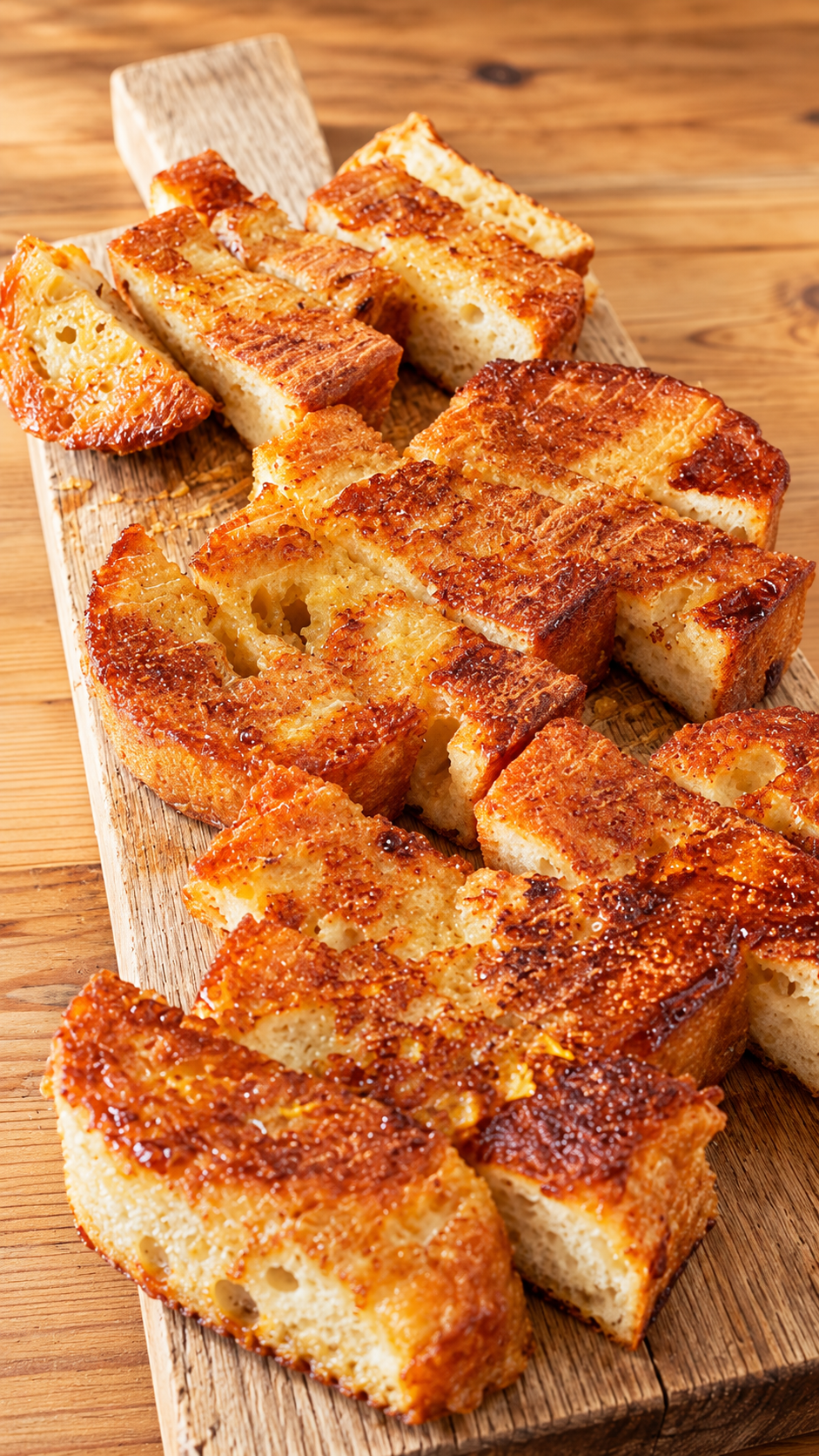
Avgofetes
Greek egg-fried bread — yesterday's loaf dipped in egg and milk, fried golden in olive oil and served with honey and cinnamon. Older than French toast.
Read the story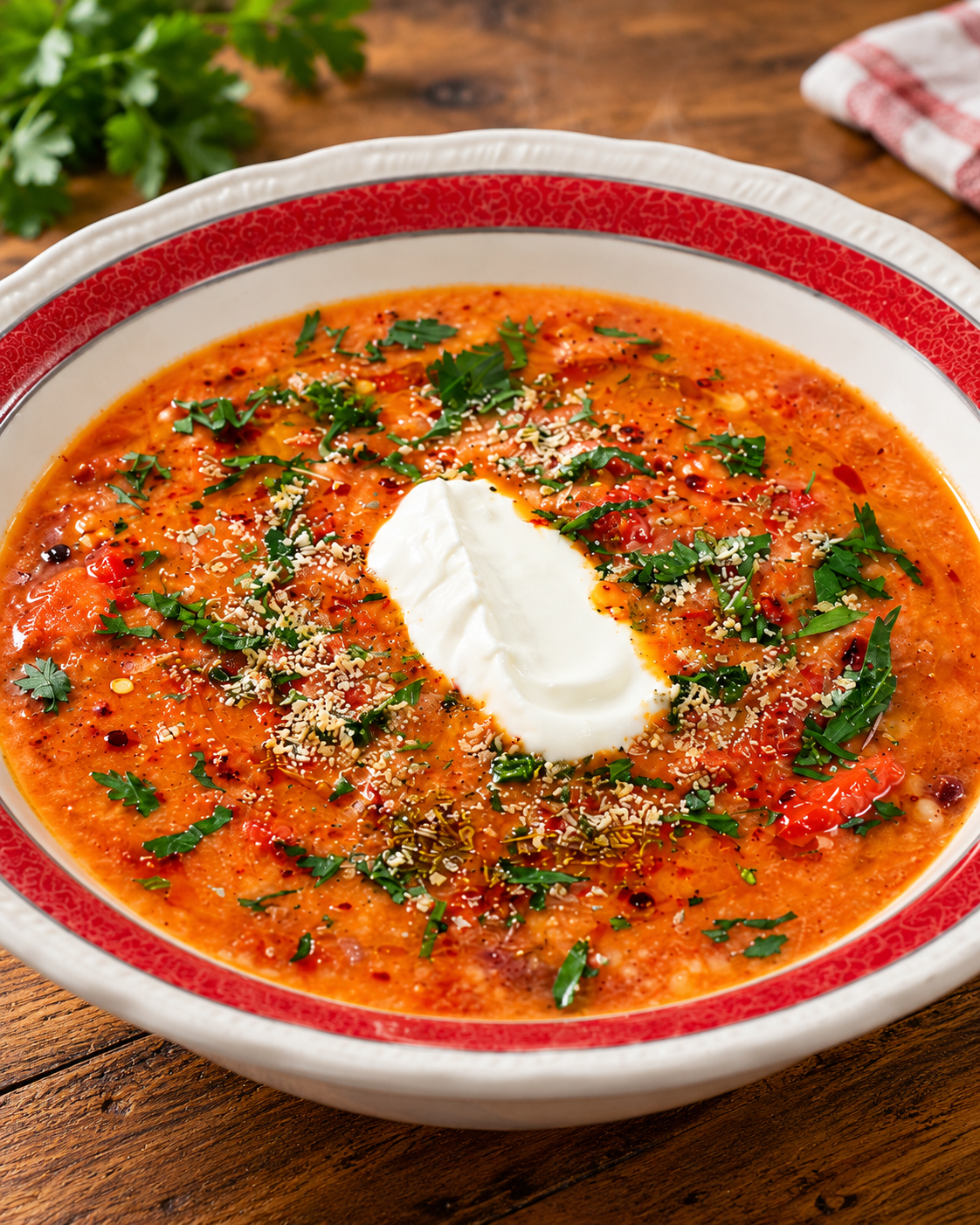
Kokkinistos Trahanas with Yogurt
Sour trahana simmered in a spicy tomato broth until creamy, served with cool Greek yogurt, boukovo and wild oregano — one humble food, countless traditions.
Read the story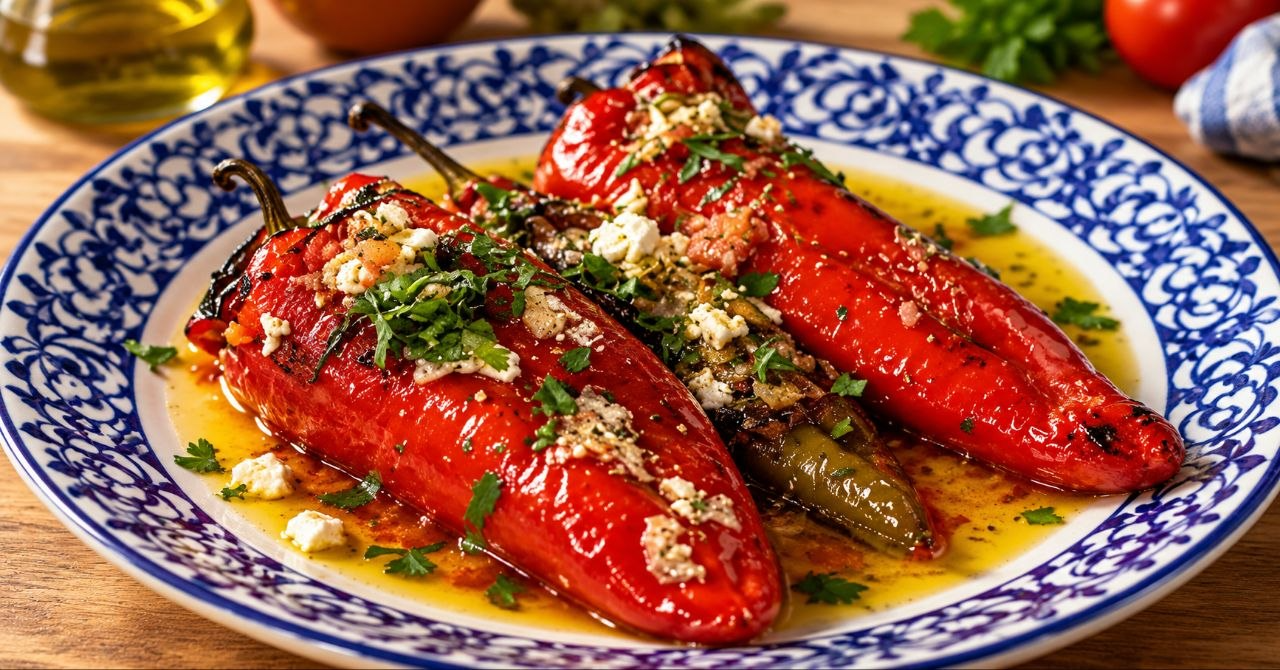
Stuffed Horn Peppers
Horn peppers stuffed with feta, tomato, garlic and wild oregano, baked until soft and caramelised — an American ingredient that became a Greek kitchen staple.
Read the story