How this dish came to life
Cultural significance
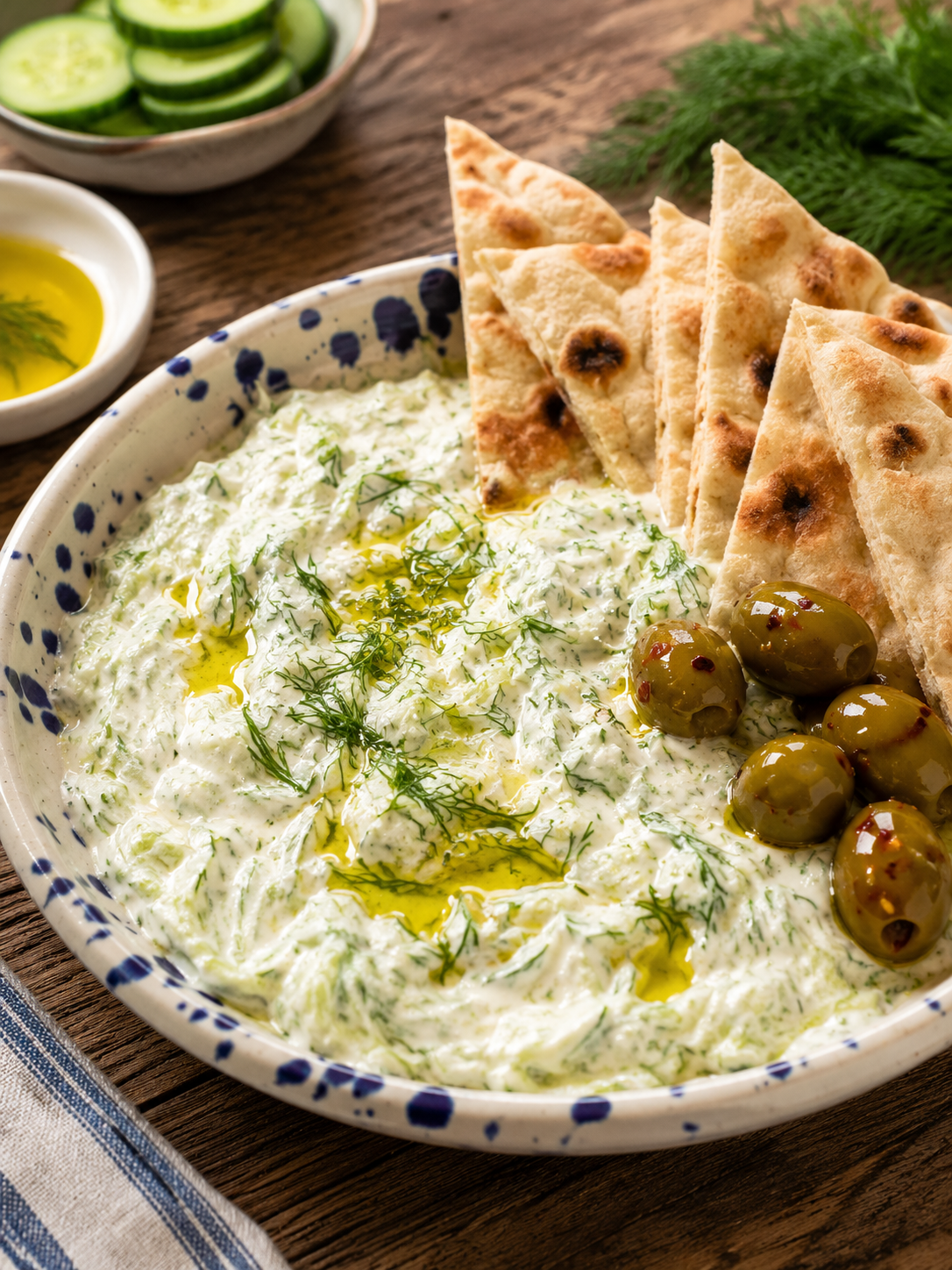
Tzatziki is not just a dip — it is the small cool bowl that opens almost every Greek meal, the companion to grilled meat, souvlaki, and gyros, the sauce inside pita wraps, the spoonful next to beetroots and boiled greens, and the palate-cleanser between every richer dish on the table. It belongs to the family of *mezedes* — the small plates that Greek eating is built around — and to the equally deep Greek tradition of *straggisto giaourti*, thick strained yogurt. In villages, tzatziki has been part of the everyday summer table for centuries; in tavernas, it is the plate the waiter brings before you've even ordered.
step by step
Instructions
- 1
Grate the cucumber on the coarse side of a box grater into a bowl. Sprinkle with a good pinch of fine salt, mix, and let it sit for 10–15 minutes. The salt draws the water out of the cucumber — this step is not optional; skipped, it turns your tzatziki into soup within an hour.
- 2
Tip the grated cucumber into a clean kitchen towel (or a fine sieve) and squeeze it hard over the sink. Really squeeze. You should see a surprising amount of green cucumber water come out. Keep pressing until only fluffy dry pulp is left in the cloth.
- 3
In a bowl, spoon in the Greek yogurt. Add the squeezed cucumber, the minced garlic, the olive oil, and the vinegar (or lemon juice).
- 4
Add a small pinch of salt and — if you like — a small twist of black pepper. Traditional Greek tzatziki doesn't use pepper, but some households do; taste and decide.
- 5
Fold in the chopped dill and mix gently until smooth and uniform. Taste. Adjust salt, garlic (you can always add more), and acid (a drop more vinegar or lemon).
- 6
Cover the bowl with clingfilm and refrigerate for at least 30 minutes — an hour is better. This resting time is where tzatziki becomes tzatziki: the raw garlic mellows, the flavours marry, and the yogurt tightens up as it cools.
- 7
Just before serving, give it one more stir. Spoon into a shallow bowl, smooth the top with the back of the spoon into gentle swirls, and drizzle a spiral of good olive oil over the surface. Scatter a little extra dill on top.
- 8
Serve chilled with warm pita triangles, alongside grilled meats, vegetables, souvlaki, gyros — or simply with bread and olives as a small cool *meze* to open the table.
tips from the village —
Wisdom from grandmothers
- 01Use real Greek strained yogurt (*straggisto*). Not runny yogurt, not diluted yogurt, not sour cream. The whole texture of tzatziki depends on the yogurt being thick enough that a spoon can stand up in it before you add anything else.
- 02Salt and squeeze the cucumber. This is the single most important step. Cucumbers are 95% water — if you don't drain them, the yogurt goes thin and watery within hours and the whole thing is ruined. Squeeze until the towel comes out only slightly damp.
- 03Grate coarse, not fine. Fine grating turns cucumber to mush. The coarse side of the box grater gives you tiny ribbons that keep some fresh texture.
- 04Mince the garlic small, or crush to a paste. Big chunks of raw garlic are aggressive. If you find raw garlic too strong, crush it with a knife blade and a pinch of salt into a smooth paste on the board — this tempers the sharpness beautifully.
- 05Rest it. Thirty minutes minimum, an hour is better. Fresh out of the bowl, tzatziki tastes flat and raw. After resting, the garlic mellows and the flavours settle into something greater than the sum of the parts.
- 06Vinegar OR lemon. White wine vinegar is the traditional Greek village choice — sharper, cleaner. Lemon juice is more Mediterranean-modern — brighter, softer. Both are correct; taste and decide.
- 07Dill is Greek. In Cyprus, some households use mint instead — and that's a delicious variation, but it's a different dish. For tzatziki proper, it's dill.
- 08Better the next day. Tzatziki is at its peak between 4 and 24 hours after it's made. Beyond that the cucumber starts to weep. It won't keep more than 2–3 days in the fridge before turning watery — but it's rarely a problem, because there's never any left.
- 09Serve with warm pita, not cold. Griddle the pita for 30 seconds a side over a dry pan or over a naked gas flame until it puffs slightly and picks up dark spots. Warm bread + cold tzatziki is one of the small perfect things.
Related recipes
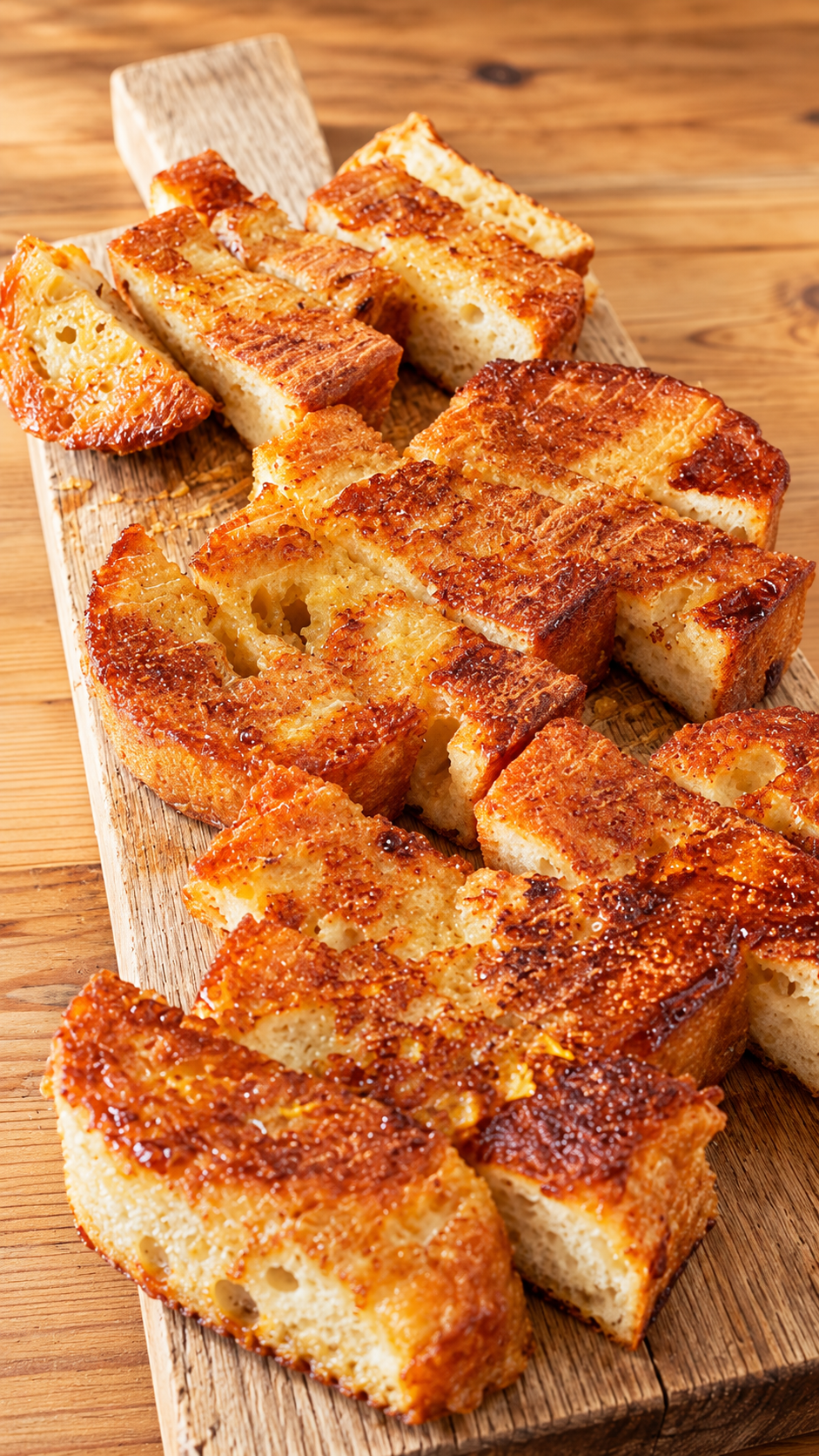
Avgofetes
Greek egg-fried bread — yesterday's loaf dipped in egg and milk, fried golden in olive oil and served with honey and cinnamon. Older than French toast.
Read the story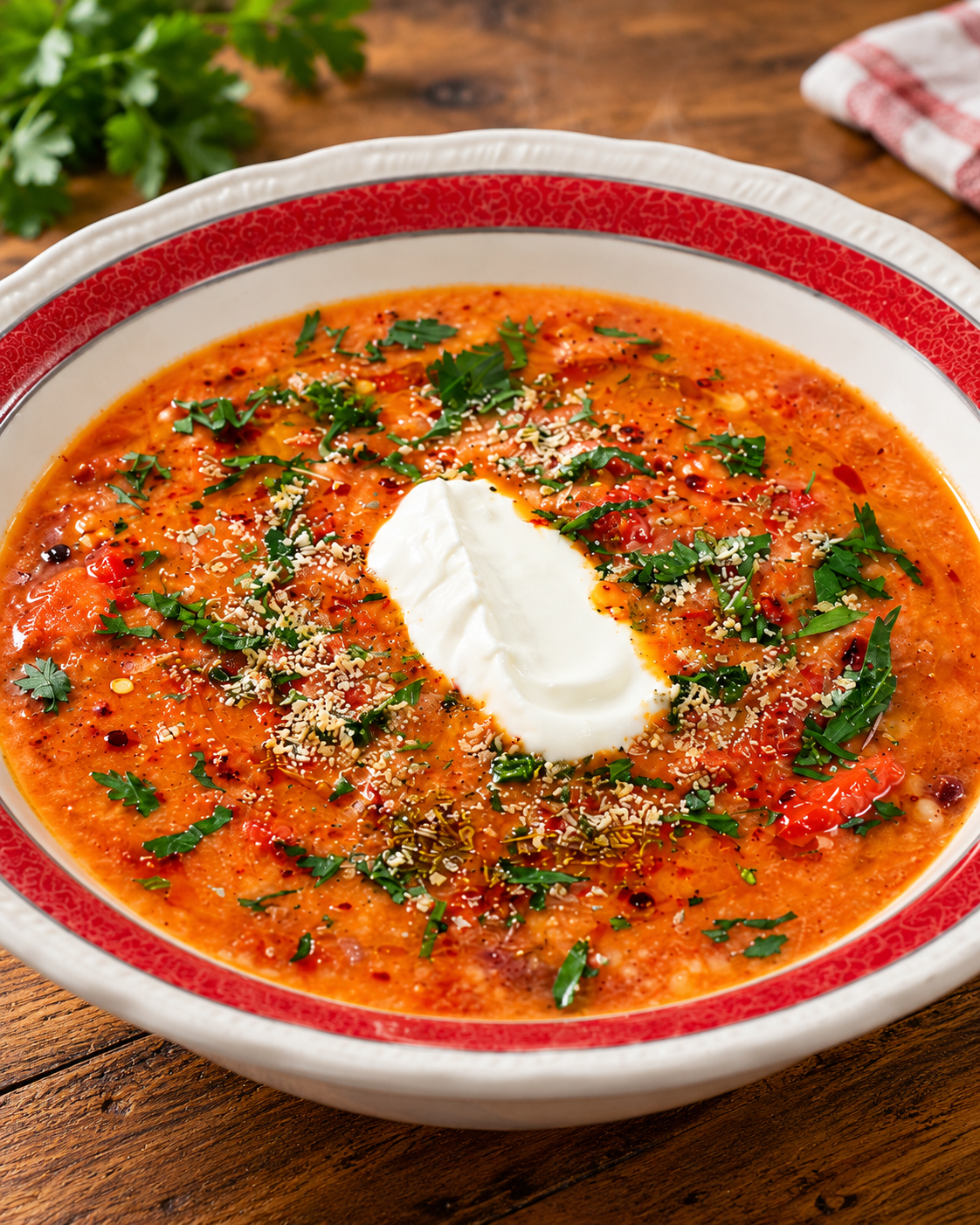
Kokkinistos Trahanas with Yogurt
Sour trahana simmered in a spicy tomato broth until creamy, served with cool Greek yogurt, boukovo and wild oregano — one humble food, countless traditions.
Read the story
Stuffed Horn Peppers
Horn peppers stuffed with feta, tomato, garlic and wild oregano, baked until soft and caramelised — an American ingredient that became a Greek kitchen staple.
Read the story