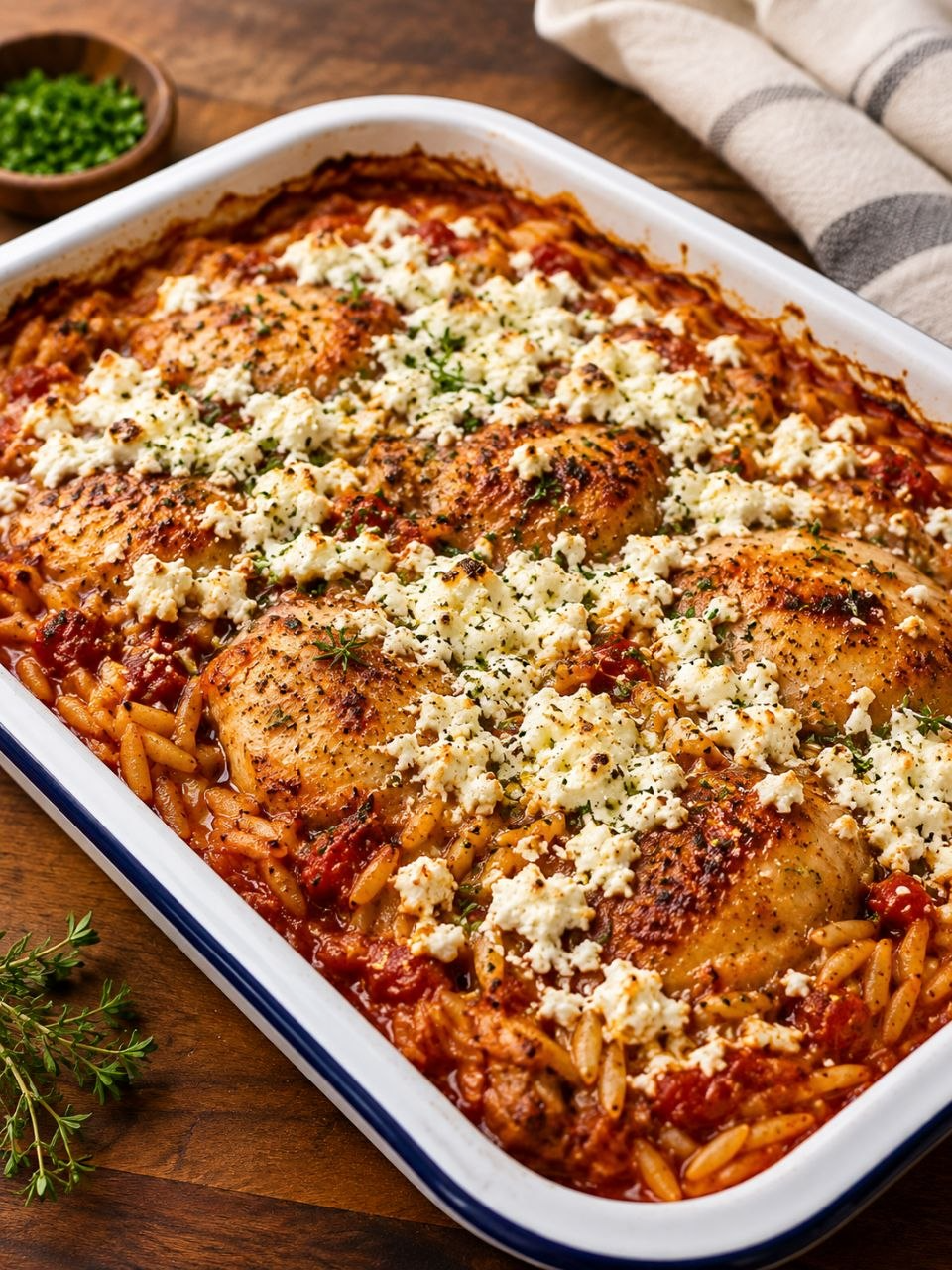
How this dish came to life
Cultural significance
Giouvetsi is the Sunday lunch of Greece — the dish that appears when the family is together, the bread is sliced thick, and someone has remembered to put the bottle of retsina in the fridge in the morning. The use of cinnamon and clove in savoury cooking is a direct inheritance from Constantinople and the Ottoman kitchens, brought by Asia Minor refugees who carried it into the home kitchens of the mainland. A dish of resilience and reunion.
step by step
Instructions
- 1
Pat the chicken legs very dry and season generously with salt and pepper. Heat the olive oil in a large heavy pot or oven-proof tray over medium-high heat.
- 2
Brown the chicken legs, skin-side down first, for 4–5 minutes per side until deeply golden. Don't move them around — let the skin do its work. Lift them out and set aside.
- 3
Lower the heat to medium. In the same fat, sauté the onion with a pinch of salt for 5–6 minutes until soft and sweet.
- 4
Stir in the garlic and the tomato paste; cook for 1 minute until darkened. Pour in the passata and add the cinnamon stick, bay leaf, plenty of cracked pepper and a generous pinch of salt.
- 5
Return the chicken to the pot, nestling the legs into the sauce. Pour in 400ml of the hot stock. Simmer gently, half-covered, for 25 minutes — the chicken should be almost cooked through and the sauce richly red.
- 6
Heat the oven to 180°C / 355°F. Tip the orzo into a deep baking tray and spread it evenly. Pour the chicken with all its sauce on top — the legs sitting proudly on the orzo — then pour the remaining 800ml of hot stock over everything (the orzo needs to be just covered).
- 7
Cover the tray loosely with foil and bake for 25 minutes. Remove the foil, give the orzo a gentle stir from the bottom (don't disturb the chicken), and bake another 10–15 minutes until the orzo has drunk the liquid, the top edges are caramelised, and the chicken skin is crisp.
- 8
Crumble the feta generously over the top, scatter fresh thyme or oregano, and let it rest 5 minutes before bringing the whole tray to the table. Serve with bread and a sharp green salad.
tips from the village —
Wisdom from grandmothers
- 01Don't skip the browning of the chicken skin — that's where most of the flavour of giouvetsi lives.
- 02Orzo absorbs more liquid than you think. If it looks dry halfway through baking, add a ladle of hot stock — never cold.
- 03The cinnamon stick stays whole. Fish it out before serving — or leave it in for the lucky one who finds it, like a Greek bay leaf.
- 04Like most Greek baked dishes, giouvetsi tastes even better reheated the next day. Add a splash of water to loosen the orzo when you warm it.
Related recipes
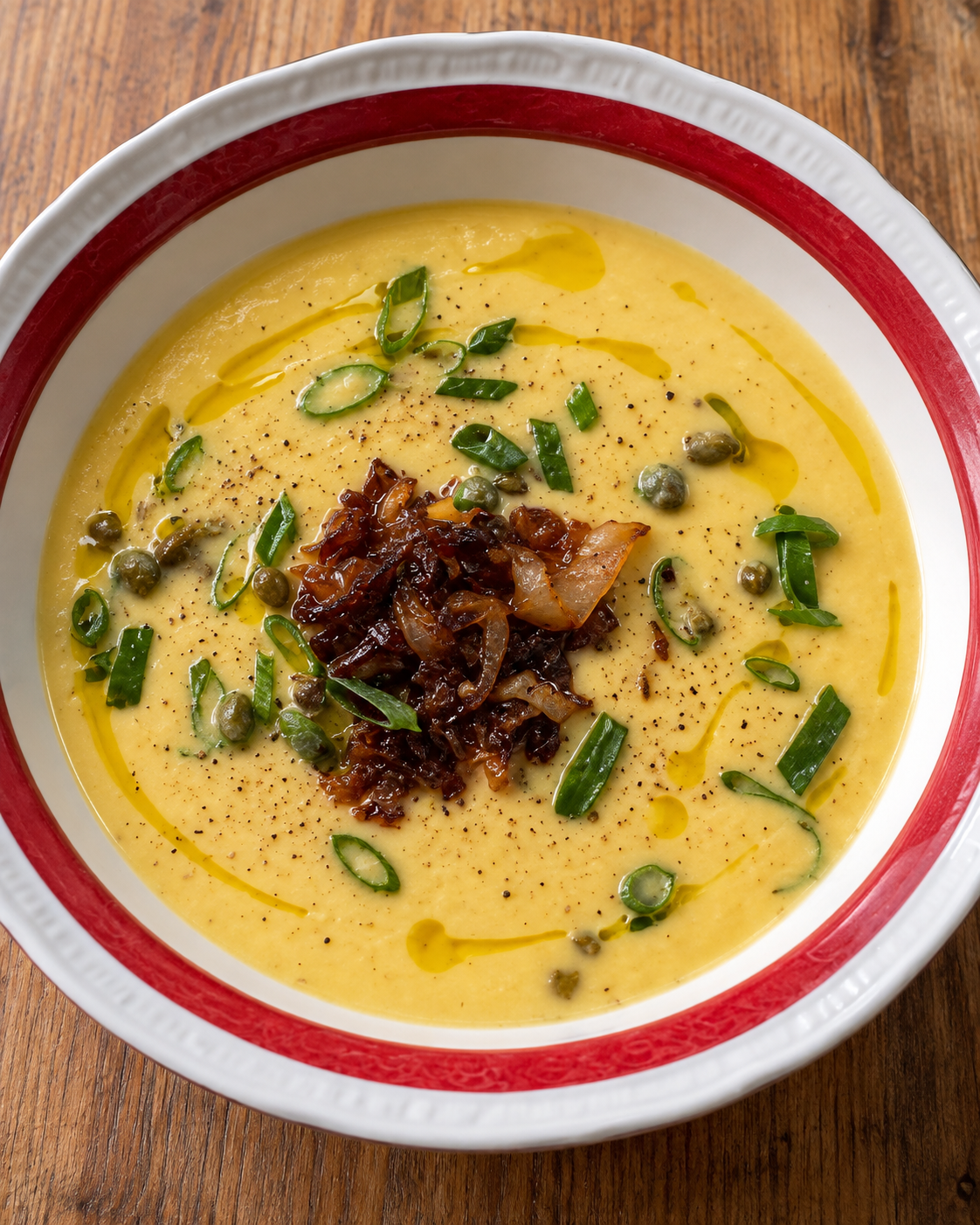
Fava
Silky yellow split-pea purée crowned with caramelized onions and capers — a dish that survived the volcano that buried ancient Santorini.
Read the story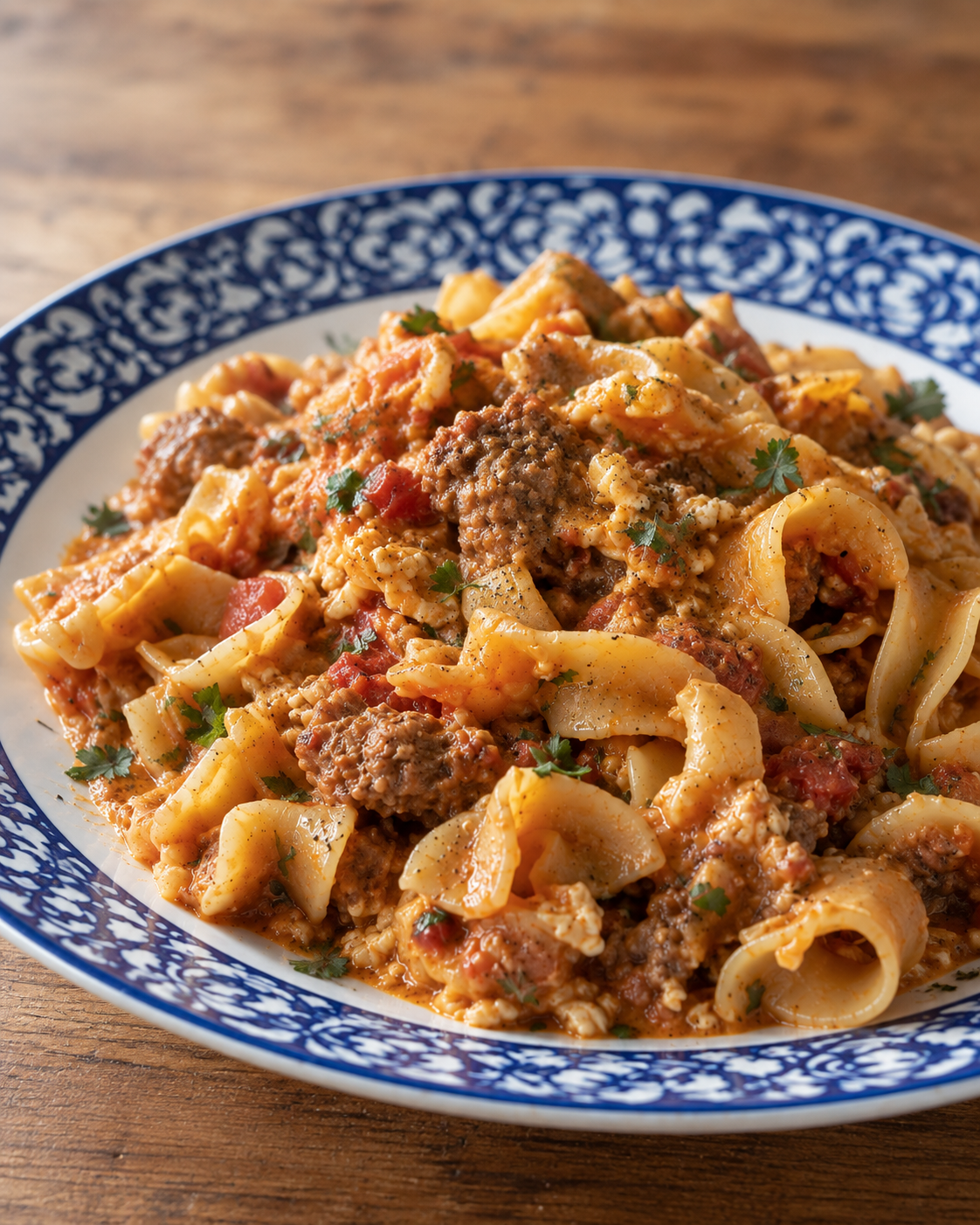
Hilopites with Sausages & Eggs
Greece's village egg pasta simmered with sausages, peppers and tomato, finished with eggs stirred through for creaminess — topped with feta and wild oregano.
Read the story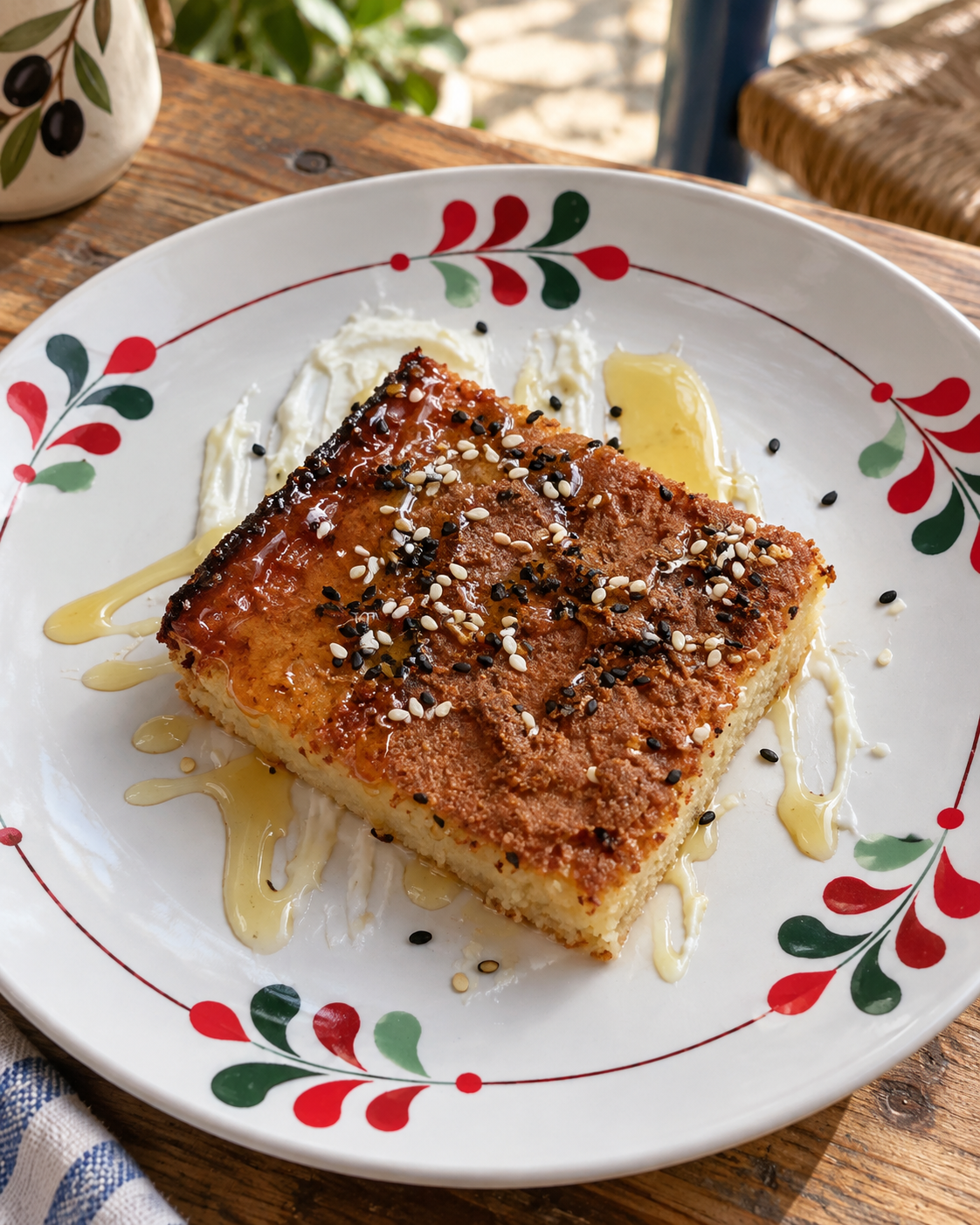
Melopita
The honey pie of Sifnos — fresh anthotyro, honey and eggs baked without pastry into a soft, golden custard. Ranked the world's number one sweet pie by TasteAtlas.
Read the story