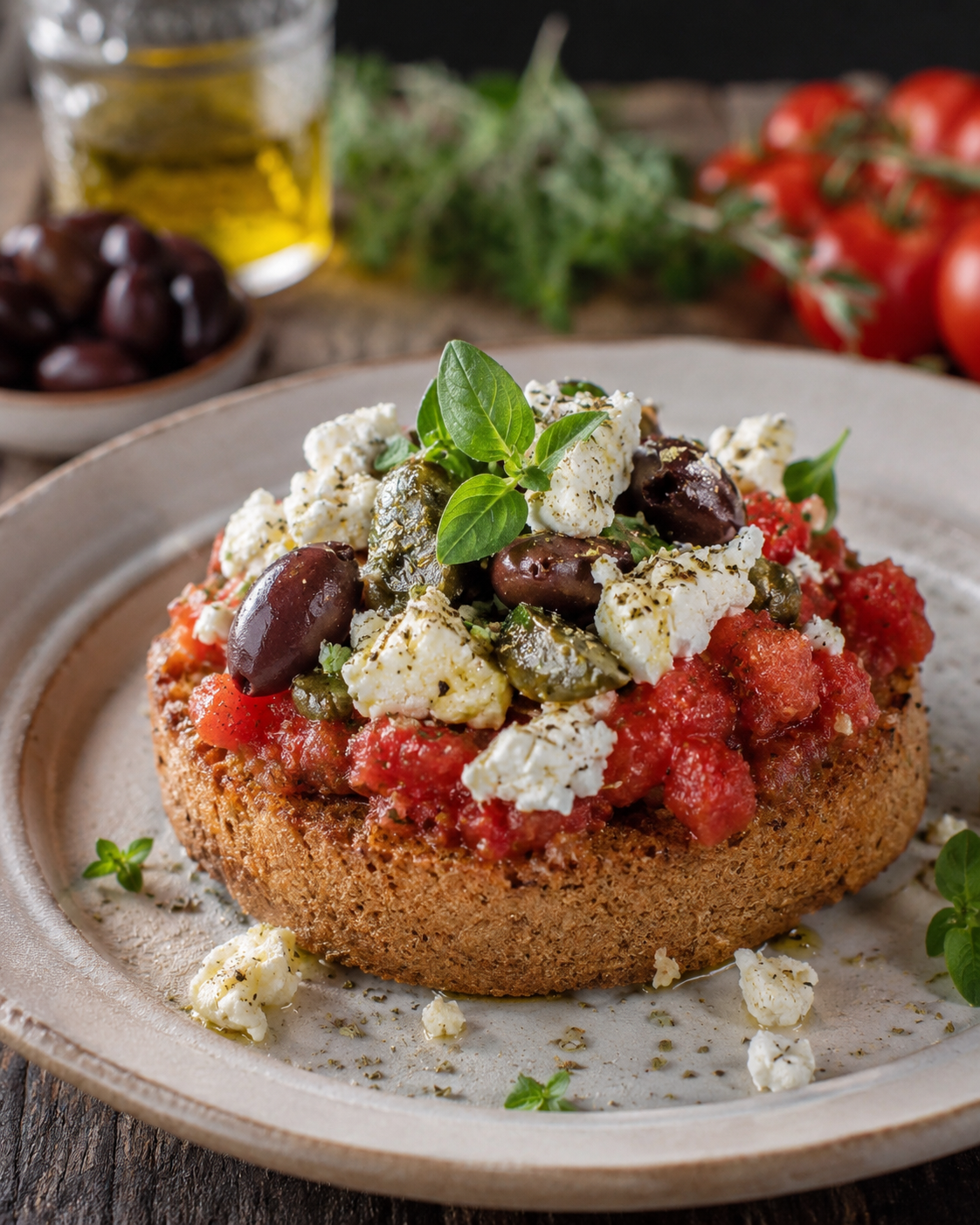
How this dish came to life
Cultural significance
What began as a way to make bread last became a meal for generations — and eventually, a symbol of Crete.
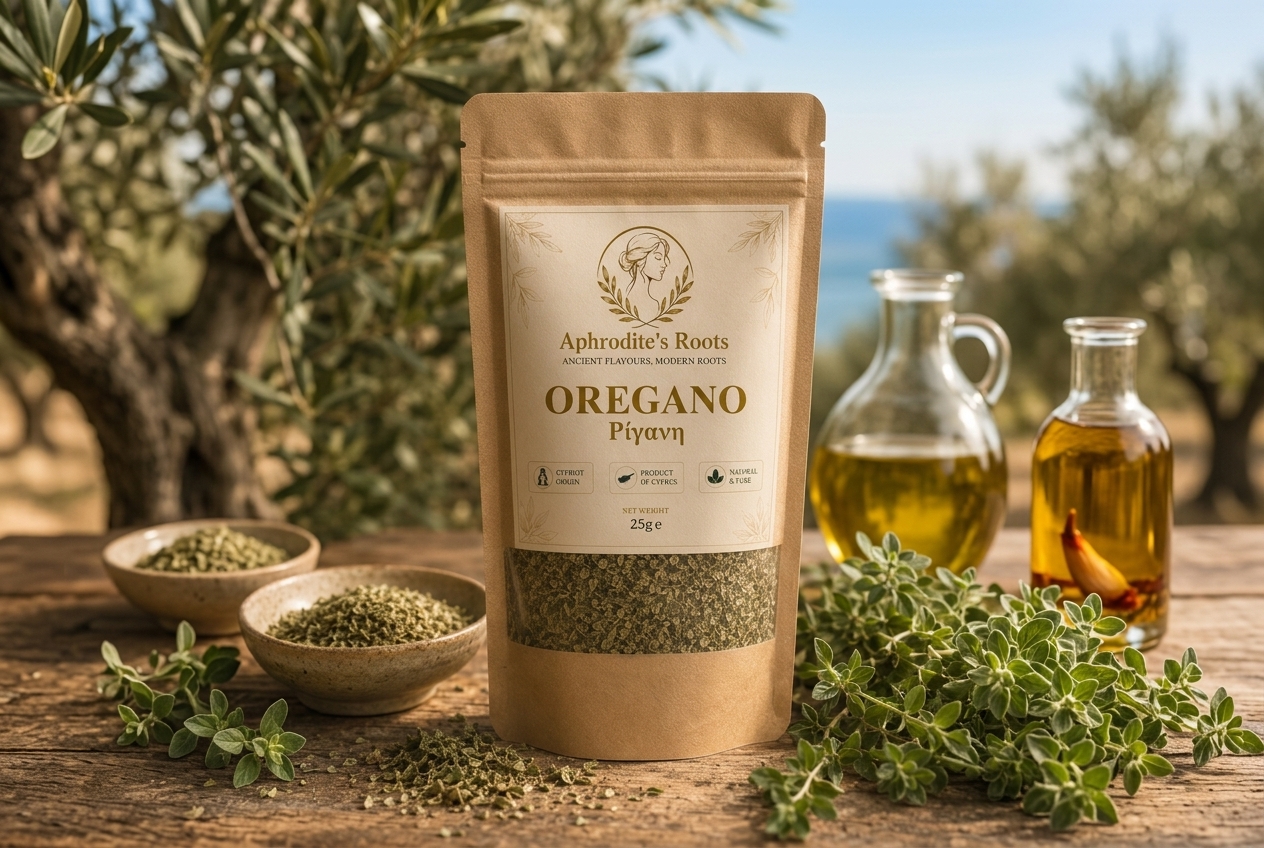
step by step
Instructions
- 1
Wet the dakos rusk with a little water to soften it.
- 2
Grate the flesh of the tomatoes into a bowl and add the olive oil, oregano, salt, pepper, vinegar and sugar, adjusting until it tastes right to you.
- 3
Let the mixture rest for 15 minutes — the oregano releases its aromas and the tomato marinates.
- 4
Spoon the marinated tomato over the dakos.
- 5
Finish with crumbled feta, a little caper, olives, a drizzle of olive oil, freshly ground pepper and one more pinch of oregano.
tips from the village —
Wisdom from grandmothers
- 01Real dakos is barley — the wheat version softens too fast and loses the bite.
- 02Don't skip the 15-minute rest; that's when the tomato and oregano become one thing.
- 03Grate the tomato, never chop it — the juice is what soaks the rusk from above.
- 04In Crete they'd use xinomizithra instead of feta. If you find it, use it, and think of Rethymno.
Related recipes
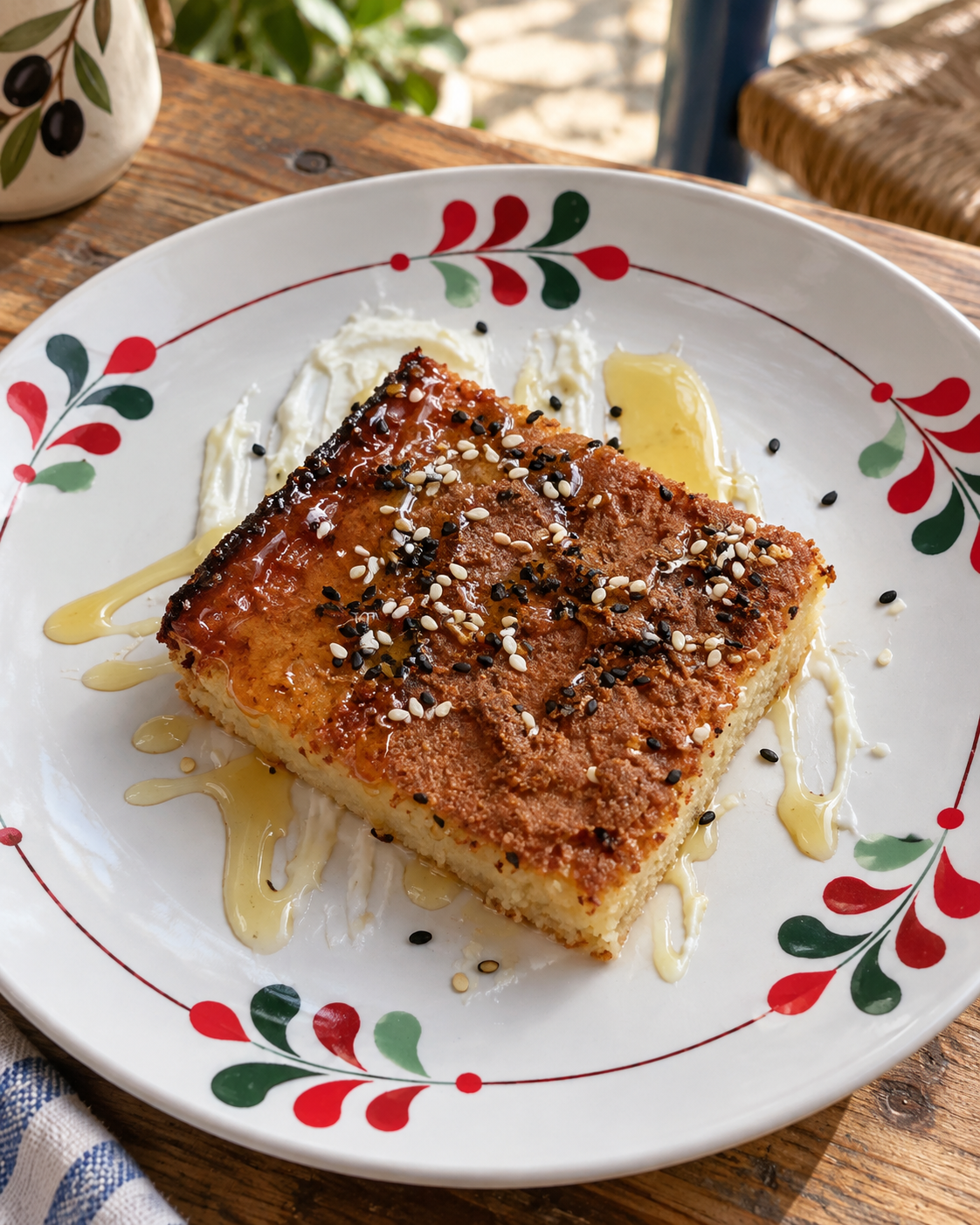
Melopita
The honey pie of Sifnos — fresh anthotyro, honey and eggs baked without pastry into a soft, golden custard. Ranked the world's number one sweet pie by TasteAtlas.
Read the story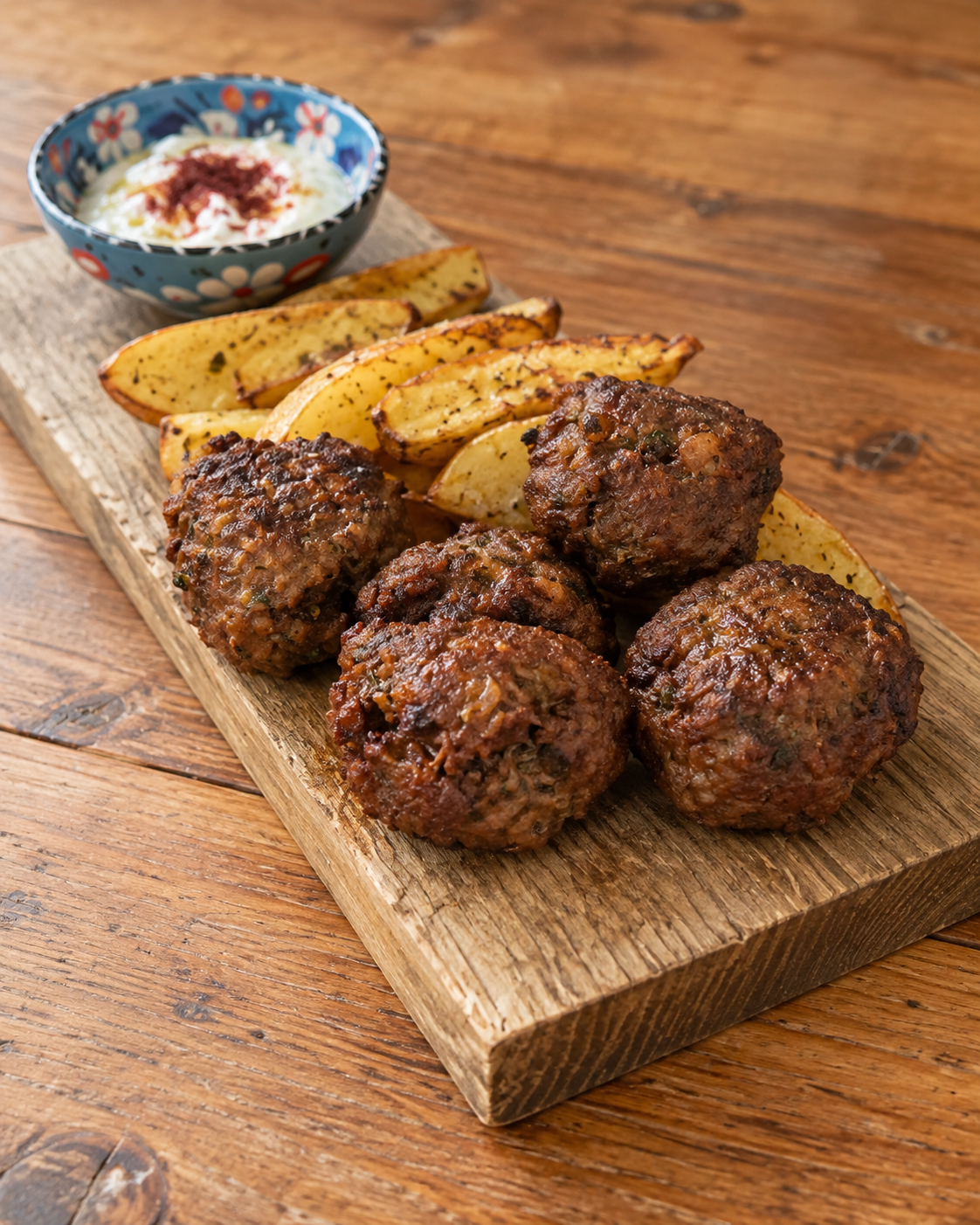
Keftedakia
Golden fried Greek meatballs with mint, lemon, cumin and wild oregano — an idea that travelled from Persia to every Greek island and family table.
Read the story
Psari à la Spetsiota
Fish in the style of Spetses — fillets baked over a glazed tomato, garlic and wine sauce, crowned with roasted tomato slices, olive oil and herbs.
Read the story