a dish from greece —
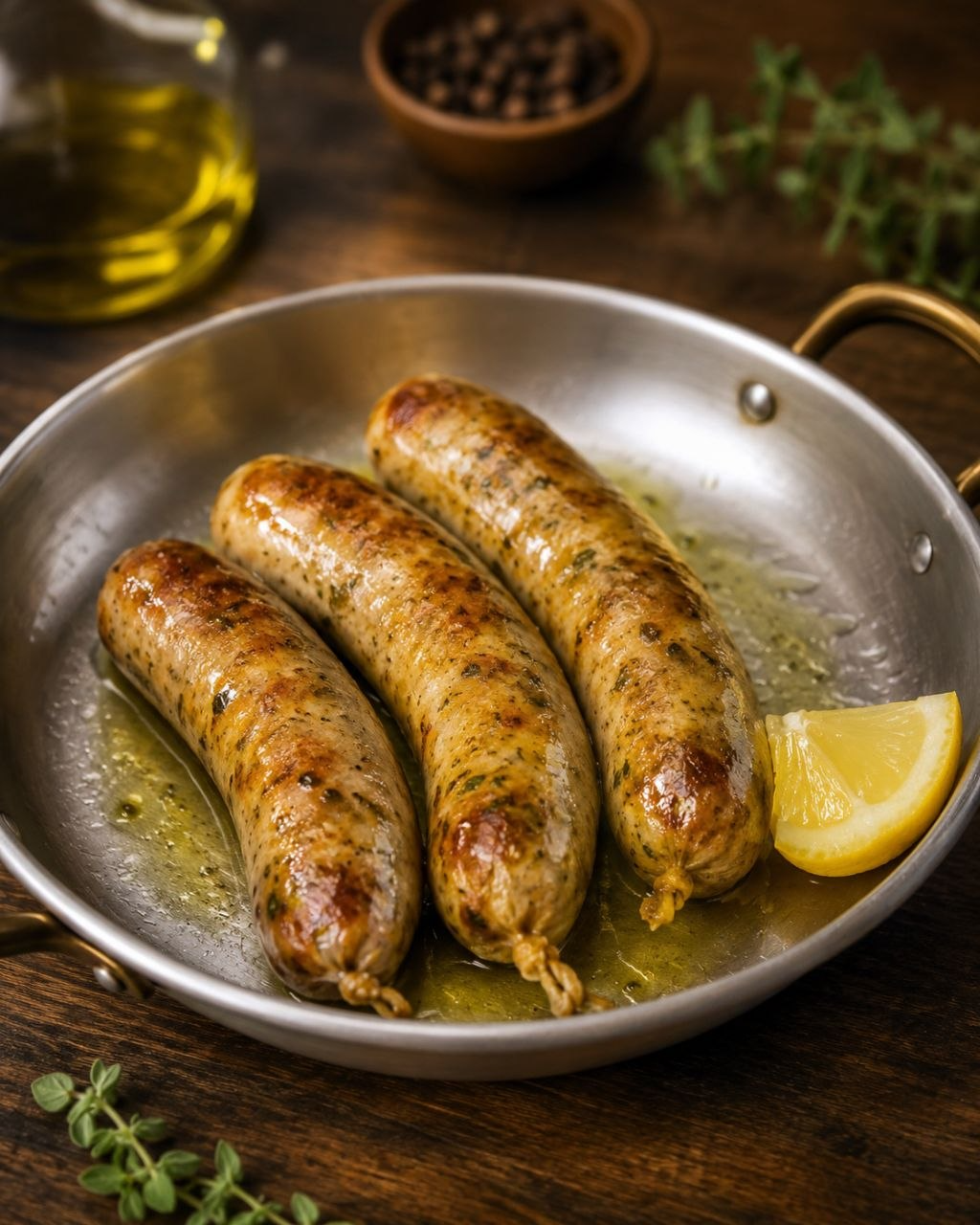
Kolosafades (Rhodian Stuffed Sausages)
How this dish came to life
Cultural significance
Kolosafades are a regional heritage dish of Rhodes and the wider Dodecanese — born of pre-industrial village life, when nothing edible was thrown away. The stuffing of intestines with rice and pork is a Mediterranean technique with parallels in Cyprus (sheftalia, lola) and the Greek mainland (kokoretsi), but the Rhodian version is unique in its use of fresh dill, mint, and cumin — a quiet inheritance from centuries of trade between the Dodecanese and Asia Minor. The dish is rarely served outside village tavernas and is almost never industrially produced. This recipe was learned in person from Grandmother Dionysia of Kitala, a family taverna in the mountain village of Salakos, Rhodes — to whom we owe both the technique and the trust to share it.
step by step
Instructions
- 1
Prepare the intestines first. Even when sold cleaned, rinse them thoroughly inside and out under cold running water — the easiest way is to slip the end over the tap and let the water run through. Inspect for any tears, and trim them into manageable lengths of about 40cm. Soak in cold water with a squeeze of lemon while you make the filling.
- 2
In a wide bowl combine the coarse pork mince and the raw rice. Mix gently with your hands — don't compact the meat.
- 3
Add the red onion, dill, parsley, mint, chopped tomato, olive oil, cumin, a generous pinch of salt and plenty of cracked pepper.
- 4
Pour in the 100ml of cold water and mix again — the filling must be loose and moist, because the rice needs liquid to swell during boiling. If it looks dry, add another splash of water.
- 5
Working with one length of intestine at a time, tie one end tightly with kitchen twine. Using your fingers (or a wide funnel), feed the filling gently into the intestine, leaving about a third of the length empty — the rice will expand, and an overstuffed kolosafa will burst.
- 6
Tie the other end with twine. If you like, twist the sausage in the middle and tie there too, dividing it into two shorter links. Repeat with the remaining intestines and filling.
- 7
Bring a large, wide pot of water to a gentle simmer (not a boil — boiling water will split the casings). Add a generous pinch of salt.
- 8
Slip the sausages in carefully and simmer over medium-low heat for 15–20 minutes, turning them gently with a slotted spoon every few minutes, until the rice inside is fully cooked. To test, press one — it should feel firm and slightly springy.
- 9
Heat the oven to 180°C / 355°F. Lift the boiled sausages onto a baking tray, drizzle generously with olive oil, and roll them around to coat.
- 10
Roast for 20–25 minutes, turning once, until the skins are deeply golden, blistered and just crisping at the edges.
- 11
Lift onto a wide serving plate or a steel pan straight from the oven. Squeeze a wedge of lemon over them at the table and eat with your hands, with bread to mop up the herby olive oil — exactly the way Dionysia served us.
- 12
If you can, visit Kitala in Salakos, Rhodes and meet her in person. Some recipes are best when you can also taste the hands that taught them.
tips from the village —
Wisdom from grandmothers
- 01Order the intestines from a proper butcher 2–3 days in advance. Avoid pre-vacuum-packed sausage casings — they're thicker and won't blister the same way.
- 02Do not overstuff. The rice doubles in volume as it cooks; a too-full casing will burst in the boiling water. Two-thirds full is exactly right.
- 03Simmer, never boil. A rolling boil rips the delicate intestine; a gentle bubbling at the surface is what you want.
- 04Pierce each sausage with a fine needle once before they go in the oven — this lets steam escape and the skin crisp instead of bursting.
- 05Cumin is the regional signature. Don't be tempted to add other spices; the Rhodian version is defined by what it leaves out.
Related recipes
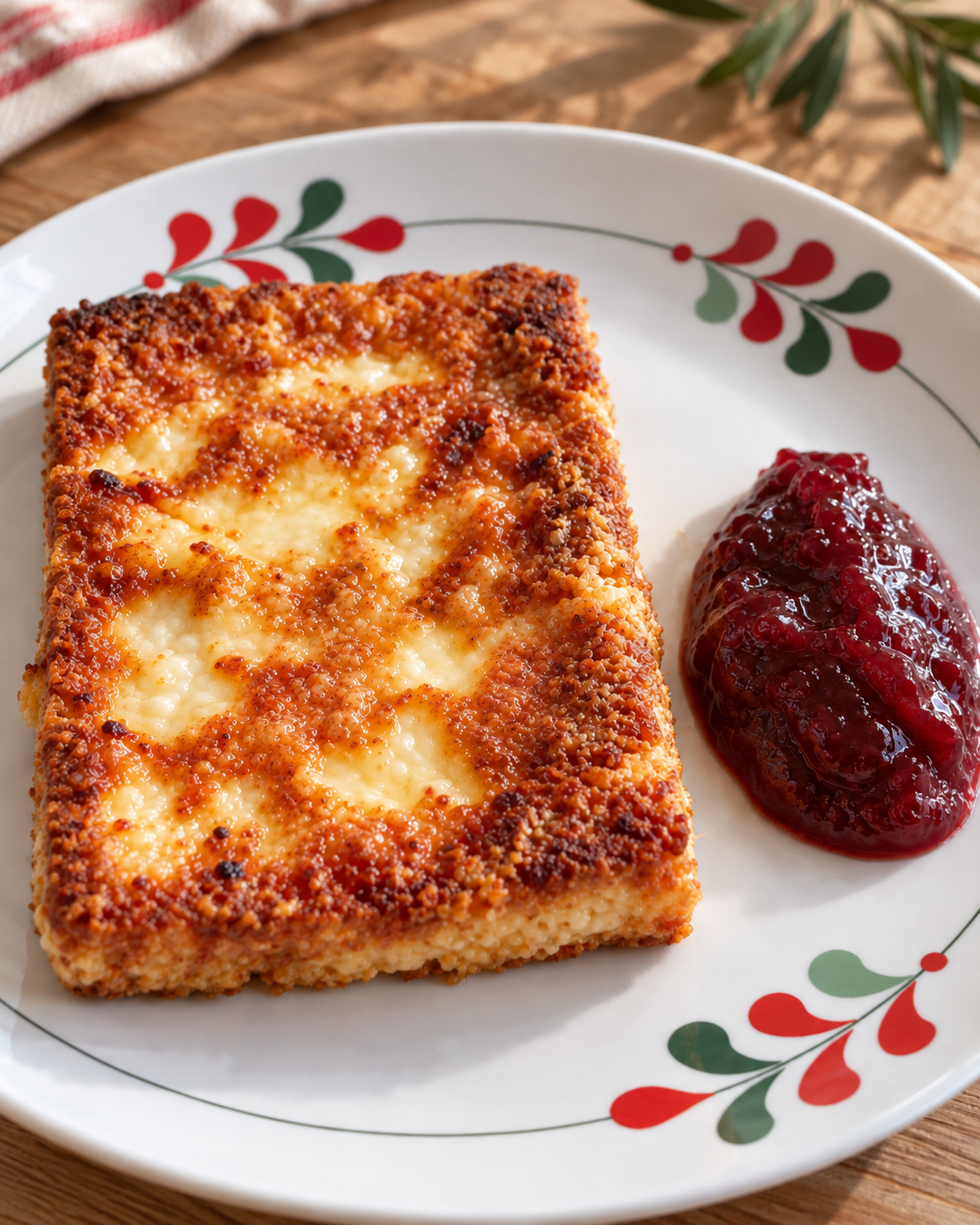
Saganaki with Grape Jam
Golden fried cheese, crisp outside and molten within, served with a slow-cooked grape jam brightened with lime — the taverna classic named after its little pan.
Read the story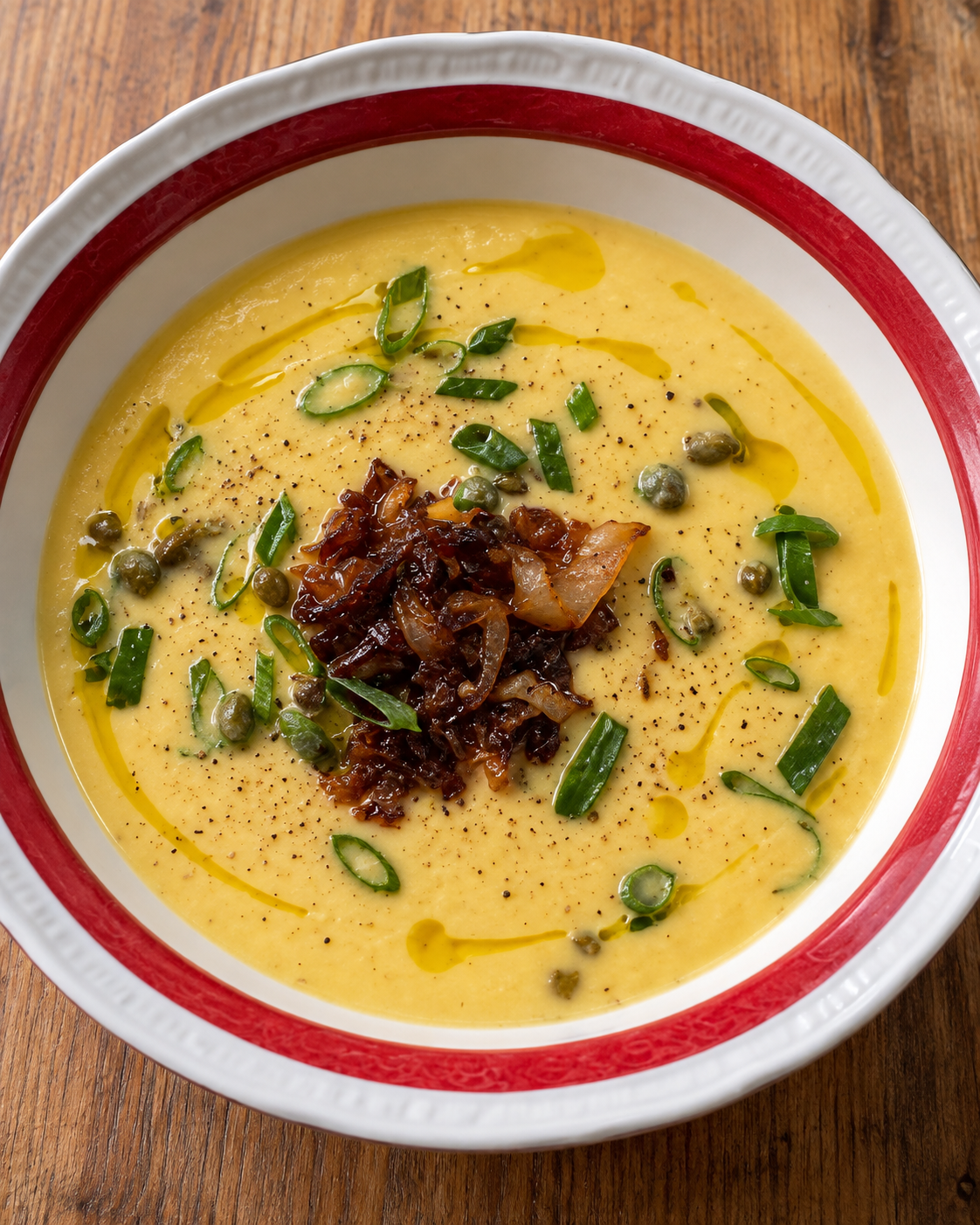
Fava
Silky yellow split-pea purée crowned with caramelized onions and capers — a dish that survived the volcano that buried ancient Santorini.
Read the story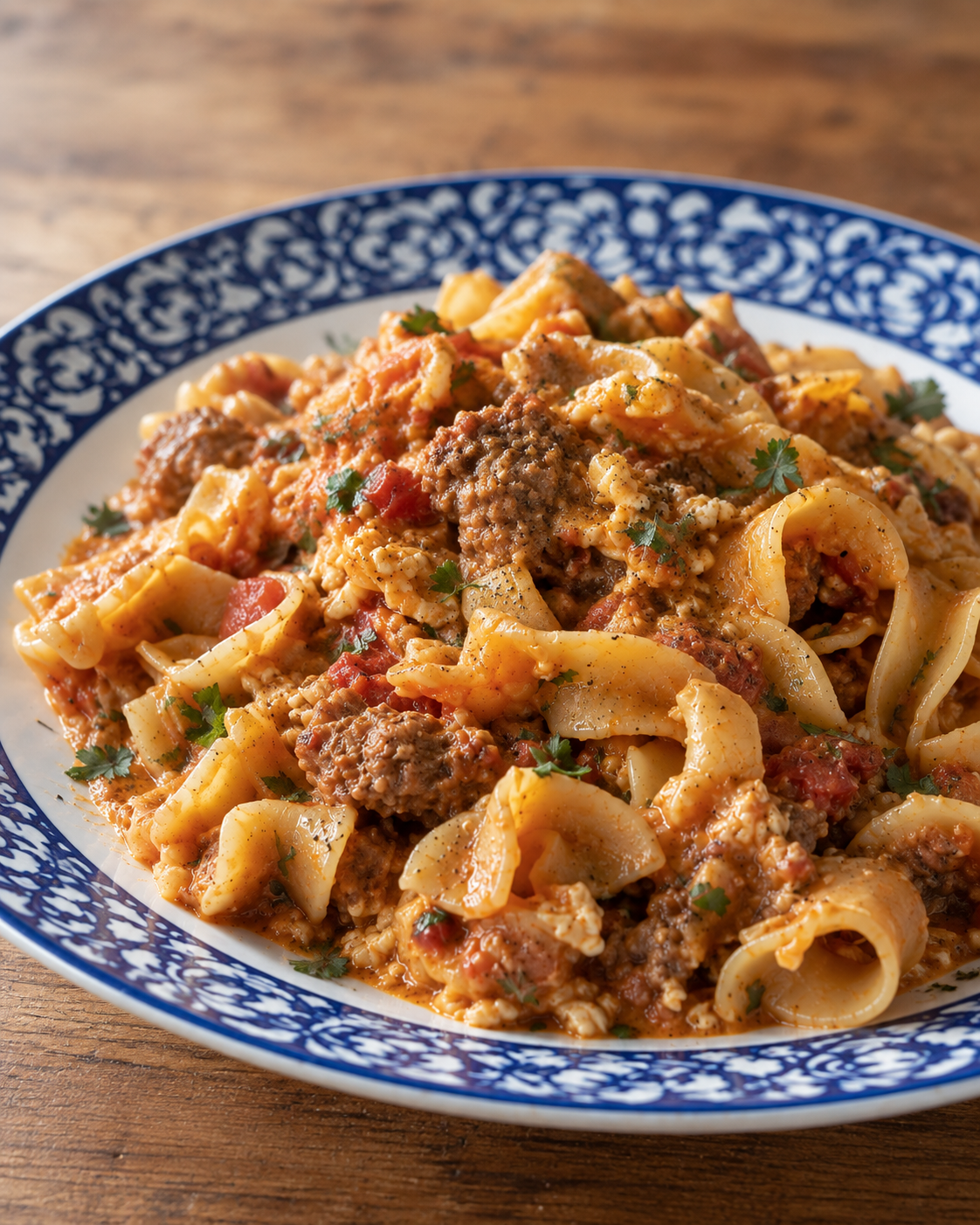
Hilopites with Sausages & Eggs
Greece's village egg pasta simmered with sausages, peppers and tomato, finished with eggs stirred through for creaminess — topped with feta and wild oregano.
Read the story