How this dish came to life
Cultural significance
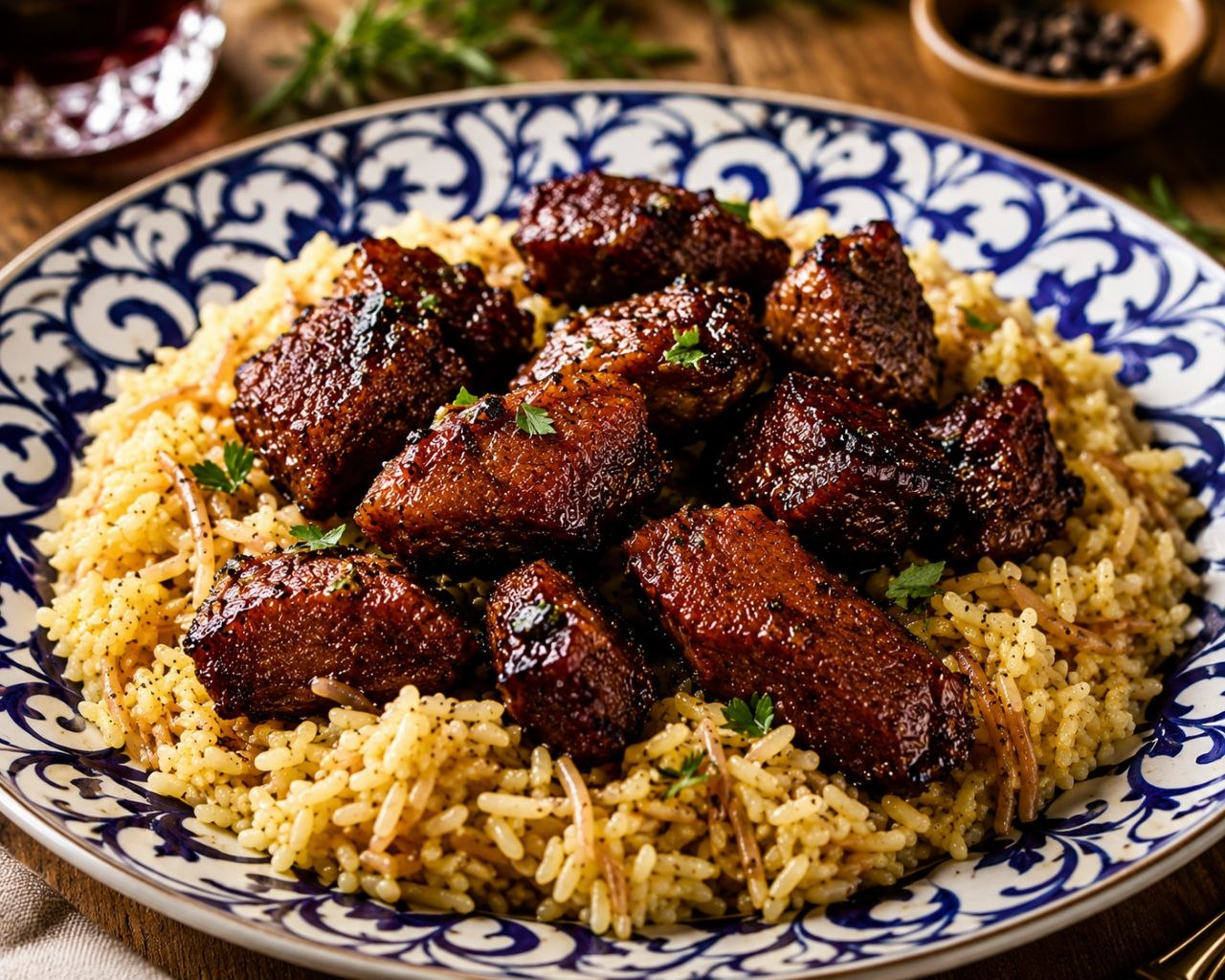
Afelia (αφέλια) is one of the foundational dishes of Cypriot cuisine — a slow-braised pork stew defined by two distinctly Cypriot ingredients: dry red wine from the island's vineyards (Cyprus has been making wine for over 4,000 years, with Commandaria recognised as the oldest named wine in the world) and crushed coriander seed (κόλιαντρος), the defining spice of the Cypriot kitchen and a marker that distinguishes Cypriot cooking from mainland Greek cuisine. Pork has been continuously eaten on Cyprus since antiquity — the island is one of the few in the eastern Mediterranean with an unbroken pork-eating tradition. Afelia is closely associated with the seasonal cooler months between October and April and with the celebrations around name days, Christmas, and Cypriot panigiria. The dish carries cultural weight beyond its ingredients: it is one of the meals most associated with the village kitchens of Cyprus during the 1955–1959 EOKA struggle for independence, when daily life and family continuity were preserved through cooking, tradition, and the small acts of gathering around one table. Almost always served with pourgouri pilafi (cracked-wheat with vermicelli) or sometimes with fried potatoes.
step by step
Instructions
- 1
Pat the pork cubes dry with a clean cloth — every Cypriot cook will tell you this. Wet meat will never sear and will never produce the deep mahogany colour that defines a real afelia.
- 2
Crush the coriander seeds with a mortar and pestle until they are cracked open into small irregular fragments — never a fine powder. The cracking releases the seeds' citrus-and-pepper oils. Giagia rule: 'You should smell them across the room.'
- 3
In a wide bowl combine the pork, the crushed coriander, the red wine, a generous pinch of salt, and plenty of cracked black pepper. Mix well with your hands so every cube is coated. Cover and marinate in the fridge for at least 2 hours, ideally 4, even better overnight. The longer the marinade, the deeper the colour and the more tender the meat.
- 4
When ready to cook, lift the pork out of the marinade with a slotted spoon and pat it dry again on a plate. Reserve the marinade — every drop will go back into the pot.
- 5
Place a wide, heavy-bottomed pot over high heat. Add NO oil yet — just the dry pork cubes. Let them sit undisturbed for 3–4 minutes before turning. The fat in the pork will render out as they sear and the cubes will turn a deep, burnished brown on all sides. This dry-sear step is the Cypriot trick that gives afelia its dramatic colour and depth.
- 6
Once the pork is well browned on all sides (about 8–10 minutes total), add the 3 tbsp of olive oil and the bay leaf if using. Cook for 2 more minutes, basting the cubes in the hot oil.
- 7
Now pour in the reserved marinade — including all the coriander seeds. Stand back: it will hiss dramatically. Stir, scraping the deep brown crust off the bottom of the pot with a wooden spoon.
- 8
Lower the heat to its lowest setting. Cover the pot loosely (a slightly cracked lid is perfect — you want some evaporation), and let it simmer very gently for 60–75 minutes. Check every 20 minutes: if the sauce is reducing too quickly, add a small splash of water (never wine — it would be too sharp).
- 9
The afelia is ready when the meat is fork-tender, the sauce has reduced to a thick, dark, slightly syrupy glaze that coats the pork, and the kitchen smells of nothing in the world except coriander and red wine. Adjust salt and pepper at the end.
- 10
Serve hot, spooned generously over a bed of pourgouri pilafi or with fried potatoes on the side. Scatter fresh parsley over the top. Eat with bread and a glass of cold village red wine.
tips from the village —
Wisdom from grandmothers
- 01Crack the coriander seeds — never use ground coriander. The pre-ground spice loses its essential oils almost immediately; cracked seeds release a citrus-pepper perfume that defines the dish.
- 02Use pork with some fat on. Lean pork shoulder turns dry in the long braise. Pork belly cubes, or shoulder with the fat cap still on, melt into the sauce and make it silky.
- 03Marinate overnight if you can. Two hours is the minimum; overnight is what every Cypriot grandmother does.
- 04Dry-sear the pork first, without oil. The pork's own fat is enough to start the browning, and you avoid splattering oil all over your stove. Trust the process.
- 05Cook on the lowest possible heat for the braise. High heat tightens pork; gentle low heat melts it.
- 06Don't add water unless absolutely needed. The reduced wine sauce is the soul of the dish.
- 07Like all good Cypriot stews, afelia tastes even better the next day. Reheat gently with a splash of water if the sauce has thickened too much overnight.
- 08Always serve with pourgouri pilafi. Mainland Greeks serve it with rice; Cypriots serve it with cracked wheat, and the two together is the actual dish.
Related recipes
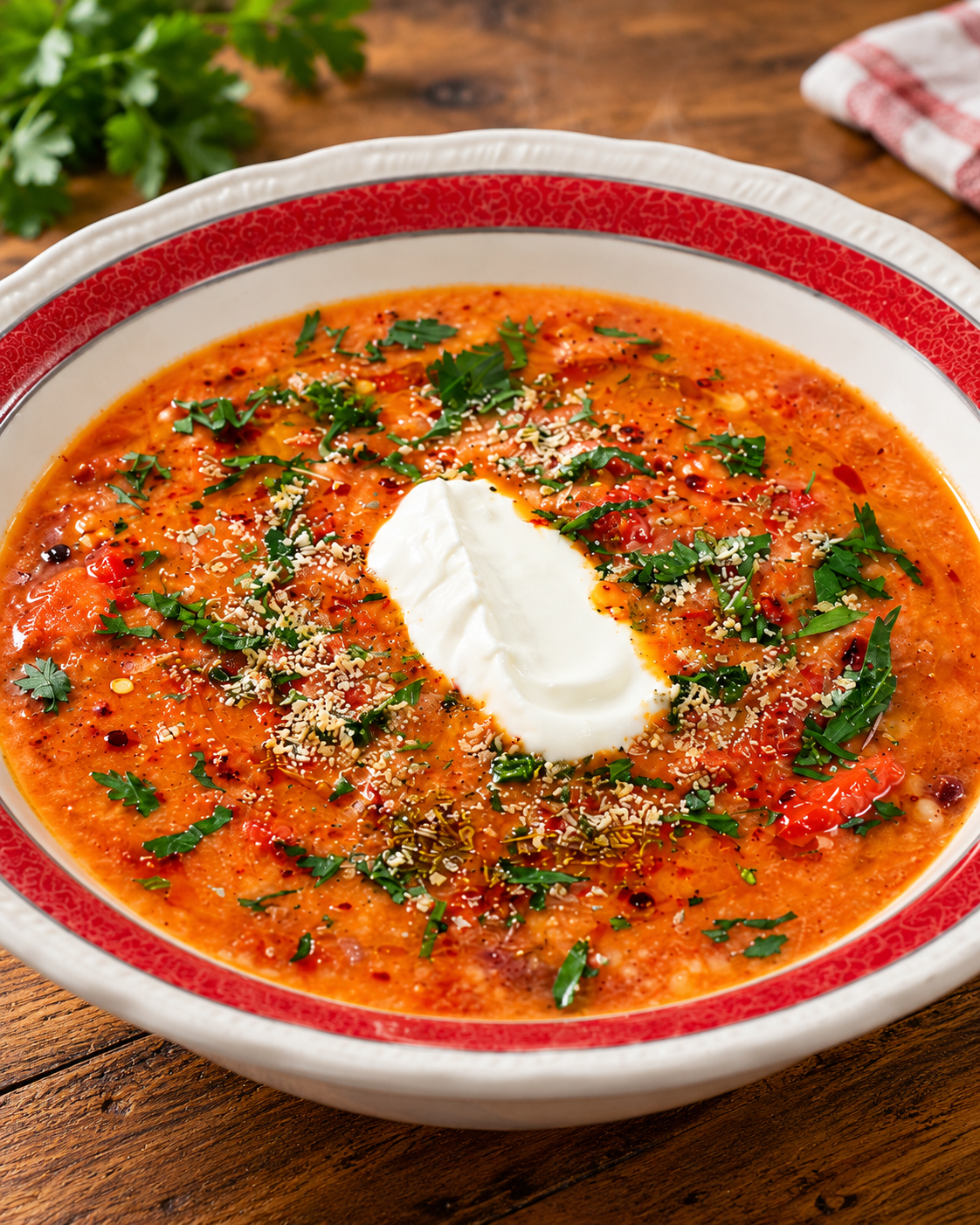
Kokkinistos Trahanas with Yogurt
Sour trahana simmered in a spicy tomato broth until creamy, served with cool Greek yogurt, boukovo and wild oregano — one humble food, countless traditions.
Read the story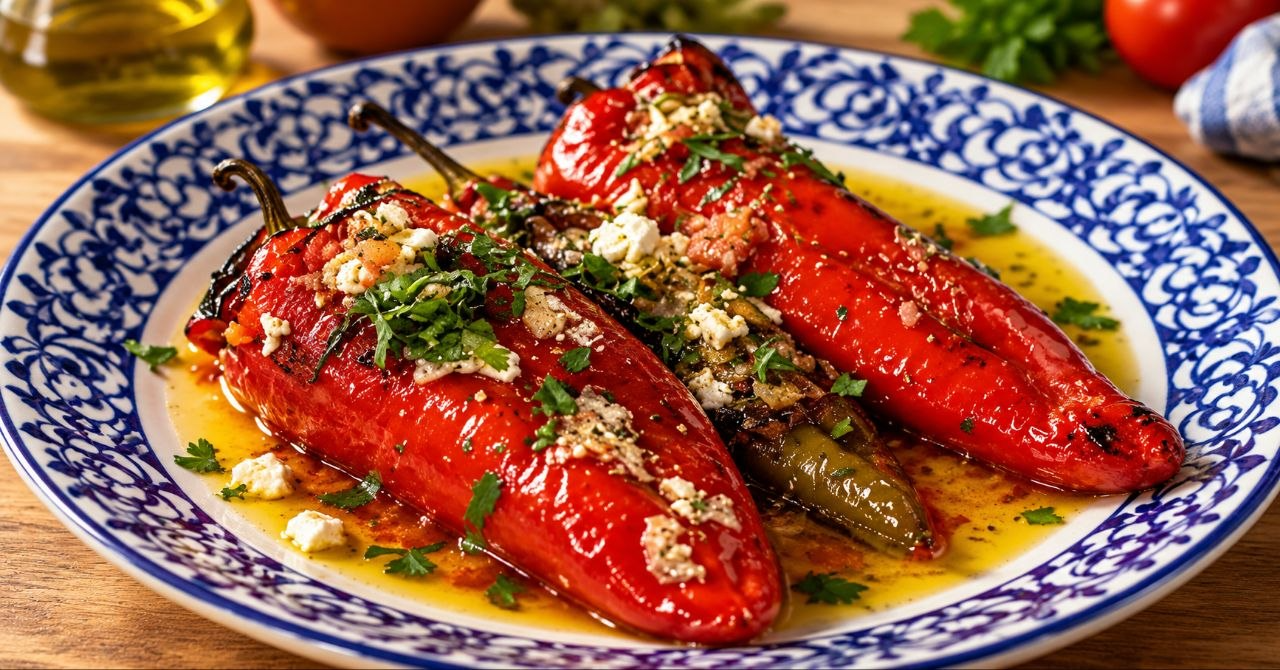
Stuffed Horn Peppers
Horn peppers stuffed with feta, tomato, garlic and wild oregano, baked until soft and caramelised — an American ingredient that became a Greek kitchen staple.
Read the story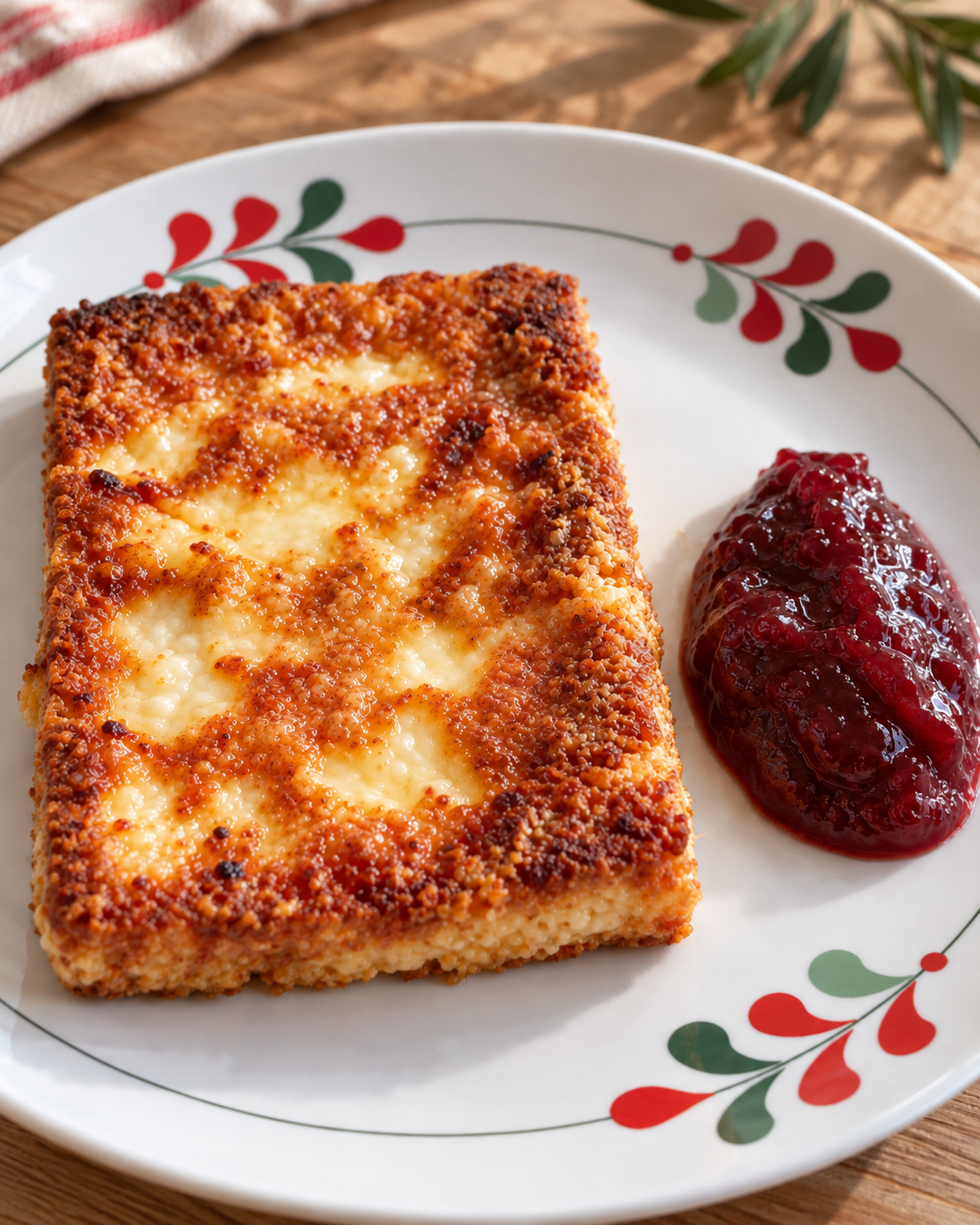
Saganaki with Grape Jam
Golden fried cheese, crisp outside and molten within, served with a slow-cooked grape jam brightened with lime — the taverna classic named after its little pan.
Read the story