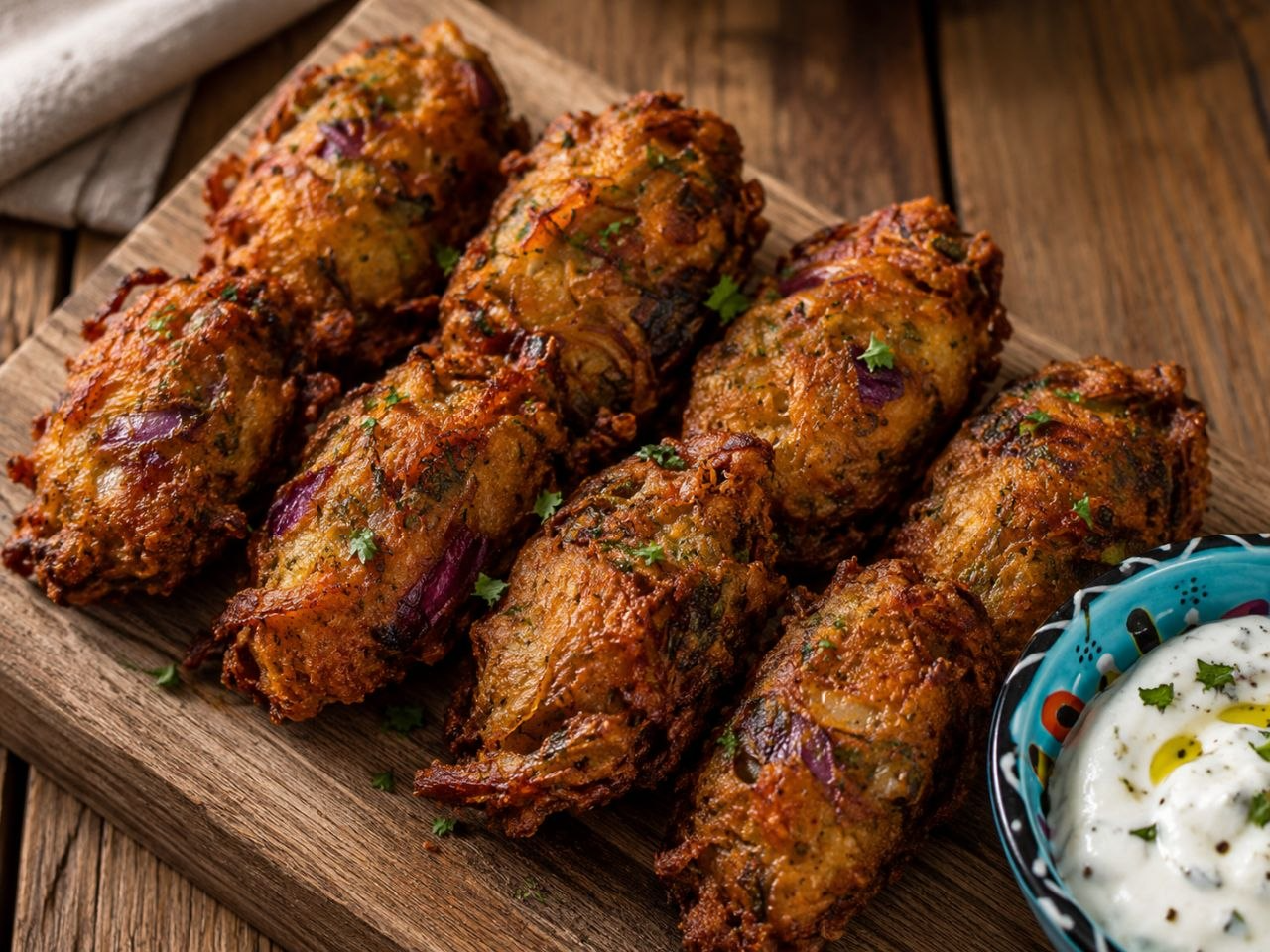
How this dish came to life
Cultural significance
Kremmydokeftedes — onion fritters — are one of the great Greek and Cypriot island meze, traditionally associated with Santorini in the Cyclades, where the PDO-protected Santorini white onion gives the local version its characteristic sweetness and crispness. The dish is closely related to the cross-Mediterranean tradition of vegetable fritters: Cretan kolokithokeftedes, mainland tomatokeftedes, and the Cypriot pumpkin fritters all share the same technique — squeeze the moisture out, fold with eggs and flour, fry, serve with yogurt. Indian onion bhaji and Turkish soğan kızartması belong to the same culinary instinct. Kremmydokeftedes are a Lenten-friendly dish in some regional variations (without eggs), and a year-round meze in every taverna across the islands, the Peloponnese, and Cyprus.
step by step
Instructions
- 1
Finely chop half of the onions (both colours) and thinly slice the rest. Place all the onions in a wide colander, sprinkle generously with salt, and let them sit for 15 minutes — the salt draws out their water.
- 2
Tip the onions into the middle of a clean tea towel, gather the corners, and twist hard over the sink. Squeeze out every last drop of water. Then squeeze again. Wet onions are the enemy of a crisp fritter — this is the single most important step in the recipe.
- 3
Place the squeezed onions in a wide mixing bowl. Add the chopped spring onions, the mint, parsley and basil, the lemon zest and juice, and the 3 tbsp of olive oil. Mix gently with your hands.
- 4
Crack the eggs into the bowl. Add the cumin, paprika, boukovo, a generous pinch of salt and plenty of cracked black pepper. Mix again.
- 5
Sift the flour and baking powder over the bowl and fold through with a spoon, just until you have a thick, sticky, holdable batter. Don't overwork it. If it looks too dry, add a tiny splash of water; if too wet, another spoonful of flour.
- 6
(Optional but worth it.) Cover the bowl and rest the mixture in the fridge for 15–20 minutes — the rest lets the flavours marry and the flour drink some of the residual onion juice, giving you a firmer batter to fry.
- 7
Meanwhile, make the yogurt dip. In a small bowl whisk together the yogurt, chopped mint or dill, a small pinch of salt, a thread of olive oil and a crack of pepper. Refrigerate.
- 8
Heat about 2 cm of sunflower oil in a wide heavy-bottomed pan over medium-high heat. The oil is ready when a small scrap of batter dropped in sizzles and turns golden within 5 seconds (about 175°C / 350°F).
- 9
Using a spoon dipped in cold water (this helps the batter slide off), scoop heaped tablespoons of the mixture and shape them roughly with your fingers into small oval fritters — about the size of a thumb. Drop them gently into the oil.
- 10
Fry 4–5 at a time (don't crowd the pan), turning once or twice, for about 3–4 minutes total until deeply golden, crisp at the edges, and cooked through the middle. Lift onto paper towel to drain briefly.
- 11
Pile the kremmydokeftedes on a warm wooden board. Scatter a final shower of fresh chopped parsley over the top.
- 12
Serve immediately with the cold yogurt dip and a wedge of lemon. Eat with your fingers. Cold beer or a glass of cold tsipouro on the side.
tips from the village —
Wisdom from grandmothers
- 01Squeeze the onions twice. The first squeeze gets out most of the water; the second gets out the rest. Truly dry onions = lace-edged, shattering fritters.
- 02Mix white and red onions. White onions give sweetness; red onions give colour and a faint sharpness. Together they are the whole dish.
- 03Don't grind the herbs to a paste. Chop them coarsely — visible green flecks are part of the look.
- 04Fry hot, not lukewarm. 175°C is the sweet spot. Cold oil gives you greasy, pale fritters; over-hot oil burns the outside before the inside cooks.
- 05Test the seasoning with one fritter first. Fry one before the rest, taste, and adjust salt or lemon in the bowl if needed.
- 06Eat immediately. Kremmydokeftedes are a *moment* — fresh out of the pan, hot and crackling, on a wooden board with cold yogurt. They lose their charm within 20 minutes.
- 07If serving as part of a Santorini-style meze plate, pair with fava (yellow split-pea purée) for the iconic island combination.
Related recipes
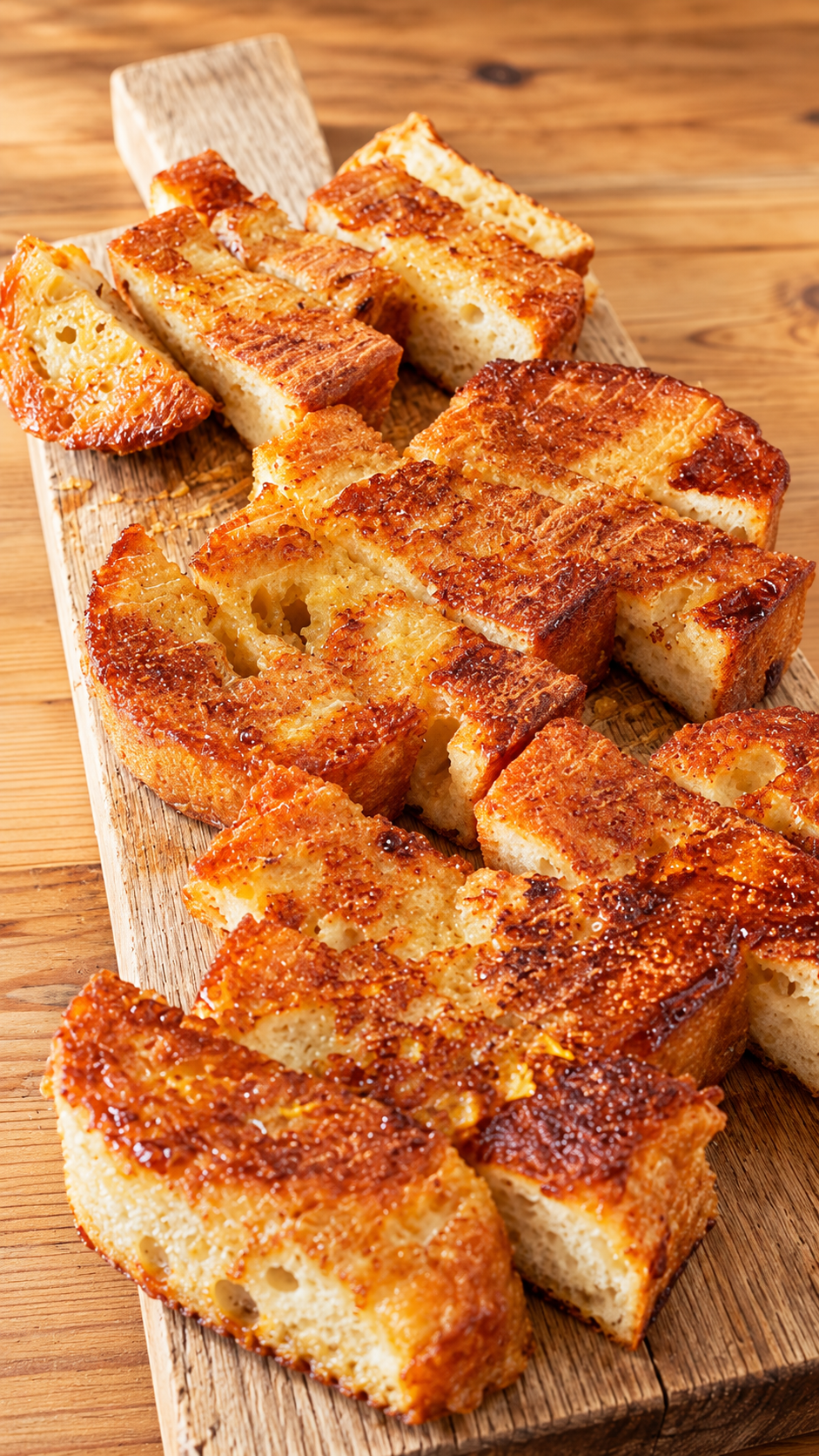
Avgofetes
Greek egg-fried bread — yesterday's loaf dipped in egg and milk, fried golden in olive oil and served with honey and cinnamon. Older than French toast.
Read the story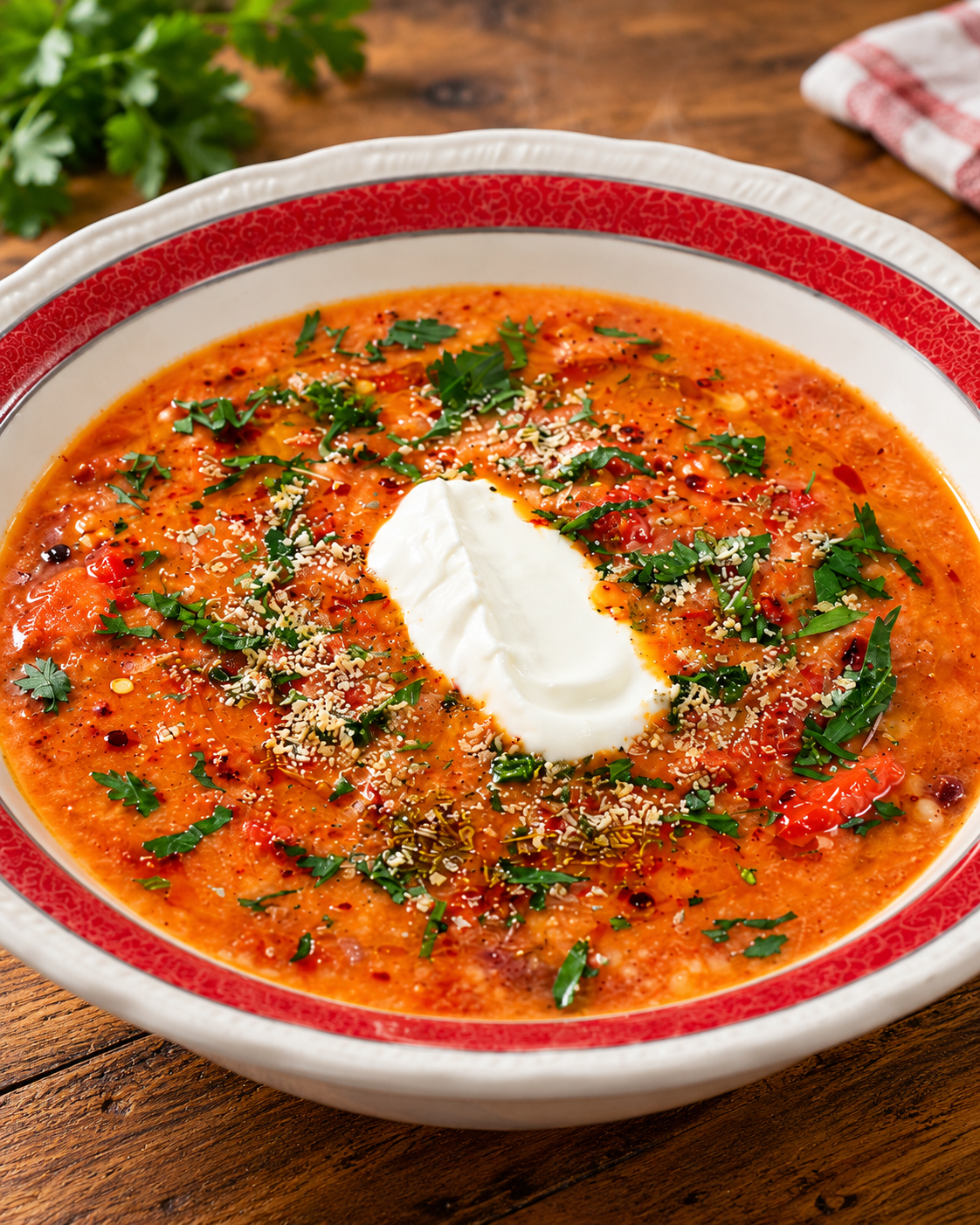
Kokkinistos Trahanas with Yogurt
Sour trahana simmered in a spicy tomato broth until creamy, served with cool Greek yogurt, boukovo and wild oregano — one humble food, countless traditions.
Read the story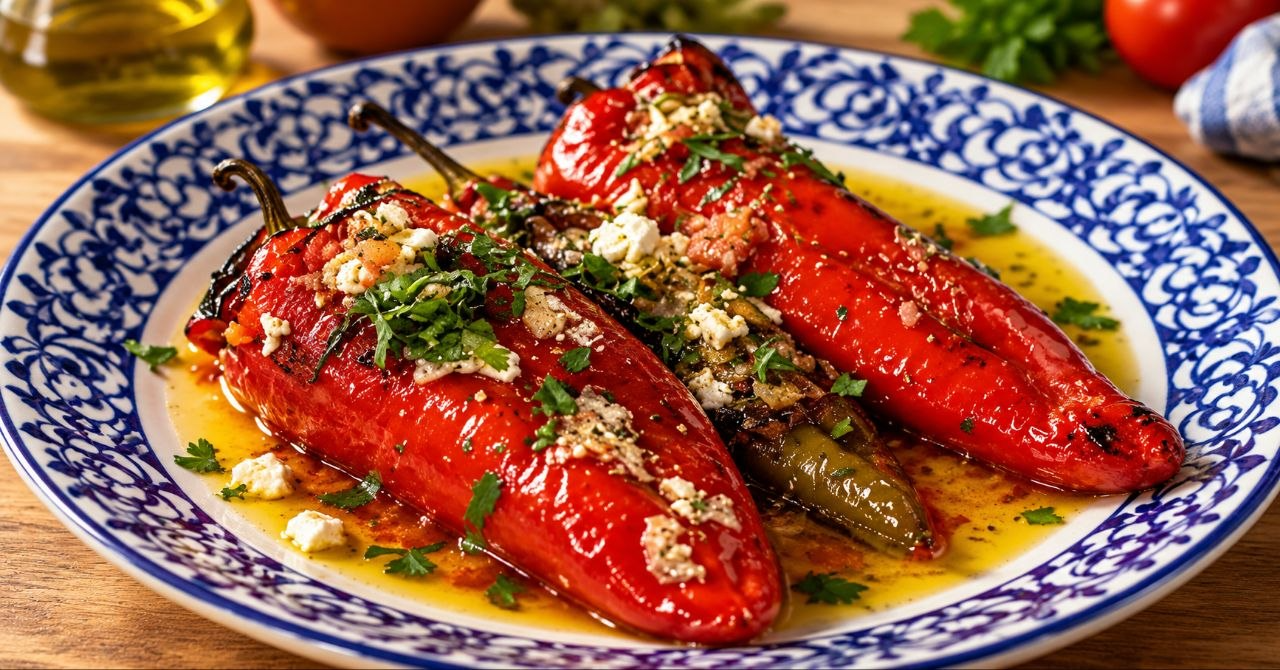
Stuffed Horn Peppers
Horn peppers stuffed with feta, tomato, garlic and wild oregano, baked until soft and caramelised — an American ingredient that became a Greek kitchen staple.
Read the story