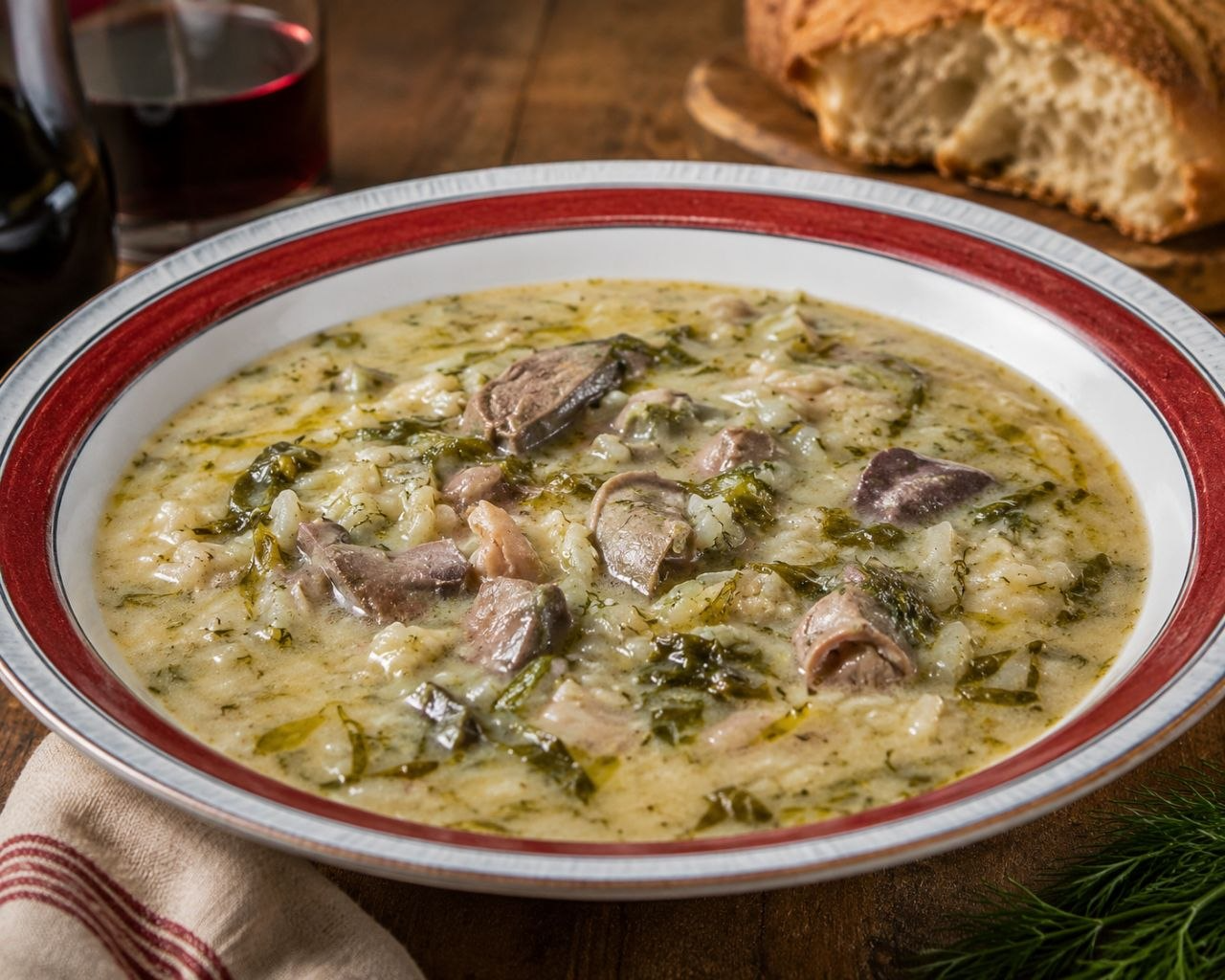
How this dish came to life
Cultural significance
Magiritsa is the most religiously significant soup of the Greek Orthodox year — eaten only once annually, immediately after the midnight Anastasis (Resurrection) service on Holy Saturday, when the 40-day Lenten fast officially ends. The dish has roots in both Byzantine religious practice and the older Greek peasant principle of using every part of the slaughtered lamb. The name μαγειρίτσα (magiritsa) comes from a diminutive form of μαγειρεύω (to cook), suggesting 'a small or modest cooking.' Regional variations exist across the Greek world: regali in the Mani region of the Peloponnese, a wild-fennel version on Crete, a refugee-tradition rice-heavier version brought from Asia Minor in 1922, and an avgolemoni pork version in Cyprus. Symbolically, the lamb represents Christ and sacrifice; the bitter greens (lettuce, dill) recall the bitter herbs of older Mediterranean spring-feast traditions including Jewish Passover; and the soup as a whole marks the transition from fasting to celebration. Magiritsa is the second most-emotionally-charged dish of the Greek Easter table after the lamb itself.
step by step
Instructions
- 1
Wash the offal very thoroughly under cold running water. If using lung or intestine, rinse multiple times — they hold blood and need full cleaning.
- 2
Place the cleaned offal in a wide pot with enough cold water to cover by 5 cm. Add the bay leaves, the peppercorns, the rosemary sprig, and a small pinch of salt. Bring to a gentle boil, then lower to a simmer for 10 minutes — this is the blanching, which firms the offal and removes the strong organ flavour.
- 3
Drain the offal (discard the blanching liquid and herbs) and let cool slightly. Once cool enough to handle, chop everything finely — about 5–7 mm pieces. The smaller pieces give the soup its characteristic mosaic texture.
- 4
In a clean, wide heavy-bottomed pot, heat the olive oil over medium heat. Add the chopped onion, the spring-onion whites, the garlic and a generous pinch of salt. Sauté gently for 6–7 minutes until soft and just turning gold.
- 5
Add the chopped offal to the pot and stir for 4–5 minutes, until everything is coated in the oil and the lamb begins to release its aroma.
- 6
Pour in the white wine and let it bubble away for 2 minutes — this lifts any stuck bits from the bottom and balances the richness of the meat.
- 7
Pour in 1.5 litres of hot water (or light lamb broth). Bring to a gentle simmer, lower the heat to its lowest setting, half-cover the pot, and let the soup simmer slowly for 40 minutes — the offal will soften completely and the broth will deepen in flavour.
- 8
After 40 minutes, taste the broth and adjust salt. Add the Arborio rice, the shredded lettuce, and most of the chopped dill (reserve a small handful for the finish). Simmer for another 15–18 minutes, stirring occasionally, until the rice is tender and the soup has thickened beautifully.
- 9
Take the pot off the heat. Now the most important step: the avgolemono. In a separate bowl, whisk the egg vigorously for 30 seconds, then whisk in the lemon juice. While still whisking, slowly ladle 2 small ladles of the hot soup broth into the egg-and-lemon mixture, a thin stream at a time — this is the 'tempering' that prevents the egg from scrambling.
- 10
Once tempered, pour the avgolemono mixture back into the pot in a slow stream while gently stirring the soup. Do not bring back to a boil — the soup will turn from clear to pale gold, slightly thickened and silky. That is exactly right.
- 11
Taste and adjust: another squeeze of lemon, more salt, plenty of cracked pepper. The soup should taste bright, lemony, and lifted.
- 12
Ladle into wide warm bowls. Scatter the reserved fresh dill and the spring-onion greens generously on top. Drizzle a final thread of raw olive oil. Crack on plenty of black pepper.
- 13
Serve immediately on Easter night with crusty Easter tsoureki or bread, a glass of cold red wine, and — if you observe the tradition — a single red-dyed egg on the side, tapped against another family member's: *Christos Anesti* / *Alithos Anesti*.
tips from the village —
Wisdom from grandmothers
- 01Blanch the offal first. Skipping the 10-minute blanching leaves the soup too strong — the blanching tames the organ flavour and clarifies the broth.
- 02Chop the offal finely. Magiritsa's pleasure is in the mosaic — small pieces of liver, heart, and lung scattered through every spoonful of broth. Bigger chunks make it heavy.
- 03Temper the egg slowly. Pouring cold egg straight into hot soup scrambles it instantly. The slow stream of hot broth into the egg is the unbreakable rule of avgolemono.
- 04Never let the avgolemono soup boil after adding the egg. Boiling curdles it. The pot should be off the heat completely when the egg-lemon goes in.
- 05Don't be shy with the lemon. Magiritsa should taste bright and lifted. One whole lemon is the minimum; some yiayias use one and a half.
- 06Make the soup base ahead. The offal and broth can be made on Holy Saturday afternoon. Add the rice, lettuce, dill and avgolemono just before serving, after midnight.
- 07Like all good Greek soups, magiritsa is even better the next day — but the avgolemono shouldn't be reheated to boiling. Warm gently, or eat at room temperature.
Related recipes
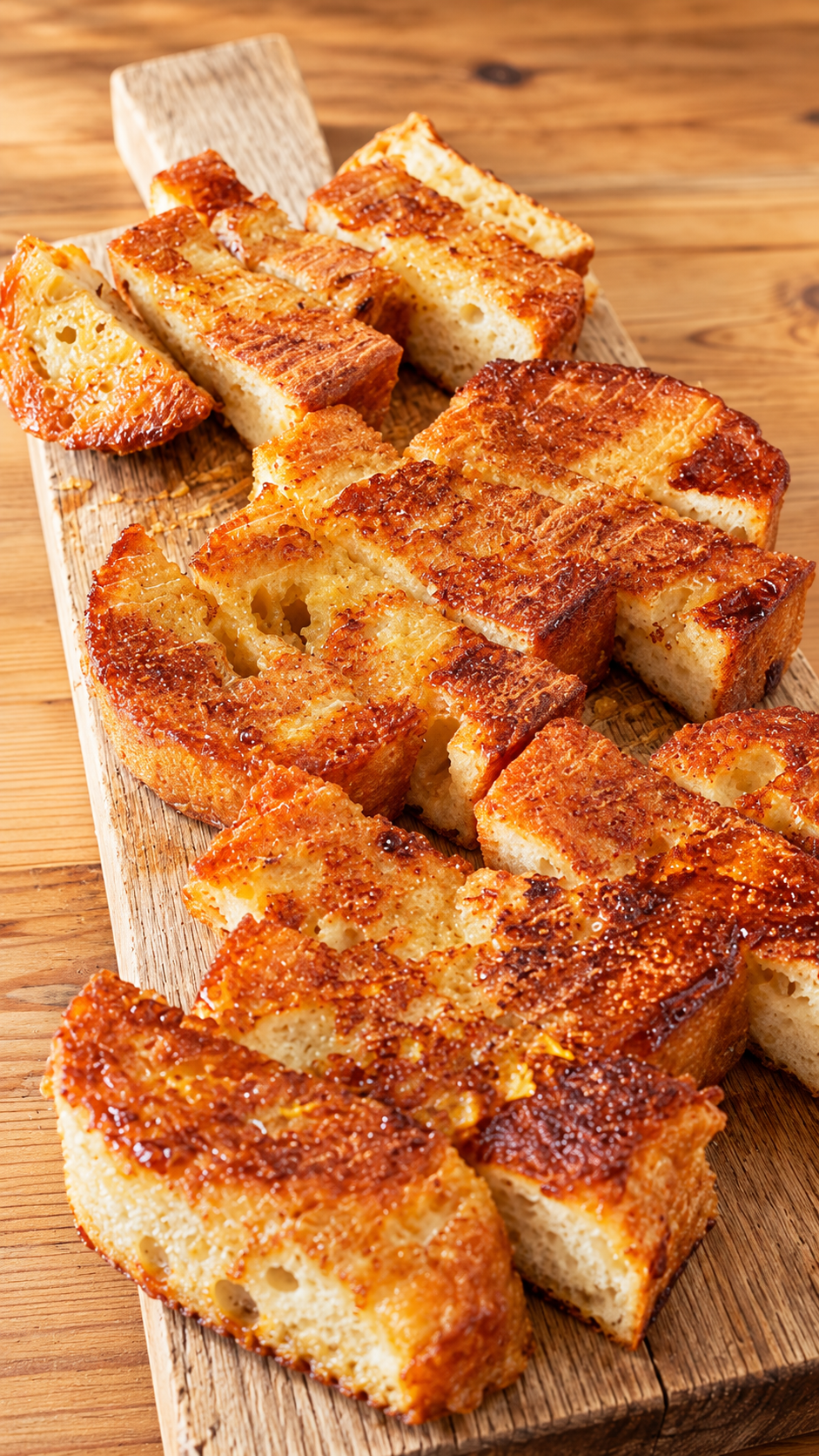
Avgofetes
Greek egg-fried bread — yesterday's loaf dipped in egg and milk, fried golden in olive oil and served with honey and cinnamon. Older than French toast.
Read the story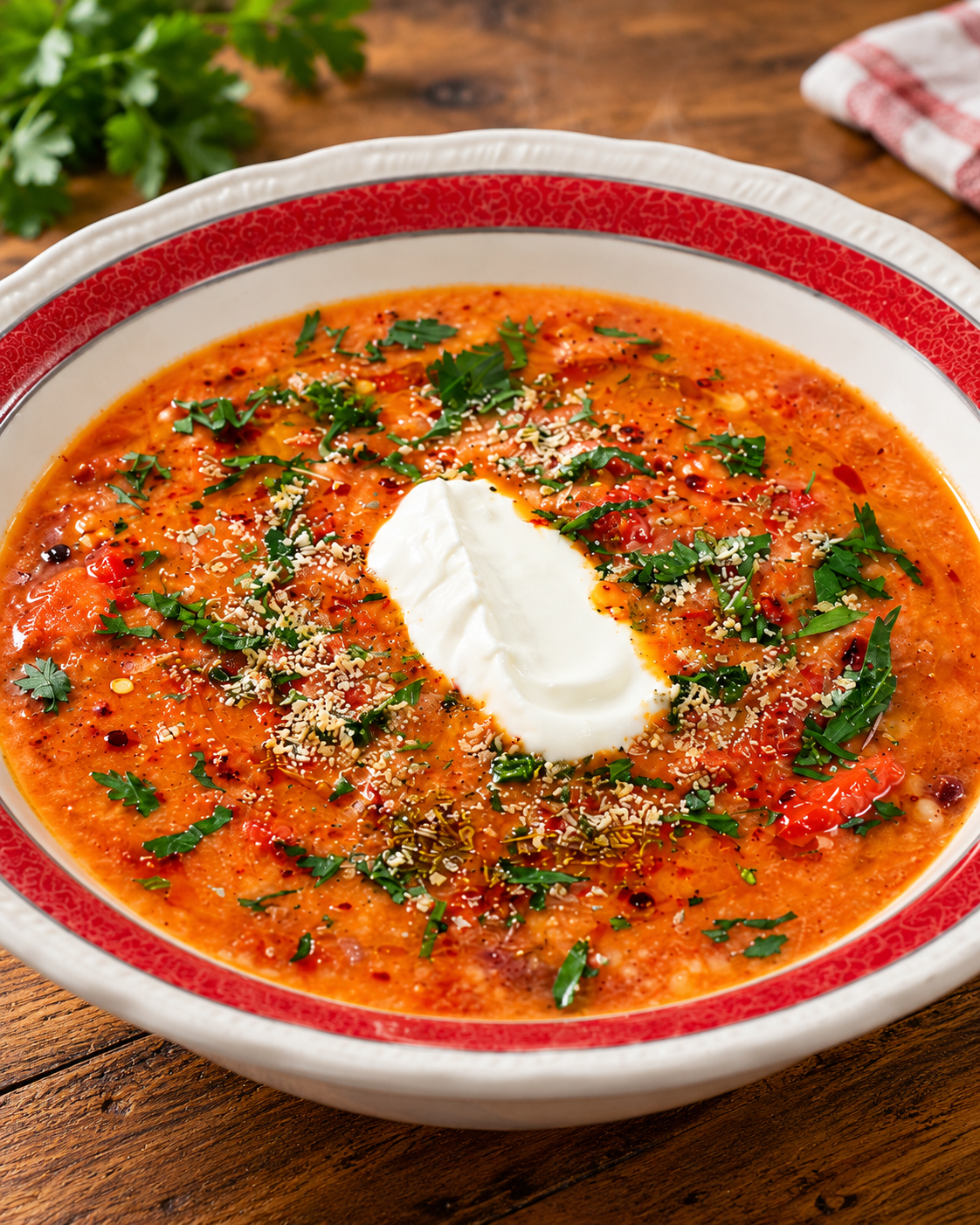
Kokkinistos Trahanas with Yogurt
Sour trahana simmered in a spicy tomato broth until creamy, served with cool Greek yogurt, boukovo and wild oregano — one humble food, countless traditions.
Read the story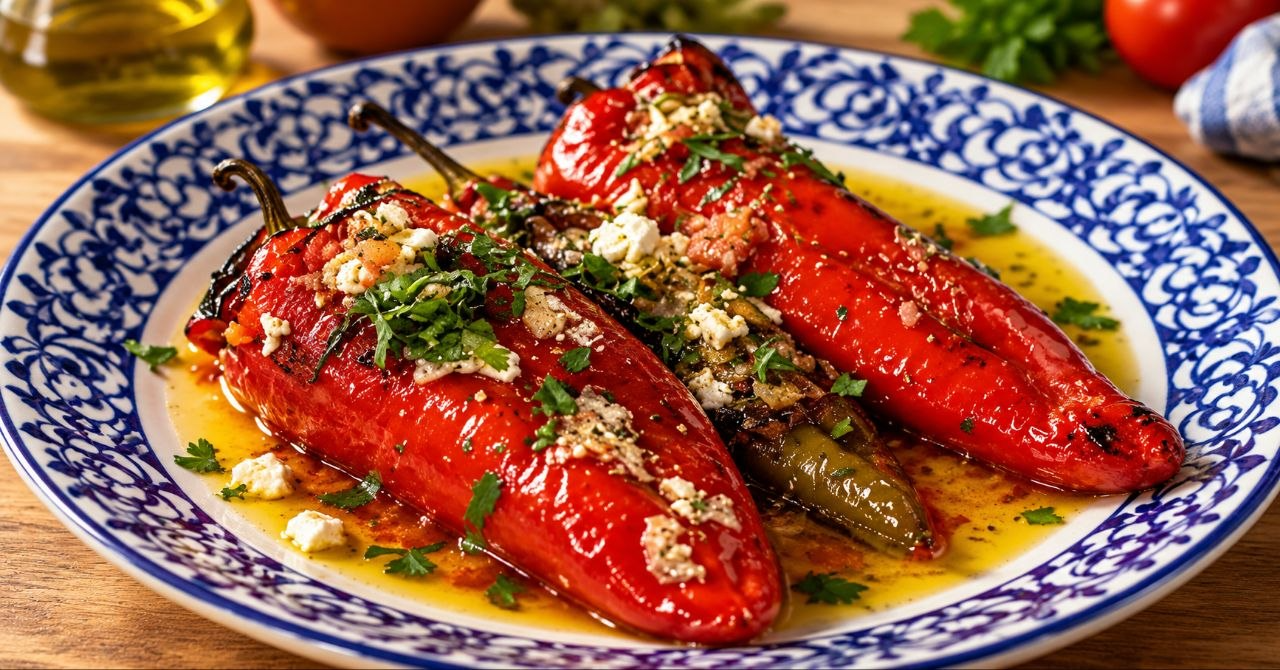
Stuffed Horn Peppers
Horn peppers stuffed with feta, tomato, garlic and wild oregano, baked until soft and caramelised — an American ingredient that became a Greek kitchen staple.
Read the story