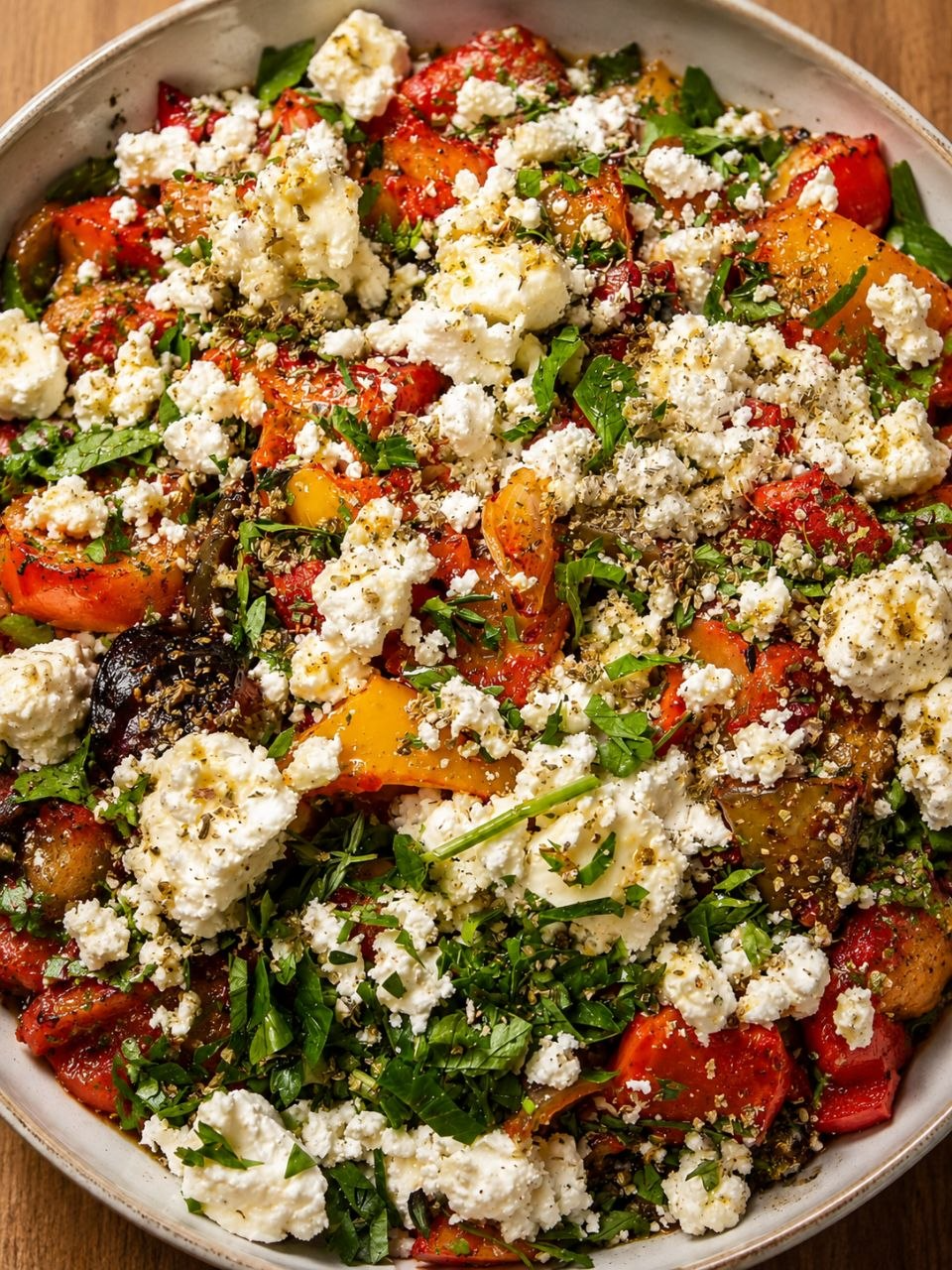
How this dish came to life
Cultural significance
Briam is one of the great laderá — the 'oily' dishes of the Greek table, cooked in olive oil and never with meat. It is a Lenten staple, a Friday supper, a Sunday lunch in the heat of summer when nobody wants to be near the stove. Like most laderá it tastes even better the day after it's made — proof of the Greek wisdom that food, like people, needs time to become itself.
step by step
Instructions
- 1
Heat the oven to 180°C / 355°F. Choose a deep, wide baking tray — terracotta or ceramic if you have it.
- 2
Slice all the vegetables to a similar thickness, about 1cm, so they cook at the same rate. Don't be too neat about it — this is a peasant dish, not a Pinterest one.
- 3
Layer the vegetables loosely in the tray, mixing the colours as you go — eggplant, zucchini, potato, peppers, onion, tomato, scattered rather than arranged.
- 4
Blend the 2 extra tomatoes with the garlic, olive oil, oregano, a generous pinch of salt and plenty of black pepper until smooth. Pour evenly over the vegetables.
- 5
Drizzle a final thin thread of olive oil over the top. Cover the tray tightly with foil.
- 6
Bake covered for 1 hour. The vegetables will steam in their own juices and the potato will turn tender.
- 7
Remove the foil, give the tray a gentle stir from the bottom, and return to the oven for another 20–30 minutes — uncovered — until the top is golden, the edges have caramelised, and the oil pools dark and glossy at the corners.
- 8
Rest for 10 minutes. Scatter with fresh parsley, crumble over a generous amount of feta if you like, and serve warm with bread to mop the tray.
tips from the village —
Wisdom from grandmothers
- 01Don't skip the slow first hour under foil. Briam needs to steam before it roasts — that's what gives the vegetables their melting texture.
- 02Use the deepest tray you have. The juices are the best part — they should pool, not evaporate.
- 03Briam is one of those dishes that genuinely improves overnight. Make it ahead and serve at room temperature for a real Greek summer lunch.
- 04Choose ripe summer tomatoes for the blended sauce. Out of season, a tin of good San Marzano tomatoes works honestly well.
Related recipes
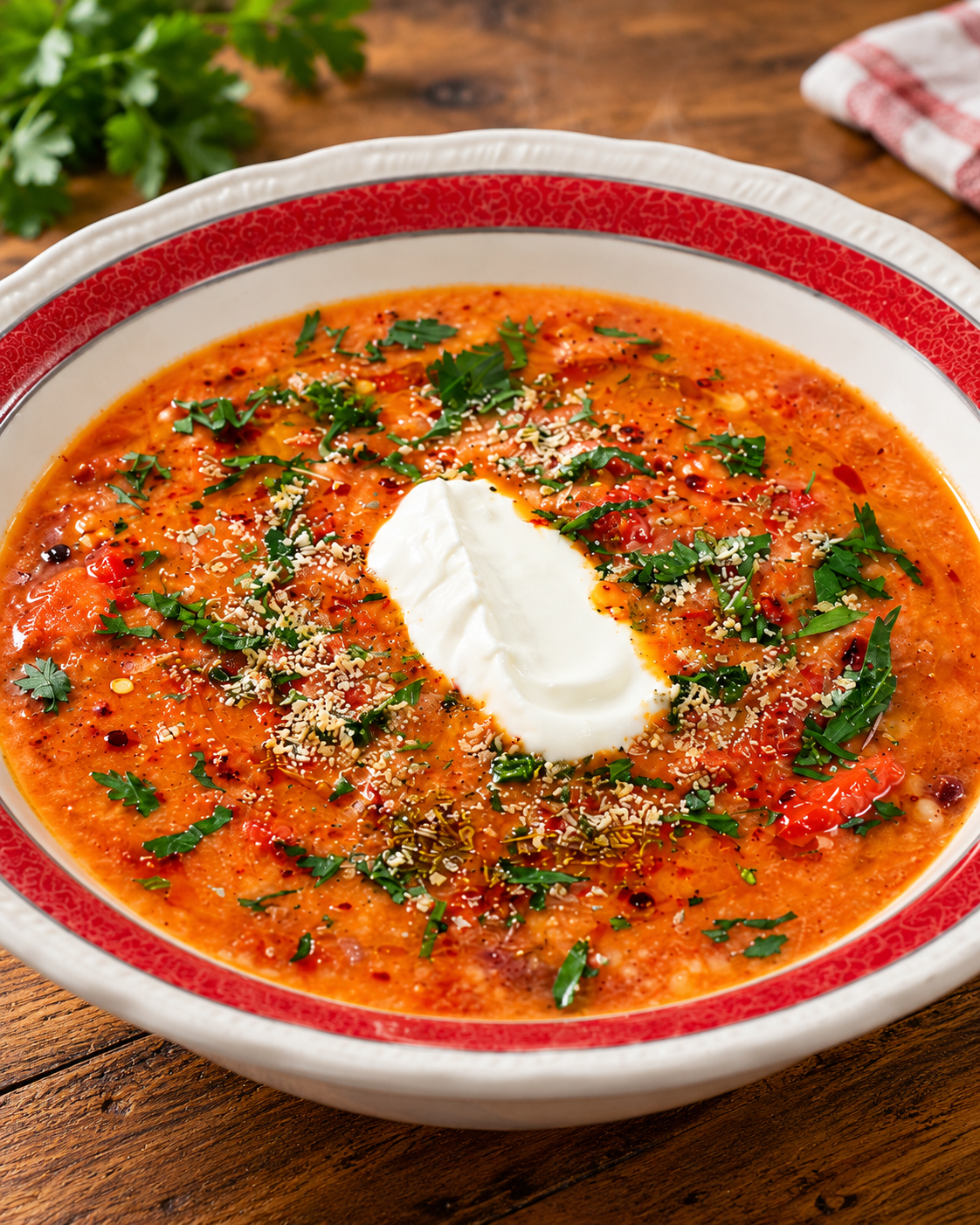
Kokkinistos Trahanas with Yogurt
Sour trahana simmered in a spicy tomato broth until creamy, served with cool Greek yogurt, boukovo and wild oregano — one humble food, countless traditions.
Read the story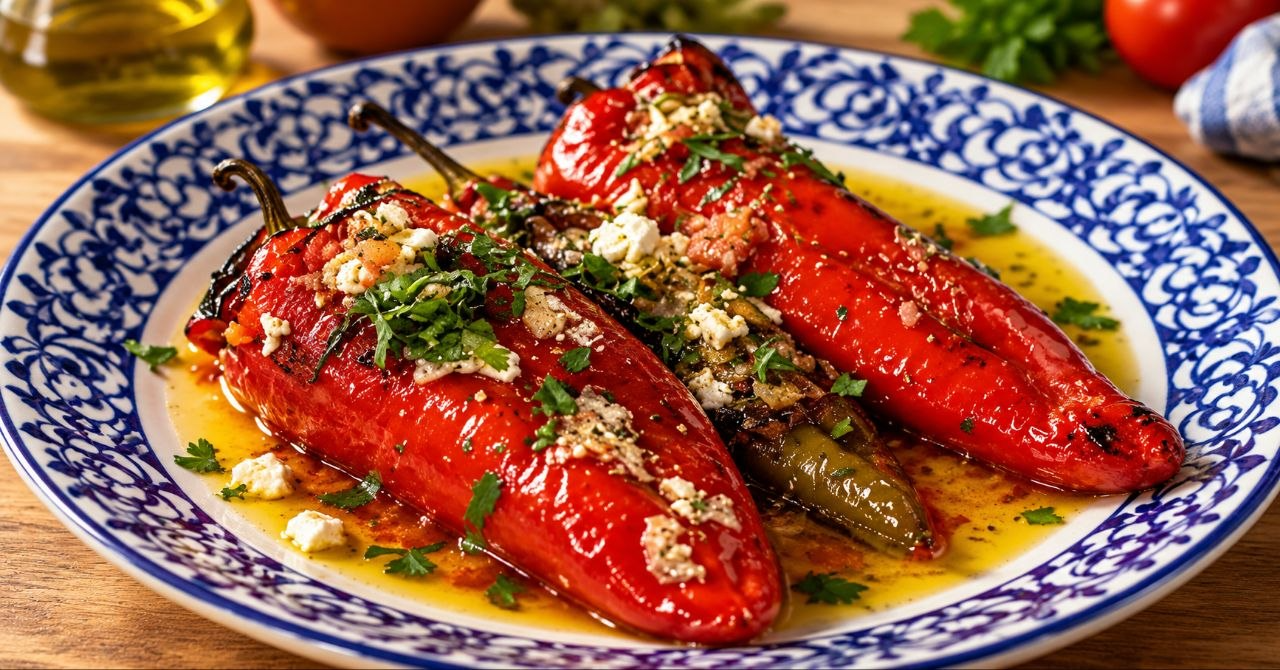
Stuffed Horn Peppers
Horn peppers stuffed with feta, tomato, garlic and wild oregano, baked until soft and caramelised — an American ingredient that became a Greek kitchen staple.
Read the story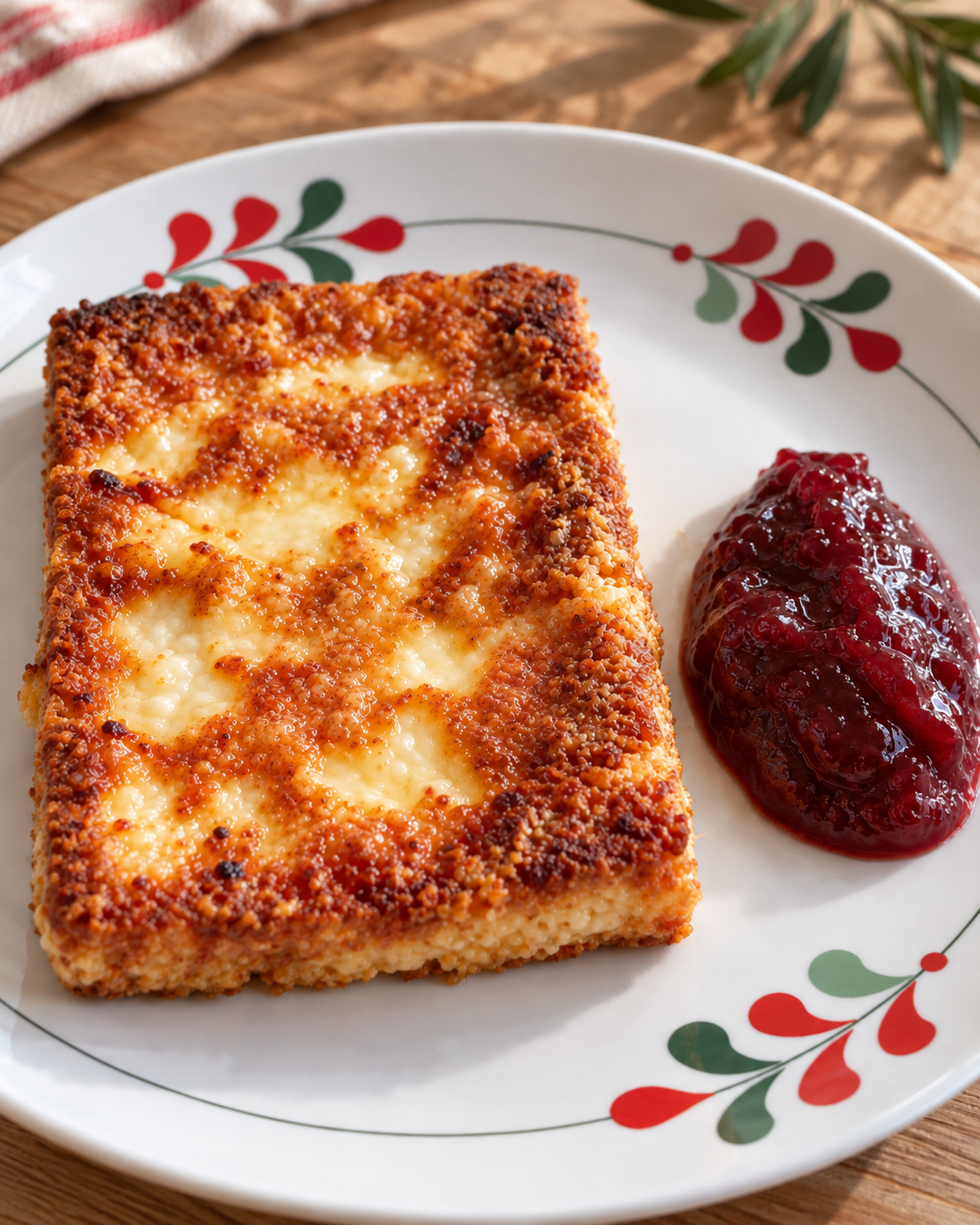
Saganaki with Grape Jam
Golden fried cheese, crisp outside and molten within, served with a slow-cooked grape jam brightened with lime — the taverna classic named after its little pan.
Read the story