a dish from greece —
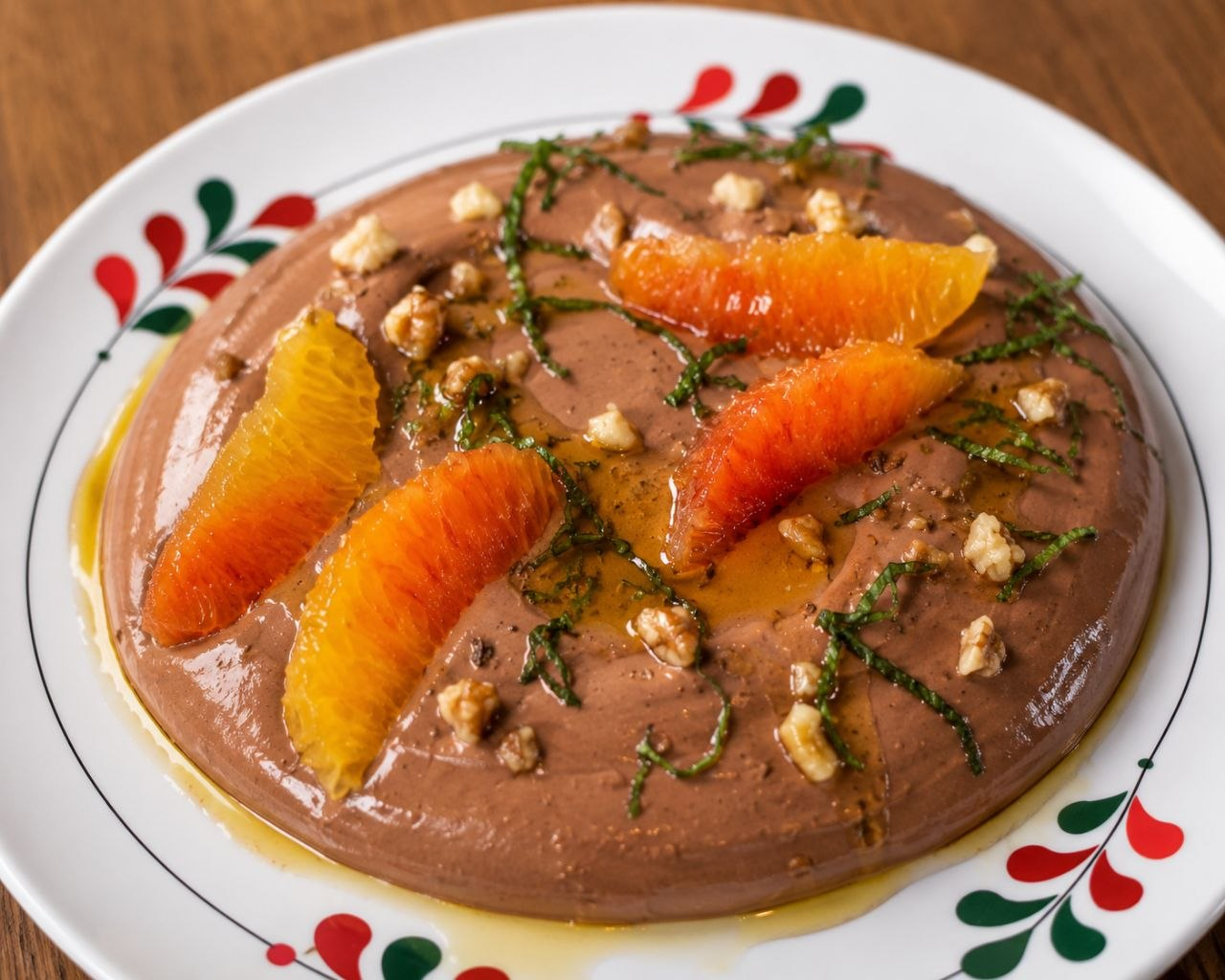
Chocolate Mousse with Orange & Olive Oil
How this dish came to life
Cultural significance
Chocolate mousse with olive oil is one of the signature gestures of the modern Athenian restaurant scene — born in the early 2010s in the small, design-forward restaurants of Koukaki, Pangrati and Kerameikos, where a new generation of Greek chefs began reinterpreting European classics through Greek pantry ingredients. The use of olive oil on dessert (alongside parallel moves like sea-salt-and-chocolate, olive oil ice cream, and mastic crème) is now a Greek culinary signature recognised internationally. Greek extra-virgin olive oil — particularly the Koroneiki variety from the Peloponnese — carries the green-grass and peppery notes that pair distinctively with dark cocoa and citrus, and the dish is now common across upscale Greek restaurants from Athens to London to New York. A modern Greek dessert built entirely on confidence in the Greek pantry.
step by step
Instructions
- 1
Set up a bain-marie: a small pan of barely-simmering water with a heatproof bowl resting over the top (the bowl shouldn't touch the water). Place the chocolate pieces in the bowl and let them melt gently, stirring once or twice, until smooth and glossy. Take off the heat.
- 2
While the chocolate melts, heat the milk in a small saucepan over medium heat until it just comes to a gentle boil — bubbles ring the edge of the pan but don't break the surface. Take off the heat.
- 3
Pour the hot milk over the melted chocolate in a slow, steady stream, whisking gently as you go. Let it sit for 5 minutes — the chocolate will infuse the milk and the mixture will turn glossy and deep.
- 4
In a separate bowl, lightly whisk the egg yolks together. Pour a small amount (about a third) of the warm chocolate milk into the yolks while whisking constantly — this is called 'tempering' and it stops the yolks from scrambling. Then pour the tempered yolks back into the rest of the chocolate milk, whisking the whole time.
- 5
Strain the mixture through a fine sieve into a clean wide bowl to catch any little curds or chocolate flecks. The texture should be smooth, glossy, and the colour of dark milk chocolate.
- 6
Let the mixture cool to room temperature, stirring occasionally — about 20 minutes. Don't rush this. Warm mixture deflates whipped cream.
- 7
Whip the cold heavy cream in a separate bowl to soft peaks (the cream should hold its shape but the peaks should fold over gently, not stand up stiff). Over-whipped cream gives a grainy mousse.
- 8
Add a third of the whipped cream to the cooled chocolate mixture and stir it through with a spatula to lighten — this is the sacrifice fold.
- 9
Add the rest of the whipped cream in two more additions, folding very gently — lifting the mixture from underneath and turning it over. Stop the moment no white streaks remain. The mousse should look airy, glossy and pour-thick.
- 10
Pour the mousse into 4 small shallow bowls (or a single wide platter, like the photograph). Smooth the surface with the back of a spoon. Refrigerate, uncovered for the first 30 minutes, then loosely covered, for at least 4 hours — overnight is better.
- 11
Just before serving, segment the orange: slice off the top and bottom, stand it up, and cut down the sides to remove the peel and white pith. Then slice between the membranes to release clean orange fillets. Drain on paper.
- 12
Arrange the orange fillets on top of the cold mousse. Scatter the toasted walnut pieces and the mint chiffonade. Now, at the table if you can, pour the olive oil in a slow, generous, deliberate stream over the top of the mousse — let it pool around the orange. Add a small pinch of flaky sea salt and (if using) a grating of orange zest.
- 13
Eat with a wide spoon. Try to get a piece of orange, a slice of walnut, some olive oil pool, and a spoonful of mousse on every spoon. Repeat until the bowl is suspiciously clean.
tips from the village —
Wisdom from grandmothers
- 01Use a real Greek olive oil — and a good one. Cheap olive oil tastes greasy on chocolate; a proper early-harvest Koroneiki tastes peppery and grassy. This is the entire dish.
- 02Pour the hot milk over the chocolate, not the other way around. Reversing the order can seize the chocolate into a grainy clump.
- 03Temper the egg yolks. Pouring hot milk directly into yolks scrambles them; tempering with a small amount first protects the texture.
- 04Cool the chocolate mixture fully before folding in the cream. Warm chocolate deflates the cream and you end up with a sauce, not a mousse.
- 05Soft peaks for the cream, not stiff. Overwhipped cream creates a grainy, slightly buttery mousse — soft peaks fold cleanly through.
- 06Pour the olive oil at the table. The dish is theatre — the pour is the whole point. Pre-poured olive oil sinks into the mousse and disappears.
- 07Refrigerate at least 4 hours. The mousse needs time to set properly. Less than that and it pours instead of stands.
Related recipes
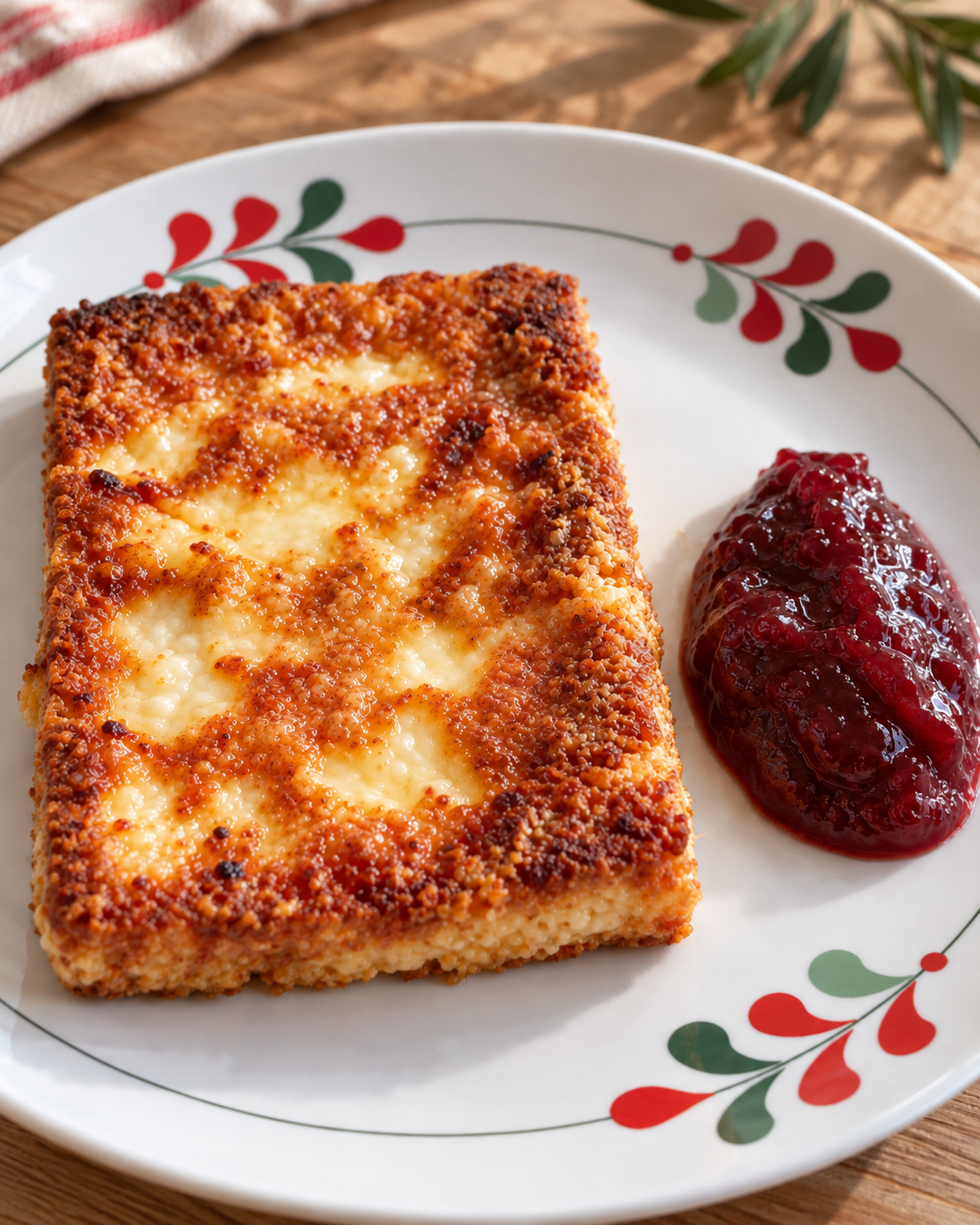
Saganaki with Grape Jam
Golden fried cheese, crisp outside and molten within, served with a slow-cooked grape jam brightened with lime — the taverna classic named after its little pan.
Read the story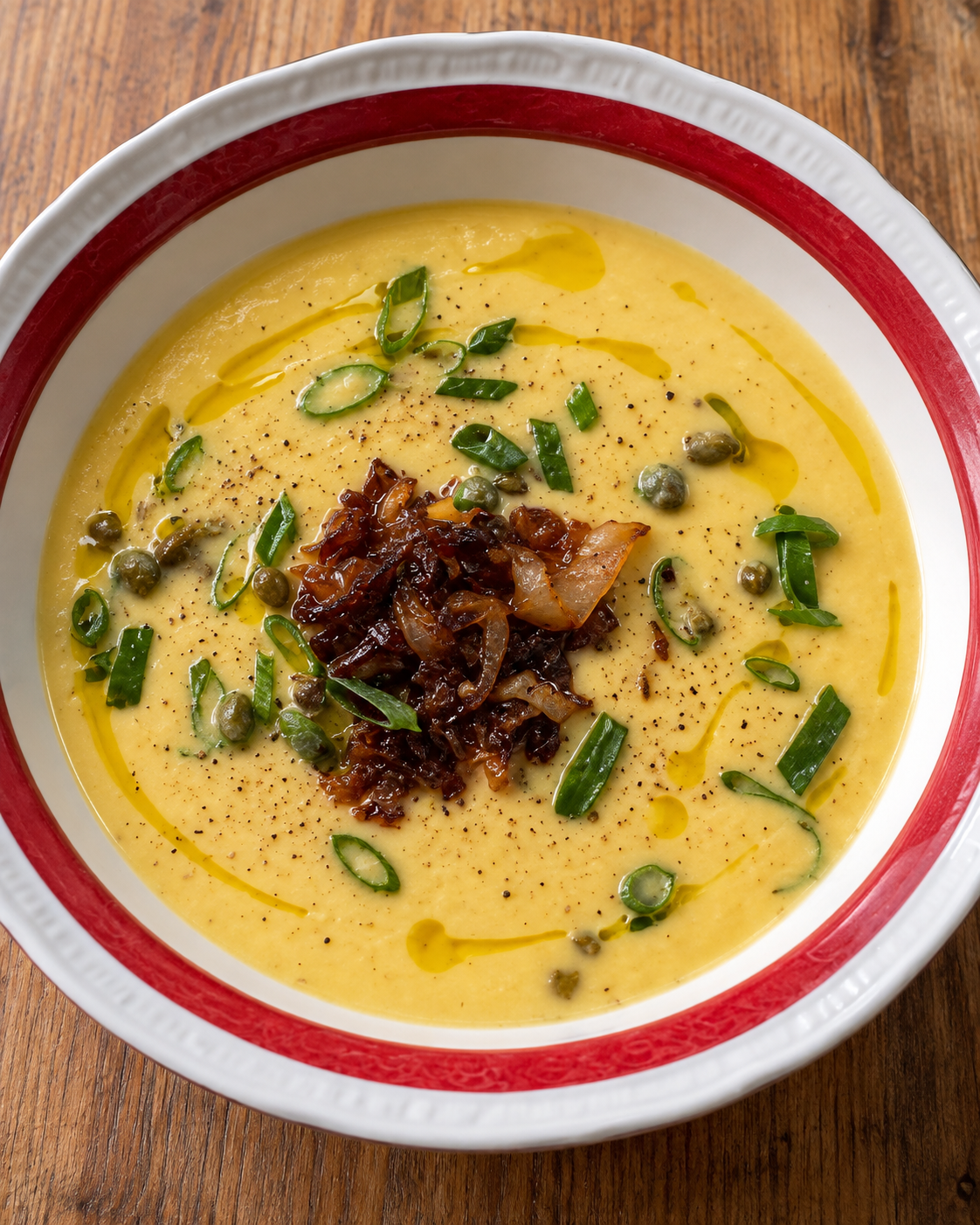
Fava
Silky yellow split-pea purée crowned with caramelized onions and capers — a dish that survived the volcano that buried ancient Santorini.
Read the story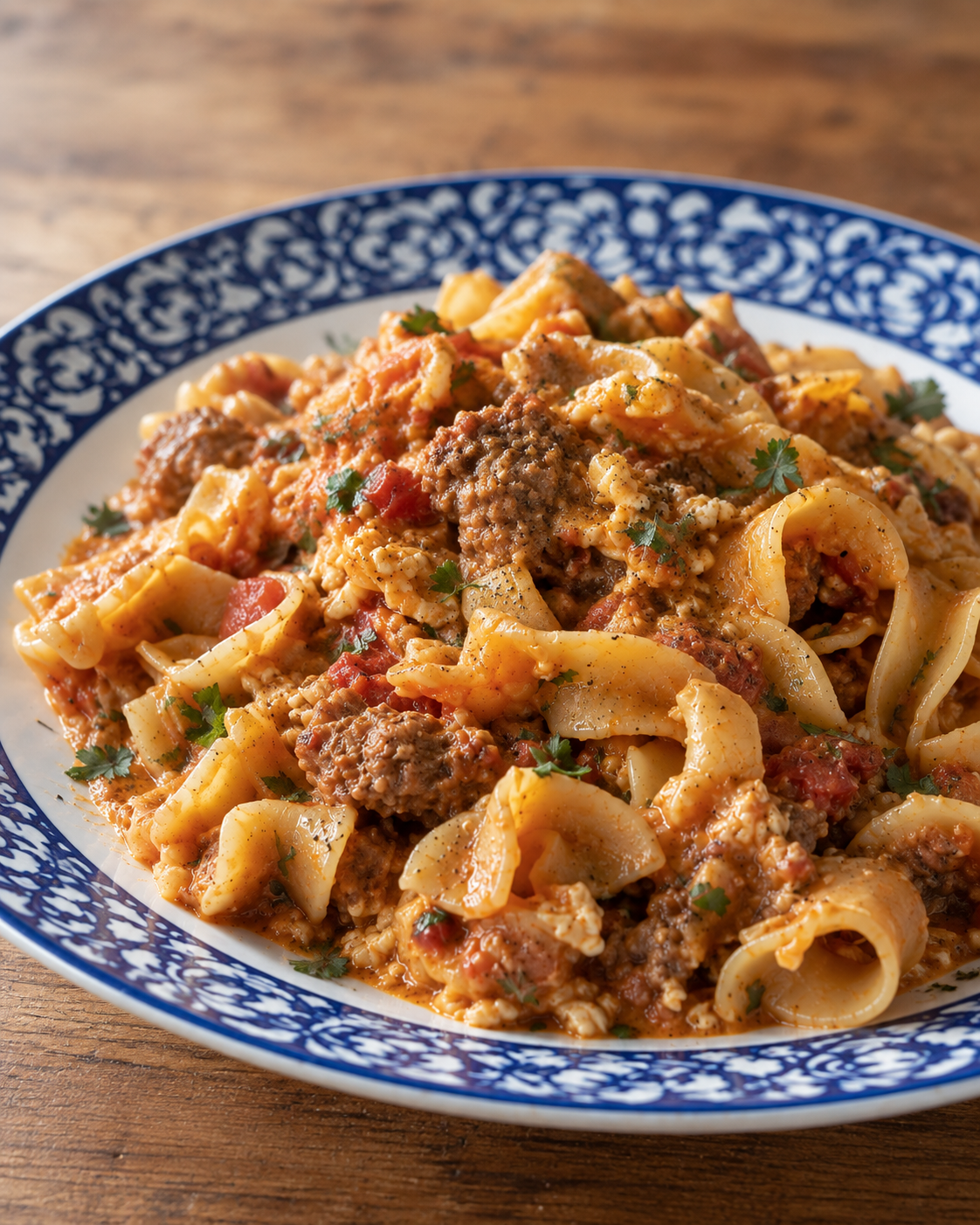
Hilopites with Sausages & Eggs
Greece's village egg pasta simmered with sausages, peppers and tomato, finished with eggs stirred through for creaminess — topped with feta and wild oregano.
Read the story