How this dish came to life
Cultural significance
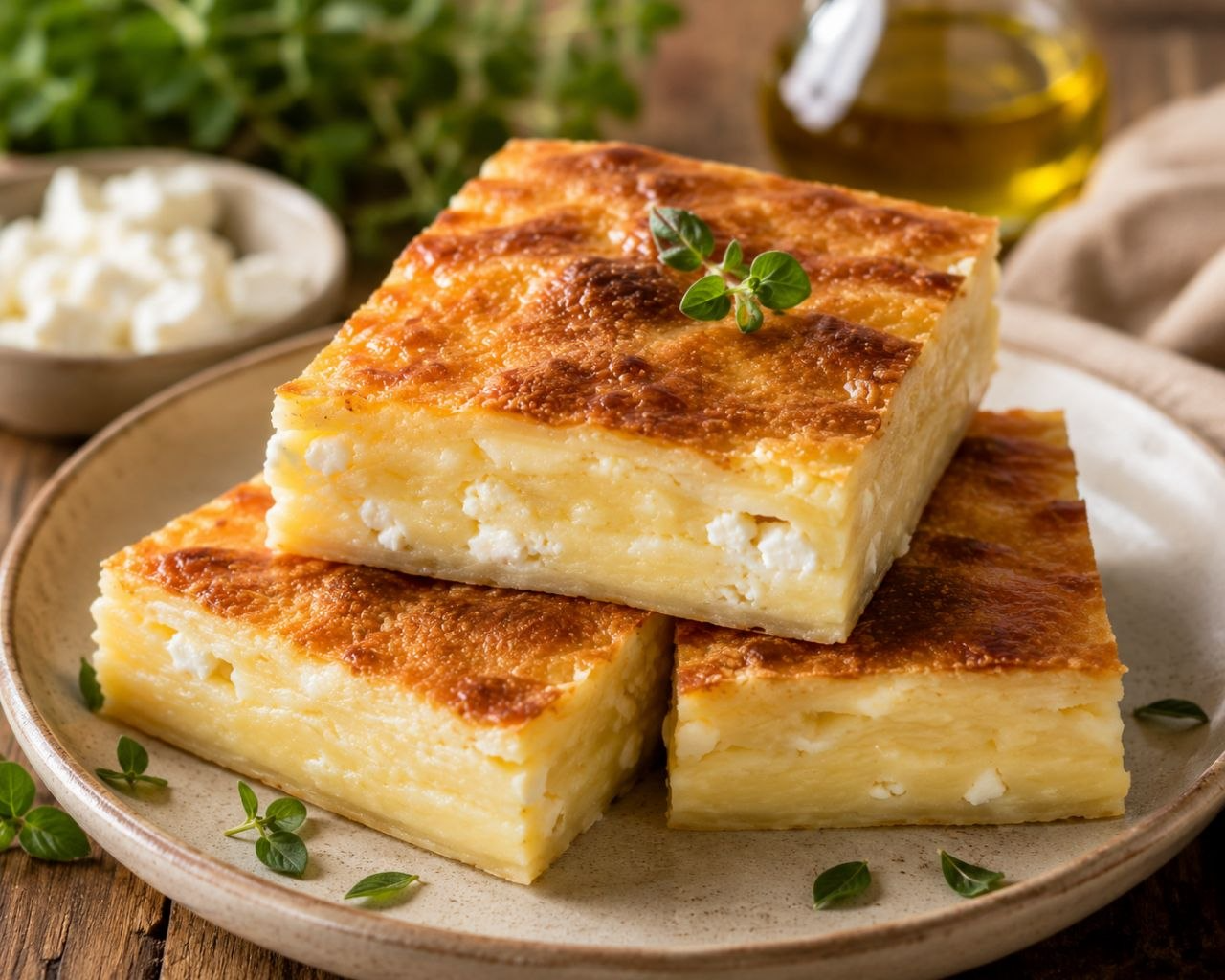
Crustless cheese pie sits at the most honest end of the Greek baking tradition — the laderá-adjacent cousin of tiropita and spanakopita, born in village kitchens that didn't always have the time (or patience) for hand-stretched phyllo. The pairing of strained yogurt + eggs + feta + a hard yellow cheese is one of the foundational textures of mainland Greek baking, related to the older Macedonian batzina and the Cypriot anari pies. The use of Kefalograviera (a hard, sharp, slightly nutty sheep's-milk cheese from northern Greece) alongside the salty cream of feta gives the pie its distinctive savoury depth, while strained yogurt — produced in Greek dairies for over two millennia — replaces the cream or béchamel of more elaborate pies. The result is a dish that is unmistakably Greek, almost preposterously easy, and absolutely indistinguishable from the kind of food a Greek aunt would pull out of the oven on a long summer Saturday.
step by step
Instructions
- 1
Heat the oven to 170°C / 340°F. Generously butter or olive-oil a 25 × 30 cm baking tray (a deep enamel or ceramic dish is ideal) and dust it lightly with flour, tapping out the excess.
- 2
In a large bowl, whisk the eggs vigorously with an electric whisk (or by hand for a few minutes) until they turn pale, foamy, and have nearly doubled in volume. This is the most important step — air whisked into the eggs is what gives the pie its soft, cake-like crumb.
- 3
Add the strained yogurt and whisk gently until smooth and uniform.
- 4
Stir in the crumbled feta and the grated Kefalograviera. Don't crush the feta into a paste — leave some pebbly chunks for those molten white pockets that show up beautifully in each slice.
- 5
Sift in the flour and the baking powder. Fold gently with a wooden spoon or spatula just until you have a smooth, thick, cake-like batter — don't overwork it.
- 6
Add the chopped mint, a generous pinch of salt (taste first — the feta is salty), and plenty of cracked pepper. Fold through.
- 7
Finally, pour in the melted, lukewarm butter in a thin steady stream while folding. The butter should be cool enough not to cook the eggs but warm enough to slip easily through the batter — this is what gives the pie its luxurious richness.
- 8
Pour the batter into the prepared tray and smooth the top with a spatula. Tap the tray gently on the counter twice to settle the bubbles.
- 9
Bake on the middle shelf for 40–50 minutes, until the top is deeply golden across the surface, the edges have pulled away from the sides, and a skewer inserted in the centre comes out clean. The middle should feel set and slightly springy.
- 10
Pull the tray from the oven and let it rest for at least 15 minutes — this is essential. The pie firms as it cools, and cutting it too hot will collapse the slices.
- 11
Cut into generous squares. Scatter a few fresh mint leaves and a small crumble of extra feta over the warm pieces. Serve with a tomato salad, a few Kalamata olives, and a glass of chilled village wine.
tips from the village —
Wisdom from grandmothers
- 01Whisk the eggs properly. Foamy, pale, almost-doubled eggs are what give this pie its tender, soufflé-like middle — undermixed eggs leave it dense.
- 02Use thick Greek strained yogurt (not regular yogurt). The strained yogurt has the body of soft cheese; runny yogurt will make the batter wet and the pie won't set.
- 03Let the melted butter cool before adding. Hot butter will scramble the eggs into clumps — lukewarm is the sweet spot.
- 04Don't crush the feta. Leave generous, pebbly chunks — those white pockets melting through the slice are half the pleasure of the dish.
- 05Rest before slicing. Fifteen minutes out of the oven means clean cuts and a slice that holds its shape. Try to wait. (Nobody ever does.)
- 06Leftovers reheat beautifully. Cover with foil and warm at 150°C for 10 minutes, or eat straight from the fridge — both are good.
Related recipes
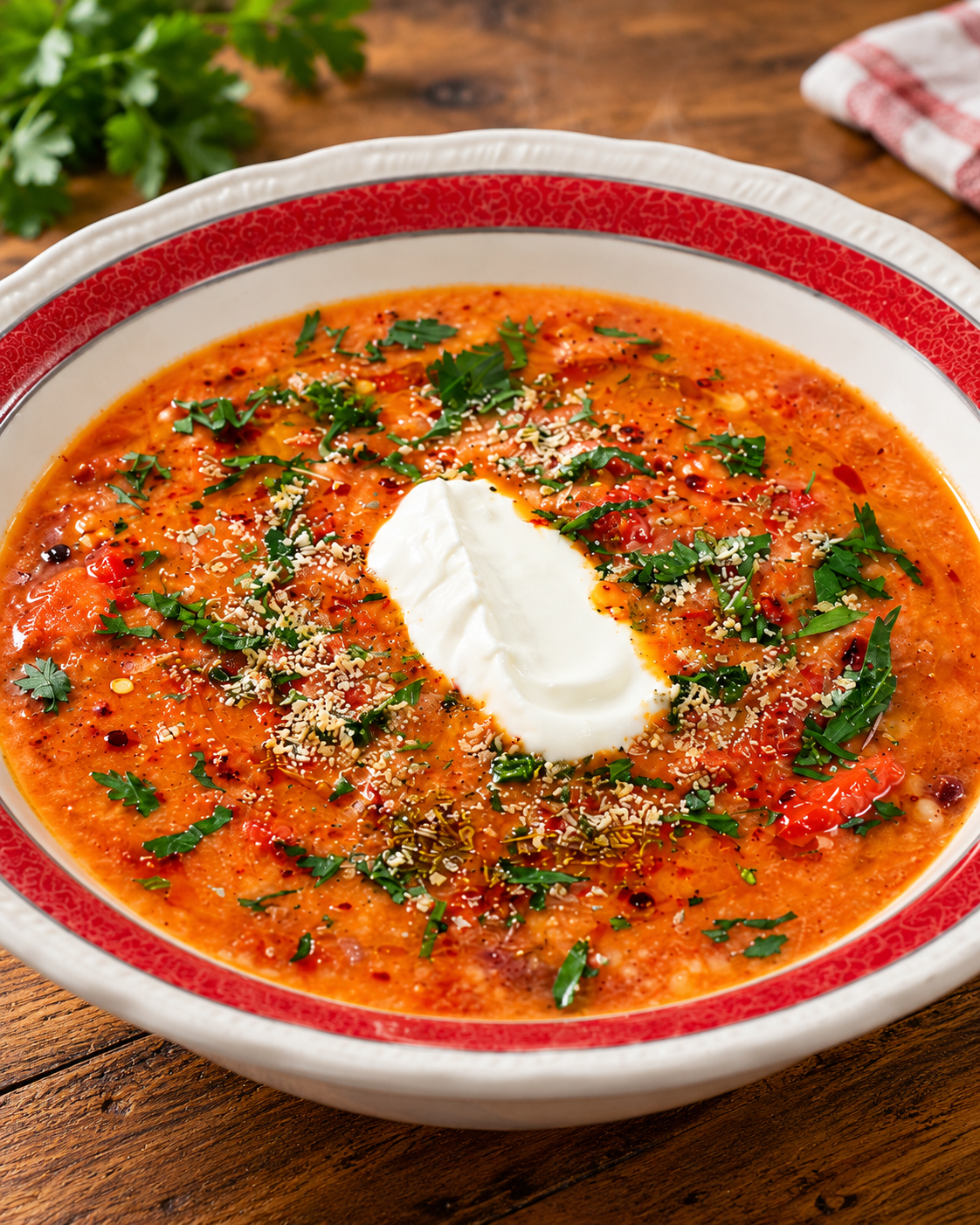
Kokkinistos Trahanas with Yogurt
Sour trahana simmered in a spicy tomato broth until creamy, served with cool Greek yogurt, boukovo and wild oregano — one humble food, countless traditions.
Read the story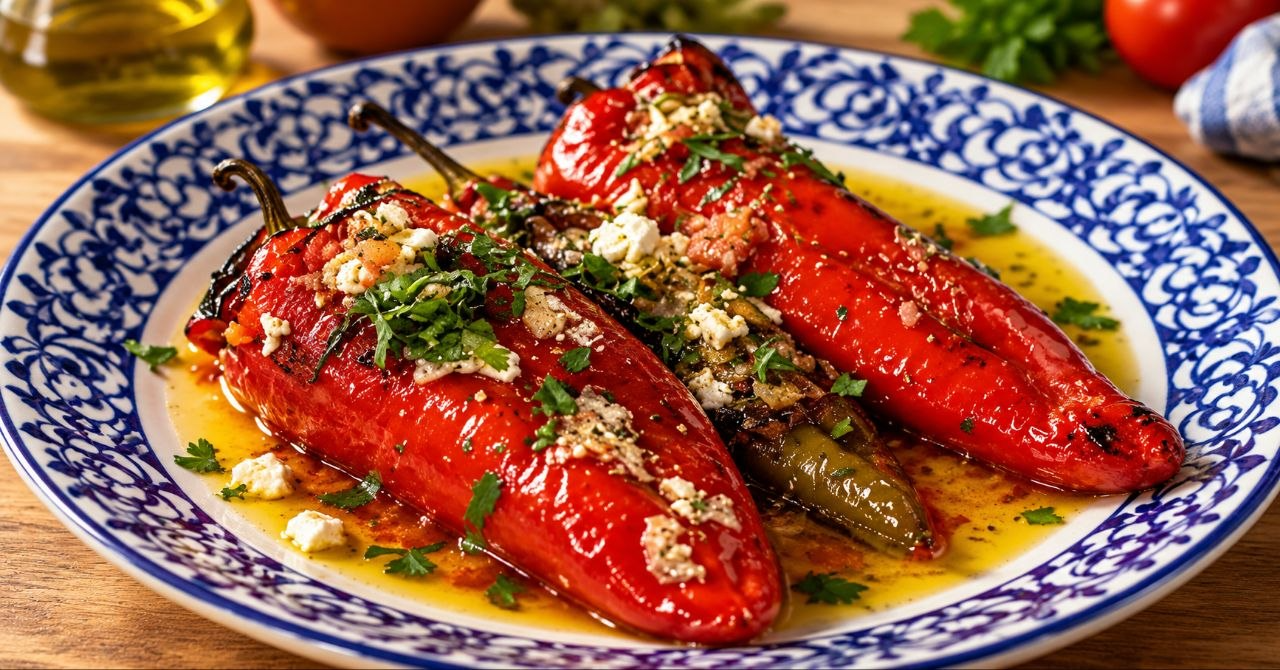
Stuffed Horn Peppers
Horn peppers stuffed with feta, tomato, garlic and wild oregano, baked until soft and caramelised — an American ingredient that became a Greek kitchen staple.
Read the story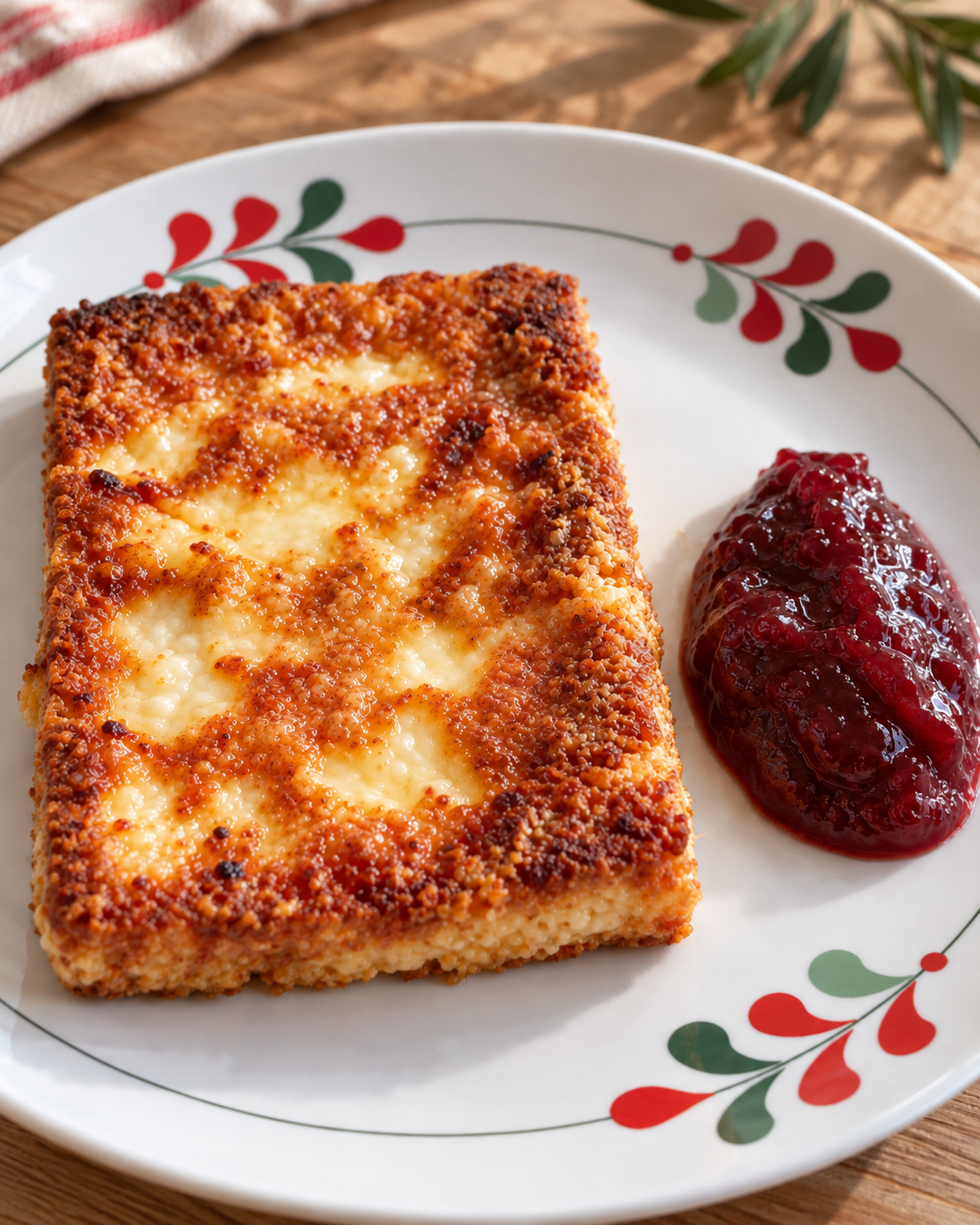
Saganaki with Grape Jam
Golden fried cheese, crisp outside and molten within, served with a slow-cooked grape jam brightened with lime — the taverna classic named after its little pan.
Read the story