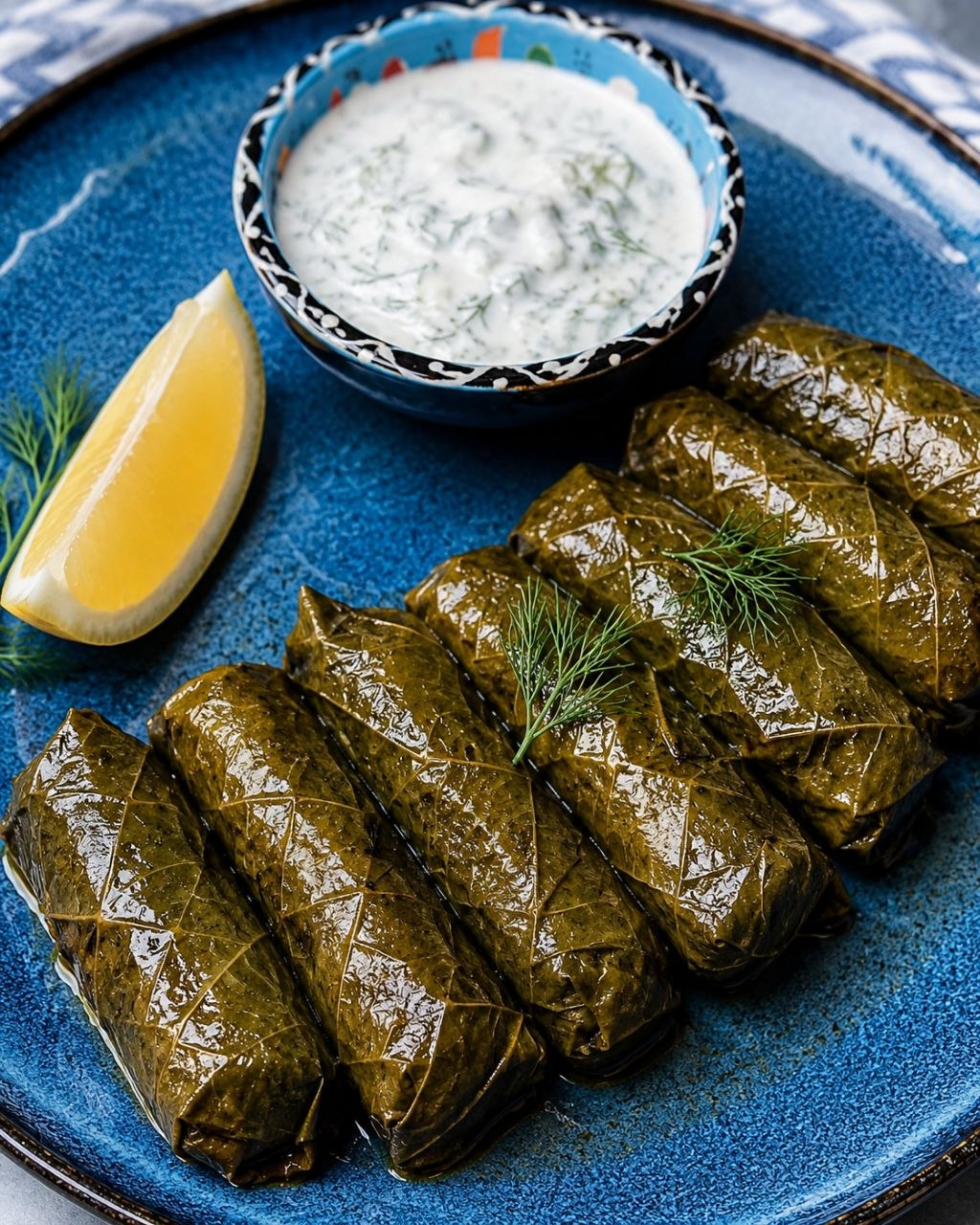
a dish from greece —
Dolmadakia Yialantzi
How this dish came to life
Cultural significance
Dolmadakia are one of the oldest dishes in the recorded Greek kitchen — descended from the ancient thría made with fig leaves and present at the table of Alexander the Great. The 'yialantzi' version (Turkish/Asia Minor for 'liar' or 'mock' — meaning meatless) developed among the Greeks of Pontus and Asia Minor, who preferred rice to lamb. The dish carries within it 2,500 years of Greek history, Asia-Minor migration, Ottoman influence, and — most movingly — the secret revolutionary scholarship of Adamantios Korais during the Greek Enlightenment. To eat one is to eat a thread of Greek memory.
step by step
Instructions
- 1
If using fresh vine leaves: blanch them in salted boiling water for 60 seconds, drain, and pat dry. If using jarred: rinse thoroughly under cold water to remove excess brine, then drain.
- 2
Heat 3 tbsp of the olive oil in a wide pan over medium heat. Sauté the onion, garlic and spring-onion whites with a pinch of salt for 5–6 minutes until soft and golden — never browned.
- 3
Stir in the rice and toast it in the oil for 1 minute, until the grains turn translucent at the edges.
- 4
Add the grated tomato, the cumin, a generous pinch of salt and plenty of black pepper, and a small splash of water (about 100ml). Simmer gently for 5 minutes until the rice is just half-cooked and the liquid has been absorbed. The filling should still be loose.
- 5
Off the heat, fold in the parsley, dill, mint, lemon zest and the juice of 1 lemon. Taste and adjust salt. This is your filling.
- 6
Lay a vine leaf shiny-side down on a board, stem closest to you, and snip off the stem. Place a small teaspoon of filling near the stem end. Fold the bottom two flaps over the filling, then fold the sides in, and roll up tightly but gently — like a little cigar. Don't overfill; the rice will swell as it cooks.
- 7
Line the bottom of a wide, heavy pot with a layer of tough or torn vine leaves, a few herb stems, and 3–4 thin slices of lemon — this protects the dolmadakia from sticking and perfumes the broth.
- 8
Pack the dolmadakia snugly into the pot, seam-side down, in concentric circles. Build a second layer on top if needed. Tuck them in tightly — they shouldn't move when the broth is added.
- 9
Drizzle the remaining olive oil over the dolmadakia. Pour in the juice of the second lemon and enough hot water to just barely cover them — about 400ml. Place a heavy plate, upside down, on top to weigh them and keep them still.
- 10
Cover the pot, bring to a gentle simmer over low heat, and cook for 40–45 minutes, until the rice inside is fully tender and the broth is mostly absorbed.
- 11
While they cook, stir the yogurt sauce together: yogurt, lemon juice, dill, olive oil, a pinch of salt. Refrigerate.
- 12
Once cooked, take the pot off the heat and rest, covered, for 15 minutes — this is when the dolmadakia drink the last of the lemony oil.
- 13
Arrange on a wide blue plate (the Greek way), garnish with extra dill and lemon wedges, and serve warm or at room temperature with the cold yogurt sauce on the side.
tips from the village —
Wisdom from grandmothers
- 01Don't overfill. A teaspoon of rice per leaf is plenty — the rice swells, and an overstuffed dolma splits open as it cooks.
- 02Roll tightly enough to hold their shape, but with a little give — Yiayia's instinct: 'they need a little space to breathe.'
- 03The plate on top of the pot during simmering is essential. It keeps the dolmadakia submerged and stops them unrolling.
- 04Dolmadakia are even better the next day, eaten cold straight from the fridge with cold yogurt. Make them ahead of any party.
- 05If using jarred vine leaves, taste one first — if very salty, soak in cold water for 10 minutes before rolling.
Related recipes
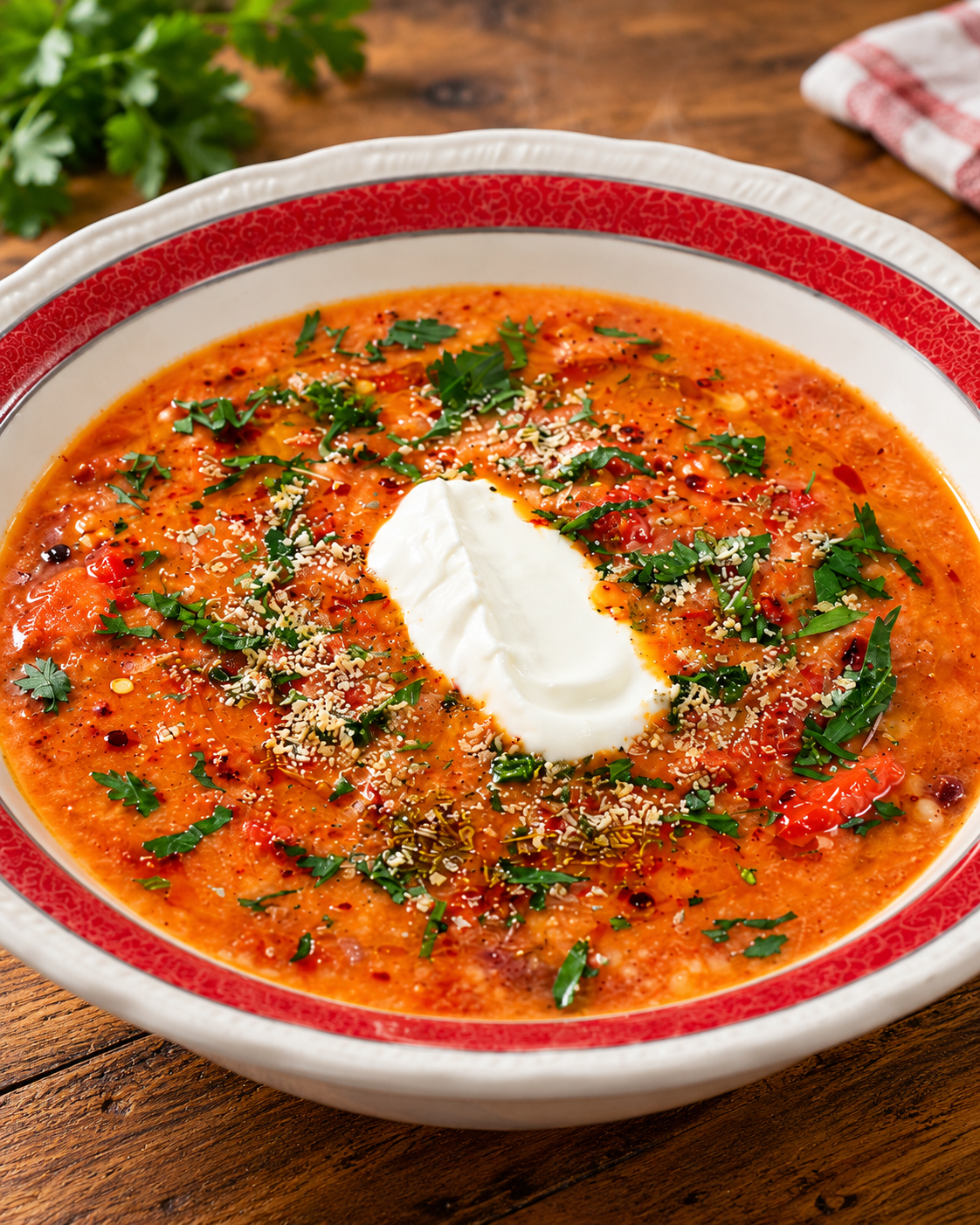
Kokkinistos Trahanas with Yogurt
Sour trahana simmered in a spicy tomato broth until creamy, served with cool Greek yogurt, boukovo and wild oregano — one humble food, countless traditions.
Read the story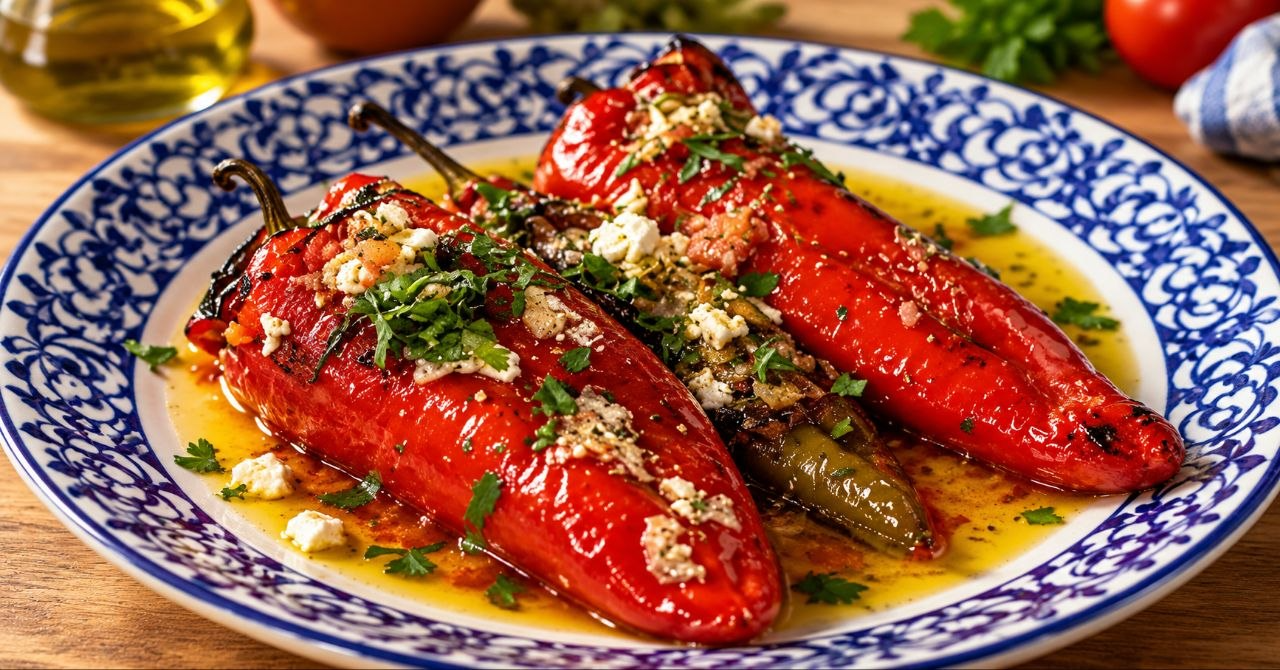
Stuffed Horn Peppers
Horn peppers stuffed with feta, tomato, garlic and wild oregano, baked until soft and caramelised — an American ingredient that became a Greek kitchen staple.
Read the story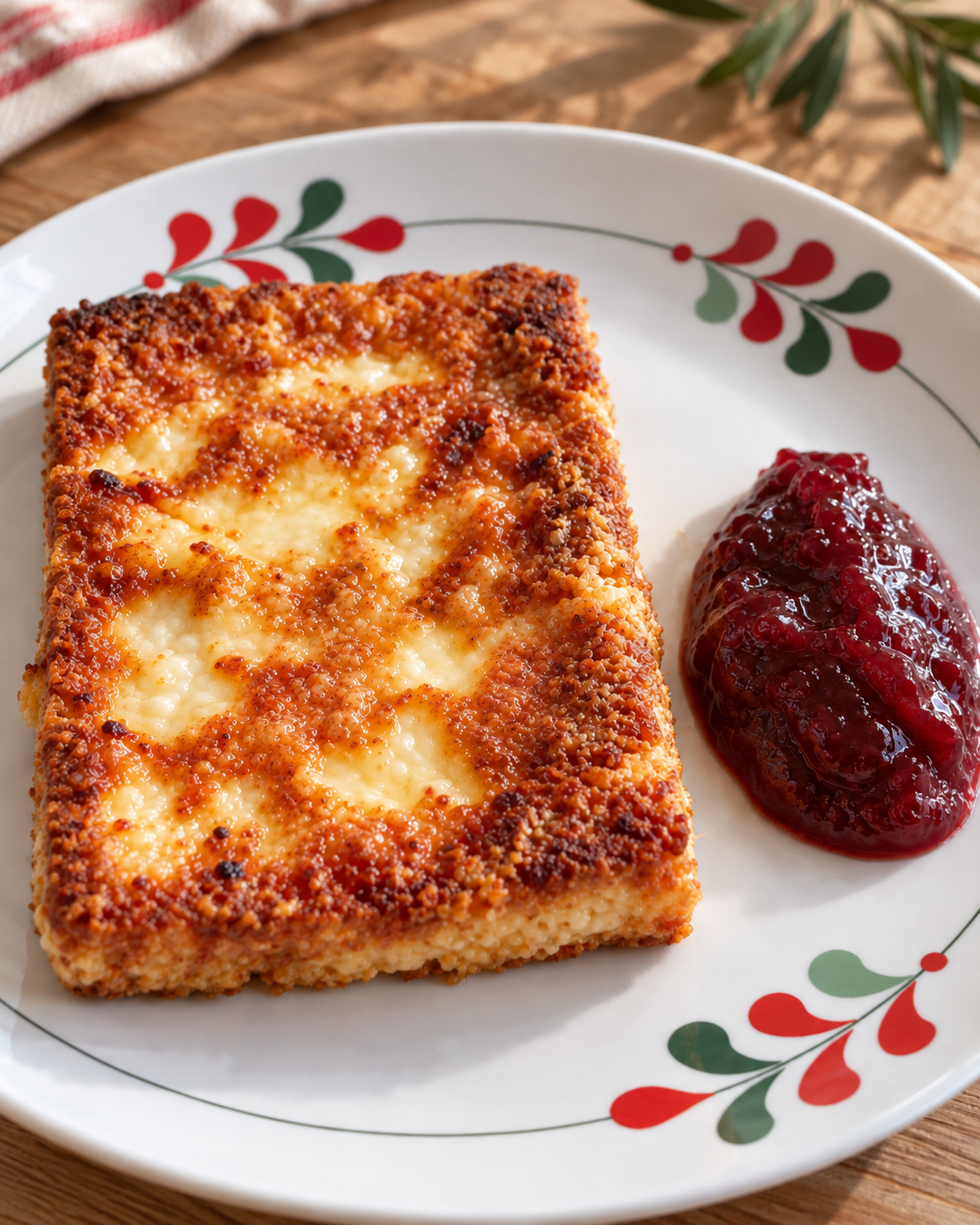
Saganaki with Grape Jam
Golden fried cheese, crisp outside and molten within, served with a slow-cooked grape jam brightened with lime — the taverna classic named after its little pan.
Read the story