How this dish came to life
Cultural significance
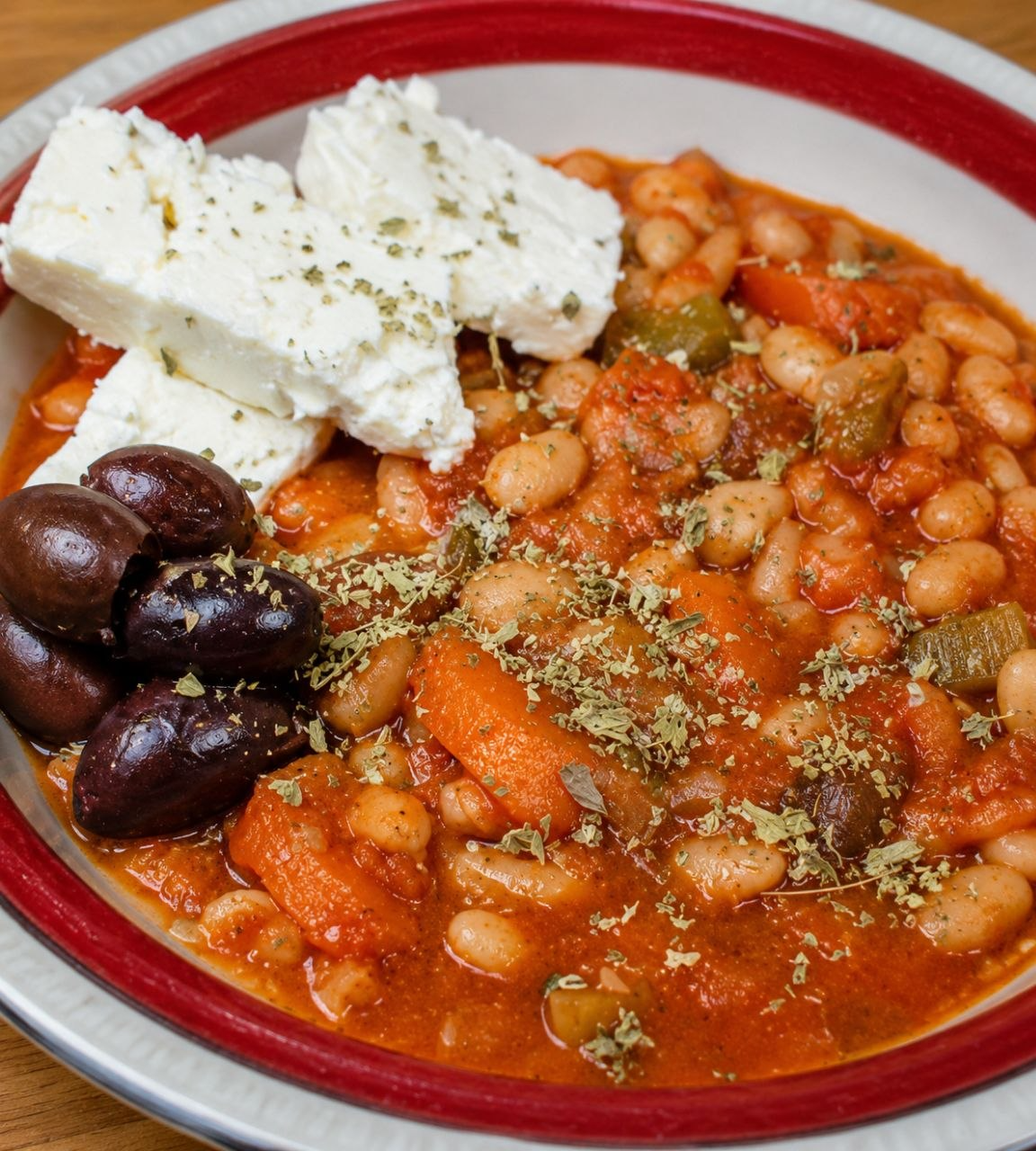
Fasolada is widely considered the unofficial national dish of Greece. Beyond its place on every Greek family table, it carries the memory of the OXI generation — the resilience, frugality, and quiet pride of a people who turned beans, olive oil and vegetables into a dish that fed a country through its hardest years. It remains a Lenten staple and a Sunday classic, eaten year-round with bread, olives, and the certainty that simple food, made with care, is sacred.
step by step
Instructions
- 1
Rinse the beans well, then soak them in plenty of cold water for about 12 hours (overnight). Don't skip this — old village wisdom for tender beans and an easier stomach.
- 2
Drain the soaked beans, place in a pot, cover with fresh water, bring to a boil for 5 minutes, then strain. This removes any impurities and bitterness.
- 3
In a fresh, clean pot, add the strained beans together with the onion, carrots, celery, tomato juice, a generous glug of olive oil and the bay leaf.
- 4
Pour in enough water to cover everything by about 5 cm. Bring to a gentle boil, then lower the heat to a slow, lazy simmer.
- 5
Season with a little salt and pepper — but go easy on the salt at first; you'll adjust at the end.
- 6
Simmer slowly, uncovered, for about 75–90 minutes, stirring occasionally, until the beans are soft and the broth has thickened and turned round and silky.
- 7
Taste and adjust salt and pepper. If you like, off the heat, finish with a final drizzle of raw olive oil — this is the soul of the dish.
- 8
Serve warm with fresh bread, a sprinkle of parsley or a pinch of chili flakes, olives, and a piece of feta on the side.
tips from the village —
Wisdom from grandmothers
- 01Soak the beans the full 12 hours, never skip it — village wisdom for tender beans and an easier stomach.
- 02Add salt only after the beans are soft. Salting too early toughens the skins and the beans fight you.
- 03The final raw olive oil drizzle is not a garnish — it's the heart of fasolada. Don't be shy with it.
- 04Yesterday's fasolada is always better than today's. Make it ahead — the flavours deepen overnight.
- 05Keep it loose, not thick. If the broth reduces too much, add a splash of hot water; this is a soup, not a stew.
Related recipes
Kokkinistos Trahanas with Yogurt
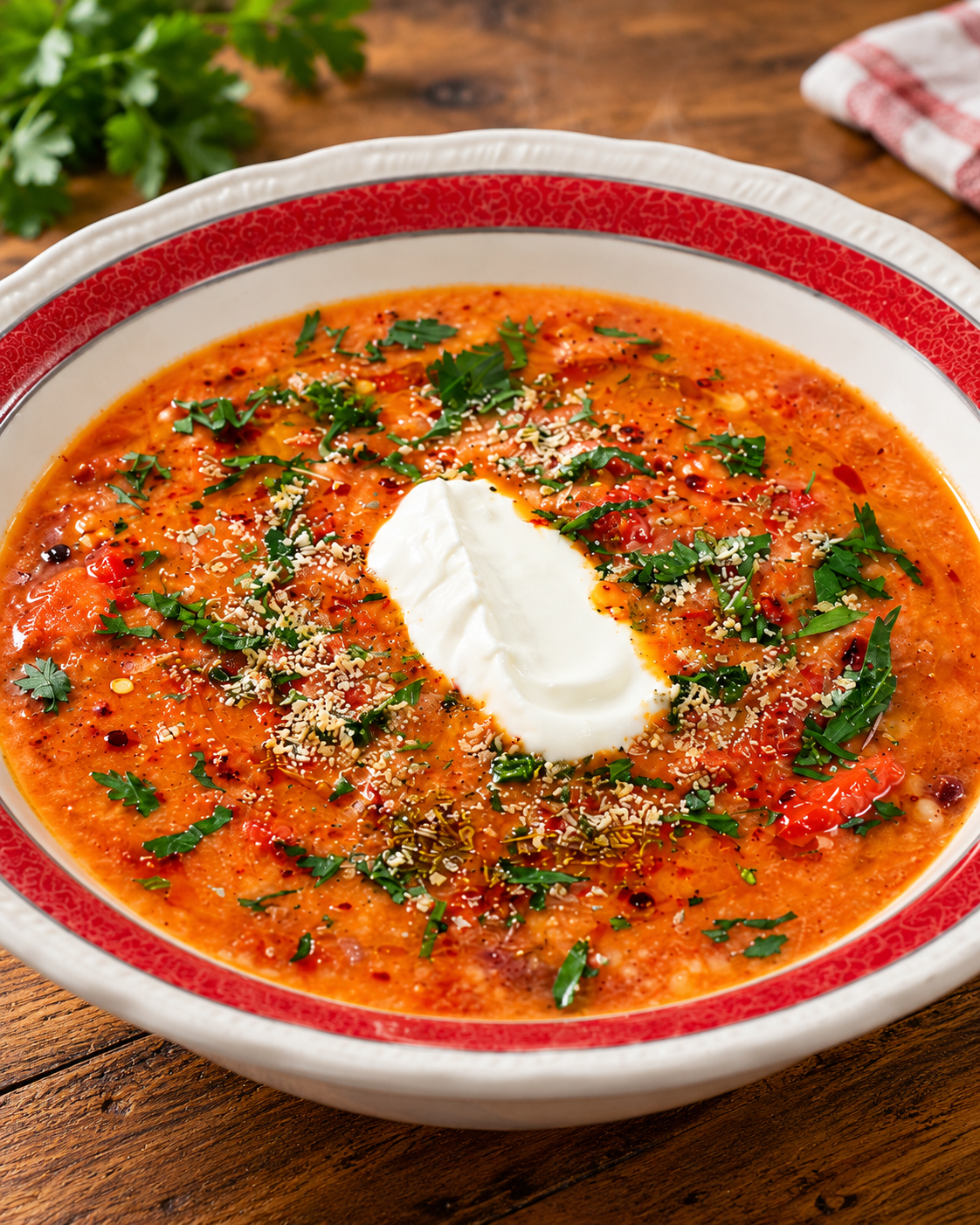
Sour trahana simmered in a spicy tomato broth until creamy, served with cool Greek yogurt, boukovo and wild oregano — one humble food, countless traditions.
Read the story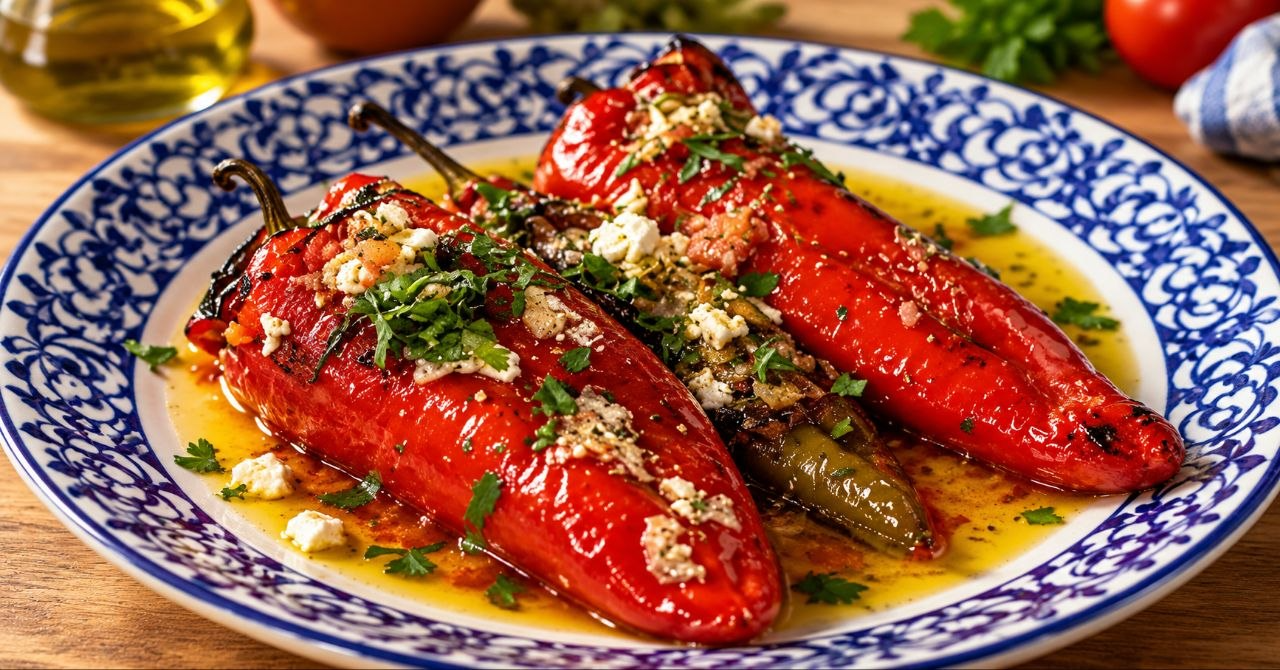
Stuffed Horn Peppers
Horn peppers stuffed with feta, tomato, garlic and wild oregano, baked until soft and caramelised — an American ingredient that became a Greek kitchen staple.
Read the story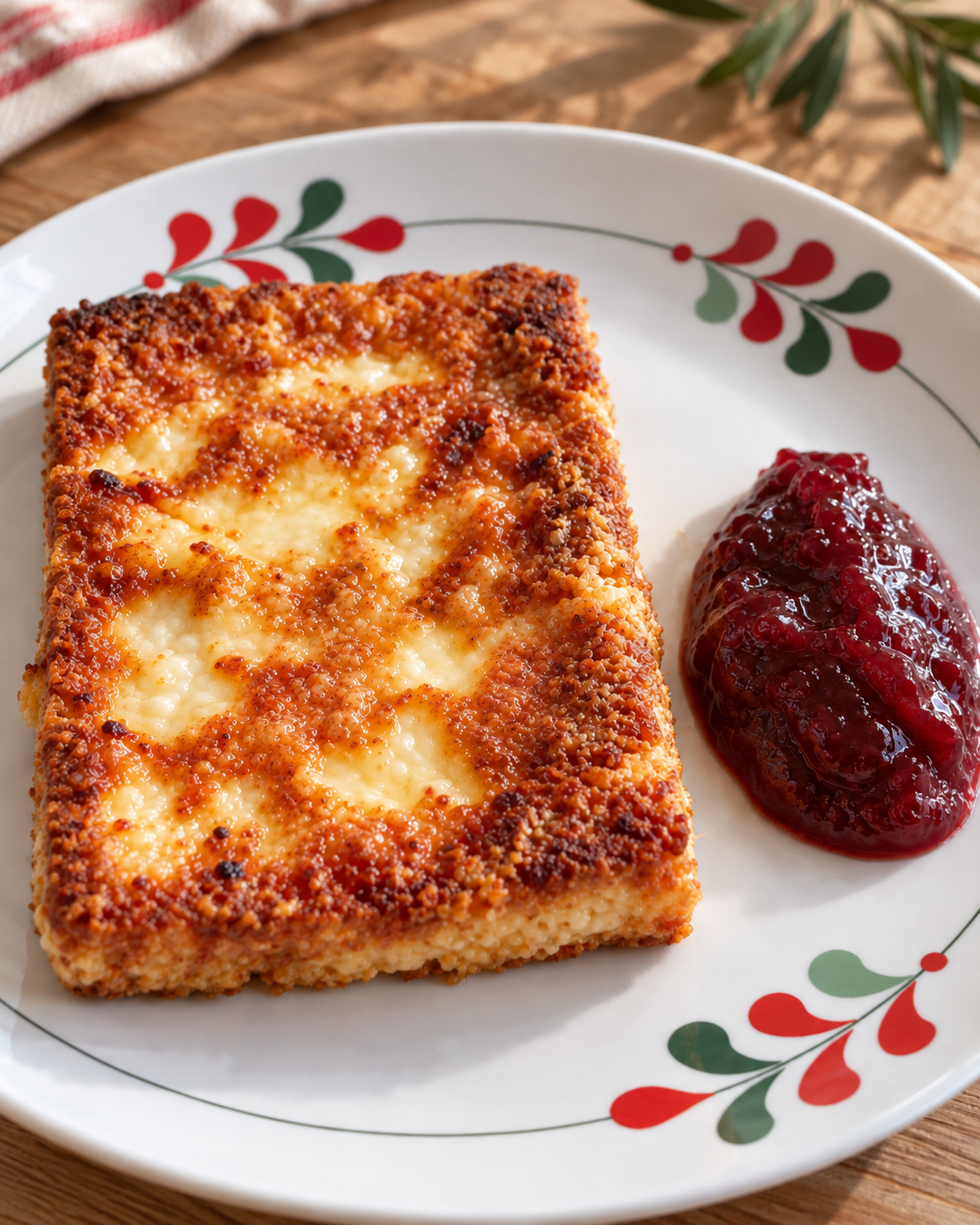
Saganaki with Grape Jam
Golden fried cheese, crisp outside and molten within, served with a slow-cooked grape jam brightened with lime — the taverna classic named after its little pan.
Read the story