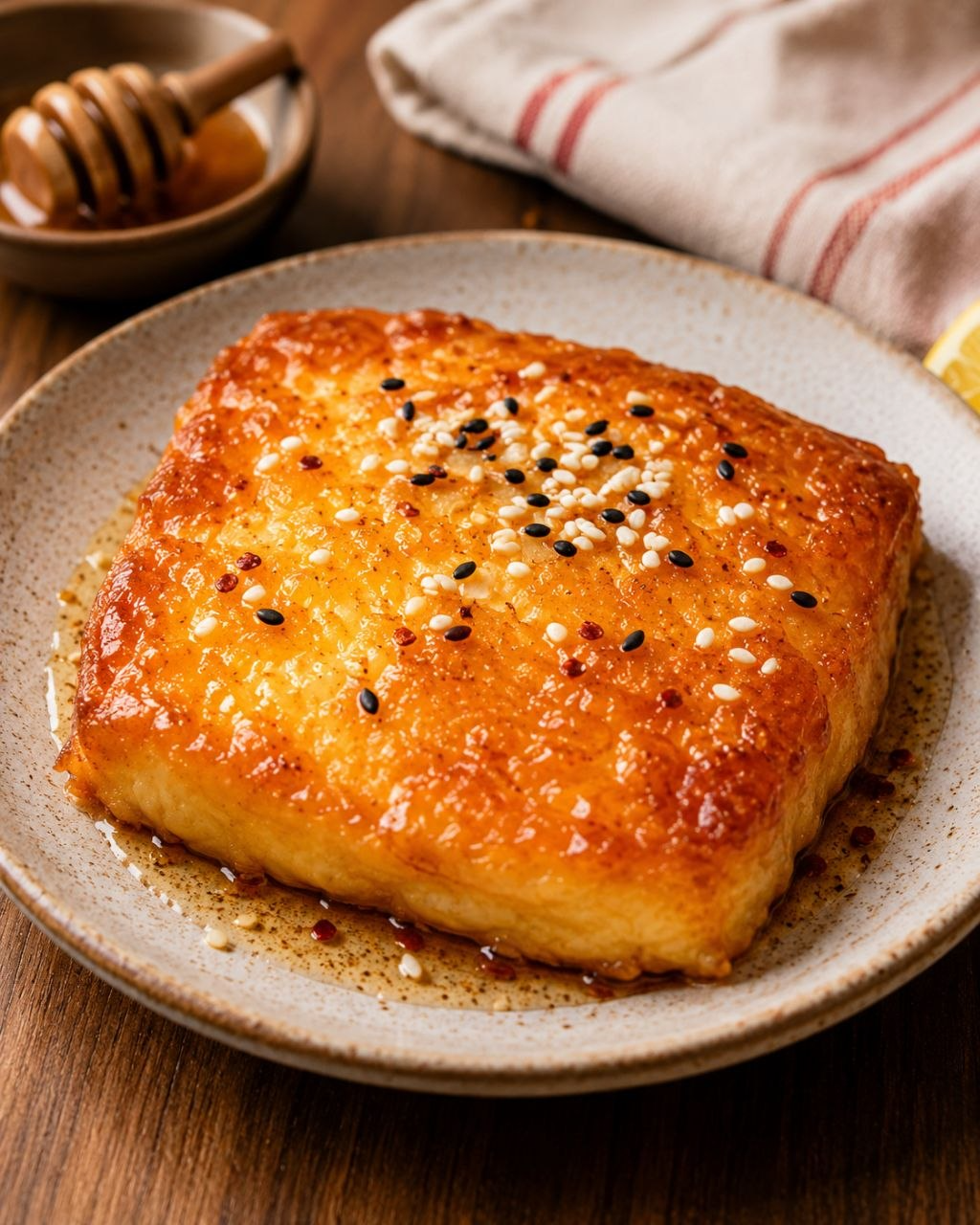
How this dish came to life
Cultural significance
Feta Saganaki in phyllo is one of the iconic dishes of the modern Athenian taverna revolution — born in the 2010s when a new generation of Greek chefs began reimagining the meze plate using only Greek ingredients in surprising ways. Built on three of the most protected Greek products: feta cheese (PDO since 2002, the only cheese in the world allowed to bear the name), phyllo pastry (the paper-thin sheets central to Greek and Levantine pastry traditions since the 11th century), and Greek thyme honey (one of the most prized honeys in the world). The dish has since become a standard on Greek menus globally, and is arguably the single most popular Greek meze on social media.
step by step
Instructions
- 1
Pat the feta block dry with a clean tea towel — moisture is the enemy of a crisp phyllo crust.
- 2
Lay one sheet of phyllo flat on your work surface. Brush it lightly with olive oil (a soft pastry brush is best — never soak it).
- 3
Lay a second sheet directly on top of the first, brush again with olive oil, and continue with the third sheet. (Keep any unused phyllo covered with a damp tea towel — it dries out in seconds.)
- 4
Place the feta block in the centre of the layered phyllo. Fold the bottom edge up over the cheese, then the two side edges in, then roll the whole parcel forward like a tight little envelope. Brush the seam with a touch more olive oil to seal.
- 5
Heat the sunflower oil in a heavy, wide pan to 180°C / 355°F — hot enough that a small piece of phyllo dropped in sizzles and browns within 5 seconds.
- 6
Carefully lower the parcel into the oil, seam-side down. Fry for 60–90 seconds per side, gently nudging it with a slotted spoon, until both sides are deeply golden and the pastry has crackled blister-tight around the cheese.
- 7
Lift onto a plate lined with paper towel to drain briefly.
- 8
Transfer the saganaki to a small wide plate while still piping hot. Pour the honey generously over the top in a slow zigzag — let it pool around the base.
- 9
Scatter the white and black sesame seeds in a generous shower, a pinch of boukovo if using, and crack on a small amount of black pepper.
- 10
Serve immediately, with a wedge of lemon on the side and bread to mop the honey that escapes. Crack the phyllo open with the side of a fork. Eat without dignity.
tips from the village —
Wisdom from grandmothers
- 01Only use real Greek PDO feta. Generic 'feta-style' cheeses are too watery and won't soften properly without making the phyllo soggy.
- 02Two or three phyllo layers is the sweet spot. One sheet tears in the oil; four sheets stays doughy in the middle.
- 03Brush the phyllo lightly — soaked phyllo turns greasy and limp. Think 'painted,' not 'wet.'
- 04Eat it within two minutes of serving. Feta saganaki in phyllo is a *moment*, not a make-ahead. The phyllo softens fast under the honey.
- 05Thyme honey is the gold standard here. Avoid generic supermarket honey — the perfume of Greek honey is half the dish.
Related recipes
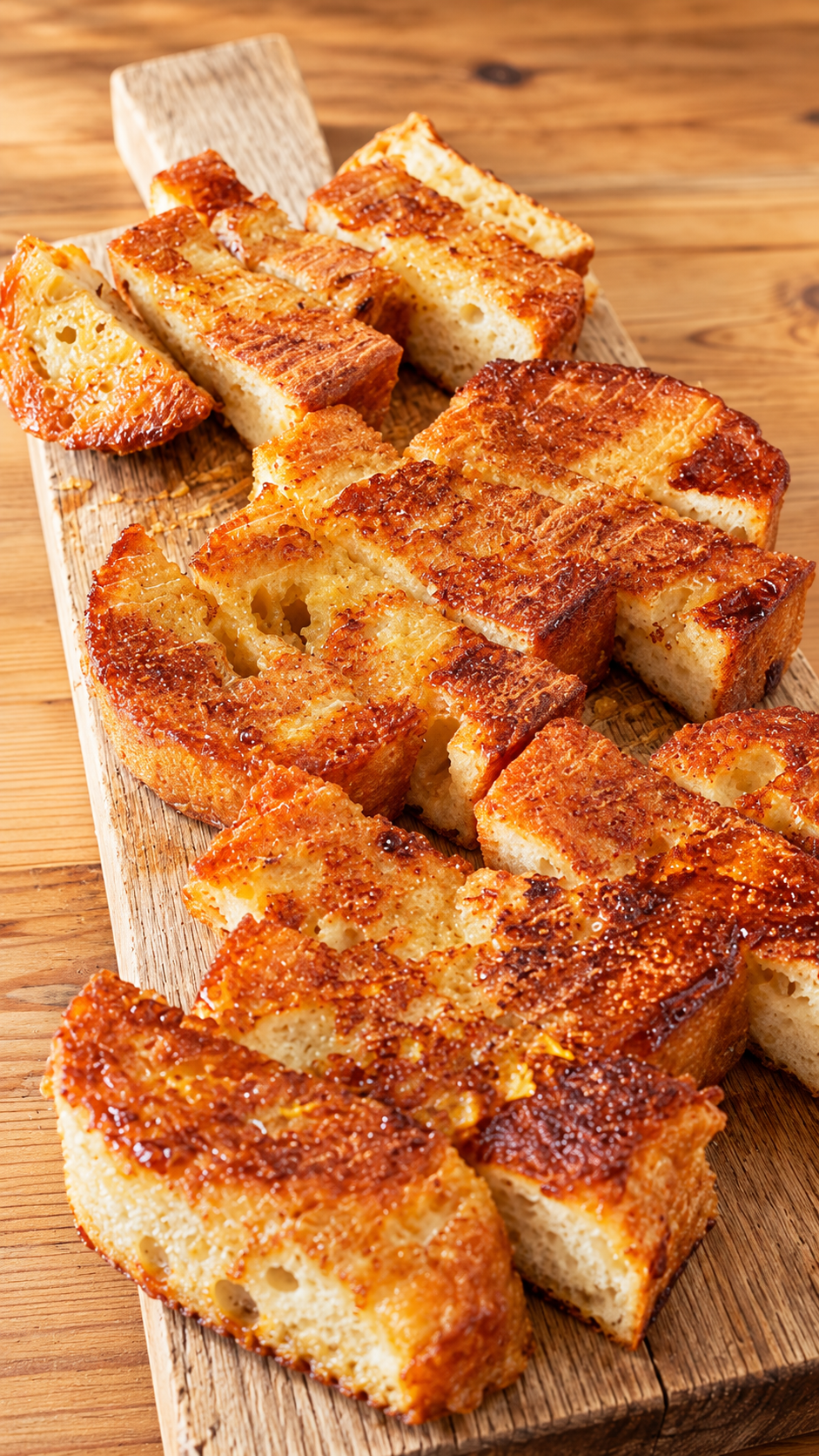
Avgofetes
Greek egg-fried bread — yesterday's loaf dipped in egg and milk, fried golden in olive oil and served with honey and cinnamon. Older than French toast.
Read the story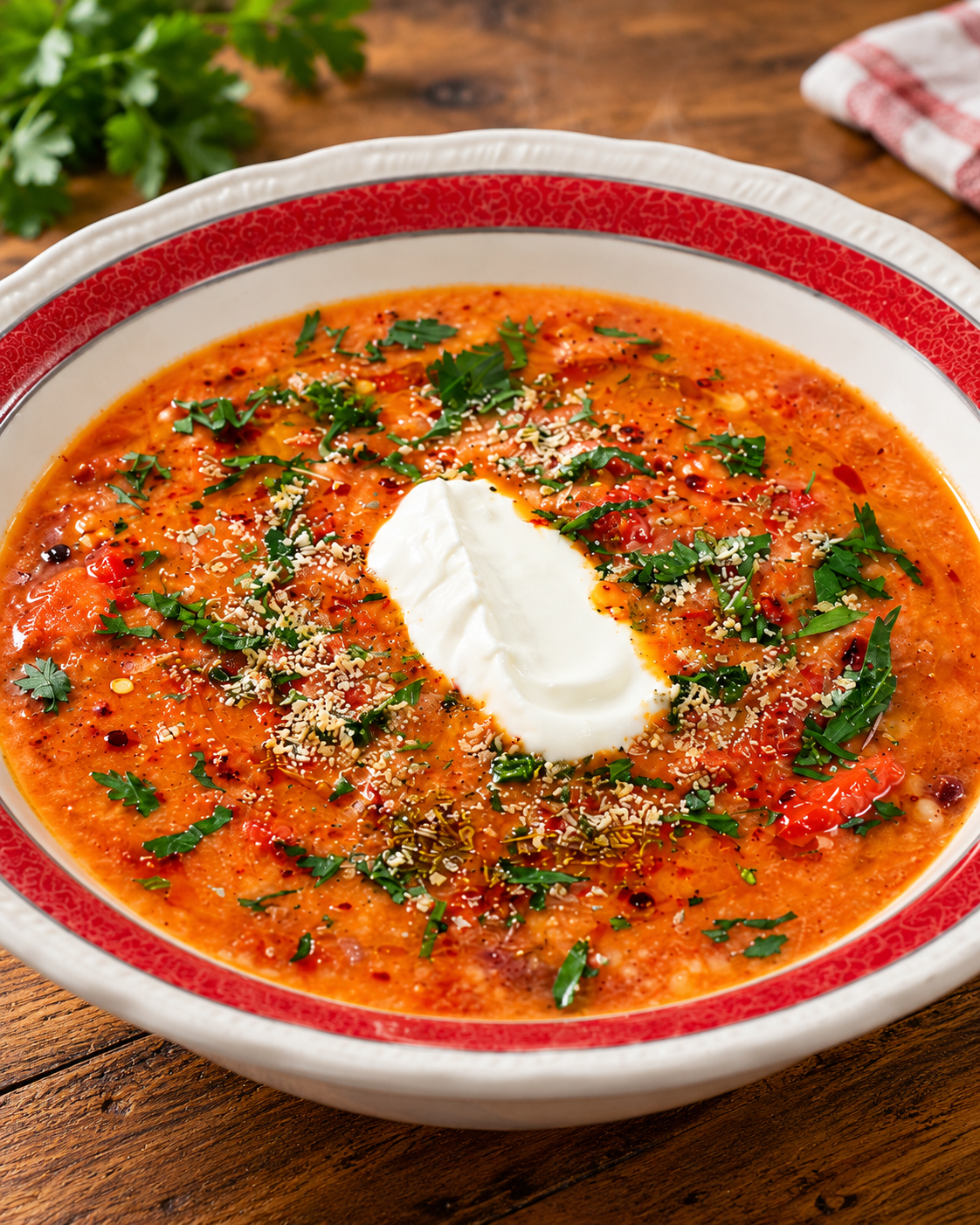
Kokkinistos Trahanas with Yogurt
Sour trahana simmered in a spicy tomato broth until creamy, served with cool Greek yogurt, boukovo and wild oregano — one humble food, countless traditions.
Read the story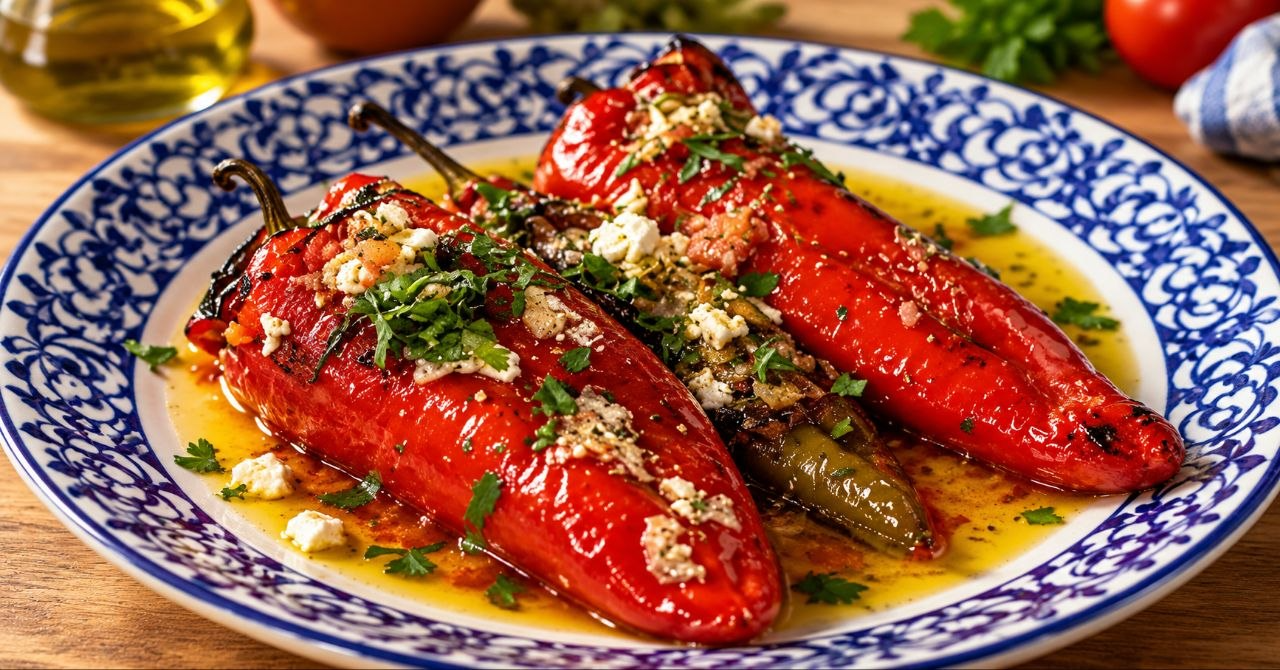
Stuffed Horn Peppers
Horn peppers stuffed with feta, tomato, garlic and wild oregano, baked until soft and caramelised — an American ingredient that became a Greek kitchen staple.
Read the story