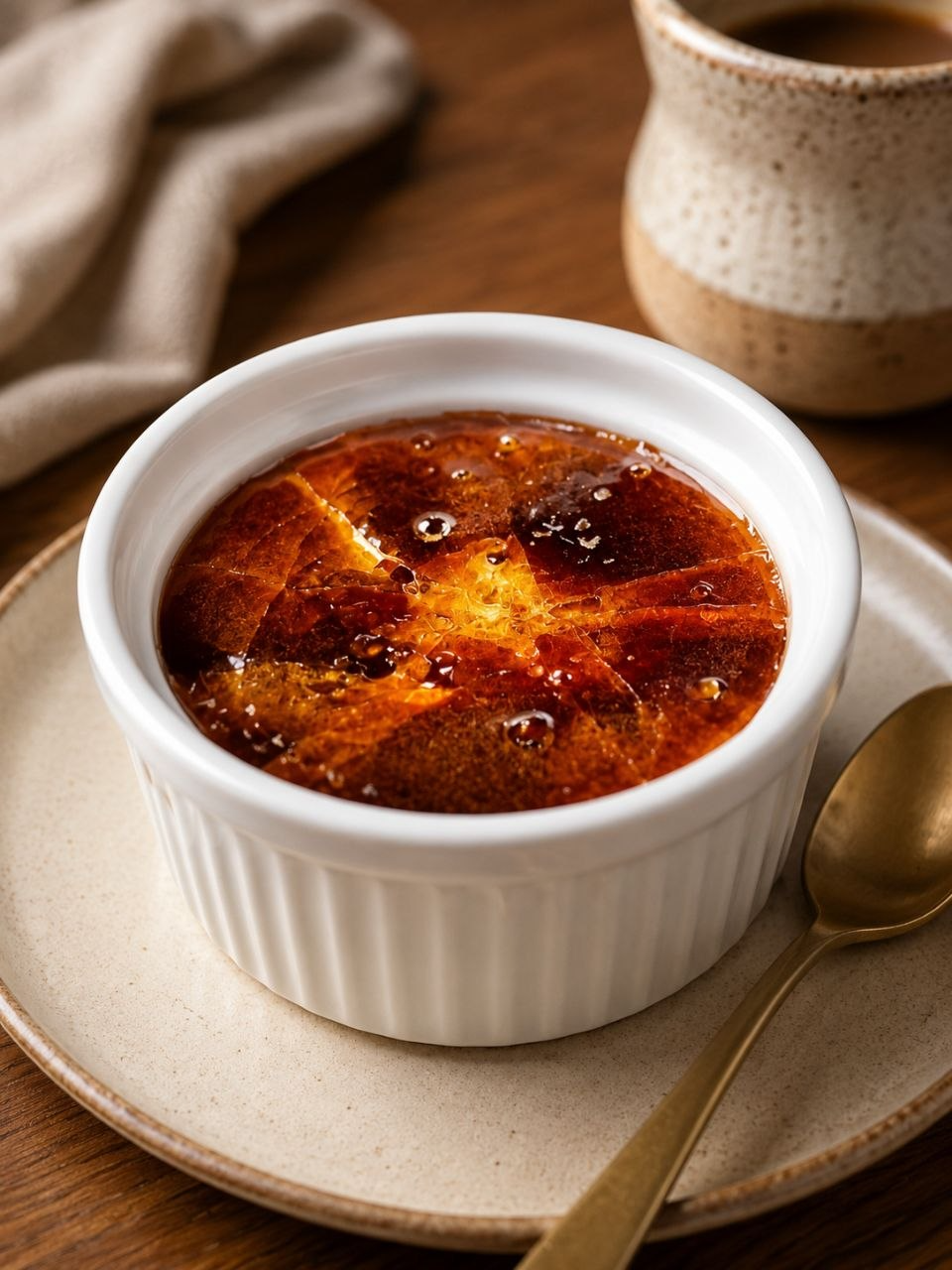
How this dish came to life
Cultural significance
Greek Brûlée is a modern Athenian dessert — part of the new wave of Greek chefs who reach into the village pantry (feta, yogurt, oregano, honey, olive oil, salt) and use those ingredients to reinterpret European classics. It is not a dish your yiayia made; it is a dish your yiayia would be quietly impressed by. The pairing of sugar and feta is older than it sounds — Greeks have been eating feta with honey, with figs, with watermelon, with grapes for centuries. This is just the contemporary expression of an instinct that has always been there.
step by step
Instructions
- 1
Break the feta into chunks and place in a small food processor or blender with the Greek yogurt. Blend for 60–90 seconds, scraping down once or twice, until it transforms into a fluffy, mousse-like cream. Taste — you should not need any salt.
- 2
Spoon the feta mousse evenly into two ramekins (or four small ones if serving a crowd), smoothing the surface flat with the back of a spoon. Refrigerate while you make the caramel — a cold base is essential, so the hot caramel sets crisp rather than melting into the mousse.
- 3
In a small heavy-bottomed pan, combine the sugar and water. Don't stir — just shake the pan gently to wet all the sugar.
- 4
Place over medium-high heat and let it bubble undisturbed for 5–7 minutes. The sugar will go through clear, pale gold, deep gold, and finally amber. Watch it like a hawk — once it colours, it darkens fast.
- 5
When the caramel is a deep amber (the colour of strong tea), take it off the heat immediately. Let it rest 30 seconds to thicken slightly.
- 6
Working fast, pour the hot caramel in a thin, even layer over the cold feta mousse — it should spread itself and set within a few seconds into a brittle, glassy disk.
- 7
Scatter the oregano over the warm caramel and crack on plenty of black pepper. A final, optional thread of olive oil over the top adds depth.
- 8
Let the brûlée sit for 2 minutes for the caramel to fully set, then serve immediately — and let your guest do the cracking. The first spoonful should shatter the caramel into the mousse with a sound like breaking glass.
tips from the village —
Wisdom from grandmothers
- 01Use the best Greek feta you can find — barrel-aged, in brine. The cheap pre-crumbled supermarket stuff won't whip into a silky mousse.
- 02Don't stir the caramel while it cooks. Stirring crystallises the sugar — you want a smooth, glassy hard caramel, not a grainy one.
- 03The hot-caramel + cold-mousse contrast is the entire trick. If the mousse is room temperature, the caramel will sink in and you'll lose the crackle.
- 04If you have a kitchen torch, you can skip the pan-caramel entirely: dust the top of the mousse with sugar and torch directly. Faster, less theatrical.
- 05Eat immediately. The caramel softens within 10 minutes — Greek Brûlée is a moment, not a make-ahead.
Related recipes
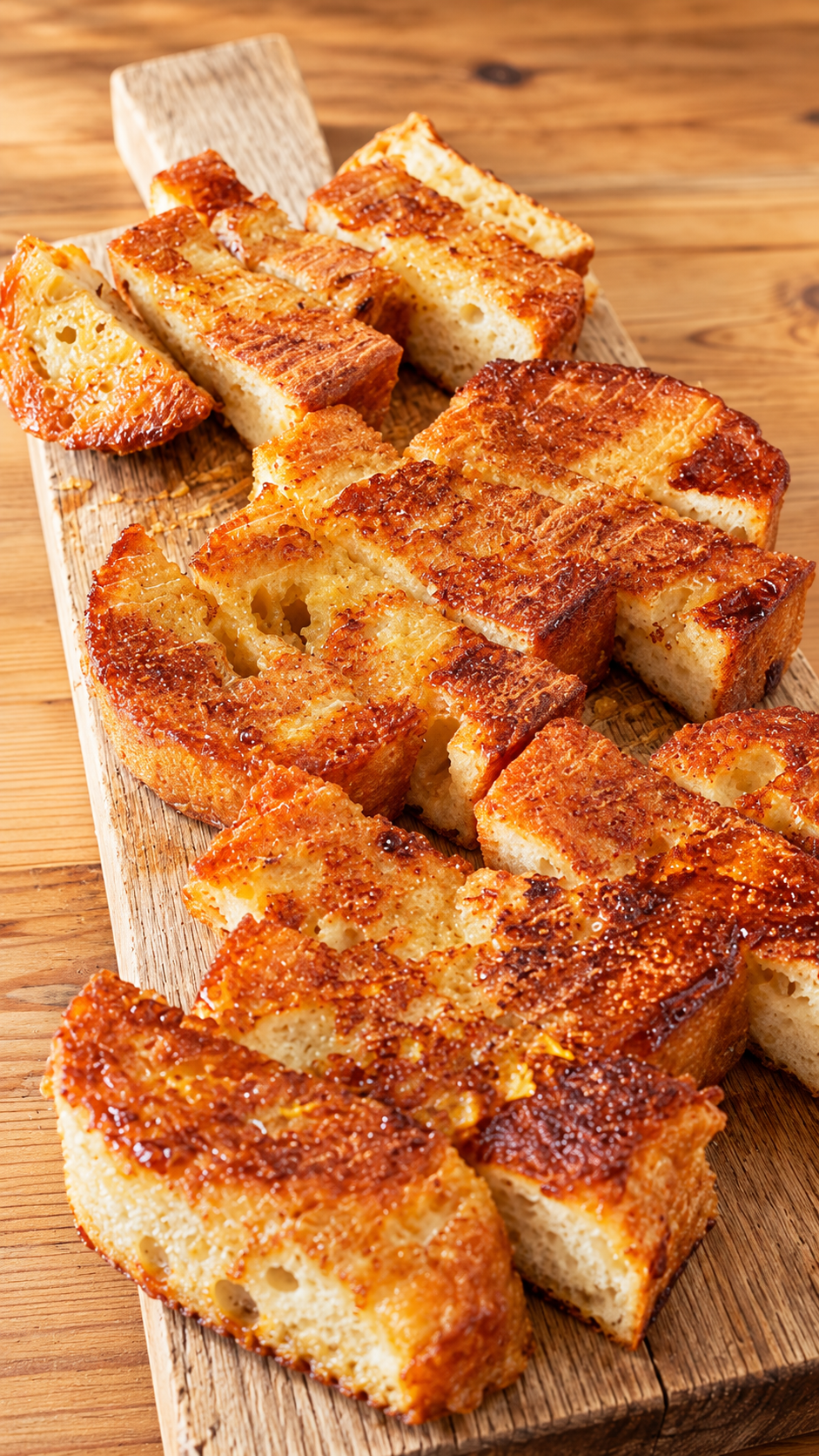
Avgofetes
Greek egg-fried bread — yesterday's loaf dipped in egg and milk, fried golden in olive oil and served with honey and cinnamon. Older than French toast.
Read the story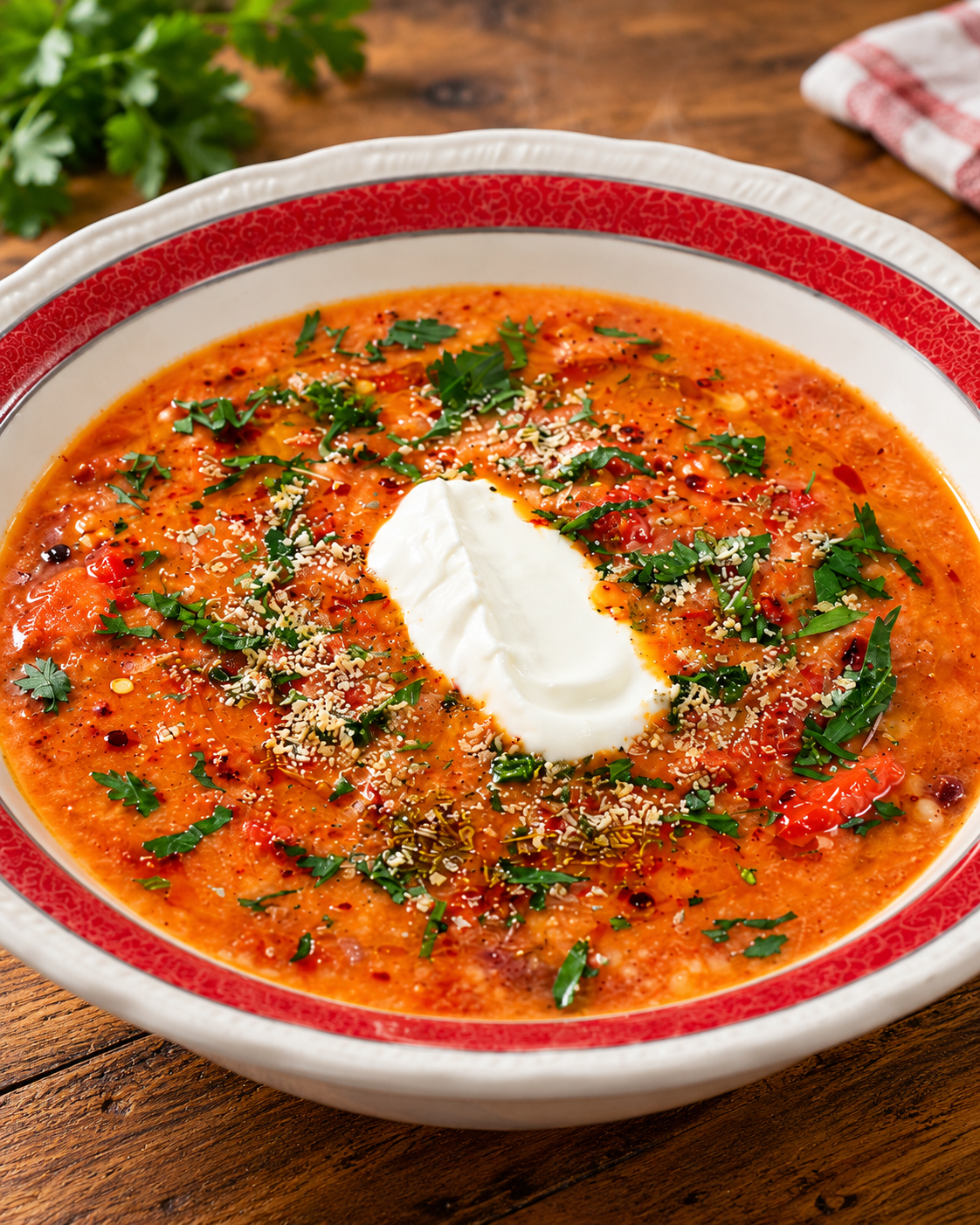
Kokkinistos Trahanas with Yogurt
Sour trahana simmered in a spicy tomato broth until creamy, served with cool Greek yogurt, boukovo and wild oregano — one humble food, countless traditions.
Read the story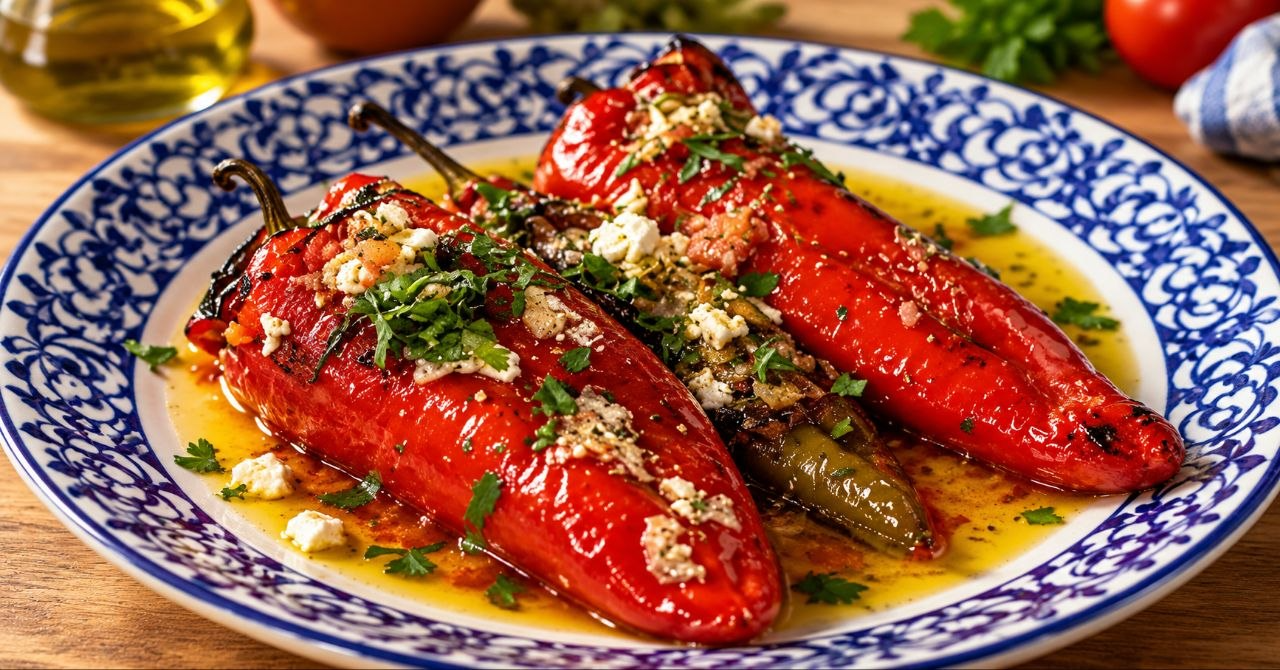
Stuffed Horn Peppers
Horn peppers stuffed with feta, tomato, garlic and wild oregano, baked until soft and caramelised — an American ingredient that became a Greek kitchen staple.
Read the story