a dish from greece —
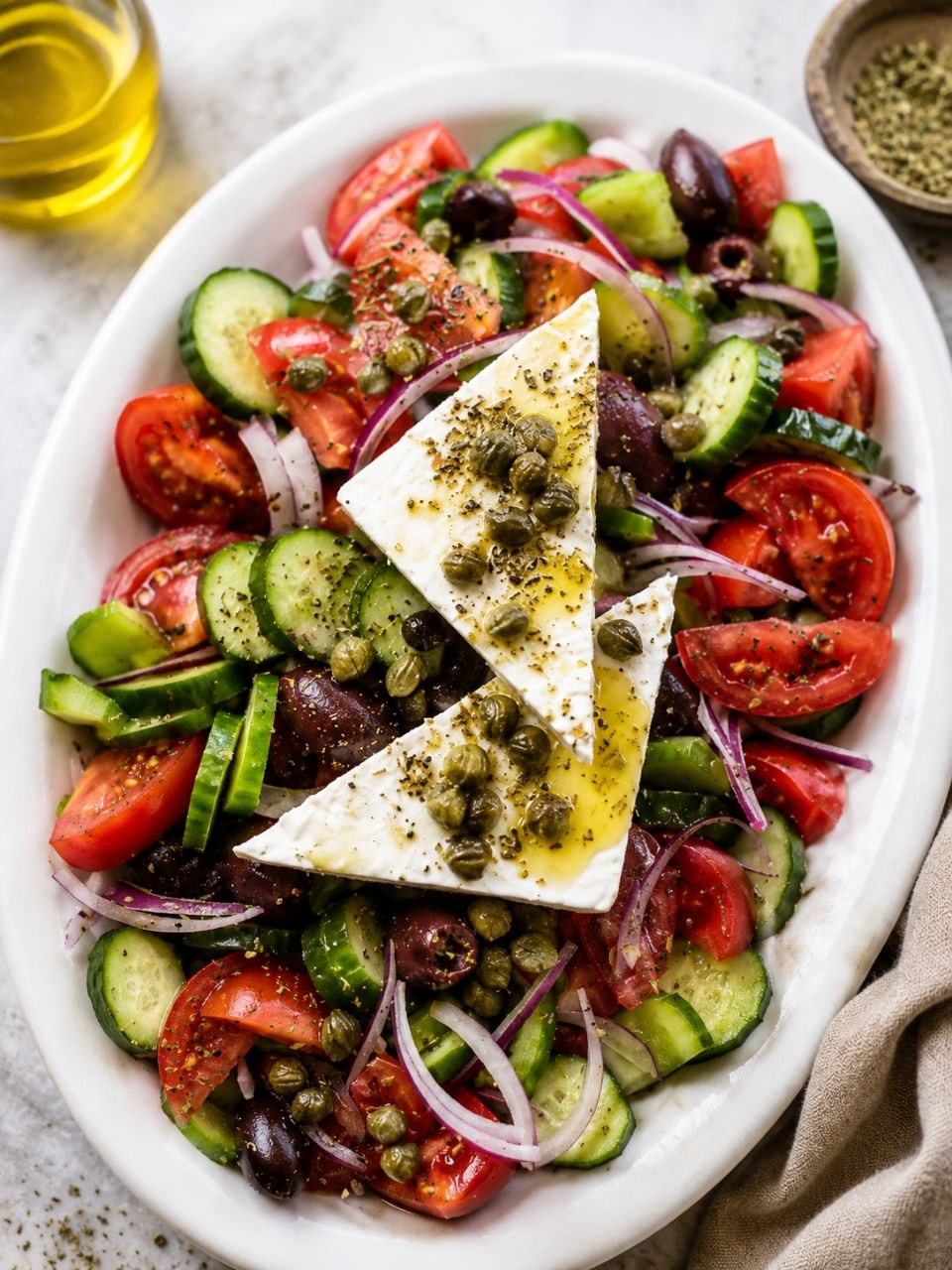
Horiatiki (Greek Village Salad)
How this dish came to life
Cultural significance
Horiatiki — literally 'the village salad' — is the most recognised Greek dish in the world and a quiet cultural archaeology in six ingredients. Tomatoes only arrived in Greek kitchens in the late 19th century from the Americas (via Italy and the Ottoman world), which means the salad in its modern form is barely 100 years old — younger than the Greek state itself. The defining element — the whole slab of feta laid across the top, rather than crumbled inside — was popularised in the Plaka district of Athens in the 1960s and 70s. Greek folk history credits this either to old taverna tradition or, more colourfully, to a clever workaround of the price controls placed by the Greek state on simple foods during that era. Either way, the slab of feta turned the salad into a national icon. Feta itself carries Greek PDO status (the only cheese in the world allowed to bear the name) and oregano grown wild on the Greek hillsides remains one of the most aromatic in the Mediterranean. The bread served alongside is for the papara — the sacred Greek ritual of dipping torn bread into the olive-oil-and-tomato-brine pool at the bottom of the bowl, a small ceremony that signals you actually loved the meal.
step by step
Instructions
- 1
Place the tomato wedges in a wide, shallow bowl or platter — never a deep one. Horiatiki is meant to be looked at.
- 2
Scatter the cucumber slices, white onion rings, and green pepper rings over the tomatoes. Don't toss — arrange.
- 3
Scatter the olives over the top, with their pits (this is the Greek way — pitted olives lose half their character).
- 4
Season the whole platter with sea salt and freshly cracked black pepper. Drizzle with the red wine vinegar.
- 5
Lay the whole slab of feta on top, in the centre — never broken up. If the slab is thick, slice it into two or three triangular wedges so it fits the platter.
- 6
Sprinkle the oregano generously over the feta — let it cover the cheese, the way every Athenian taverna serves it.
- 7
Pour the olive oil over everything — be generous. Greeks measure olive oil in glugs, not tablespoons. The oil should run off the feta and pool around the tomatoes.
- 8
Add the optional capers if using.
- 9
Serve immediately, with the village bread on the side. As you eat, the salt, the oil, the tomato juice, and the olive brine will gather at the bottom of the platter. Don't waste a drop. Tear off pieces of bread and dip them into the pool — this is the papara, the ritual that closes every real Horiatiki. A salad without a papara at the end is a salad you didn't love.
tips from the village —
Wisdom from grandmothers
- 01Use the ripest summer tomatoes you can find. Out-of-season tomatoes won't release the juice that makes the papara at the end — and the papara is the whole point.
- 02Cut everything large and rustic. Horiatiki is the salad of farmers — knife marks, uneven wedges, big slabs.
- 03Whole feta only, never crumbled. The slab on top is the entire visual and emotional signature of the dish.
- 04Drizzle the olive oil at the very last second, after the vinegar and salt. Oil over wet vinegar pools beautifully; oil before vinegar dilutes.
- 05Always serve bread. There is no Horiatiki without a papara at the end. Yiayia's rule: 'a Horiatiki without a papara is a Horiatiki you didn't really love.'
Related recipes
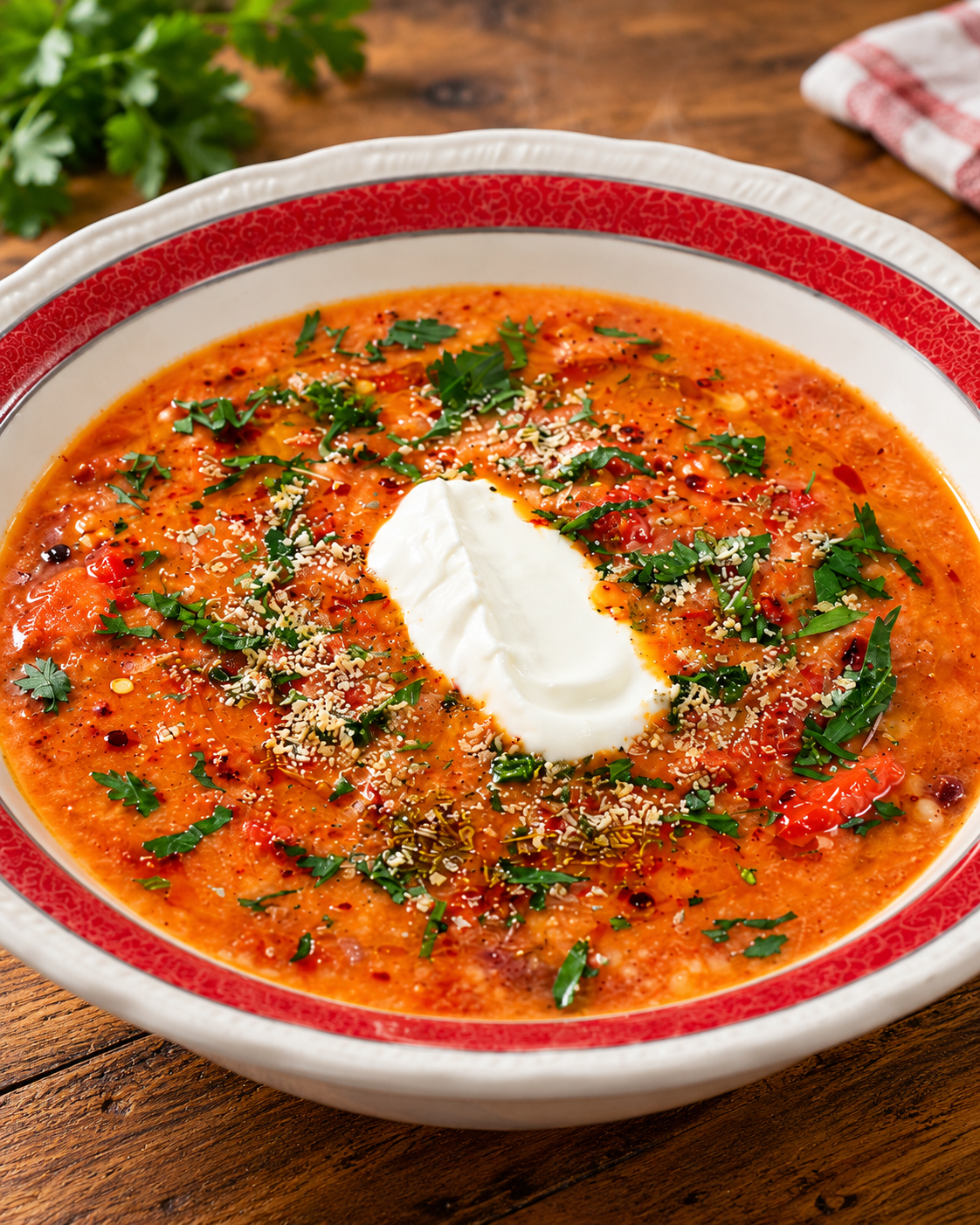
Kokkinistos Trahanas with Yogurt
Sour trahana simmered in a spicy tomato broth until creamy, served with cool Greek yogurt, boukovo and wild oregano — one humble food, countless traditions.
Read the story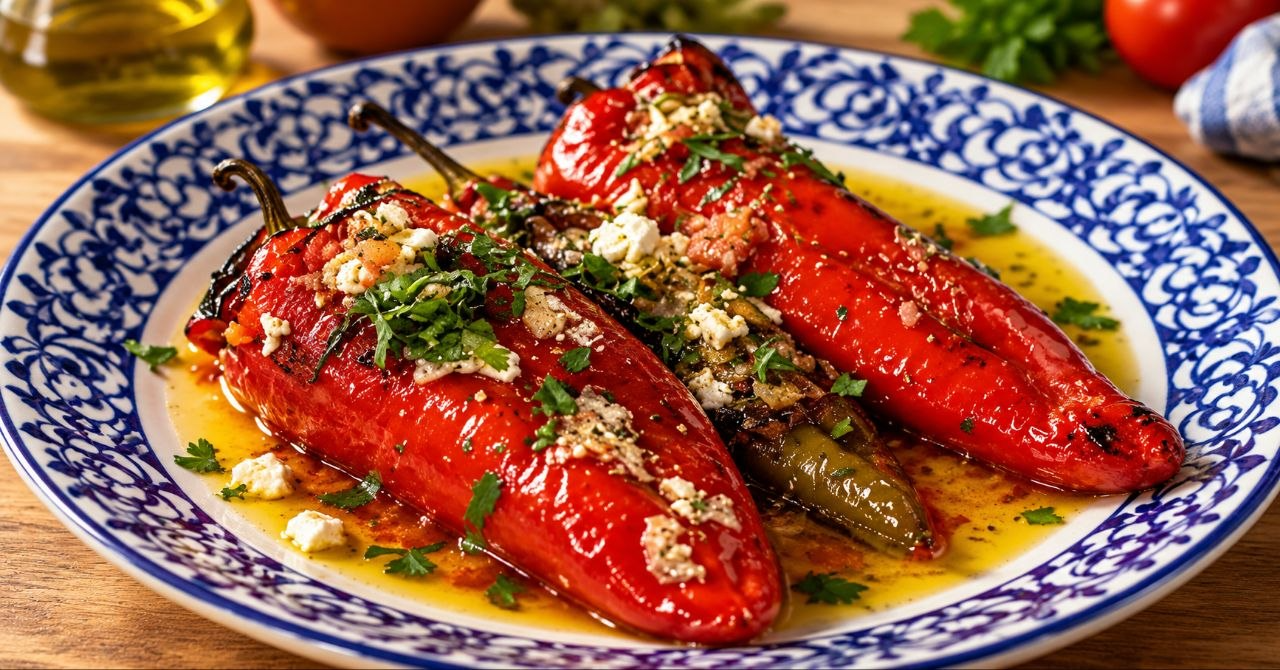
Stuffed Horn Peppers
Horn peppers stuffed with feta, tomato, garlic and wild oregano, baked until soft and caramelised — an American ingredient that became a Greek kitchen staple.
Read the story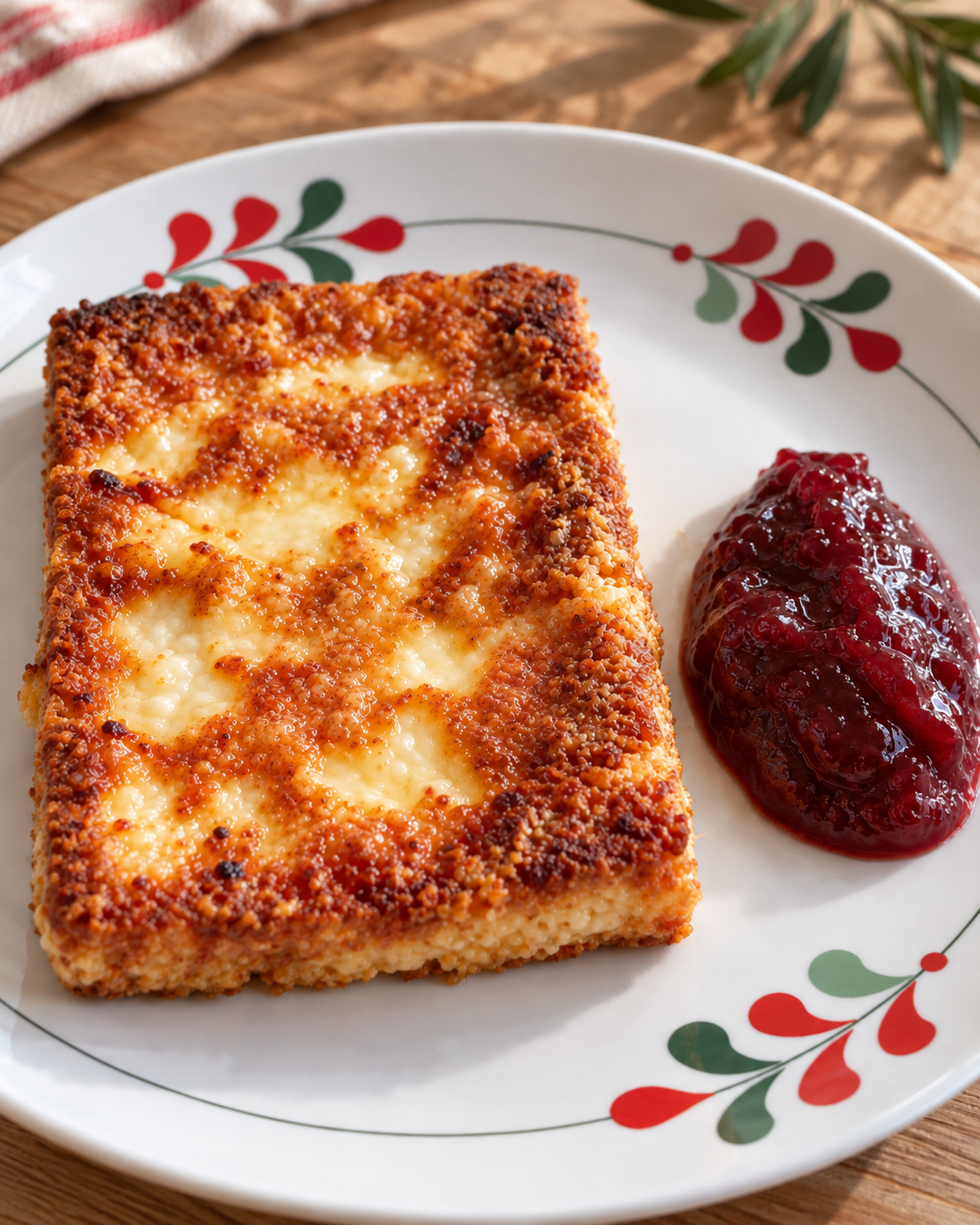
Saganaki with Grape Jam
Golden fried cheese, crisp outside and molten within, served with a slow-cooked grape jam brightened with lime — the taverna classic named after its little pan.
Read the story