How this dish came to life
Cultural significance
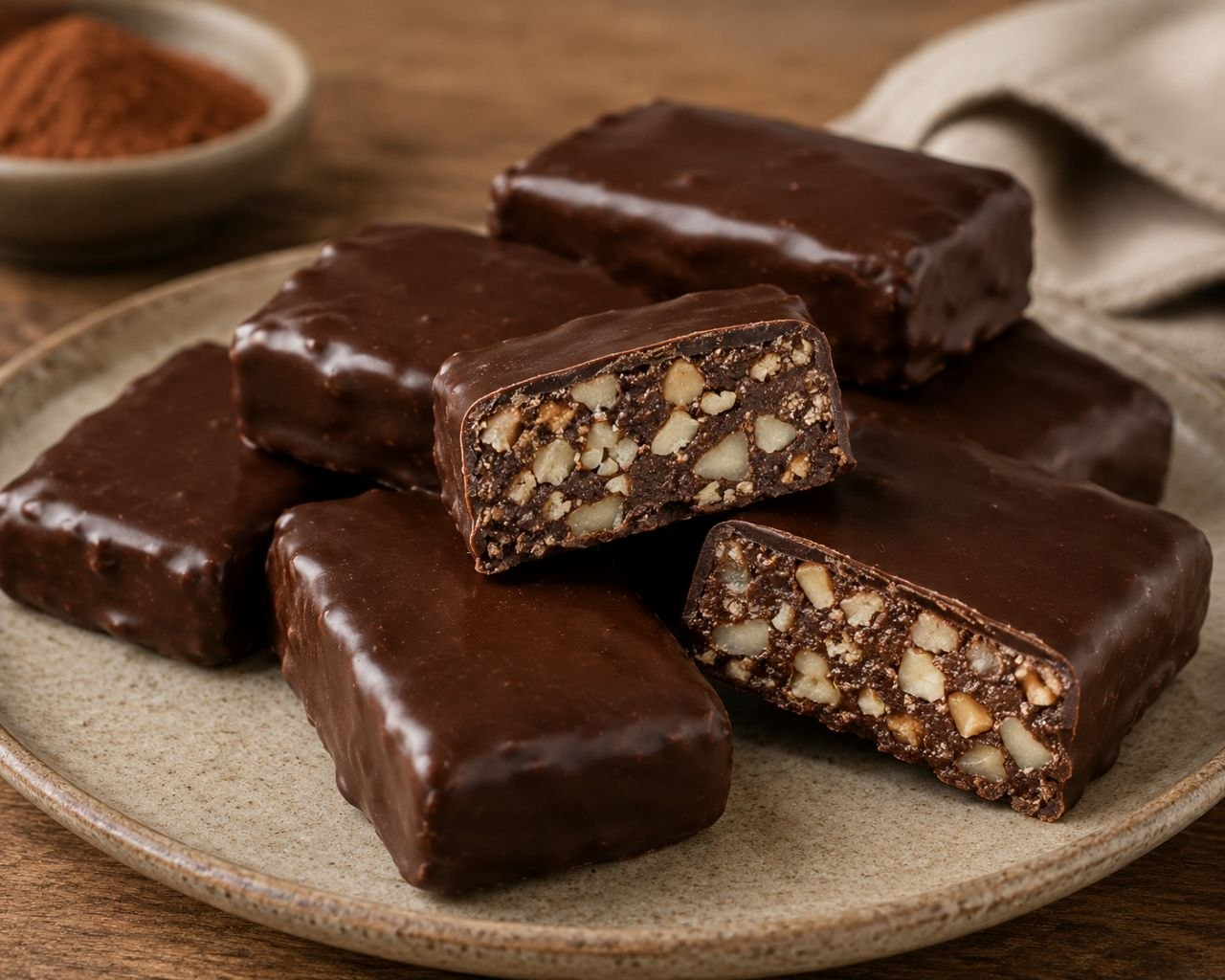
Kariokes are a Greek invention of the inter-war years, born in the pastry shops of Xanthi — a small city in Thrace, in the far north-east of Greece. The recipe began as a frugal way to use leftover cake and biscuit trimmings during the years of sugar rationing and economic difficulty in the 1920s and 30s, folding them with the abundant Thracian walnut harvest, cocoa, cognac and syrup into dense fudge-like logs coated in dark chocolate. Today Xanthi is still considered the heartland of the kariokes tradition, and several historic patisseries in the old town (Galerakis, Asteras, and others) sell hand-cut, hand-dipped kariokes daily in lacquered wooden trays. The dessert has since spread across all of Greece and is a fixture of the bougatsa shops of Thessaloniki, the bakeries of Athens, and the Sunday-afternoon coffee tables of Greek households worldwide. Its survival is a quiet monument to a Greek principle older than the recipe itself: that nothing — not a crumb, not a memory — should be thrown away.
step by step
Instructions
- 1
Crush the petit beurre biscuits into fine crumbs (a food processor is fastest, but a rolling pin and a sealed bag works just as well — Yiayia way). Tip into a wide bowl.
- 2
Roughly chop the walnuts into pebbly pieces — you want some texture in every bite, so don't grind them too fine.
- 3
Melt the butter gently and let it cool to room temperature. Hot butter will turn the biscuit crumbs into a paste — cool butter binds them like a proper fudge.
- 4
Add the chopped walnuts, condensed milk, cognac, vanilla, cocoa powder, cinnamon and the cooled melted butter to the bowl with the crushed biscuits. Mix thoroughly with a wooden spoon (or by hand) until everything comes together into a thick, sticky, almost shiny chocolate paste.
- 5
Line a small tray (about 20 × 20 cm) with baking parchment. Tip the mixture in and press it down firmly and evenly with the back of a spoon or your palms — you want a thick, dense slab about 2.5 cm deep.
- 6
Cover the tray with cling film and refrigerate for 60–90 minutes, until firm enough to cut without crumbling.
- 7
Meanwhile, prepare the chocolate coating. Break the couverture into pieces and place in a heatproof bowl with the 50 g butter. Set the bowl over a small pan of barely simmering water (a bain-marie) and stir slowly until completely melted, glossy and smooth. Take off the heat and let cool for 5 minutes — the chocolate should still be liquid but no longer hot to the touch.
- 8
Lift the cold biscuit slab out of the tray using the parchment. Cut it into small rectangles — the classic Xanthi size is about 3 × 5 cm. A sharp knife dipped in hot water and wiped dry gives the cleanest cut.
- 9
One by one, drop each rectangle into the melted chocolate. Use two forks to turn it gently so the chocolate coats every side, then lift, let the excess drip off, and place on a parchment-lined tray. Don't crowd them — the chocolate must set untouched.
- 10
Sprinkle a tiny pinch of flaky sea salt on top of each one immediately, if you like the modern Greek pastry-shop touch.
- 11
Refrigerate the coated kariokes for about 30 minutes, until the chocolate has set into a hard, glassy shell.
- 12
Store in a sealed glass container in a cool place (not the fridge, where they sweat) — they'll keep beautifully for 2 weeks, and the texture deepens after a couple of days.
tips from the village —
Wisdom from grandmothers
- 01Use a good dark couverture chocolate — not chocolate chips. Couverture has the higher cocoa butter content needed for a glossy, snapping shell.
- 02Let the melted butter cool fully before mixing it into the crumbs. Hot butter melts the cocoa, turns the mixture greasy, and changes the texture from fudge to mud.
- 03Don't skip the cognac. Even a small spoon adds the perfume that distinguishes kariokes from any other chocolate bar — alcohol-free versions taste flatter.
- 04Press the biscuit slab firmly into the tray. Loose-packed kariokes crumble when you cut them; densely-packed ones slice like fudge.
- 05Dip the knife in hot water between cuts. Cold knife = ragged edges. Warm knife = bakery-clean slices.
- 06Two-fork dipping is the patissier's method — fingers leave prints and warm the chocolate. Forks give you cleaner sides and a more even glaze.
- 07Keep at cool room temperature, not in the fridge. Refrigerated kariokes sweat and lose their snap; cool-pantry kariokes stay glossy and crisp.
Related recipes
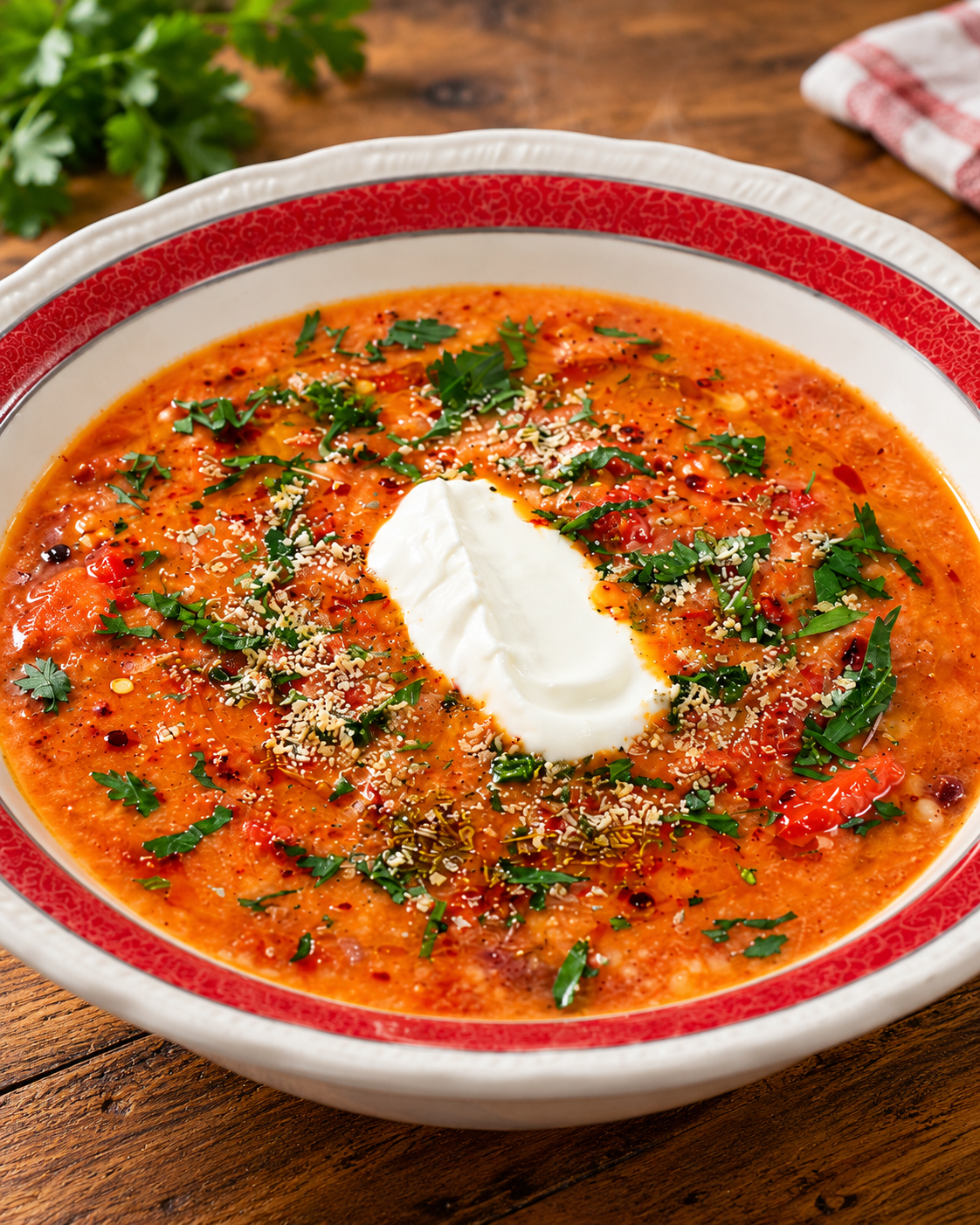
Kokkinistos Trahanas with Yogurt
Sour trahana simmered in a spicy tomato broth until creamy, served with cool Greek yogurt, boukovo and wild oregano — one humble food, countless traditions.
Read the story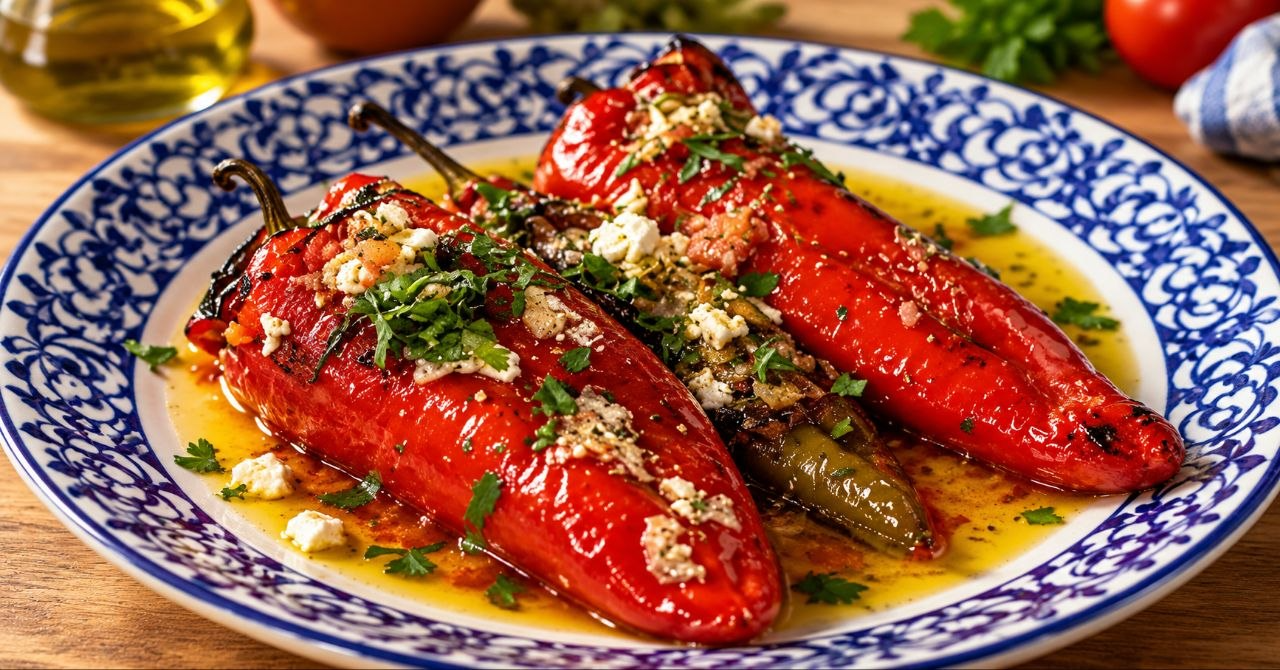
Stuffed Horn Peppers
Horn peppers stuffed with feta, tomato, garlic and wild oregano, baked until soft and caramelised — an American ingredient that became a Greek kitchen staple.
Read the story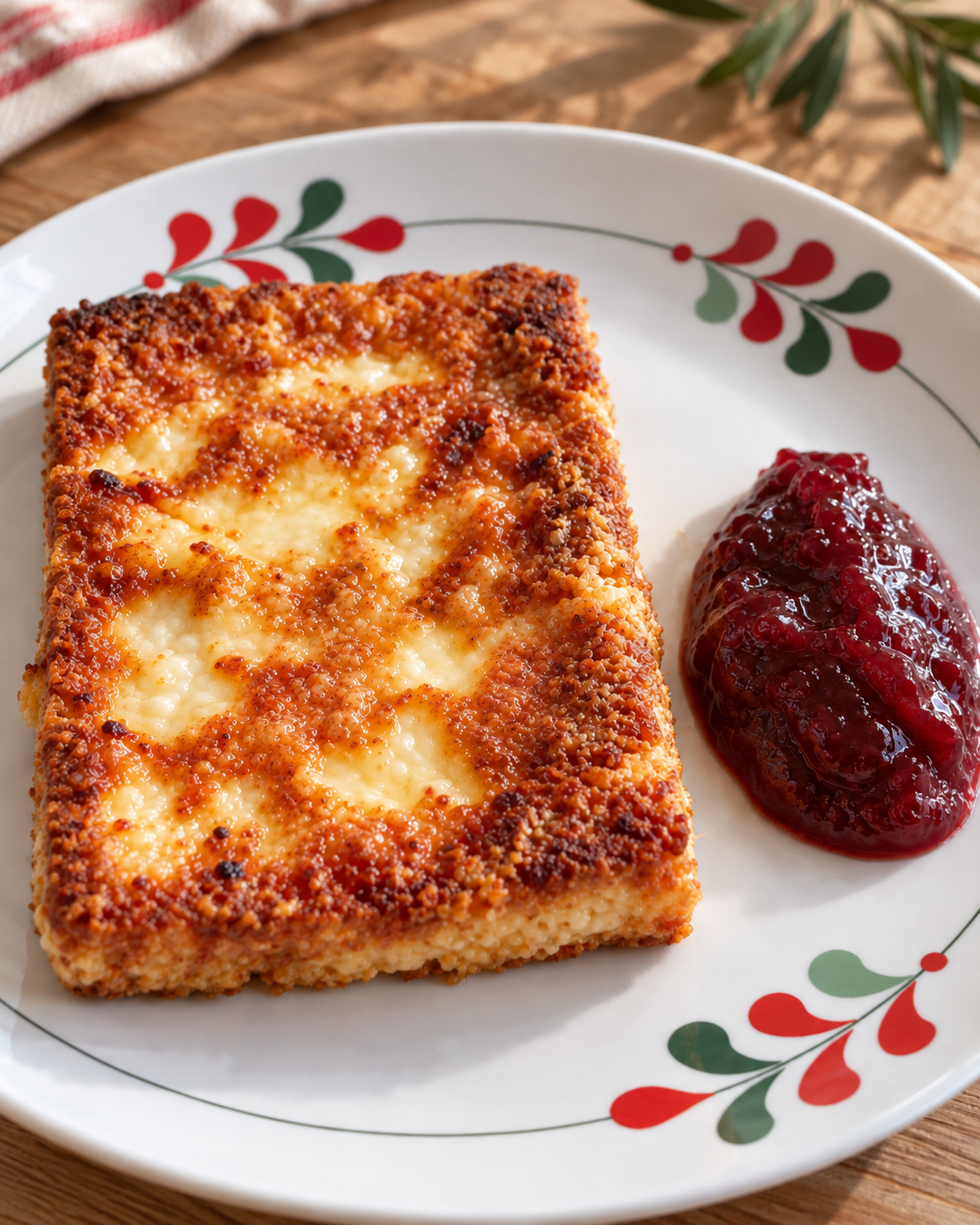
Saganaki with Grape Jam
Golden fried cheese, crisp outside and molten within, served with a slow-cooked grape jam brightened with lime — the taverna classic named after its little pan.
Read the story