How this dish came to life
Cultural significance
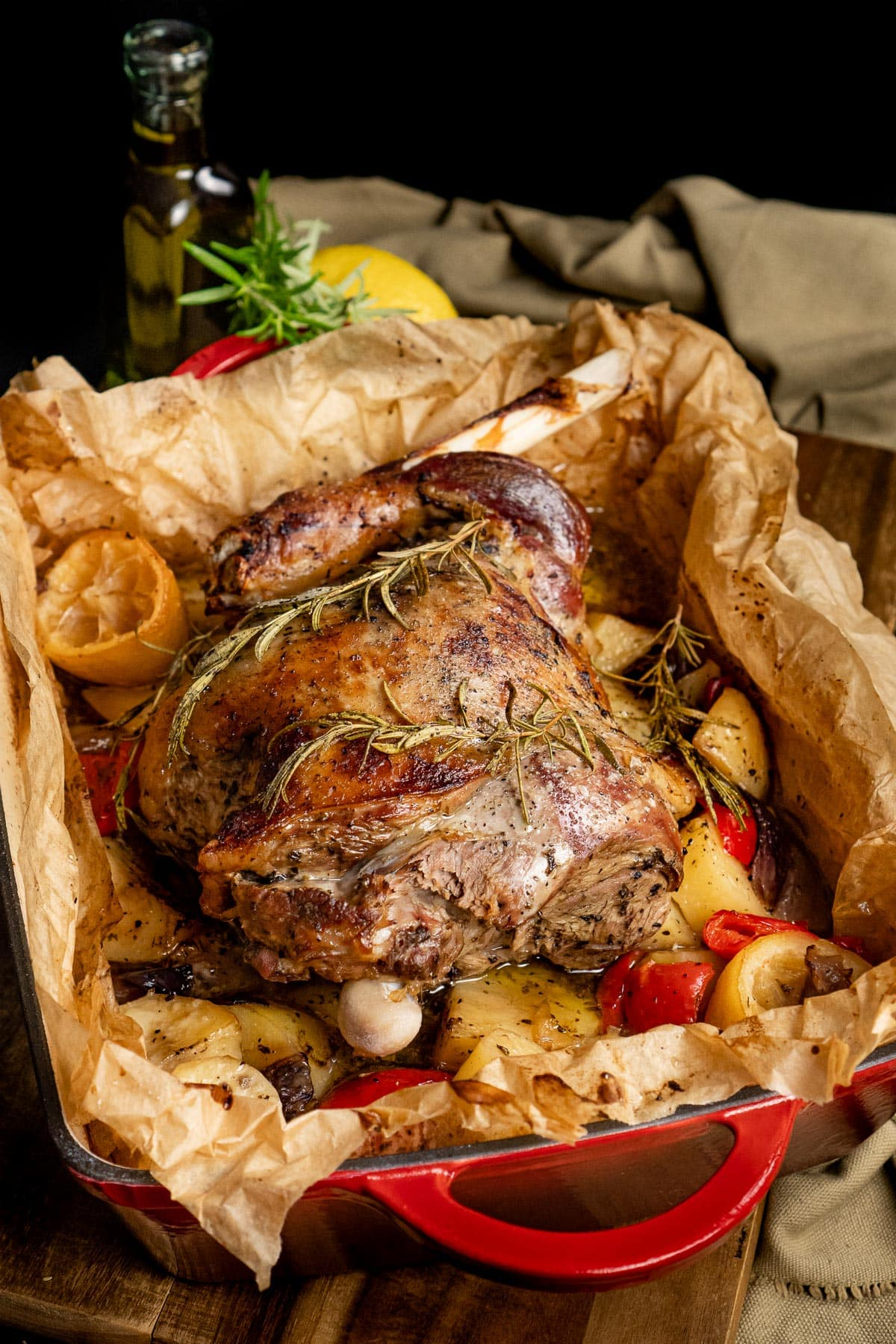
Kleftiko is one of the few dishes whose name is also a piece of history. Born from the kitchens of the Klephts during four centuries of Ottoman occupation, it became, after independence, a symbol of Greek and Cypriot resilience and freedom. It is the dish you serve when you want to honour the table — Easter Sundays, name days, weddings, family gatherings — slow, generous, and impossible to rush. To eat kleftiko is to taste the long memory of two countries that learned how to feed themselves on patience and herbs.
step by step
Instructions
- 1
Cut the lamb leg into large chunks (the size of a small fist) and place in a deep bowl.
- 2
Whisk together the olive oil, white wine, mustard, lemon juice, oregano, leaves from a few sprigs of thyme and rosemary, salt and pepper. Pour over the lamb and toss to coat.
- 3
Cover and marinate in the fridge for at least 2 hours — overnight is even better, the meat needs time to drink the marinade.
- 4
When ready to cook, heat the oven to 180°C / 355°F. Slice the potatoes into wedges, chop the peppers and onions, smash the garlic, and cut the cheese into chunks.
- 5
Lay a large sheet of parchment paper inside a deep roasting tray (it should be big enough to wrap everything up). Pile in the potatoes, onions, peppers and garlic.
- 6
Add the marinated lamb on top with all of its marinade. Tuck the cheese chunks in among the meat and vegetables.
- 7
Toss everything once with your hands so the marinade coats every piece evenly.
- 8
Bring the edges of the parchment together over the top, twist or fold to seal completely, and tie firmly with kitchen twine — like a giant bundle. The seal is what cooks the dish.
- 9
Bake at 180°C / 355°F for about 2 hours, undisturbed.
- 10
Open the parcel at the table — let everyone smell the steam come out. The lamb should fall apart with a fork, the potatoes should be soaked in lamb juices, and the cheese melted into pockets of richness.
- 11
Serve straight from the parchment with bread and a simple village salad.
tips from the village —
Wisdom from grandmothers
- 01The marinade time isn't optional — the meat needs at least 2 hours to take the lemon, wine and mustard. Overnight is best.
- 02Seal the parchment tightly. Any gap lets the steam escape and turns kleftiko from a slow braise into a dry roast.
- 03Don't open the parcel during cooking. The Klephts couldn't open their pits — and your oven works the same way.
- 04Graviera or kefalotyri are the traditional Cypriot/Greek choice. If you can't find them, a good aged Pecorino works in a pinch.
- 05Save every drop of the juices that pool inside the parcel. Spoon them over the bread — that liquid is the soul of the dish.
Related recipes
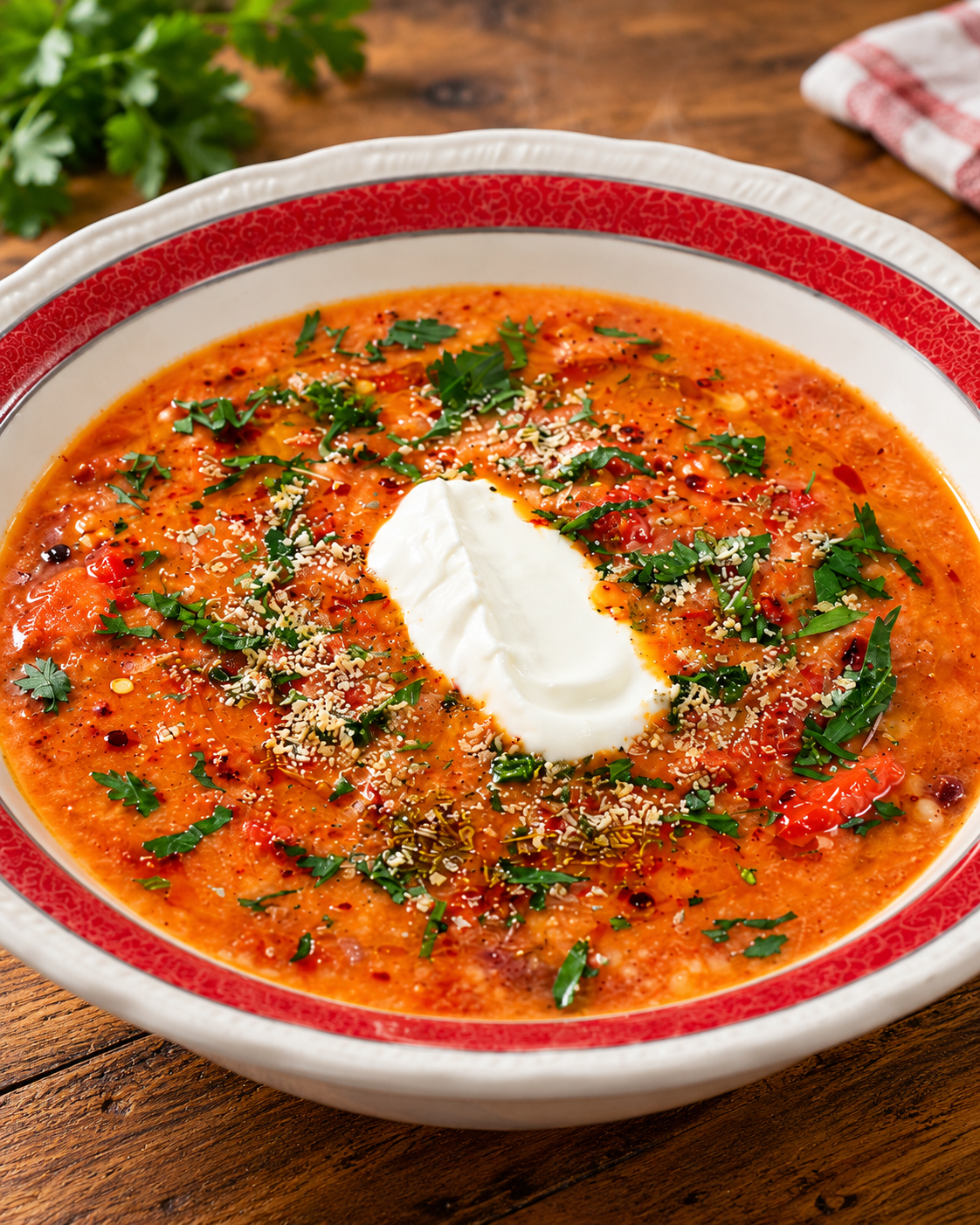
Kokkinistos Trahanas with Yogurt
Sour trahana simmered in a spicy tomato broth until creamy, served with cool Greek yogurt, boukovo and wild oregano — one humble food, countless traditions.
Read the story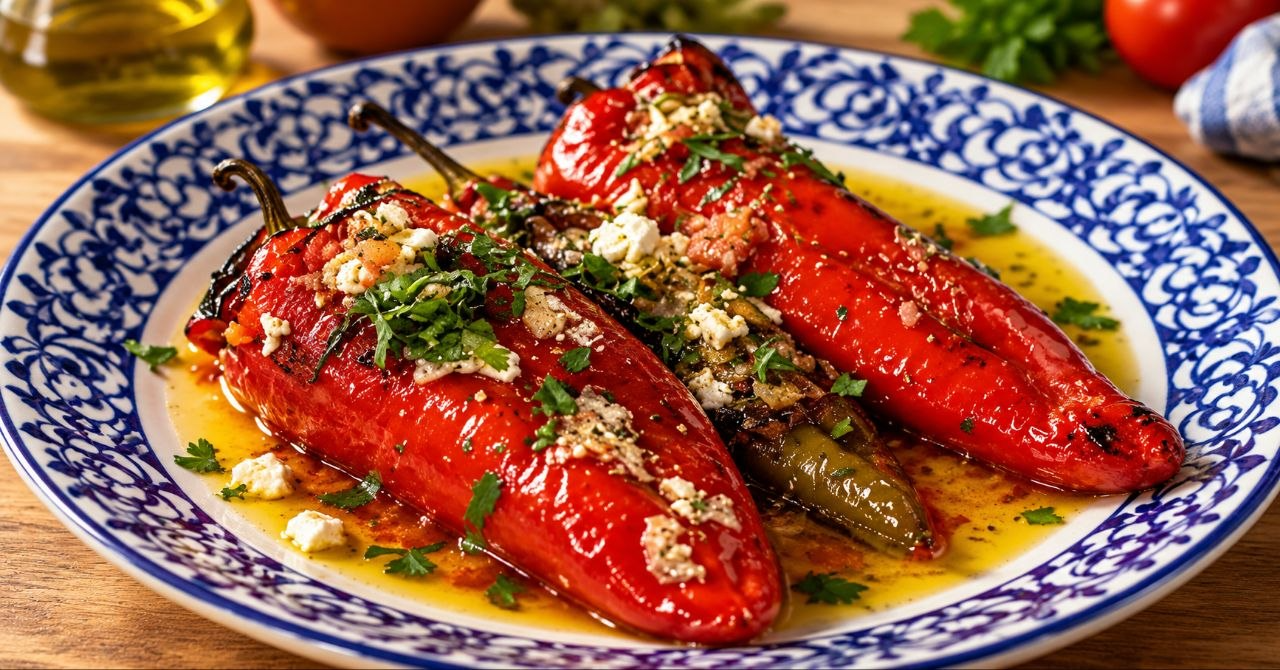
Stuffed Horn Peppers
Horn peppers stuffed with feta, tomato, garlic and wild oregano, baked until soft and caramelised — an American ingredient that became a Greek kitchen staple.
Read the story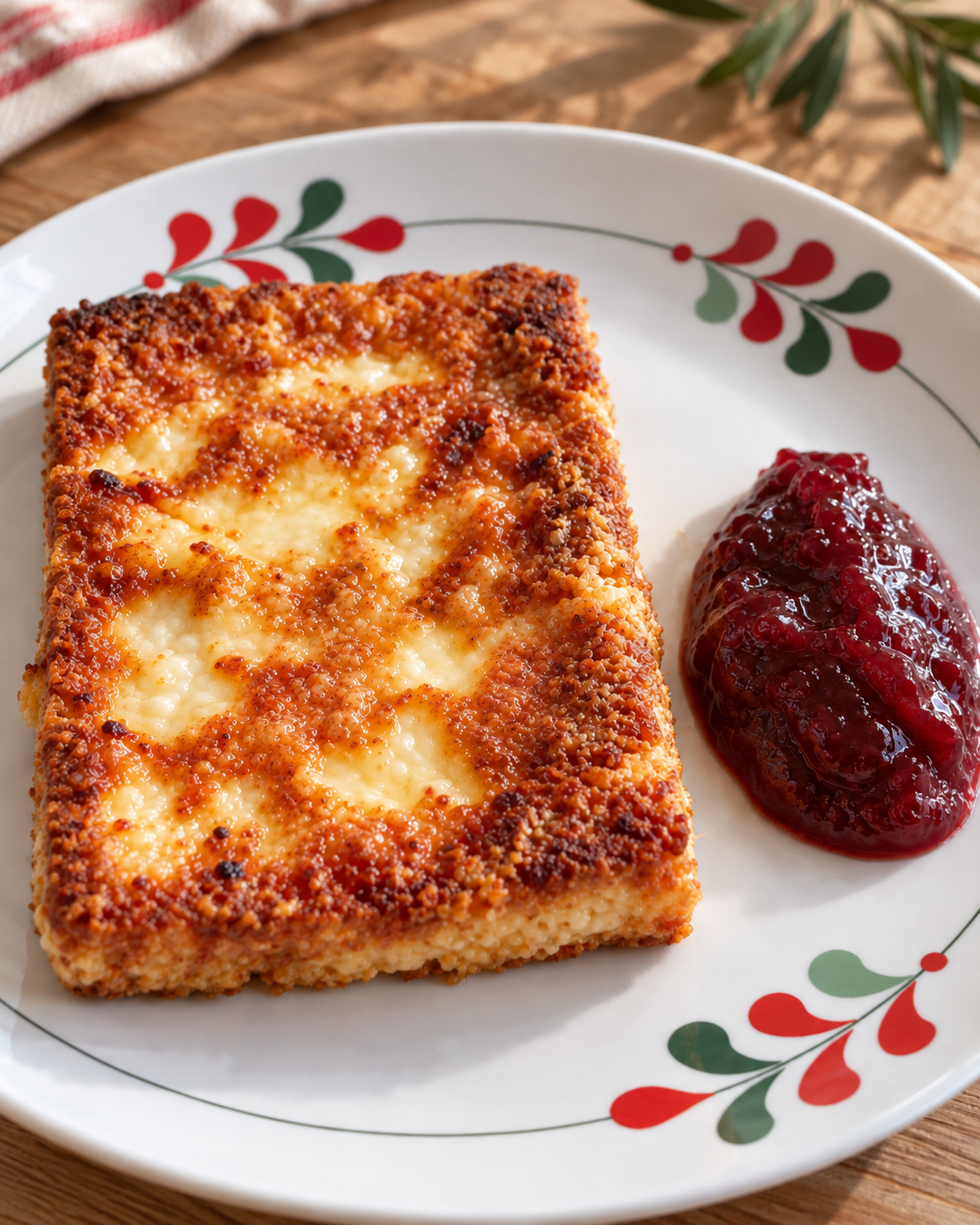
Saganaki with Grape Jam
Golden fried cheese, crisp outside and molten within, served with a slow-cooked grape jam brightened with lime — the taverna classic named after its little pan.
Read the story