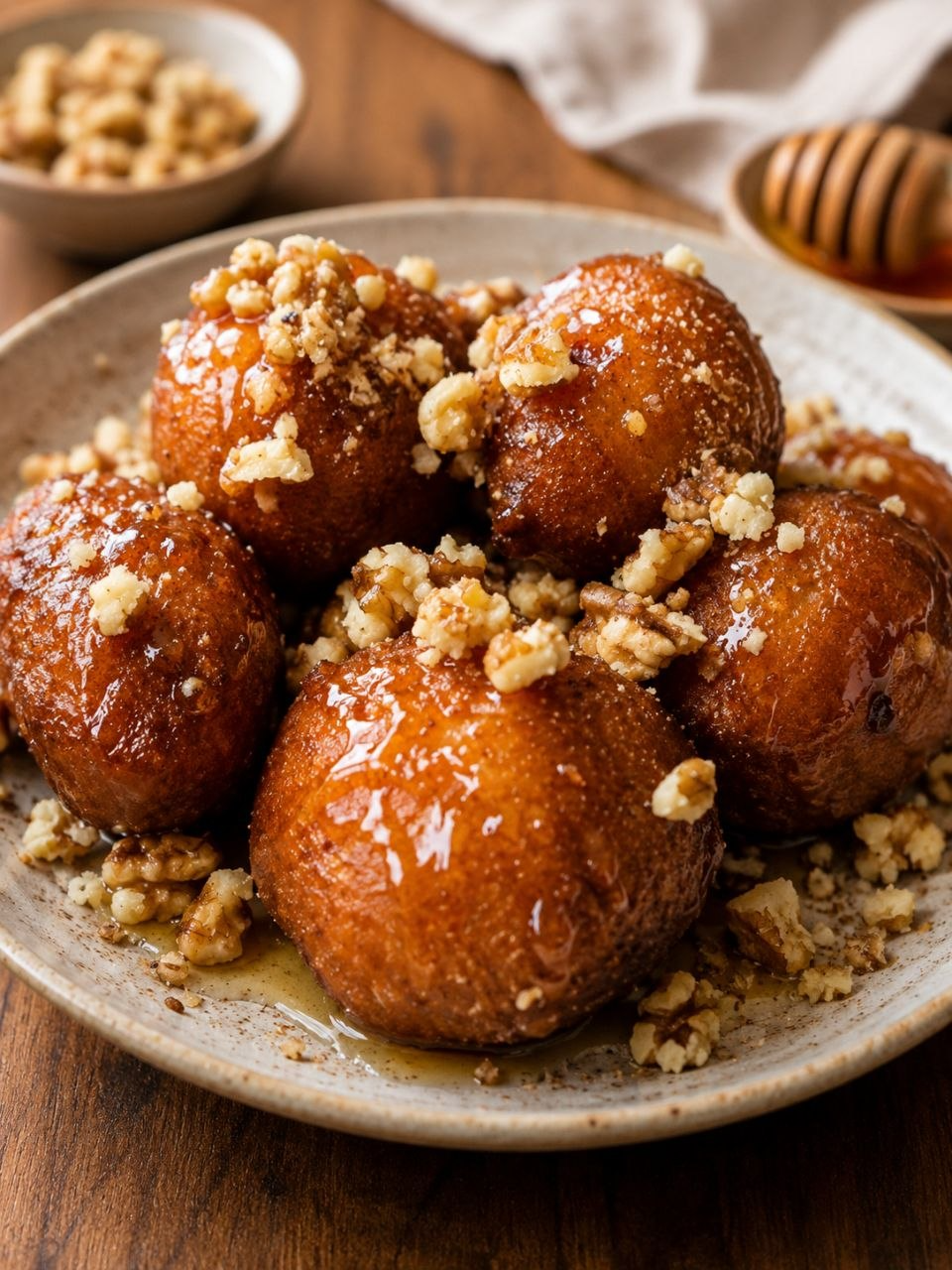
How this dish came to life
Cultural significance
Loukoumades — descended from the ancient Greek enkrides (ἐγκρίδες) — are the oldest recorded dessert in the Western world, mentioned in surviving fragments of the poet Callimachus as the sweet offered to the victors of the first ancient Olympic Games in 776 BCE. The dish has unbroken continuity across the Hellenic, Byzantine, and Ottoman periods, surviving as lokma in Turkish, luqma in Arabic, and zalabia across the wider Middle East. Honey itself, sacred to Artemis and Demeter in ancient Greece, gave loukoumades their ritual association with celebration, victory, and divine favour — and that meaning still lives in the way Greeks serve them today at saints' day festivals (panigiria), name-days, baptisms, and weddings. A bite of edible Greek heritage.
step by step
Instructions
- 1
Warm a small splash of the water until it is just hand-hot. Stir the sugar into it until dissolved, then sprinkle the yeast over the top. Let it sit for 5 minutes, until it foams visibly — this is how you know the yeast is alive.
- 2
In a large mixing bowl, pour in the rest of the water, the activated yeast mixture, the 20 g of sunflower oil and a pinch of salt. Whisk briefly.
- 3
Add the flour gradually, whisking until you have a smooth, glossy batter the consistency of thick honey — it should slowly drip off a wooden spoon, not pour, not hold its shape.
- 4
Cover the bowl with cling film or a clean tea towel. Refrigerate for 1 hour, until the batter has doubled in size and is bubbly across the surface. (A cold rest, not a warm one, gives loukoumades their open crumb and the chewy soft interior the Greeks call afráto.)
- 5
Heat about 5 cm of sunflower oil in a deep heavy pot to 175°C / 350°F — the temperature matters. Too cool and the loukoumades go greasy; too hot and they brown before the inside cooks.
- 6
Now the trick that every Greek yiayia taught: dip a small teaspoon in cold water (this is essential — the batter slides off cleanly), scoop a small ball of batter, and drop it gently into the oil. Continue with 5–6 at a time, dipping the spoon in water between each one.
- 7
The loukoumades will sink, then bob to the surface, then puff. Fry them for about 3–4 minutes, turning gently with a slotted spoon, until they are deeply golden all over.
- 8
Lift them onto a plate lined with paper towels to drain. Don't crowd them — they need to breathe.
- 9
Just before serving, do the second fry. Drop them back into the hot oil for 30–60 seconds — this is the secret of restaurant-style extra-crisp loukoumades, the equivalent of a French fry's second fry.
- 10
Pile the hot loukoumades onto a wide serving plate. Pour the honey generously over them while still hot — it should pool around the base of the plate.
- 11
Dust heavily with cinnamon and scatter the crushed walnuts in a generous shower. If you like, add a small drizzle of hazelnut praline for a modern twist.
- 12
Serve immediately, while they're still steaming and the honey is hot. Eat with the fingers, with a strong Greek coffee on the side. Don't be civilised about it.
tips from the village —
Wisdom from grandmothers
- 01The cold-fridge rise is the Greek baker's secret. A slow, cold fermentation gives the dough its open, chewy interior — never let it rise on the counter.
- 02Dip the spoon in cold water between every scoop. The batter is sticky; cold water releases it cleanly. This is the single most important technique.
- 03Two fries, not one. The second 30-second fry is what creates the crackling, glassy crust that good Athens loukoumadika are famous for.
- 04Use real Greek honey if you can — thyme honey from Crete or pine honey from Halkidiki. Generic supermarket honey works but lacks the perfume.
- 05Eat immediately. Loukoumades cooked yesterday are not loukoumades — they're sad bread balls. This is a dish that lives in the minute it's served.
Related recipes
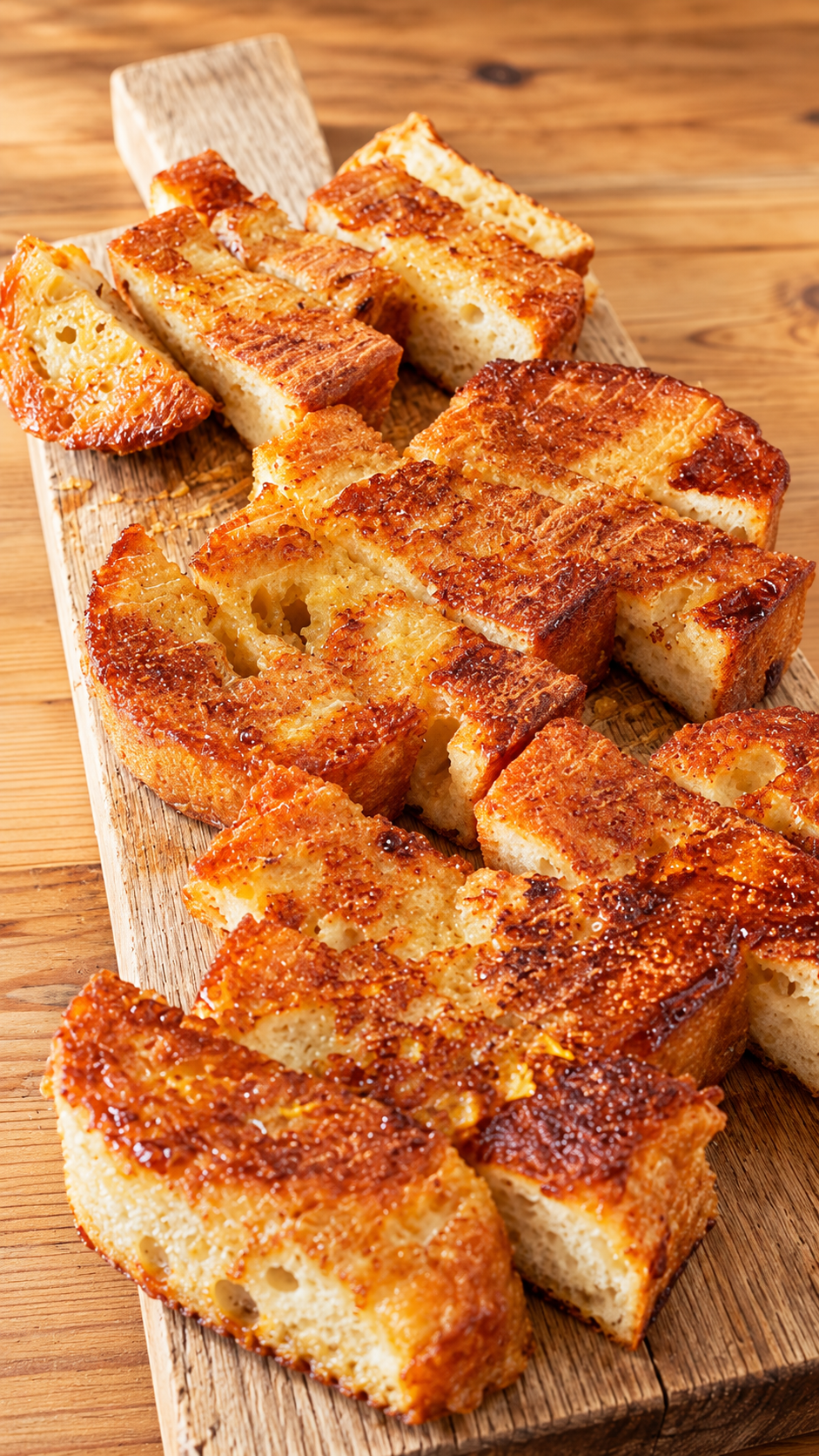
Avgofetes
Greek egg-fried bread — yesterday's loaf dipped in egg and milk, fried golden in olive oil and served with honey and cinnamon. Older than French toast.
Read the story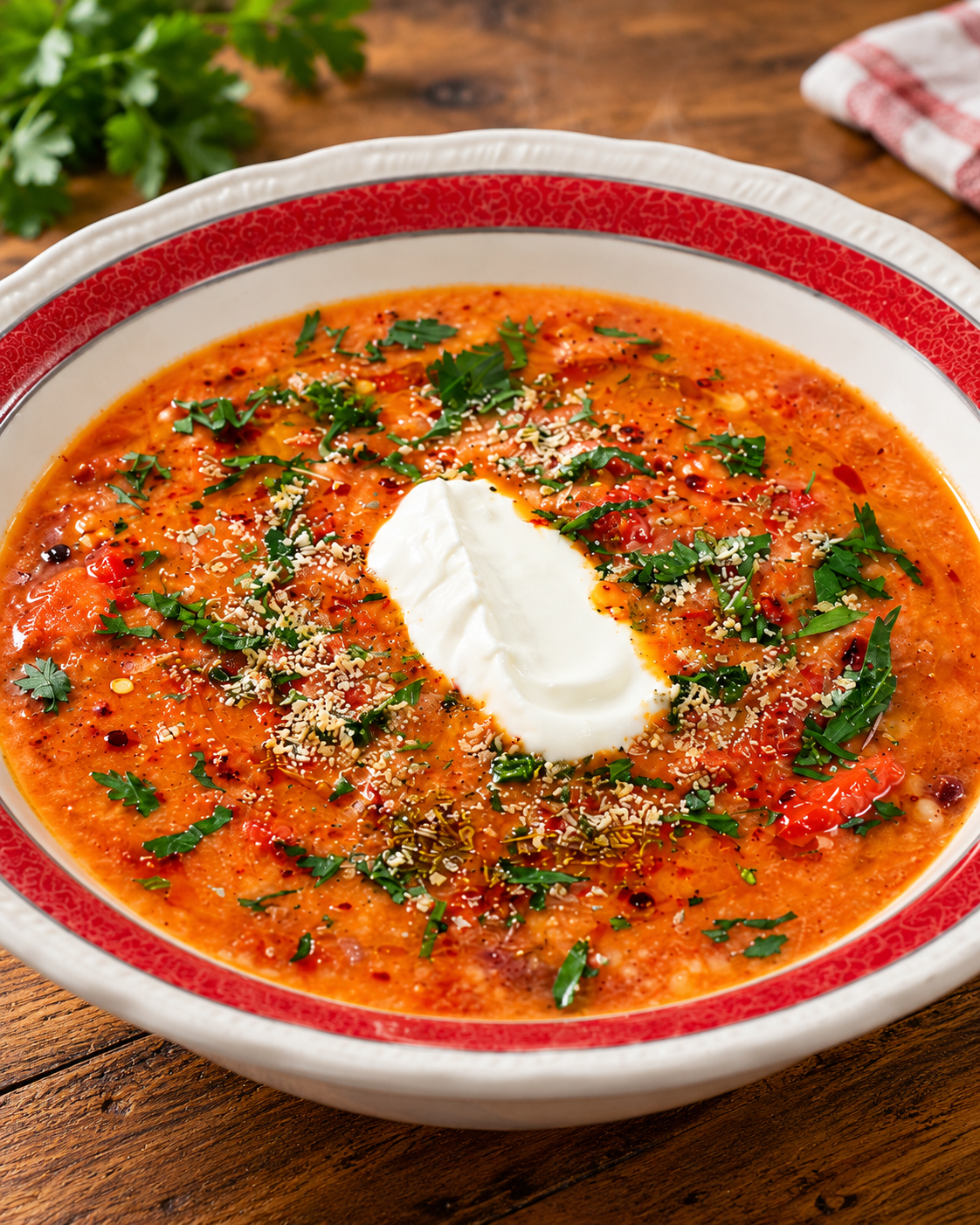
Kokkinistos Trahanas with Yogurt
Sour trahana simmered in a spicy tomato broth until creamy, served with cool Greek yogurt, boukovo and wild oregano — one humble food, countless traditions.
Read the story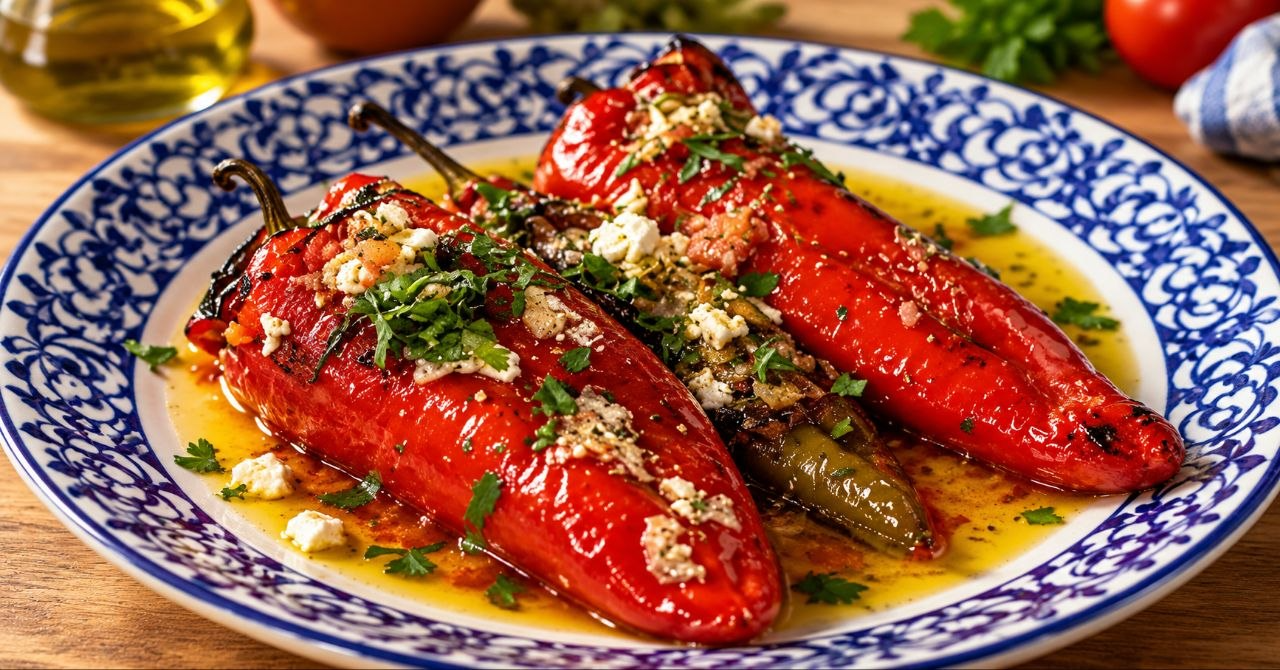
Stuffed Horn Peppers
Horn peppers stuffed with feta, tomato, garlic and wild oregano, baked until soft and caramelised — an American ingredient that became a Greek kitchen staple.
Read the story