How this dish came to life
Cultural significance
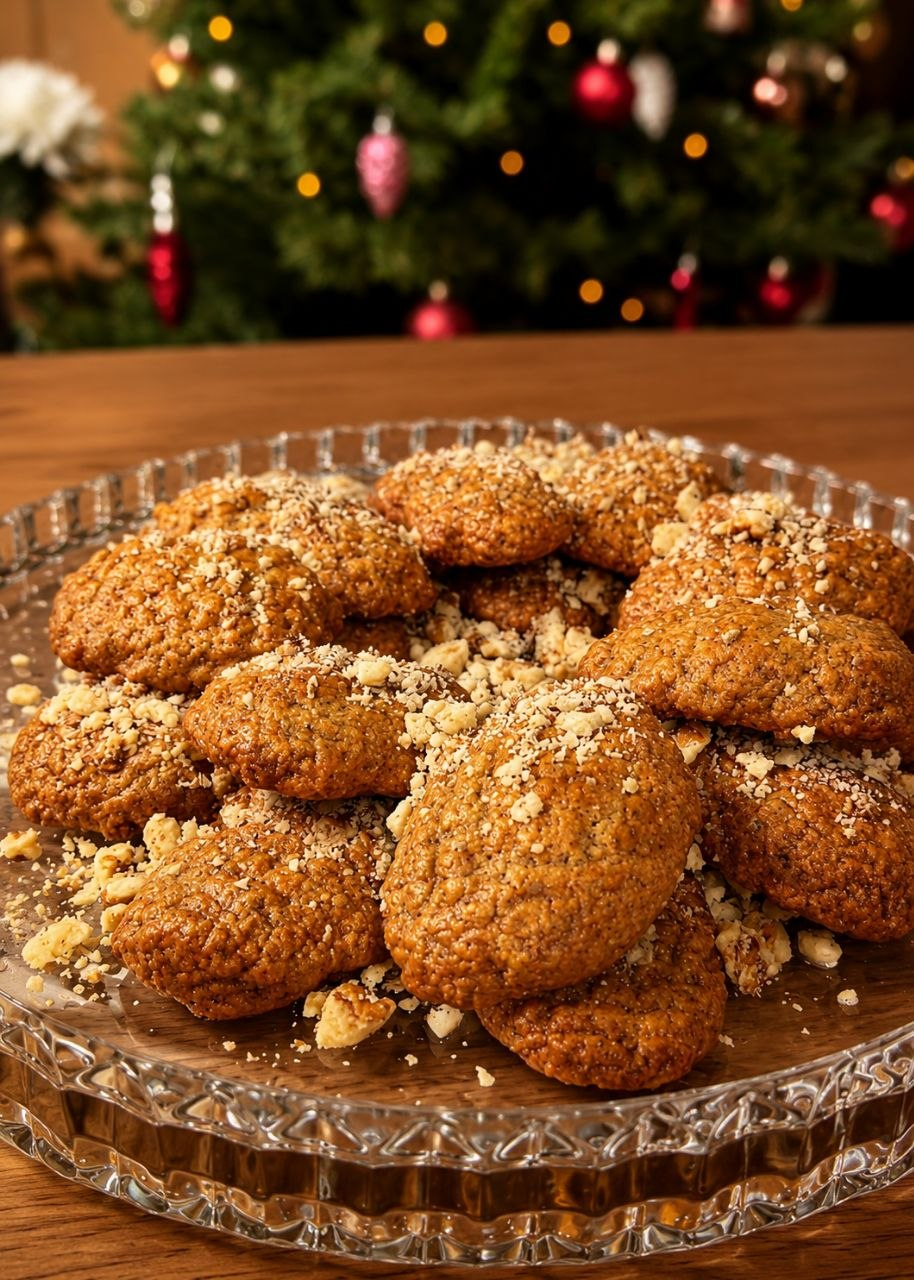
Melomakarona are one of the two great cookies of the Greek Christmas table, alongside kourabiedes. The dish carries a remarkable etymological story — it descends from the ancient Greek makaría, a small biscuit served at funerals and named for the Greek word makários (blessed). Adapted into Christian tradition, glazed with honey, and rebranded as a holiday treat, the melomakarono is a perfect example of how Greek cuisine carries continuity across millennia. They are vegan (made with olive oil, never butter), and a staple of Lent — appearing in different forms during the fasting period before Christmas.
step by step
Instructions
- 1
Start with the syrup — it must be completely cold by the time the cookies come out hot. In a wide pot, combine the water, sugar, halved orange, cinnamon stick and cloves. Bring to a boil and let it bubble for 3–4 minutes.
- 2
Take the pot off the heat, stir in the honey, and set the syrup aside, uncovered, to cool completely (at least an hour — overnight is better). Don't skip this. Hot cookie + cold syrup = the right texture.
- 3
Heat the oven to 180°C / 355°F. Line two large baking trays with parchment.
- 4
In a large bowl, whisk together the orange juice, sunflower oil, olive oil, powdered sugar, ground clove, nutmeg, cinnamon and baking soda. The baking soda will fizz against the juice — that's exactly what you want.
- 5
In a separate bowl, stir together the flour and semolina.
- 6
Add the dry ingredients to the wet in three batches, folding gently with a wooden spoon. Do NOT knead. Melomakarona dough must be soft, slightly sticky, and barely combined — overworking turns them tough and bready.
- 7
Pinch off a small piece of dough (about a heaped tablespoon) and shape it gently between your palms into a small oval, about the size of an egg yolk. Don't press hard.
- 8
Arrange the cookies on the baking trays, leaving 2cm between them. Bake for 20–25 minutes, until deeply golden brown on top and slightly cracked on the surface.
- 9
Now the magic. Working in small batches while the cookies are still hot, drop them into the cold syrup. Push them down with a slotted spoon for 5–10 seconds — long enough for them to soak, not so long that they fall apart.
- 10
Lift onto a wide platter, leaving space between each cookie. Sprinkle generously with the crushed walnuts and a final dust of cinnamon while still glossy with syrup.
- 11
Let them rest at room temperature for at least 4 hours — better overnight — so the syrup soaks all the way through. They keep, covered, at room temperature for up to 2 weeks (and improve with time).
tips from the village —
Wisdom from grandmothers
- 01Hot cookie + cold syrup is the unbreakable rule. If both are warm, the cookies turn soggy; if both are cold, they don't drink it up. Make the syrup the night before.
- 02Do not knead the dough. Melomakarona are a 'soft hand' cookie — you fold the dry into the wet just until it comes together, no more.
- 03Use a good Greek honey if you can — thyme honey or pine honey both make the syrup taste of the country. Acacia or generic supermarket honey is fine, just less perfumed.
- 04The cookies look pale when they go in and need to come out properly browned — almost dark amber. Pale melomakarona won't soak up syrup correctly.
- 05Make a double batch. Greek Christmas tradition says you give half away to neighbours, family, and the postman.
Related recipes
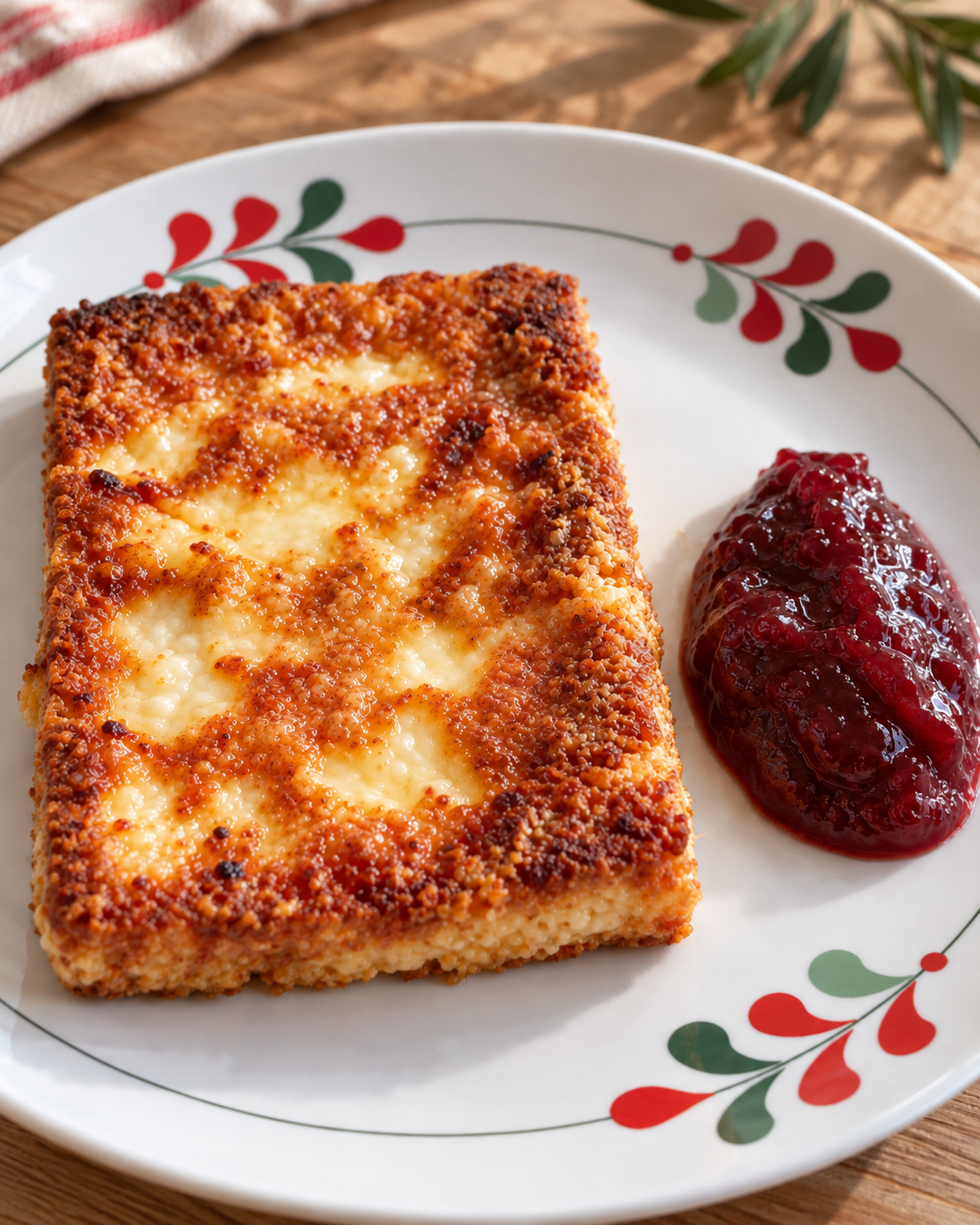
Saganaki with Grape Jam
Golden fried cheese, crisp outside and molten within, served with a slow-cooked grape jam brightened with lime — the taverna classic named after its little pan.
Read the story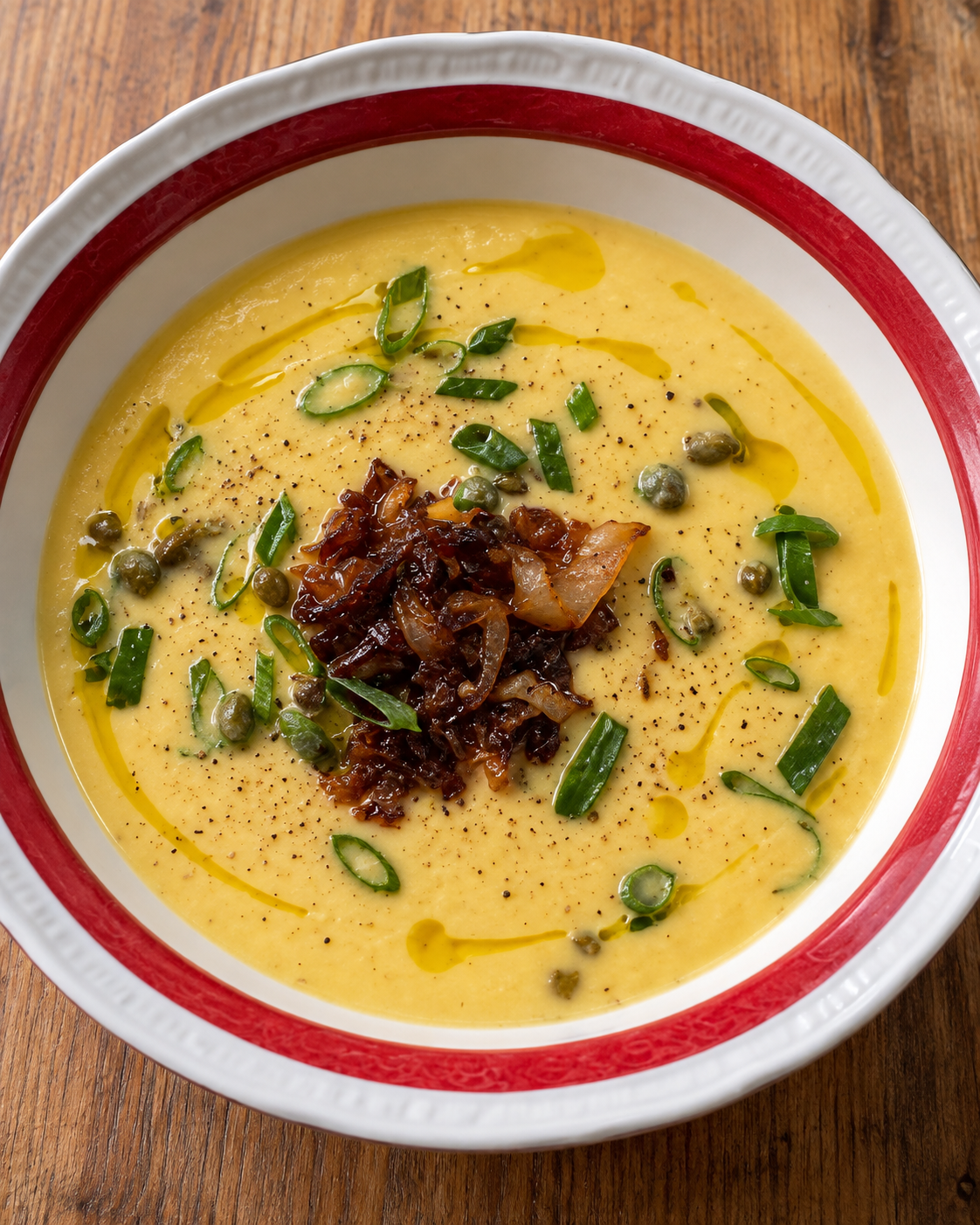
Fava
Silky yellow split-pea purée crowned with caramelized onions and capers — a dish that survived the volcano that buried ancient Santorini.
Read the story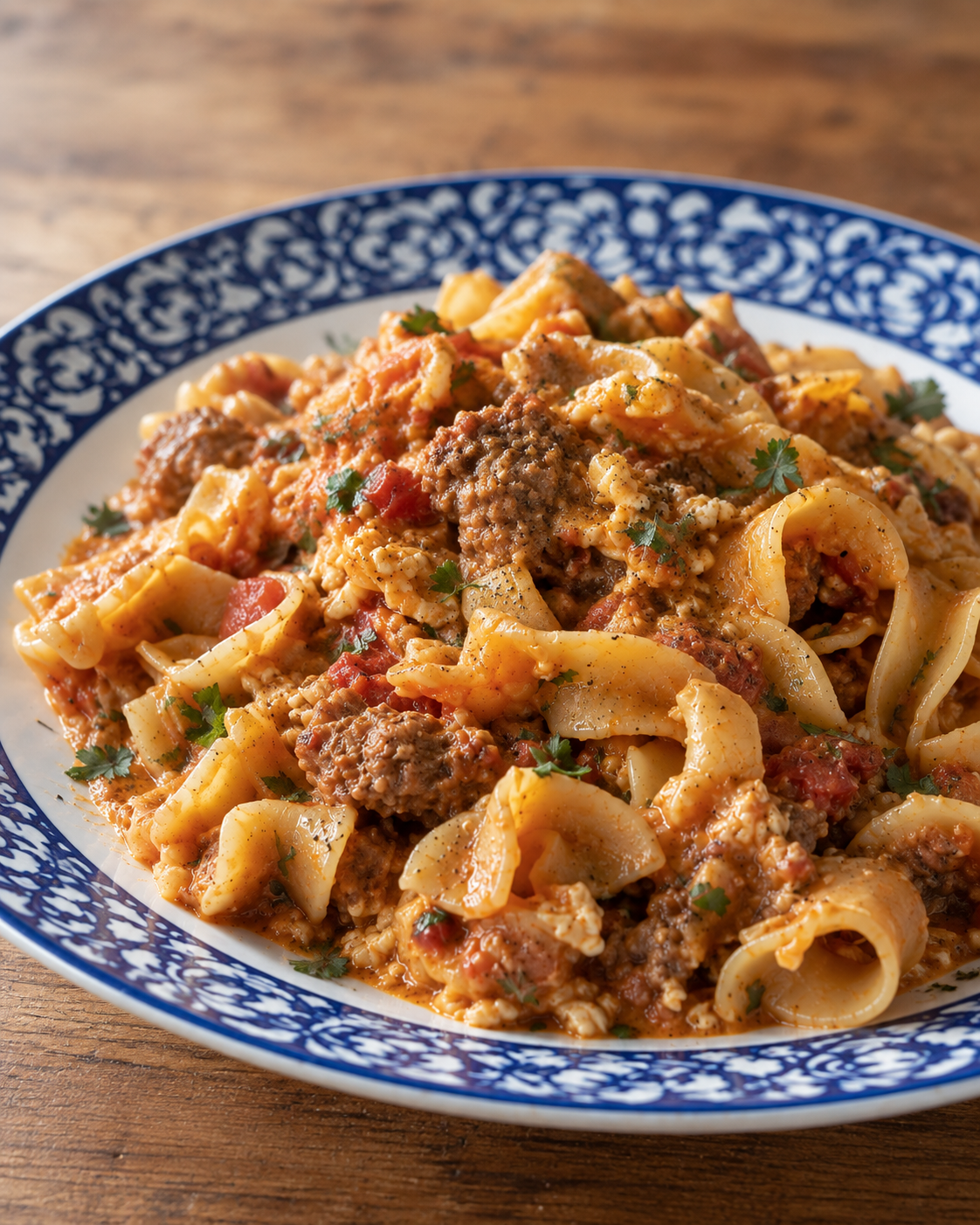
Hilopites with Sausages & Eggs
Greece's village egg pasta simmered with sausages, peppers and tomato, finished with eggs stirred through for creaminess — topped with feta and wild oregano.
Read the story