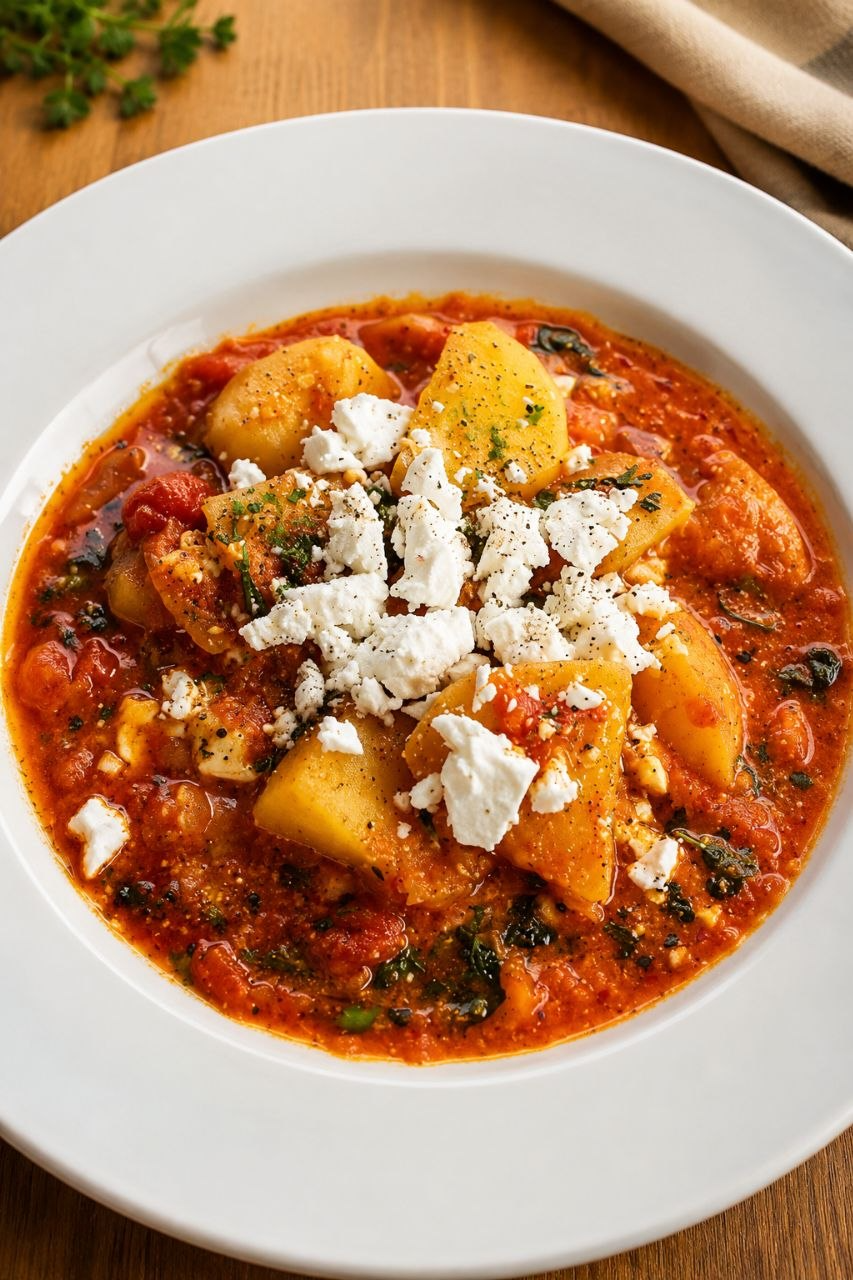
How this dish came to life
Cultural significance
Giahni-style cooking — vegetables, legumes or meat slowly simmered in tomato and olive oil — is one of the cornerstone Greek home techniques. It is closely related to the Greek tradition of ladera (literally "oily ones"), the family of olive-oil-and-tomato vegetable dishes that anchor Lenten cooking and Sunday tables alike. Patates giahni is humble food made elegant by patience, and a dish nearly every Greek will associate with their mother's stove.
step by step
Instructions
- 1
Heat a generous glug of olive oil in a wide deep pot over medium heat. Add the chopped onion with a small pinch of salt and cook gently for 5–6 minutes, until soft, sweet and translucent — never browned.
- 2
Add the chopped garlic and cook for one more minute, just until fragrant.
- 3
Tip in the potato chunks. Stir well to coat them in the oil and onion.
- 4
Add the tomato paste and stir it through the potatoes for a full minute, until it darkens slightly. This single minute is the difference between a good giahni and a great one.
- 5
Drop in the thyme, rosemary and bay leaf. Season with salt and a good crack of black pepper.
- 6
Pour in the crushed tomatoes and enough hot water to come almost to the top of the potatoes (about 250–300 ml). Stir gently to combine.
- 7
Bring to a gentle bubble, then lower the heat. Cover with a lid slightly ajar and simmer slowly for 35–40 minutes, stirring occasionally, until the potatoes are tender all the way through and the sauce has thickened and turned round and silky.
- 8
Taste and adjust salt and pepper. Fish out the bay leaf and the woody herb stems.
- 9
Off the heat, finish with a generous final drizzle of raw olive oil — the heart of the dish.
- 10
Scatter chopped parsley and crumbled feta over the top. Serve warm in deep plates with bread for the sauce — the bottom of the bowl is the best part.
tips from the village —
Wisdom from grandmothers
- 01Cook the tomato paste for a full minute before adding the liquid. That minute is the depth of the dish.
- 02Don't crowd the pot — the potatoes should be in a single, generous layer so they cook evenly in the sauce.
- 03Cover with the lid slightly ajar — fully sealed and the sauce won't reduce; fully open and it dries out.
- 04The final raw olive oil drizzle at the end is not a garnish. It is the soul of the dish.
- 05Patates giahni is even better the next day. The potatoes drink the tomato overnight and turn impossibly tender.
Related recipes
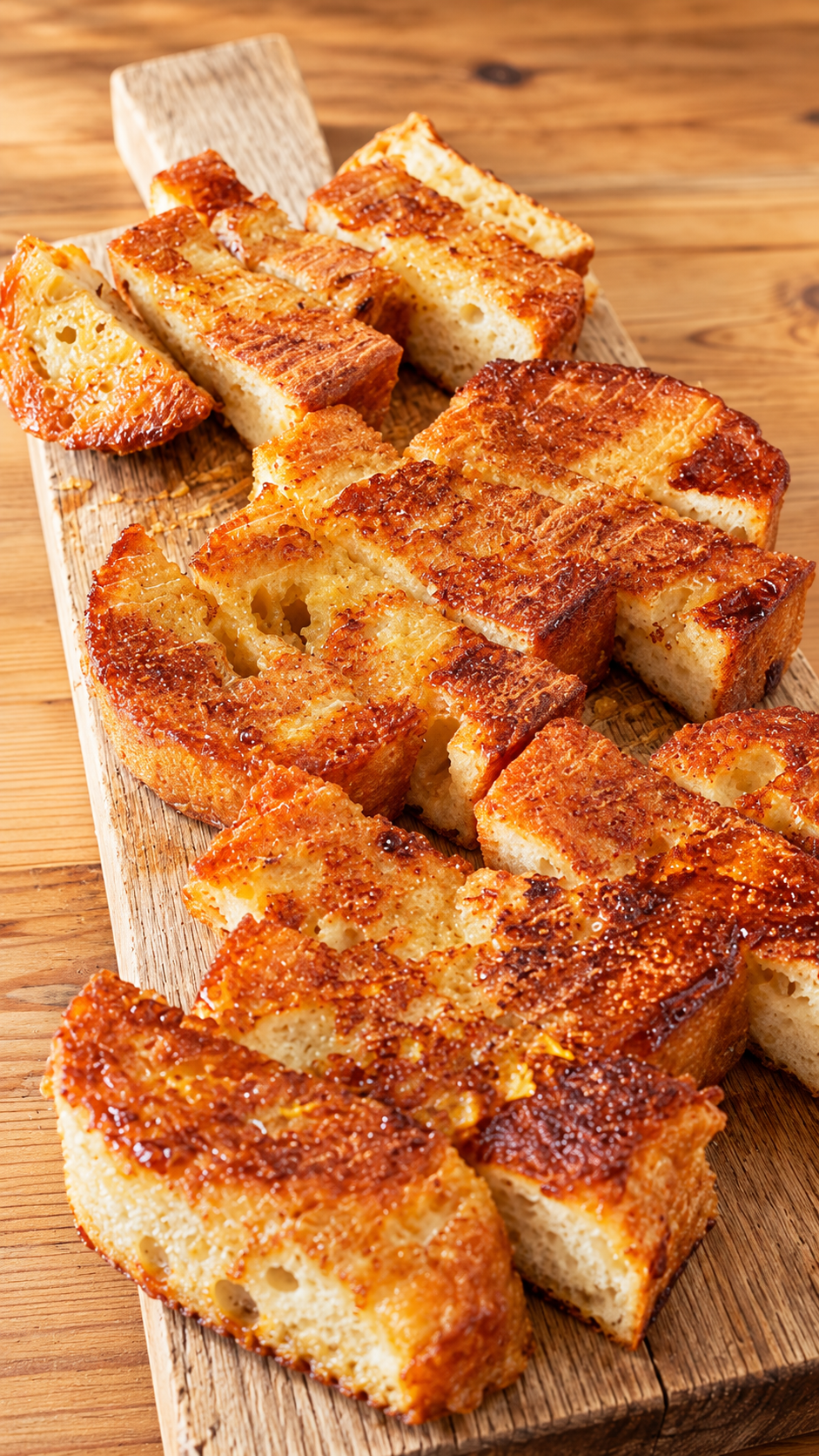
Avgofetes
Greek egg-fried bread — yesterday's loaf dipped in egg and milk, fried golden in olive oil and served with honey and cinnamon. Older than French toast.
Read the story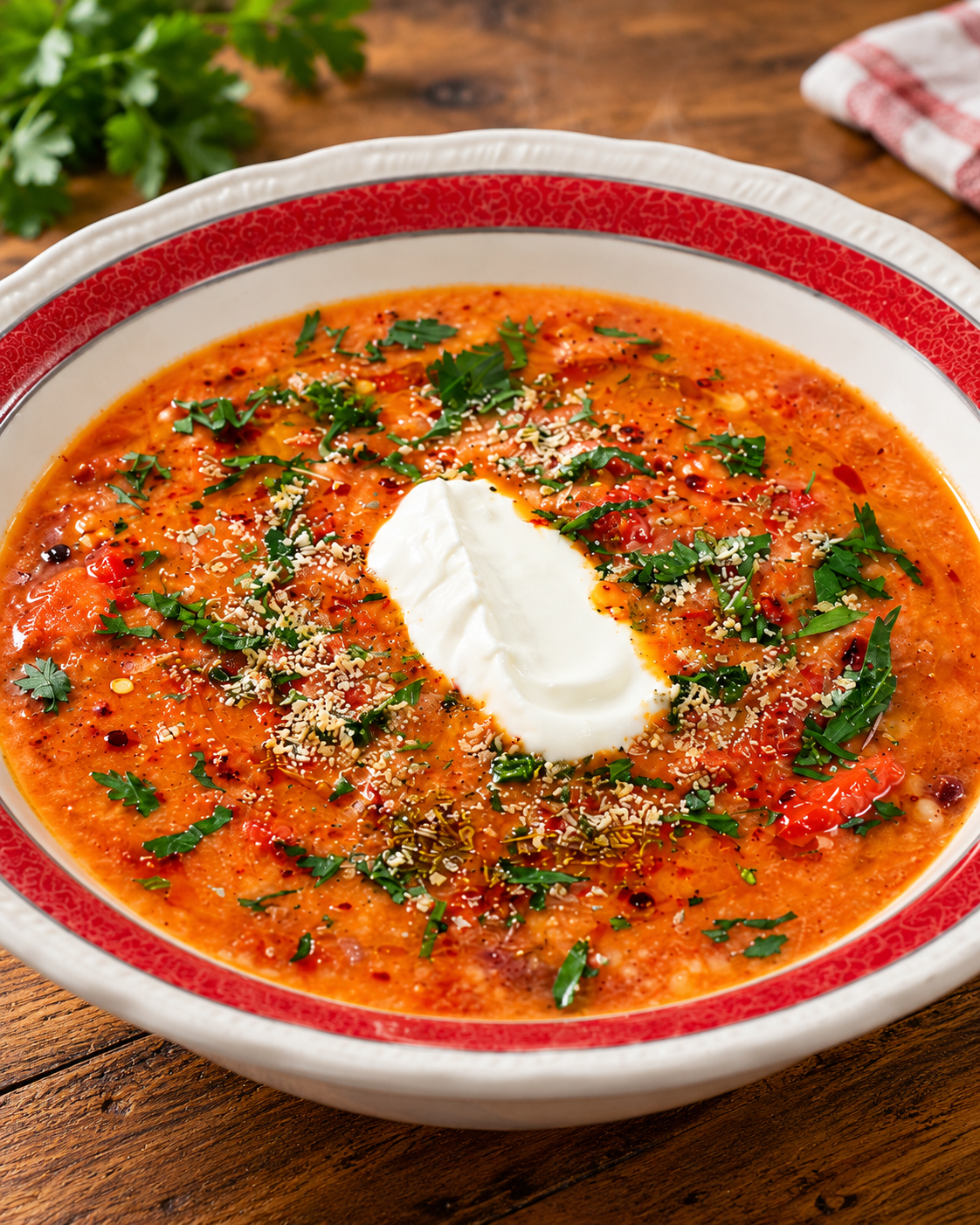
Kokkinistos Trahanas with Yogurt
Sour trahana simmered in a spicy tomato broth until creamy, served with cool Greek yogurt, boukovo and wild oregano — one humble food, countless traditions.
Read the story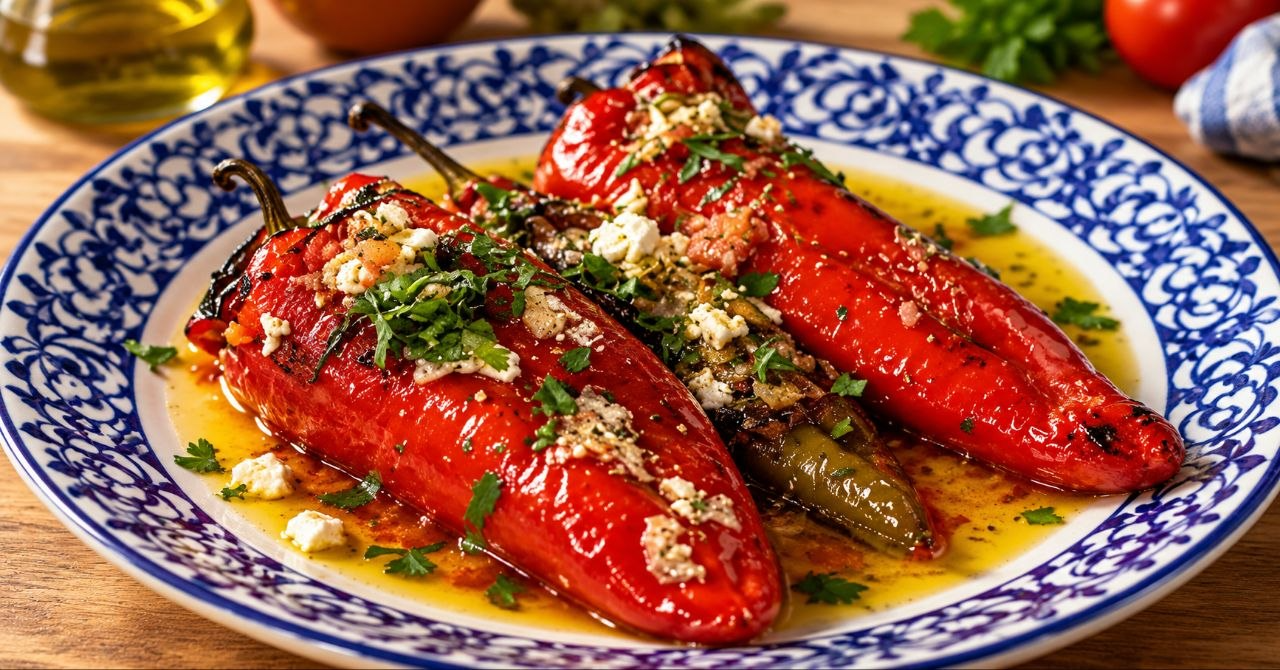
Stuffed Horn Peppers
Horn peppers stuffed with feta, tomato, garlic and wild oregano, baked until soft and caramelised — an American ingredient that became a Greek kitchen staple.
Read the story