How this dish came to life
Cultural significance
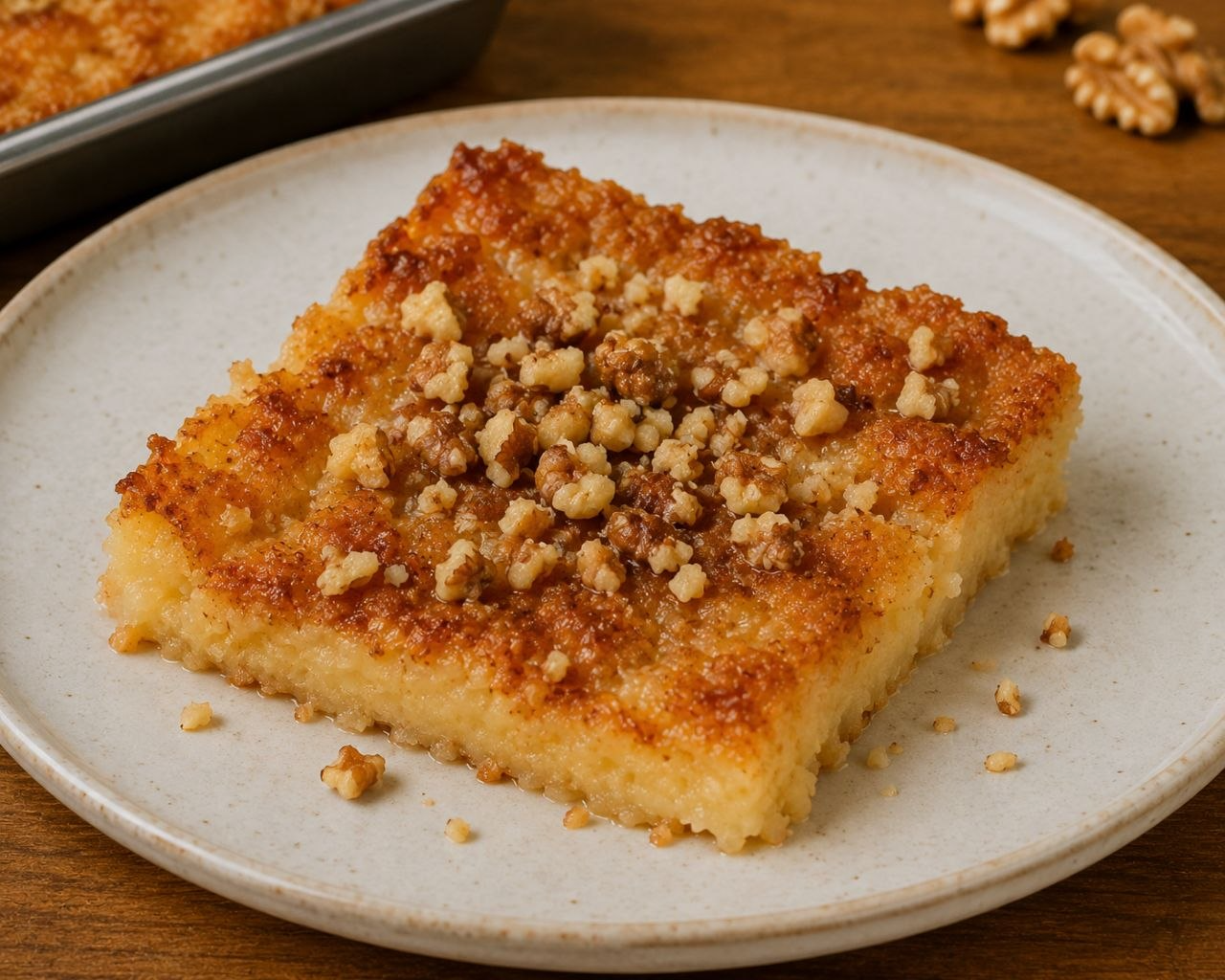
Patsavouropita — 'the rag pie' — is one of the great frugal desserts of the Greek countryside, born in the village kitchens of Epirus, Macedonia and Thrace where phyllo was hand-stretched at home and leftover scraps were never thrown away. It belongs to the broader Greek tradition of σιροπιαστά (siropiasta — syrup-soaked desserts) and shares its hot-cake + cold-syrup technique with ravani, kariokes, melomakarona, baklava and galaktoboureko. The dish is closely related to the Macedonian γαλατόπιτα and the Thracian γαλατομπούρεκο of village home-baking, but distinguishes itself in one cunning, beautiful way: it uses broken or stale phyllo as part of the batter, transforming a kitchen leftover into the structural heart of the dessert. It is a quiet monument to the older Greek-village wisdom that food, like memory, should never be discarded.
step by step
Instructions
- 1
Make the syrup first — it must be completely cold by the time the pie comes out hot. In a wide saucepan combine the water, sugar, cinnamon stick and the two orange halves (squeeze them lightly first to release the juice, then drop them in whole). Bring to a gentle boil for 5 minutes, no longer.
- 2
Take the syrup off the heat. If using, stir in a small squeeze of lemon juice. Set aside, uncovered, to cool completely — at least 1 hour. Hot pie + cold syrup is the unbreakable rule of siropiasta.
- 3
Lay out the phyllo sheets in a single layer (on a clean tea towel or the kitchen counter) and let them dry for 30–60 minutes. Alternatively, place them on a baking tray and dry briefly in the oven at 50°C / 120°F with the fan on for 10 minutes. The phyllo should be brittle, cracking sharply when you break it.
- 4
Heat the oven to 180°C / 355°F. Grease a 28 × 35 cm baking tray generously with oil — every corner.
- 5
In a large bowl, whisk the eggs and sugar together with an electric mixer for 4–5 minutes, until pale, foamy, and nearly tripled in volume. This is the most important step — air whisked into the eggs is what gives patsavouropita its tender custard-middle texture.
- 6
Add the sunflower oil, yogurt, vanilla, baking powder and pinch of salt. Whisk on low speed for 30 seconds, until smooth and uniform.
- 7
Now the signature move: crumble the dried phyllo into the bowl with your hands, tearing it into small, rough pieces — about 2–3 cm across. Don't try to be neat. The 'rag' character is the entire point. Resist the urge to crush it into crumbs — you want torn pieces, not powder.
- 8
Fold the phyllo gently through the batter with a spatula, just until every piece is coated. The batter will look loose and uneven — that's exactly right. Let it sit for 5 minutes so the phyllo starts to drink the wet mix.
- 9
Pour the mixture into the prepared tray and spread it evenly to the corners with the back of a spoon. Don't compact it — leave the surface a little ragged.
- 10
Bake on the middle shelf for 40–50 minutes, until the top is deeply golden across the whole surface, the edges are caramelised, and a skewer inserted in the centre comes out clean. The middle should feel set with a small wobble.
- 11
Pull the hot pie out of the oven. Working immediately, cut it into squares or diamond shapes with a sharp knife — straight down through to the bottom of the tray. Then pour the cold syrup over the pie in a slow, wide, even circle, paying special attention to the cut lines so the syrup reaches every layer. Don't be alarmed by how much syrup there is. The pie drinks all of it.
- 12
Let the pie rest, undisturbed, at room temperature for at least 1 hour — ideally 2. The syrup needs time to climb all the way through the phyllo and into the eggy base.
- 13
Once the pie has cooled and absorbed all the syrup, scatter the chopped walnuts generously across the top. (Optional: a small dusting of cinnamon over the walnuts.)
- 14
Serve at room temperature with a strong Greek coffee on the side. Patsavouropita keeps, covered at room temperature, for up to 4 days and — like all good siropiasta — improves overnight.
tips from the village —
Wisdom from grandmothers
- 01The unbreakable rule: hot pie, cold syrup. If both are warm, the pie turns soggy at the bottom; if both are cold, it doesn't absorb. The temperature difference is the whole secret.
- 02Dry the phyllo first. Fresh, supple phyllo collapses into a wet paste when folded into the batter. Brittle, oven-dried phyllo holds its shape and creates the characteristic 'rag' texture.
- 03Tear, don't crush. Use your hands and rip the phyllo into small ragged pieces — never grind it. The torn, uneven character is what gives the dish its name and texture.
- 04Whisk the eggs properly. Five minutes with a mixer until pale, foamy and nearly tripled. Underwhipped eggs give a dense, heavy pie.
- 05Cut the pie BEFORE pouring the syrup. The cut lines let the syrup penetrate down through every level. If you cut after, the syrup pools on top and never reaches the middle.
- 06Pour the syrup slowly, in wide circles. Concentrated syrup in one place creates wet patches; even pouring creates even crumb.
- 07Add the walnuts at the very end, after the pie has cooled. Warm walnuts go limp; cool walnuts stay crisp and shower over the syrup-glossy surface beautifully.
- 08Don't refrigerate. Like ravani and kariokes, patsavouropita is at its best at room temperature — refrigerated siropiasta turns dense and dry.
Related recipes
Avgofetes
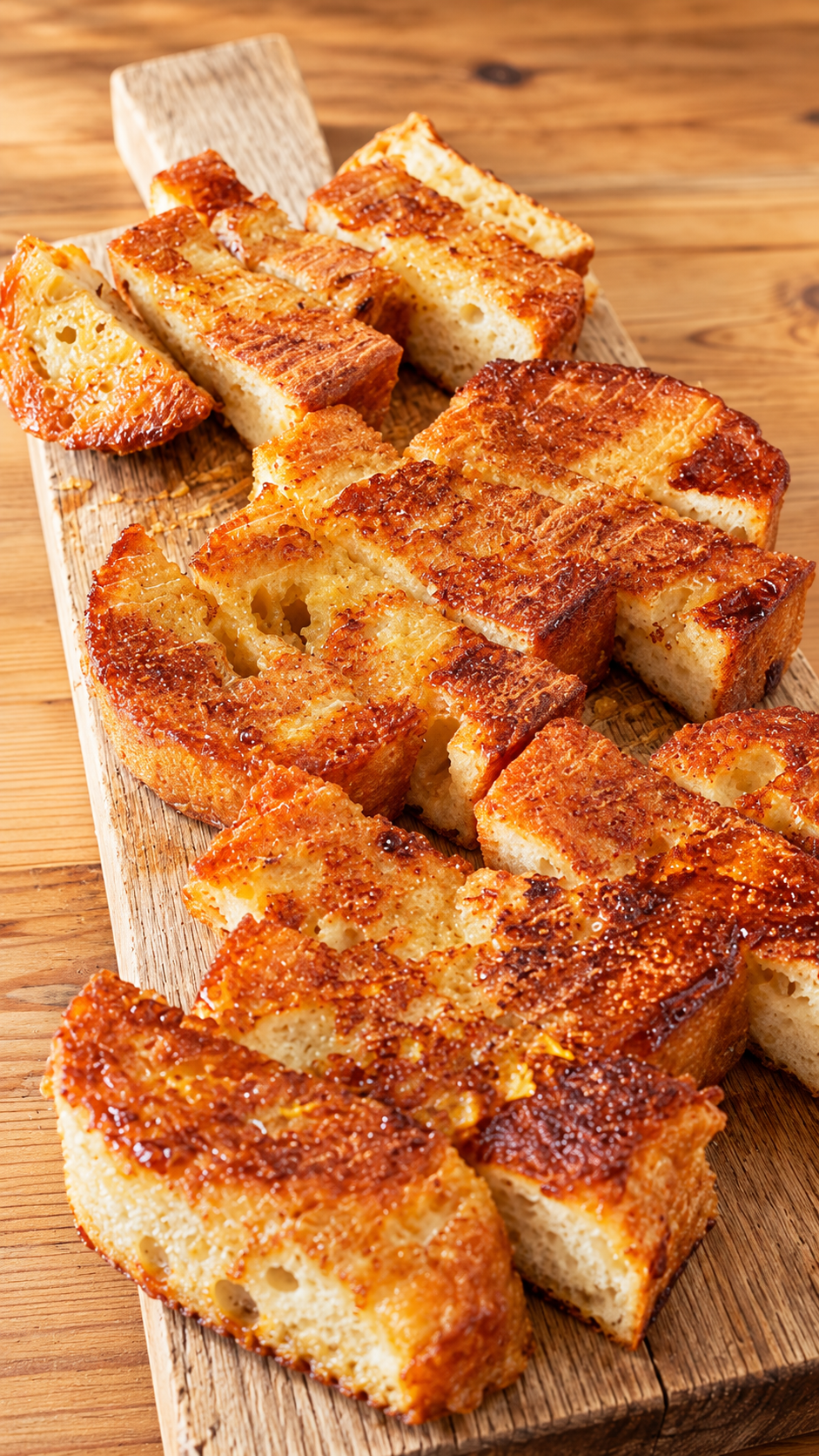
Greek egg-fried bread — yesterday's loaf dipped in egg and milk, fried golden in olive oil and served with honey and cinnamon. Older than French toast.
Read the story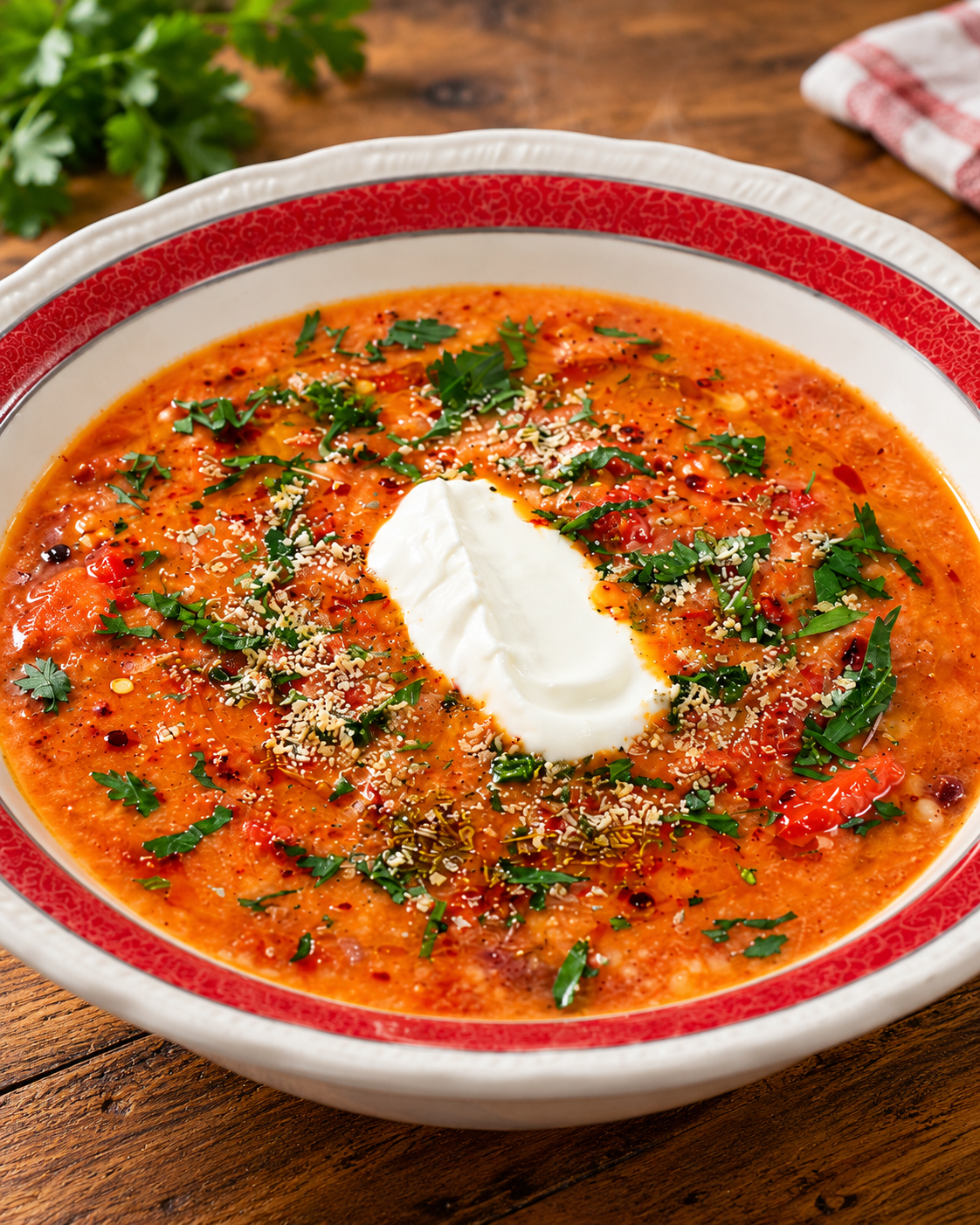
Kokkinistos Trahanas with Yogurt
Sour trahana simmered in a spicy tomato broth until creamy, served with cool Greek yogurt, boukovo and wild oregano — one humble food, countless traditions.
Read the story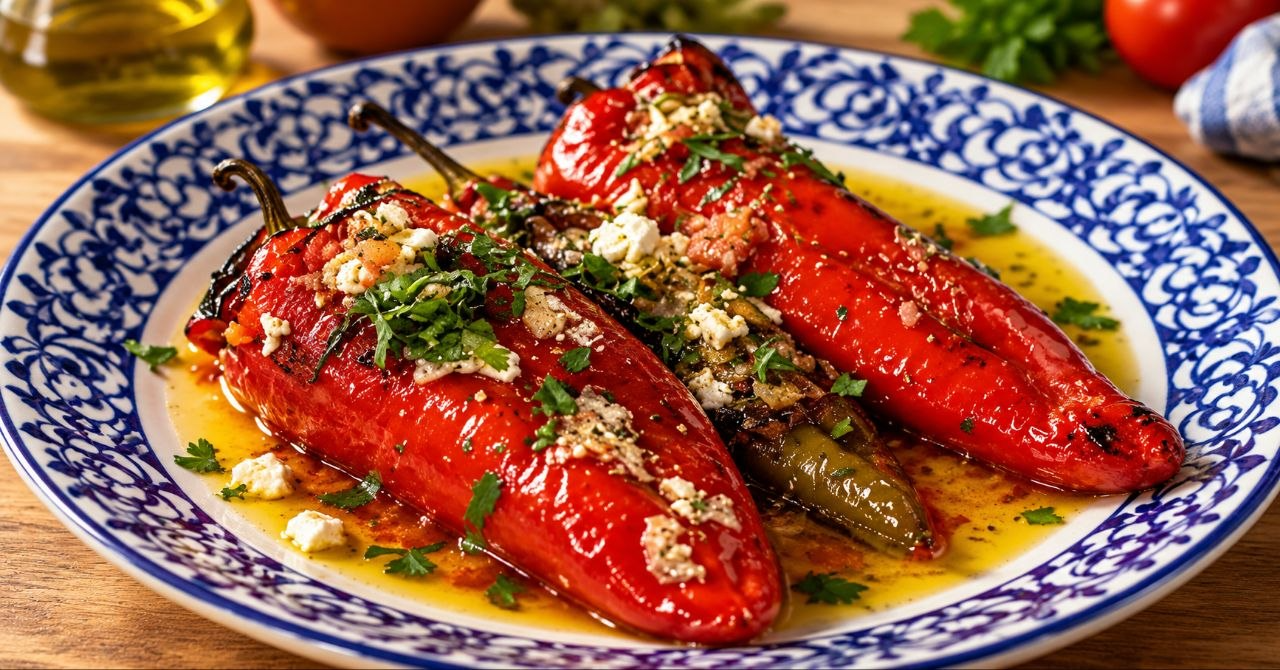
Stuffed Horn Peppers
Horn peppers stuffed with feta, tomato, garlic and wild oregano, baked until soft and caramelised — an American ingredient that became a Greek kitchen staple.
Read the story