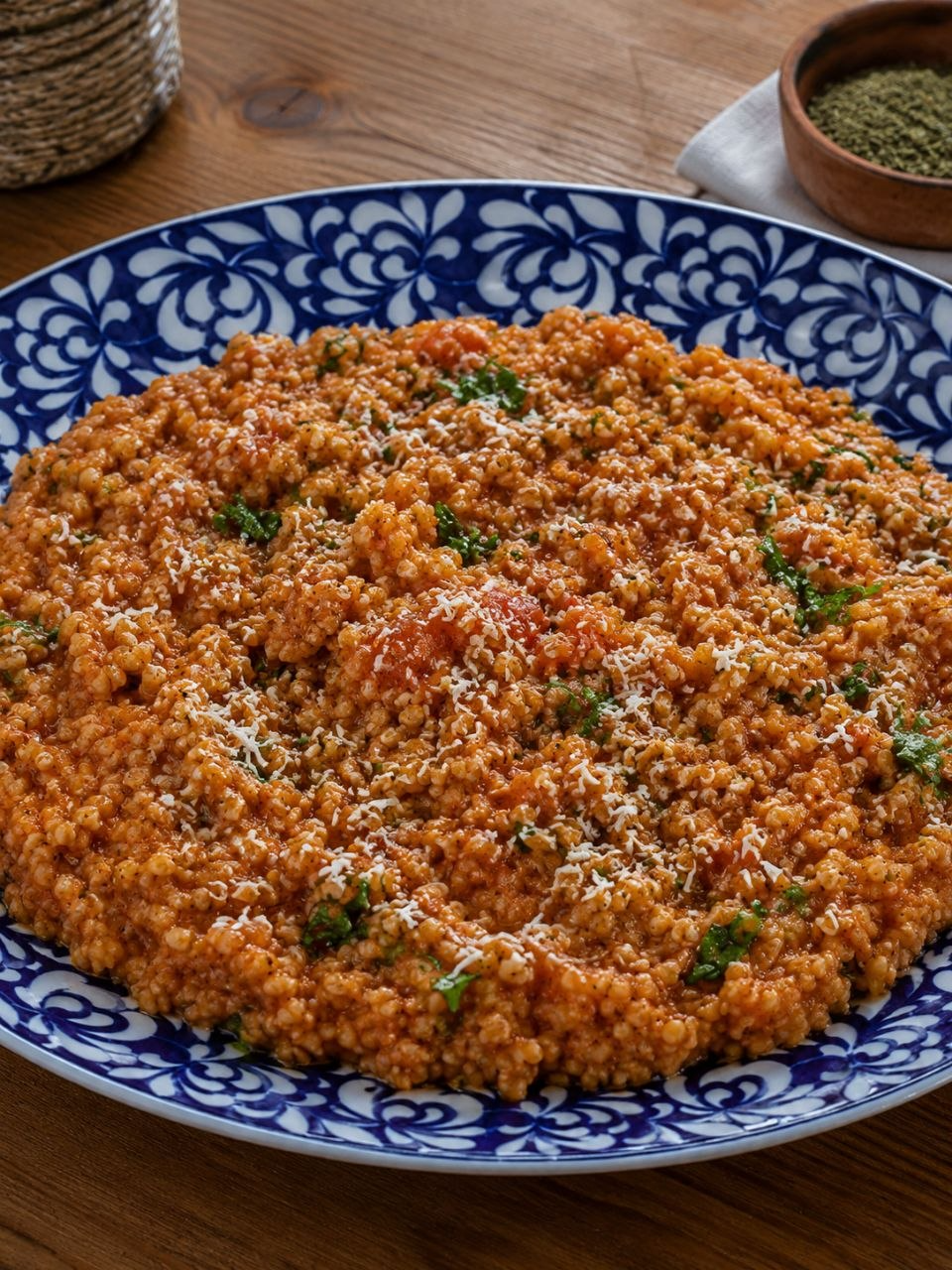
How this dish came to life
Cultural significance
Pourgouri (bulgur wheat) is one of the oldest documented grains on Cyprus — traces of parched cracked wheat have been found in storage vessels on the island dating to the Late Bronze Age (over 3,000 years ago). Long before rice was introduced to Greek and Cypriot cooking through Alexander the Great's eastern campaigns, pourgouri was the staple grain of the Cypriot kitchen. The dish carries within it the entire pre-modern food culture of the island: the village-wide summer ritual of communal pourgouri-making in the great copper χαρτζί cauldrons, the white drying sheets laid across the courtyards, and the careful storage in clay jars that allowed a single grain to feed a family through a winter. Regional variations exist across Cyprus — simple Karpas style with only onion and oil, the more famous tomato-and-vermicelli version (pourgouri pilafi) from the Troodos, the mint-finished Akamas coastal version, and the coastal Mesaoria addition of a dried squid for umami depth. Today pourgouri remains the everyday grain of the Cypriot kitchen, served with halloumi, with yogurt, with kleftiko, with afelia, with everything the island cooks.
step by step
Instructions
- 1
Heat the olive oil in a wide, heavy pot over medium heat. If using vermicelli, toast it gently in the oil first for 2 minutes, stirring, until deep golden — then set aside on a plate.
- 2
Add the chopped onion to the same oil with a pinch of salt. Sauté gently for 6–7 minutes until soft, sweet and just turning gold — never browned. This slow start is where the depth of the dish lives.
- 3
Stir in the grated tomato (or tomato paste with a splash of water) and cook for 2–3 minutes, until it darkens and tastes round and almost jammy.
- 4
Tip the pourgouri (and the toasted vermicelli, if using) into the pot. Stir for 1 minute to coat every grain in the oil-and-tomato glaze. This is the secret: dry-frying the pourgouri briefly gives it a nutty edge that water alone never produces.
- 5
Pour in the hot chicken broth all at once. Add a generous pinch of salt, plenty of cracked pepper, and the dried mint. Bring to a gentle simmer.
- 6
Cover the pot, lower the heat to its lowest setting, and let the pourgouri cook undisturbed for 12–15 minutes, until every drop of liquid has been absorbed.
- 7
Take the pot off the heat. Don't lift the lid. Let it rest, covered, for 5 minutes. Giagia's rule: 'The pourgouri needs to think. Don't rush it.' This rest is when the grain finishes drinking the last of the steam and the texture turns properly fluffy.
- 8
Lift the lid, drizzle a final thread of raw olive oil over the top, and fluff gently with a fork — never a spoon, which compacts the grain.
- 9
Serve on a wide blue Cypriot platter, scattered with a few fresh mint leaves and (if using) a snowdrift of grated dry mizithra or haloumi over the top. A wedge of grilled halloumi and a small bowl of yogurt on the side make it a complete meal.
tips from the village —
Wisdom from grandmothers
- 01Use coarse pourgouri, not the fine grade used for tabbouleh. The coarse grain has the bite and chew the dish wants.
- 02Toast the vermicelli first if you're using it. That tiny extra step is what makes pourgouri pilafi taste like a Cypriot Sunday lunch instead of just bulgur.
- 03Dry-fry the pourgouri in the oil before adding liquid. One minute of stirring in hot oil unlocks a nutty depth that boiled-only bulgur never finds.
- 04Hot broth, never cold. Cold liquid drops the pan temperature and the grain cooks unevenly — go hot, all at once.
- 05Don't lift the lid during the cook or the 5-minute rest. Steam is doing the work; let it.
- 06Fluff with a fork, never a spoon. A spoon compacts the grain into a sad mash. A fork lifts each grain into its proper space.
- 07Like all good Cypriot food, pourgouri tastes even better the next day, warmed gently with a splash of water and finished with fresh olive oil.
Related recipes
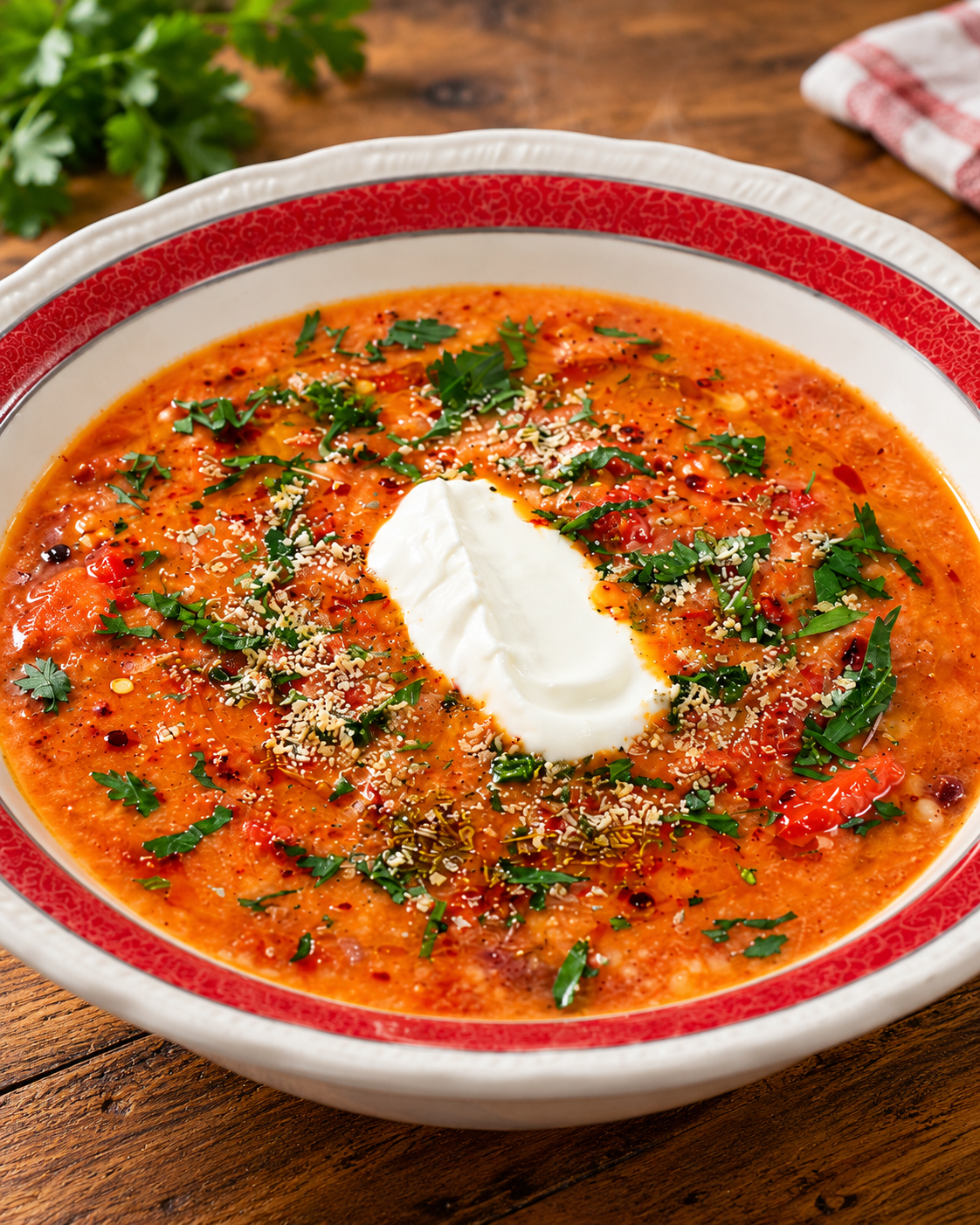
Kokkinistos Trahanas with Yogurt
Sour trahana simmered in a spicy tomato broth until creamy, served with cool Greek yogurt, boukovo and wild oregano — one humble food, countless traditions.
Read the story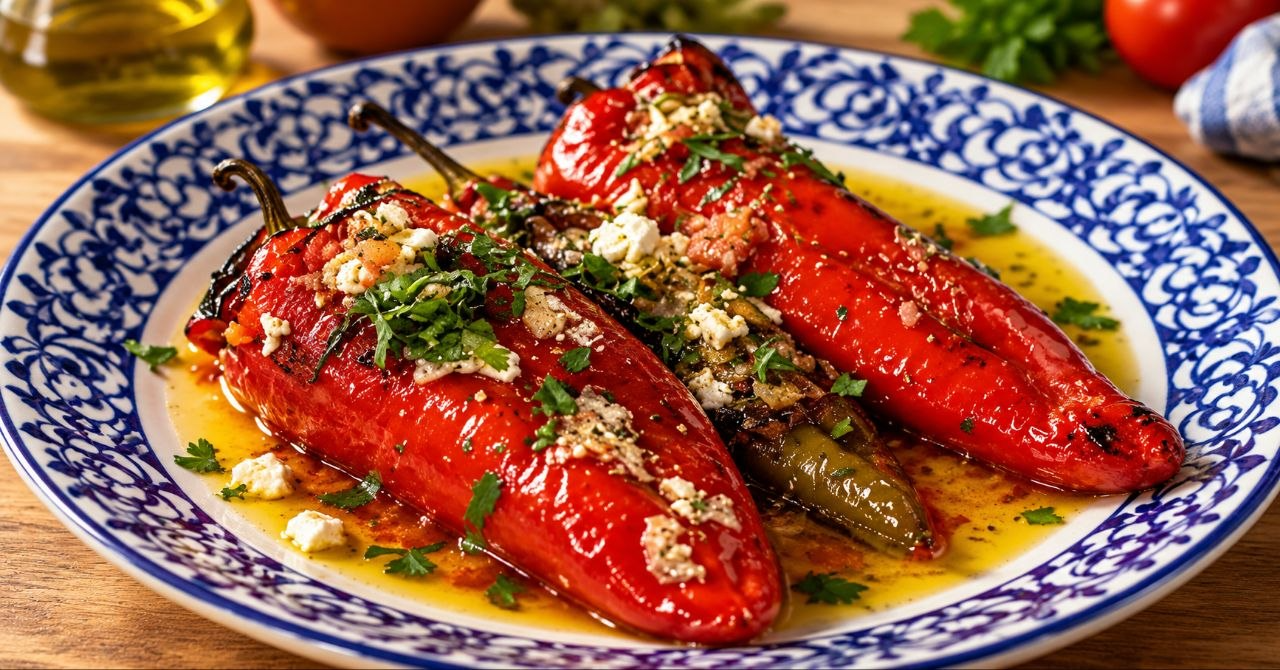
Stuffed Horn Peppers
Horn peppers stuffed with feta, tomato, garlic and wild oregano, baked until soft and caramelised — an American ingredient that became a Greek kitchen staple.
Read the story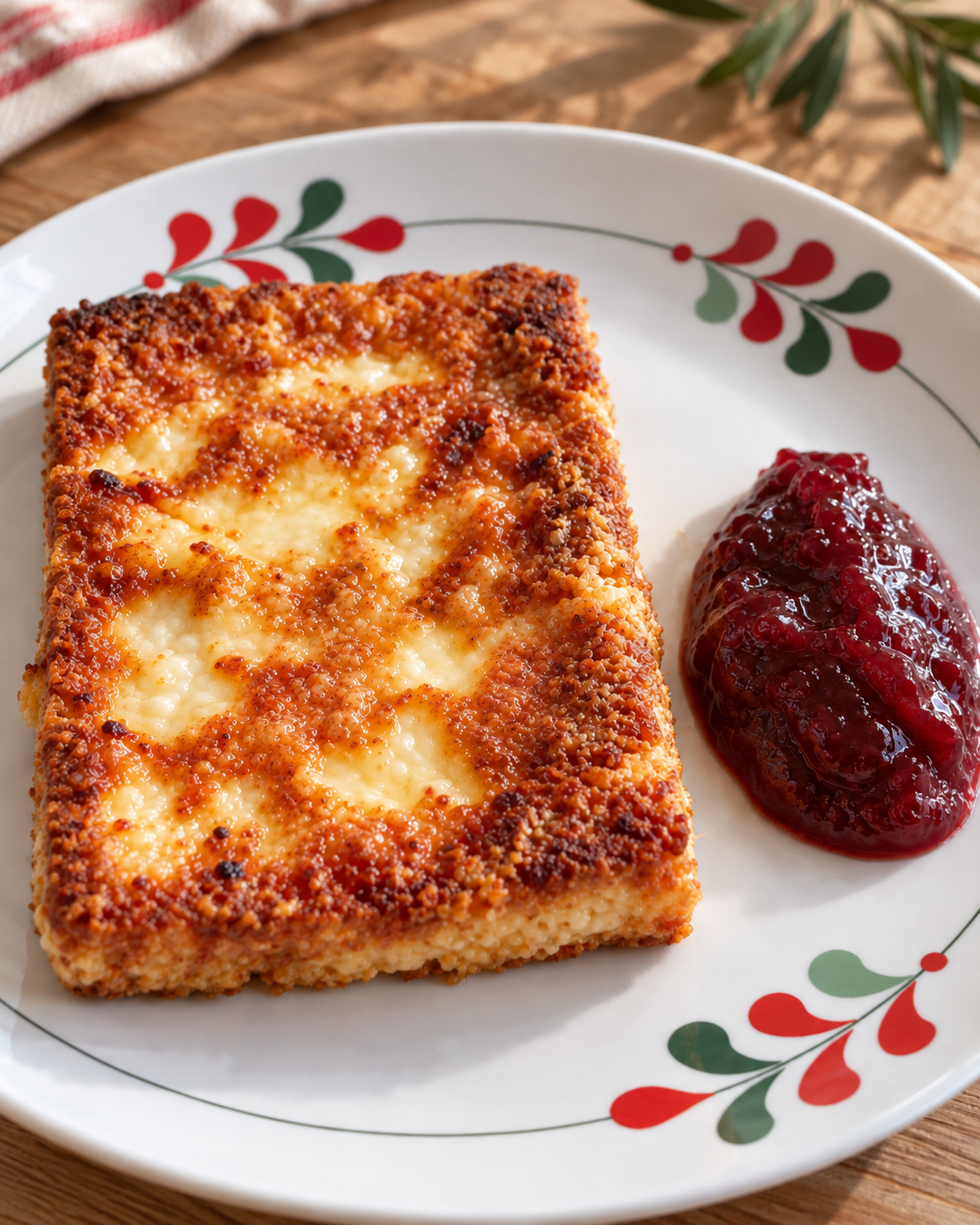
Saganaki with Grape Jam
Golden fried cheese, crisp outside and molten within, served with a slow-cooked grape jam brightened with lime — the taverna classic named after its little pan.
Read the story