How this dish came to life
Cultural significance
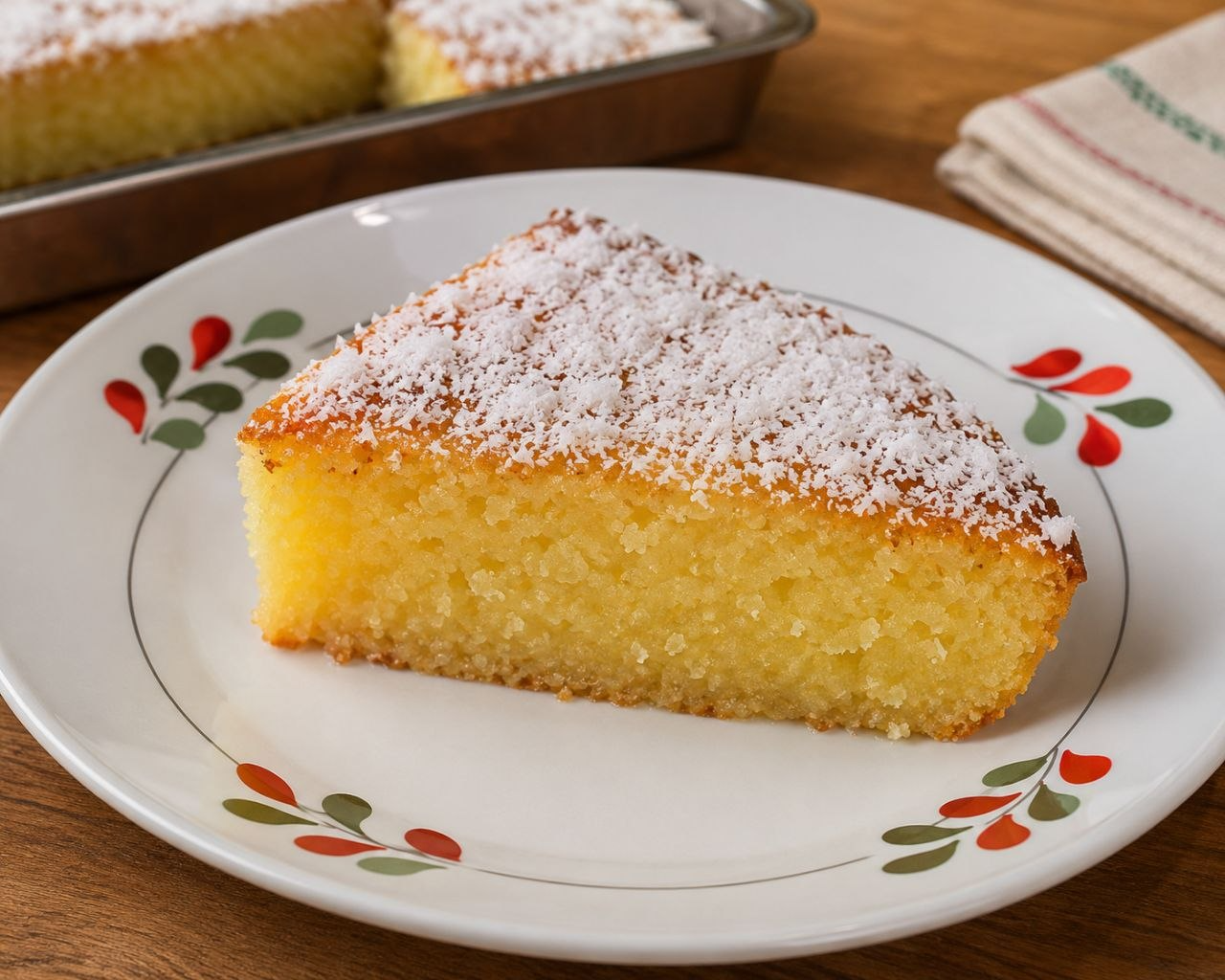
Ravani is one of the great Greek and pan-Eastern-Mediterranean syrup cakes (siropiasta). Its origins are Ottoman — the word ravani comes from the Turkish revani — and parallel versions exist across the region (basbousa in Egypt and the Levant, namoura in Lebanon, revani in Turkey, ravanijia in the Balkans). The Greek version distinguishes itself in three ways: it is made with vegetable oil rather than butter (making it Lenten-friendly and shelf-stable for days at room temperature), it is heavily perfumed with citrus and cinnamon syrup, and it is finished with a snowfall of desiccated coconut — a post-war Greek innovation that came in with the first international supermarket goods of the 1950s. The hot-cake-cold-syrup or cold-cake-hot-syrup rule is essential to siropiasta texture and is shared across every variation. Ravani is the most home-cooked of all Greek cakes — found in every yiayia's repertoire, every village taverna, and every neighbourhood bakery from Athens to Crete to the diaspora communities of Astoria and Melbourne.
step by step
Instructions
- 1
Make the syrup first — it must be completely cold by the time the cake comes out hot. In a large saucepan combine the sugar, water, cinnamon stick and lemon peel. Bring to a gentle boil over medium-high heat, stirring once to dissolve the sugar, then let it bubble undisturbed for 4–5 minutes — no longer (overcooked syrup turns gluey).
- 2
Take the syrup off the heat. If using, stir in a small squeeze of lemon juice at the end. Set it aside, uncovered, to cool completely — at least 1 hour. Don't skip this. Hot cake meets cold syrup is the unbreakable rule of siropiasta.
- 3
Heat the oven to 160–165°C / 320–330°F. Grease a 24 × 30 cm baking tin generously with oil and dust it with a light coat of semolina, tapping out the excess (this gives the cake its signature golden, slightly grainy outer crust).
- 4
In a large bowl, whisk the eggs and sugar together with an electric mixer for 4–5 minutes, until they are pale, foamy, and have nearly tripled in volume. This is the most important step — the air whisked into the eggs is what gives ravani its light, airy crumb.
- 5
Pour in the milk, the sunflower oil and the vanilla. Whisk gently on low speed for 30 seconds, until smooth and uniform.
- 6
In a separate bowl, stir together the flour, baking powder and pinch of salt. Sift this dry mixture into the wet mixture and fold gently with a spatula just until combined — don't overmix.
- 7
Pour in the semolina and fold it through. The batter will look slightly grainy and very loose — that's exactly right. Semolina drinks liquid as it sits, and the batter will tighten as it bakes.
- 8
Pour the batter into the prepared tin and smooth the surface with a spatula. Tap the tin gently on the counter twice to release air bubbles.
- 9
Bake on the middle shelf for 45–50 minutes, until the top is a deep golden colour, the cake has slightly pulled away from the sides of the tin, and a skewer inserted into the centre comes out clean. Don't open the oven door during the first 35 minutes.
- 10
Take the hot cake out of the oven and immediately pour the cold syrup over it in a slow, wide, even circle — covering every inch of the surface, including the edges. Don't be alarmed by how much syrup there is; the cake drinks all of it.
- 11
Let the cake rest, undisturbed, at room temperature for at least 2–3 hours — ideally 4. The syrup needs time to climb all the way through the crumb. Cutting too early gives you a wet bottom and a dry top.
- 12
Once the cake is fully cooled and the syrup is absorbed, dust generously with desiccated coconut — heavily enough that the top looks like fresh snow. Optional: scatter a few crushed pistachios for colour.
- 13
Cut into generous diamond or square wedges and serve with strong Greek coffee. Leftover ravani keeps, covered at room temperature, for up to 5 days — and like all good syrup cakes, it tastes even better the next day.
tips from the village —
Wisdom from grandmothers
- 01The unbreakable rule: hot cake, cold syrup. If both are warm, the cake turns soggy at the bottom; if both are cold, it doesn't absorb. The temperature difference is the entire secret of siropiasta.
- 02Whisk the eggs and sugar properly — pale, foamy, almost-tripled in volume. Undermixed eggs give a dense, heavy crumb. Five minutes with a mixer is the right amount.
- 03Use fine semolina, not coarse. Coarse semolina (the kind used for pasta) stays gritty even after syrup. Fine semolina (often labelled '00' or 'fine grade') gives you the proper tender crumb.
- 04Bake at a gentle 160°C, not hotter. Ravani is a slow-baked cake — high heat browns the outside before the inside has set.
- 05Pour the syrup in slow circles, not in one place. Concentrated syrup in one spot creates wet patches; even pouring gives an even crumb.
- 06Wait 3 hours before cutting. The hardest part. Set a timer, leave the room.
- 07Add the coconut only after the cake has fully cooled. Hot coconut goes limp; cold coconut stays snowy and crisp on top.
Related recipes
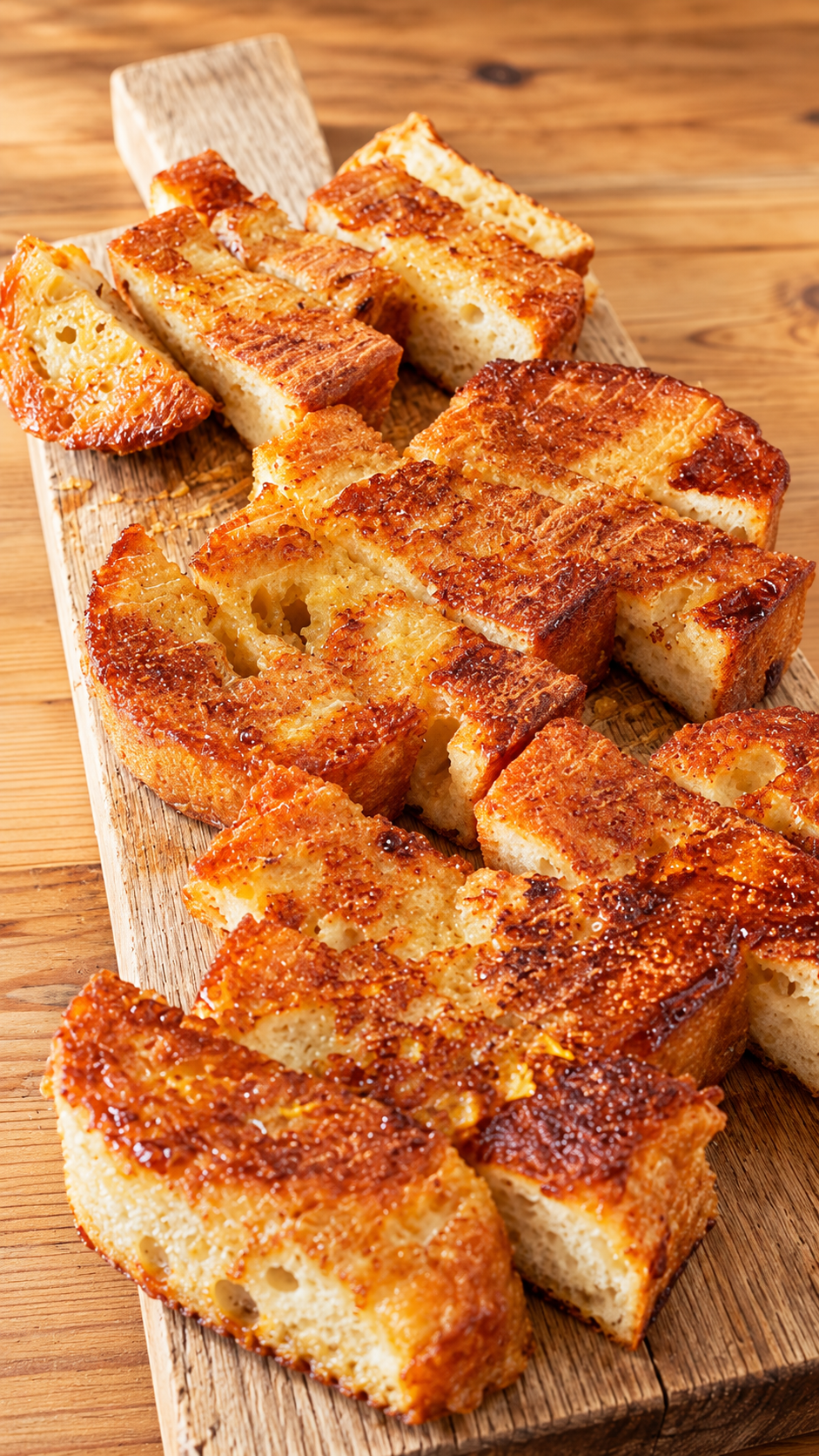
Avgofetes
Greek egg-fried bread — yesterday's loaf dipped in egg and milk, fried golden in olive oil and served with honey and cinnamon. Older than French toast.
Read the story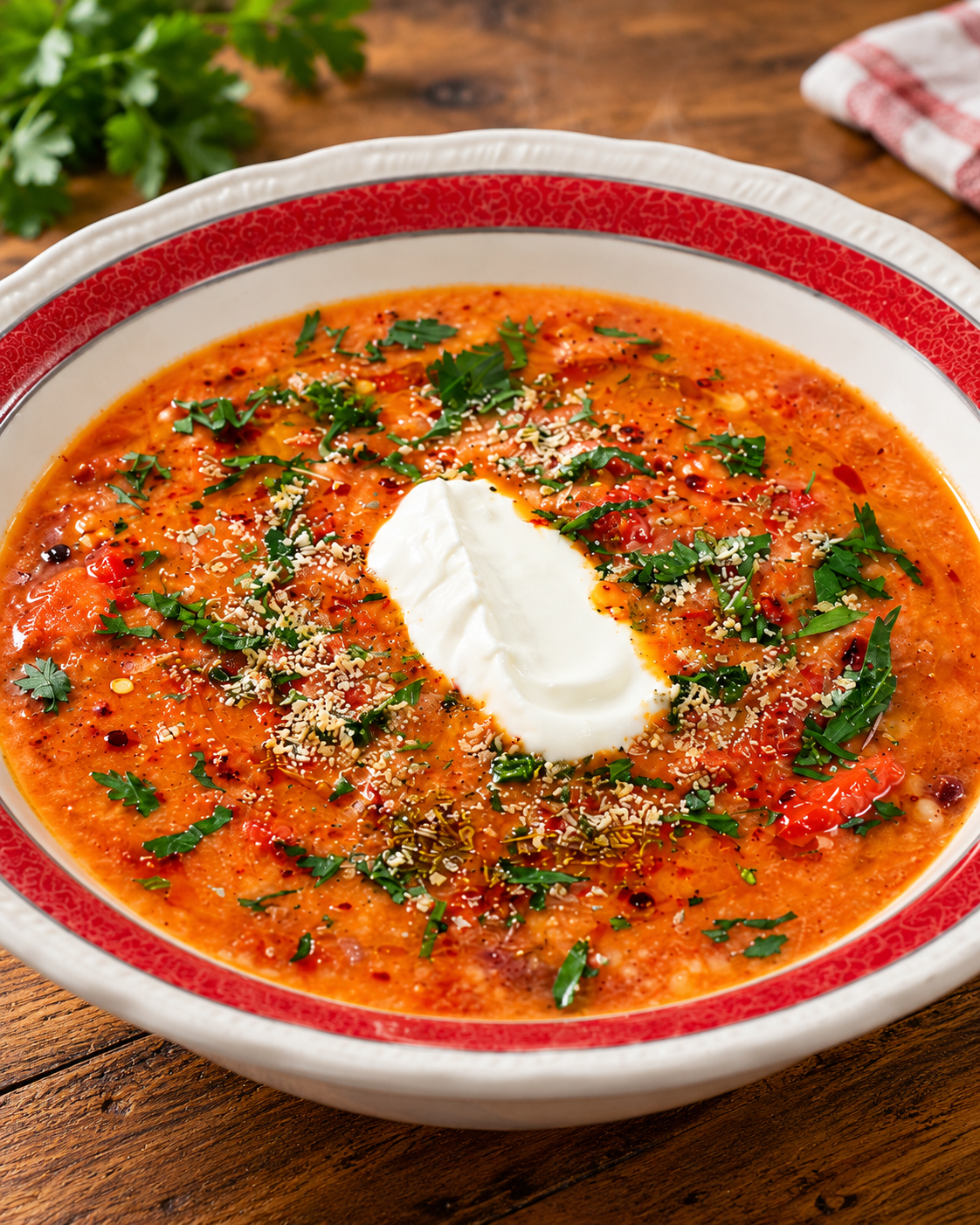
Kokkinistos Trahanas with Yogurt
Sour trahana simmered in a spicy tomato broth until creamy, served with cool Greek yogurt, boukovo and wild oregano — one humble food, countless traditions.
Read the story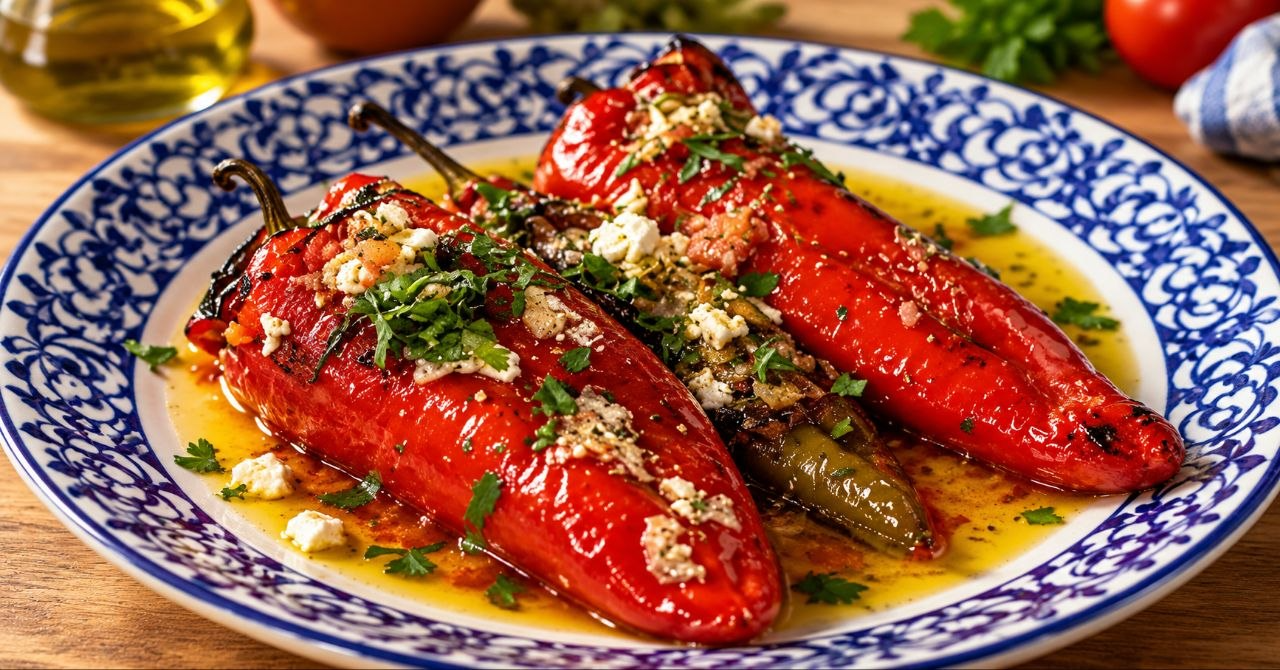
Stuffed Horn Peppers
Horn peppers stuffed with feta, tomato, garlic and wild oregano, baked until soft and caramelised — an American ingredient that became a Greek kitchen staple.
Read the story