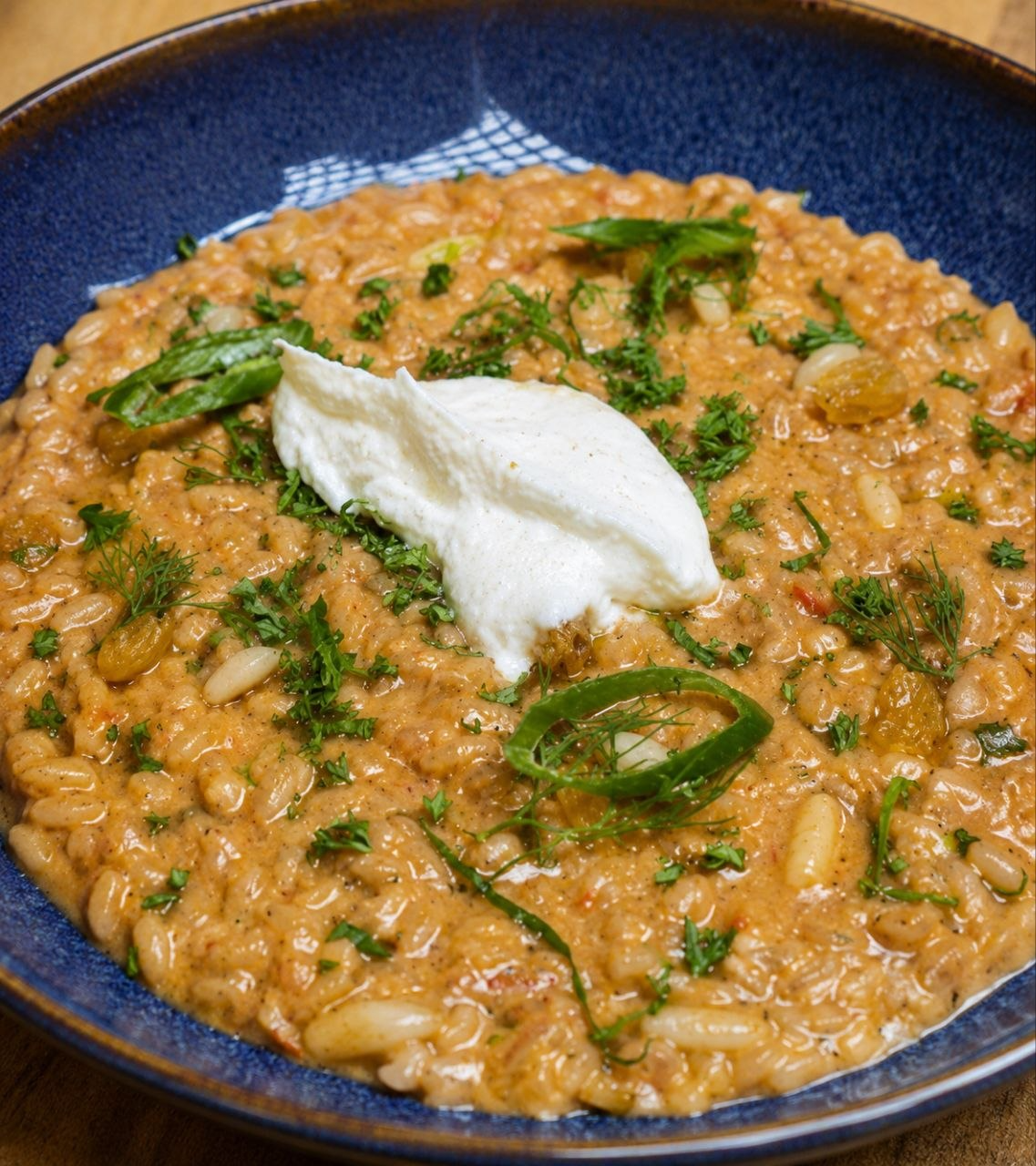
How this dish came to life
Cultural significance
Gemista — γεμιστά, literally "the stuffed ones" — is the most maternal of Greek dishes, the kind of recipe every yiayia has a slightly different version of and every Greek-abroad chases for the rest of their life. Reimagining it as a risotto is part of a quiet new wave in Greek home cooking: keeping the soul of the village dish, but bringing it into a kitchen where two people are cooking together for each other instead of for a table of twelve. The technique is Italian; the heart is entirely Greek.
step by step
Instructions
- 1
Heat the oven to 200°C / 400°F. Lay the tomatoes, peppers, garlic cloves and chili (if using) on a roasting tray. Drizzle generously with olive oil, season with salt and pepper, and roast for 20–25 minutes until softened, blistered and a little caramelised at the edges.
- 2
Squeeze the soft garlic out of its skin into a blender. Add the roasted vegetables and any oil left in the tray. Blend to a smooth, thick purée. Set aside.
- 3
While the vegetables roast, make the feta mousse: blend the feta with the cream and a small drizzle of olive oil until completely smooth and silky. Taste — feta is salty, so it shouldn't need more salt. Refrigerate.
- 4
In a wide heavy pan, heat olive oil over medium heat. Add the chopped onion with a pinch of salt and cook gently for 4–5 minutes until soft and translucent. Add the garlic for the last minute.
- 5
Add the arborio rice and stir for a minute, until the grains turn glossy and slightly translucent at the edges.
- 6
Pour in the white wine and let it bubble away until almost completely absorbed.
- 7
Begin adding the warm stock one ladle at a time, stirring often, letting each ladle be absorbed before adding the next. After about 12 minutes the rice will be tender on the outside and just al dente at the centre.
- 8
Stir in the roasted-vegetable purée. The risotto will turn a deep, glowing orange. Continue cooking for 2–3 more minutes until the rice is just past al dente and the texture is loose and silky.
- 9
Off the heat, add the cold cubes of butter and stir vigorously until they melt in. Then stir in the Parmesan. Fold through the soaked raisins, pine nuts and most of the fresh dill and parsley.
- 10
Taste and adjust salt and pepper. The risotto should look glossy, loose, almost soupy — the proper all'onda "like a wave".
- 11
To plate: spread the risotto onto warm shallow plates with the back of a spoon. Spoon a generous quenelle of cold feta mousse onto each. Scatter the remaining herbs, a few raisins and pine nuts, a sprig of mint, and finish with a long, generous drizzle of olive oil. Bring to the table immediately.
tips from the village —
Wisdom from grandmothers
- 01Roast the vegetables hard — you want them caramelised, not just soft. The colour is the flavour.
- 02Use cold feta mousse against hot risotto — the temperature contrast is half the magic of this dish.
- 03Don't forget to soak the raisins. Dry raisins fight the rice; soaked raisins melt into it.
- 04Toast the pine nuts dry in a small pan until they smell sweet — about 90 seconds. They burn fast, so don't walk away.
- 05Serve immediately. Risotto waits for no one — and quenelles of feta mousse melt into the warm rice within seconds, which is exactly what you want.
Related recipes
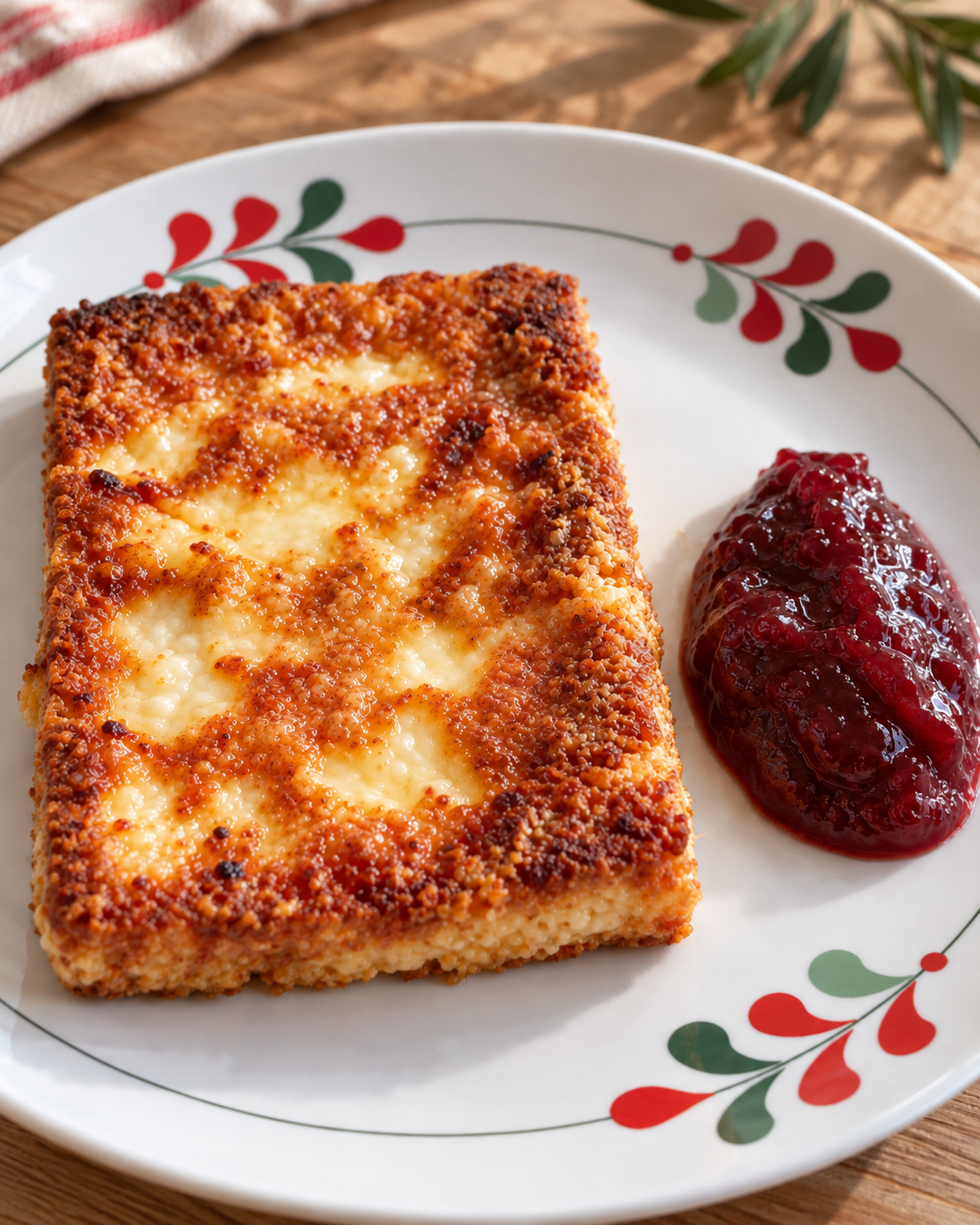
Saganaki with Grape Jam
Golden fried cheese, crisp outside and molten within, served with a slow-cooked grape jam brightened with lime — the taverna classic named after its little pan.
Read the story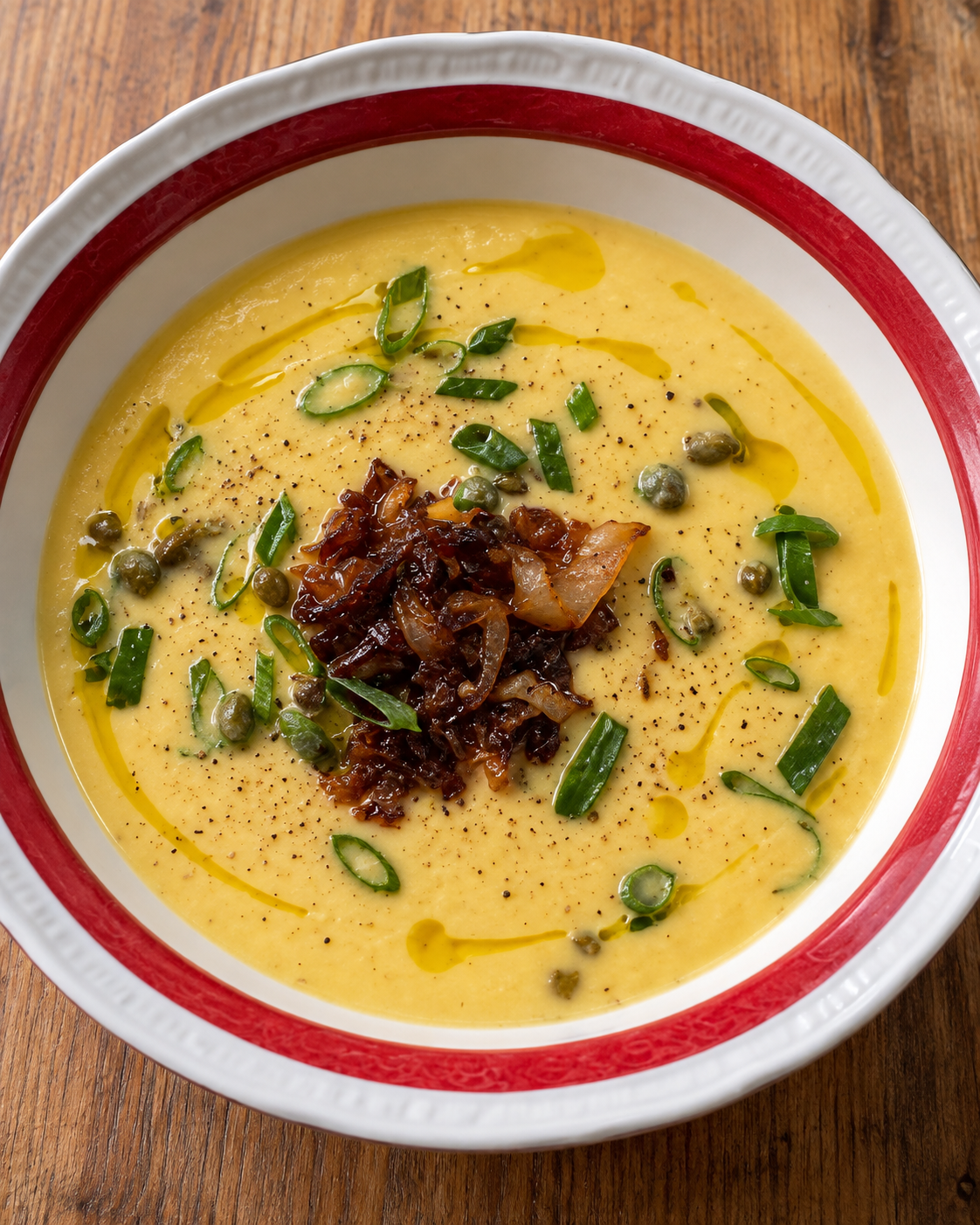
Fava
Silky yellow split-pea purée crowned with caramelized onions and capers — a dish that survived the volcano that buried ancient Santorini.
Read the story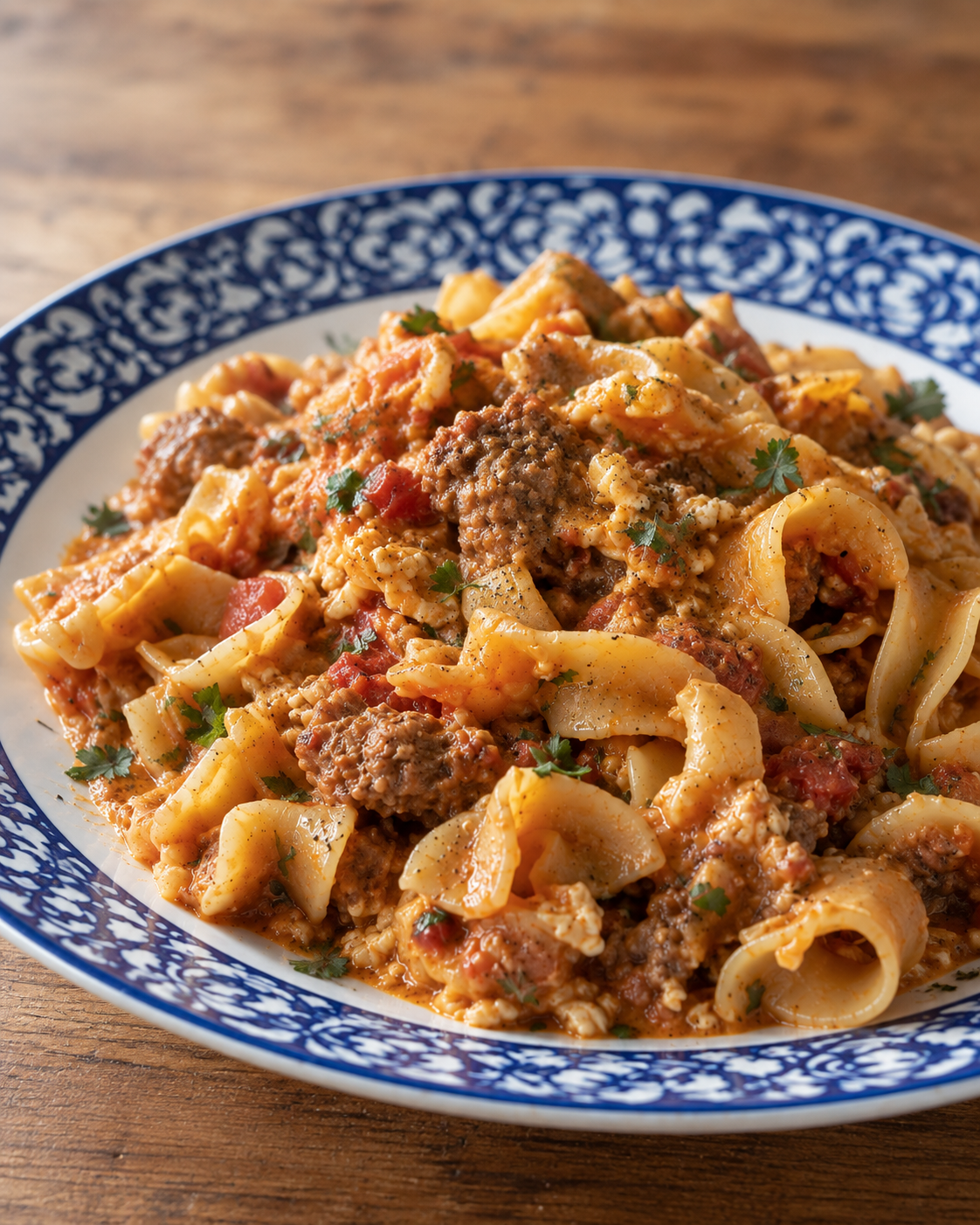
Hilopites with Sausages & Eggs
Greece's village egg pasta simmered with sausages, peppers and tomato, finished with eggs stirred through for creaminess — topped with feta and wild oregano.
Read the story