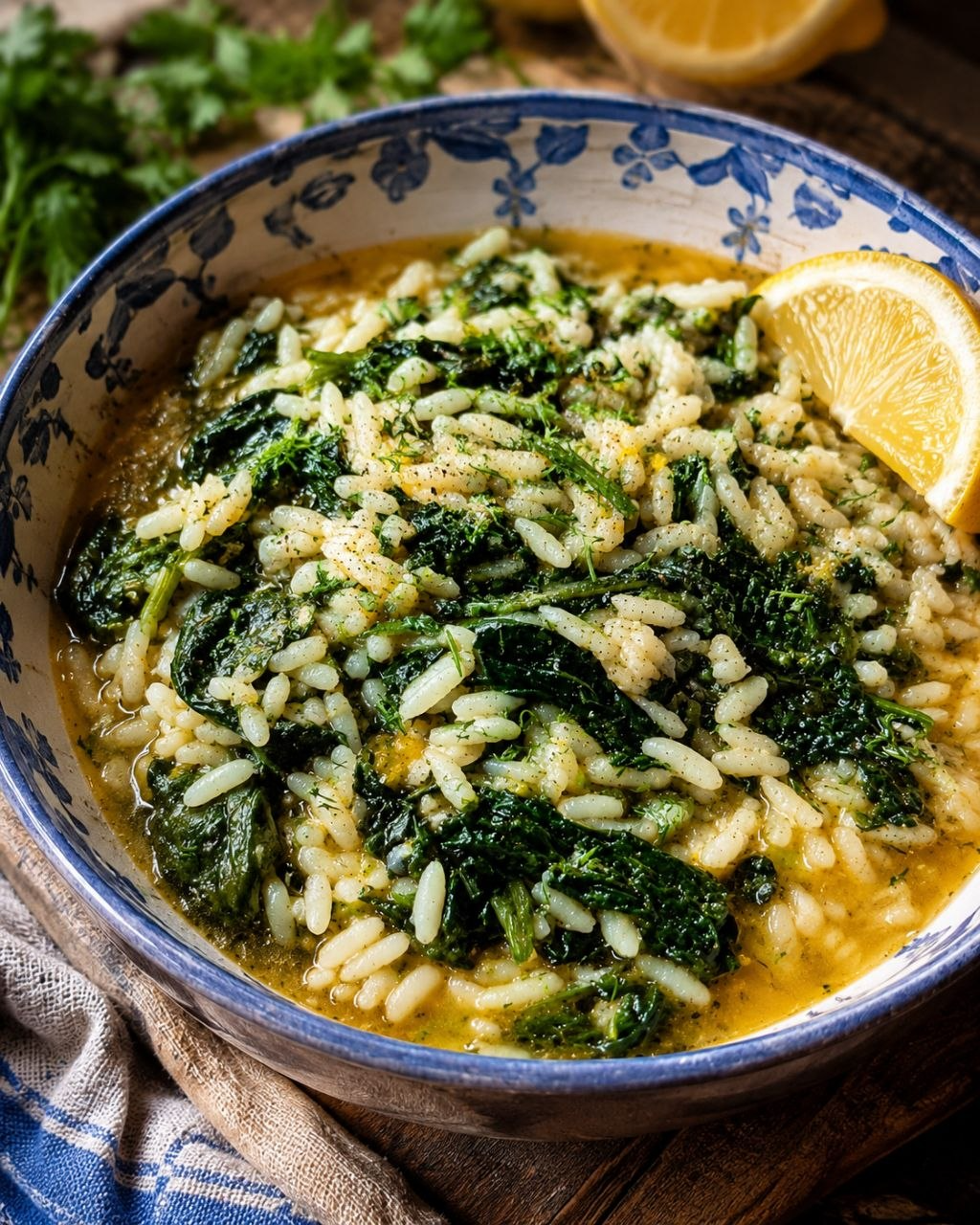
How this dish came to life
Cultural significance
Spanakorizo is one of the great Greek laderá — a Lenten and everyday dish that pre-dates olive oil being measured in tablespoons. It belongs to the same family as fasolada and gigantes: peasant dishes that turn pantry staples and one perfect vegetable into a meal complete in itself. The Greek combination of leafy green + rice + olive oil + lemon is centuries old — Hippocrates would have eaten a version. Today it is on every Lenten table and most Friday tables, and a cornerstone of the Greek-Mediterranean diet that gives the country its long-lived villages.
step by step
Instructions
- 1
Wash the spinach in several changes of cold water — grit hides in the leaves. Drain well. If the leaves are large, roughly tear them.
- 2
Heat the olive oil in a wide, heavy pot over medium heat. Add the onion, leek, and the whites of the spring onions with a pinch of salt. Sauté gently for 7–8 minutes until soft and golden, not coloured.
- 3
Stir in the garlic and cook for 30 seconds. Add the tomato paste and stir for a minute, until darkened and fragrant.
- 4
Add the spinach in big handfuls, stirring it down as it wilts. It will look like an impossible mountain — it always collapses. Wait until each addition has wilted before adding the next.
- 5
Once all the spinach is in and wilted, pour in the rice and stir to coat in the oil.
- 6
Pour over the hot water, season generously with salt and pepper, and bring to a gentle simmer.
- 7
Cover the pot loosely and cook on low heat for 15 minutes, stirring once halfway, until the rice is tender and most of the liquid is absorbed — there should still be a glossy little broth at the bottom (it'll thicken as it rests).
- 8
Off the heat, stir in the dill and the green tops of the spring onions. Cover the pot and let it sit, undisturbed, for 3 minutes.
- 9
Squeeze the lemon over the top, drizzle a generous final thread of raw olive oil, crack on plenty of black pepper.
- 10
Serve warm in a wide bowl with crumbled feta, olives, lemon wedges and bread.
tips from the village —
Wisdom from grandmothers
- 01Wash the spinach twice. There is no shortcut for grit between your teeth.
- 02Use a wide, heavy pot — the wider the surface, the better the rice cooks. A shallow casserole is perfect.
- 03Don't oversalt early. Spinach releases water as it wilts and the dish concentrates as it cooks.
- 04Lemon goes in at the table, not in the pot. Squeezed over hot rice, the steam carries the citrus right through the dish — Yiayia's most quiet trick.
- 05Like all laderá, spanakorizo tastes even better the next day, eaten at room temperature with a fresh squeeze of lemon.
Related recipes
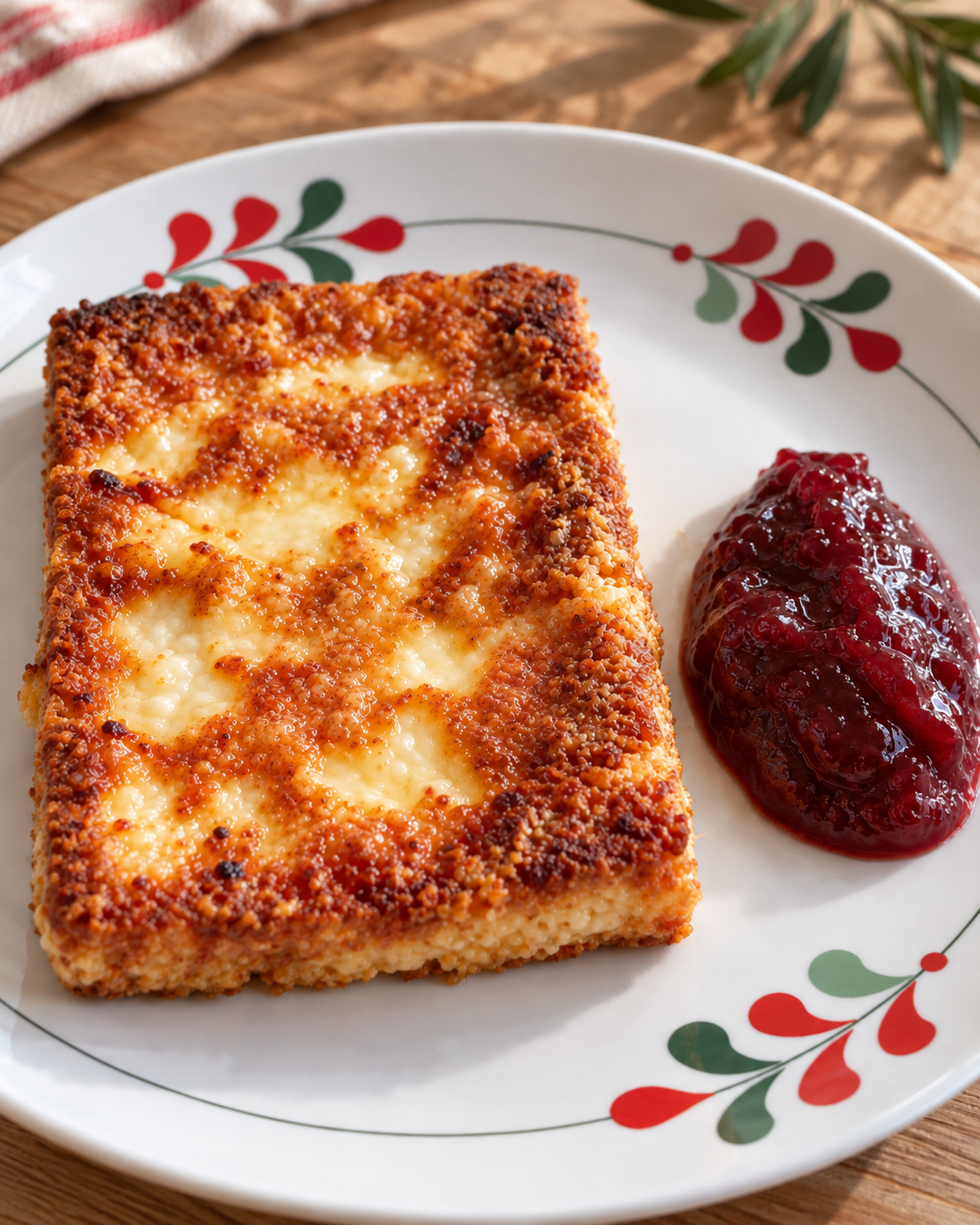
Saganaki with Grape Jam
Golden fried cheese, crisp outside and molten within, served with a slow-cooked grape jam brightened with lime — the taverna classic named after its little pan.
Read the story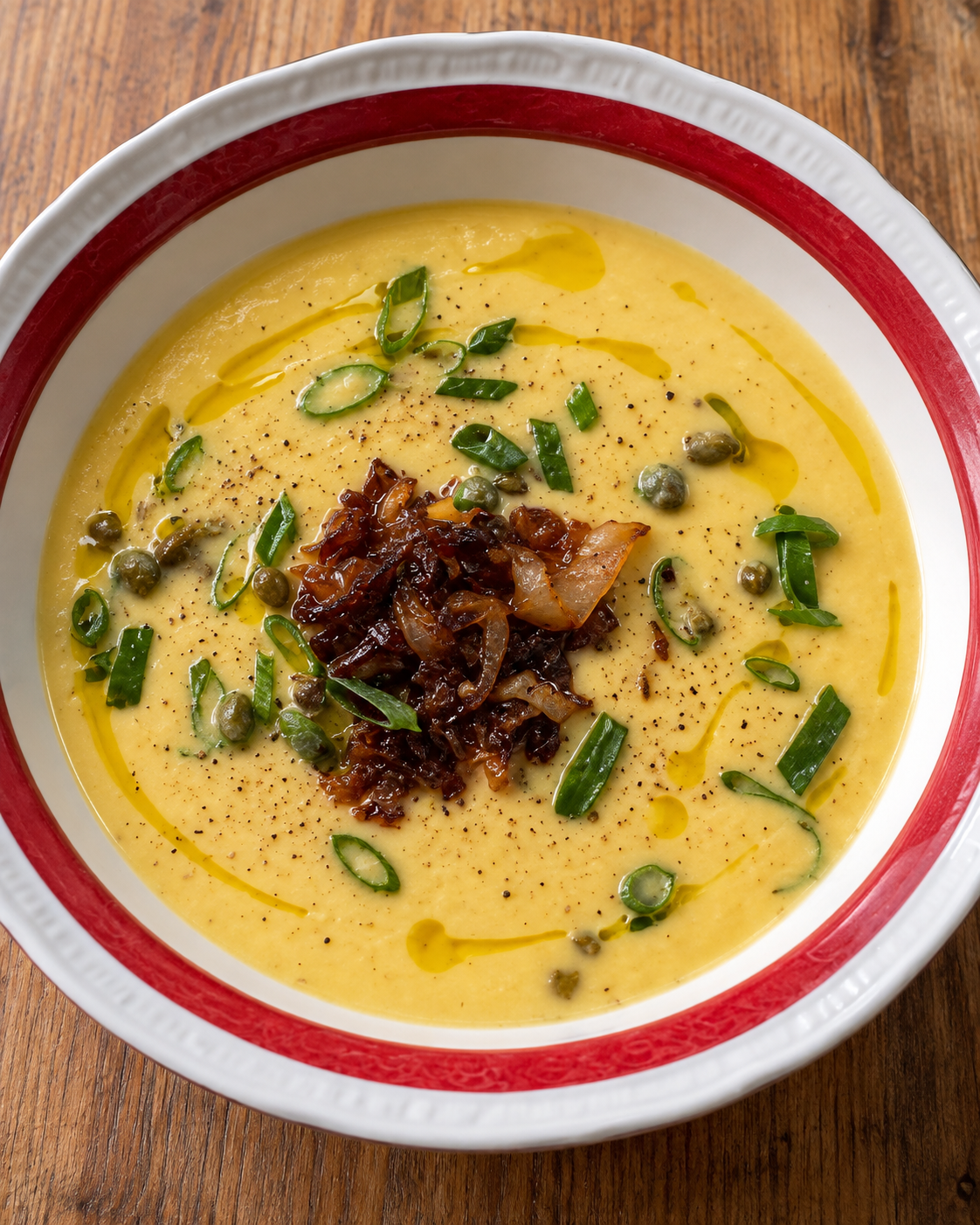
Fava
Silky yellow split-pea purée crowned with caramelized onions and capers — a dish that survived the volcano that buried ancient Santorini.
Read the story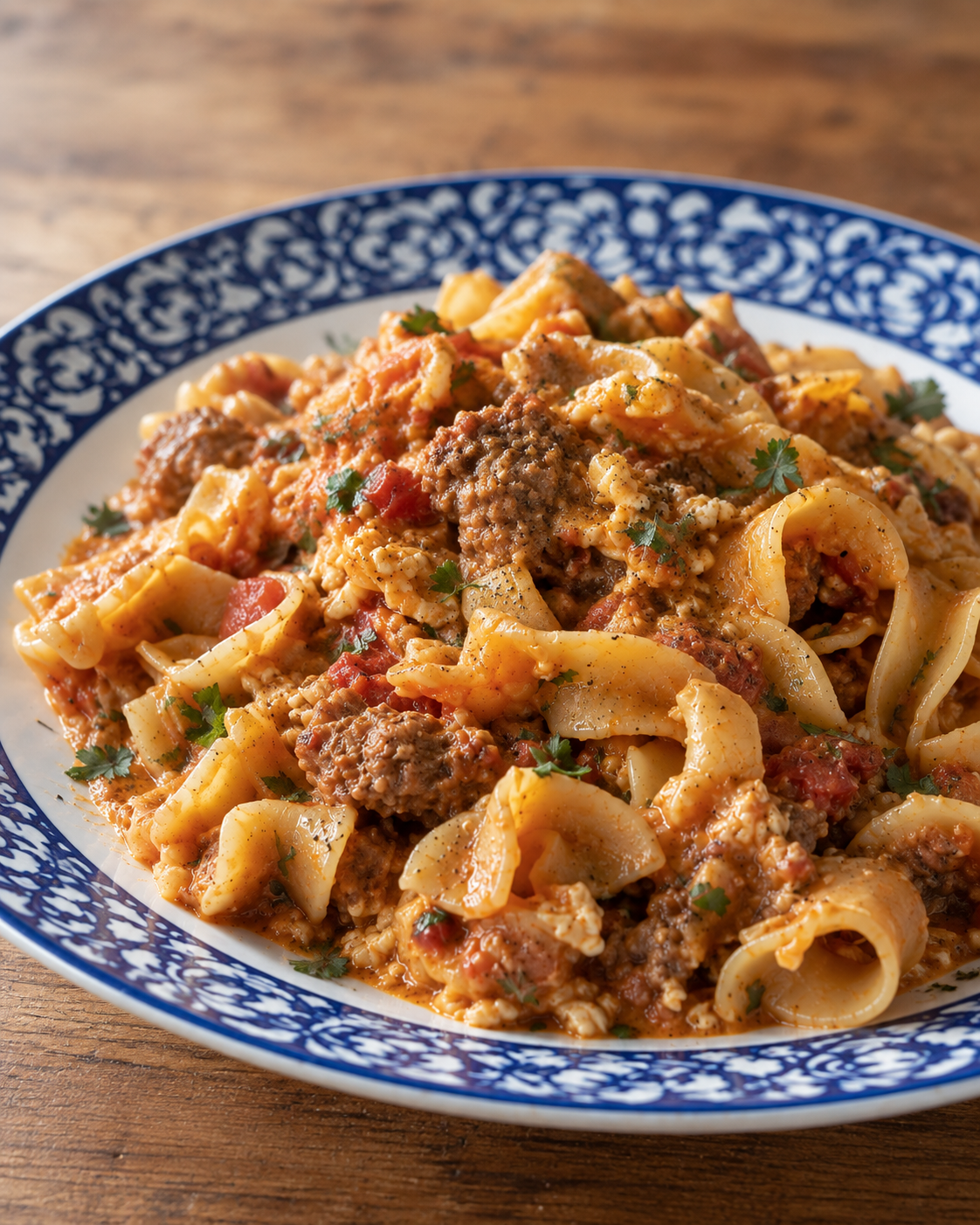
Hilopites with Sausages & Eggs
Greece's village egg pasta simmered with sausages, peppers and tomato, finished with eggs stirred through for creaminess — topped with feta and wild oregano.
Read the story