a dish from greece —
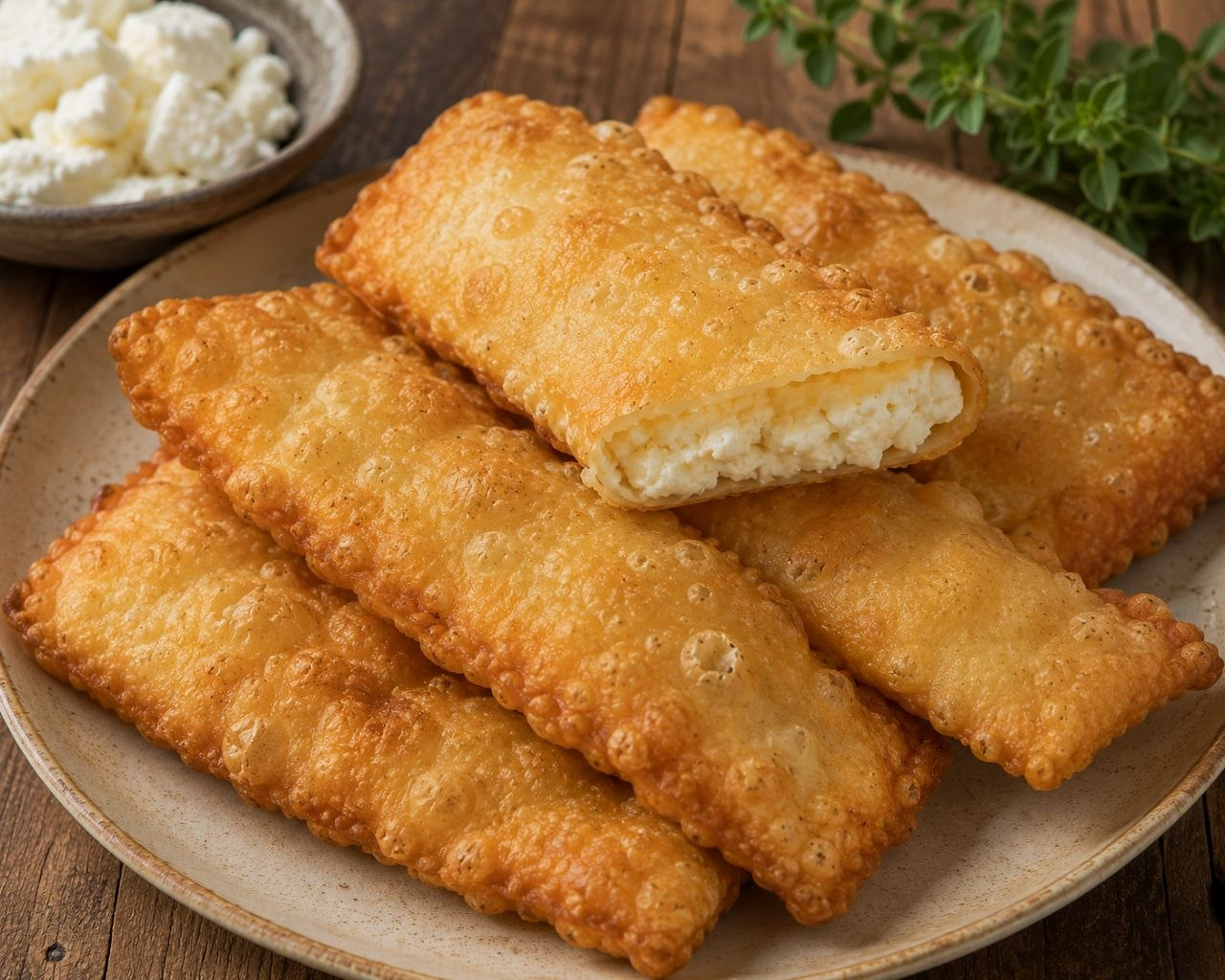
Tyropitaria (Greek Deep-Fried Cheese Pies)
How this dish came to life
Cultural significance
Tyropitaria are the everyday cousins of the more elaborate tiropita — the Greek kitchen's quick-fire answer to feeding a sudden table. They appear across the country in different sub-forms: as the fried bakery snack of Athens (sold by the dozen from the glass cases of every fournos), as the village home-cook's answer to unexpected guests, and as the small ouzo meze of the islands. The dough — flour, water, olive oil, vinegar, salt — is one of the oldest pastry formulas in the Greek kitchen, predating the use of butter, and is closely related to the doughs used for κουρού (kourou) pies and the small fried turnovers of Crete and the Dodecanese. The filling is almost always feta alone, though in some regional variations, mizithra, anthotyro, or kasseri are folded in. Tyropitaria are equally at home on a kafenio plate, a school lunchbox, a Sunday afternoon meze table, and a wedding spread.
step by step
Instructions
- 1
Make the dough first so it has time to rest. In a wide bowl, combine the flour, water, olive oil, vinegar and salt. Bring it together with your hands and knead on the counter for 5–6 minutes, until smooth, elastic and no longer sticky. The vinegar gives the dough its crackling-crisp finish later — don't skip it.
- 2
Shape the dough into a smooth ball, wrap in cling film, and rest in the fridge for at least 30 minutes (up to 2 hours is even better). A cold rest relaxes the gluten and makes the dough roll out paper-thin without tearing.
- 3
Meanwhile, prepare the filling. Crumble the feta into a wide bowl, breaking it into small pebbly pieces. Crack in the eggs, scatter in plenty of black pepper (and oregano or mint if using), and mix gently with a fork until you have a thick, slightly wet paste. Don't whip it — leave some feta texture.
- 4
Take the dough out of the fridge. Divide it into 12 small balls (about 60 g each), keeping the rest covered with a damp cloth as you work.
- 5
On a lightly floured surface, roll each ball into a long thin rectangle, about 10 × 18 cm and as thin as you can without tearing — almost see-through is perfect.
- 6
Place a generous heaped tablespoon of the feta filling in the centre of one half of each rectangle. Fold the empty half over the filling like an envelope, lining up the edges.
- 7
Press the edges firmly to seal. Yiayia's rule: press each edge twice with the heel of your hand. If you have a fluted pastry cutter or a fork, run it along the sealed edge — it makes the classic decorative crimp and double-locks the filling inside.
- 8
Heat the sunflower oil in a wide, heavy pan to 180°C / 355°F — a small piece of dough dropped in should sizzle and float to the top within 5 seconds.
- 9
Lower the tyropitaria gently into the oil, working in batches of 3–4 (never crowd the pan). Fry for 2–3 minutes per side, turning once, until they are deeply golden, blistered, and puffed up — the pastry should look like little ridged pillows.
- 10
Lift onto a plate lined with paper towel to drain briefly.
- 11
Serve immediately, while the pastry is still crackling and the feta is hot and molten inside. A wedge of lemon on the side, or a small drizzle of Greek thyme honey across the top, takes them from snack to revelation.
tips from the village —
Wisdom from grandmothers
- 01The vinegar in the dough is essential — it tenderises the gluten and gives tyropitaria their signature crispy, blistered crust. Plain water-and-oil dough will fry up tough.
- 02Rest the dough cold. A 30-minute fridge rest (or longer) is the difference between rolling them thin and tearing them.
- 03Roll the dough almost see-through. The thinner you can get it, the more blistered and crackling the finished pastry — thick dough fries up dense and bready.
- 04Seal the edges hard. The two-press rule is real — the worst tyropitari is the one that splits in the oil and lets the cheese out.
- 05Fry hot, not lukewarm. Oil that's too cool gives you greasy, pale pastries. 180°C is the sweet spot. Test with a scrap of dough first.
- 06Eat immediately. Tyropitaria are at their peak for the first ten minutes out of the pan. They'll keep an hour, but Yiayia would not approve.
Related recipes
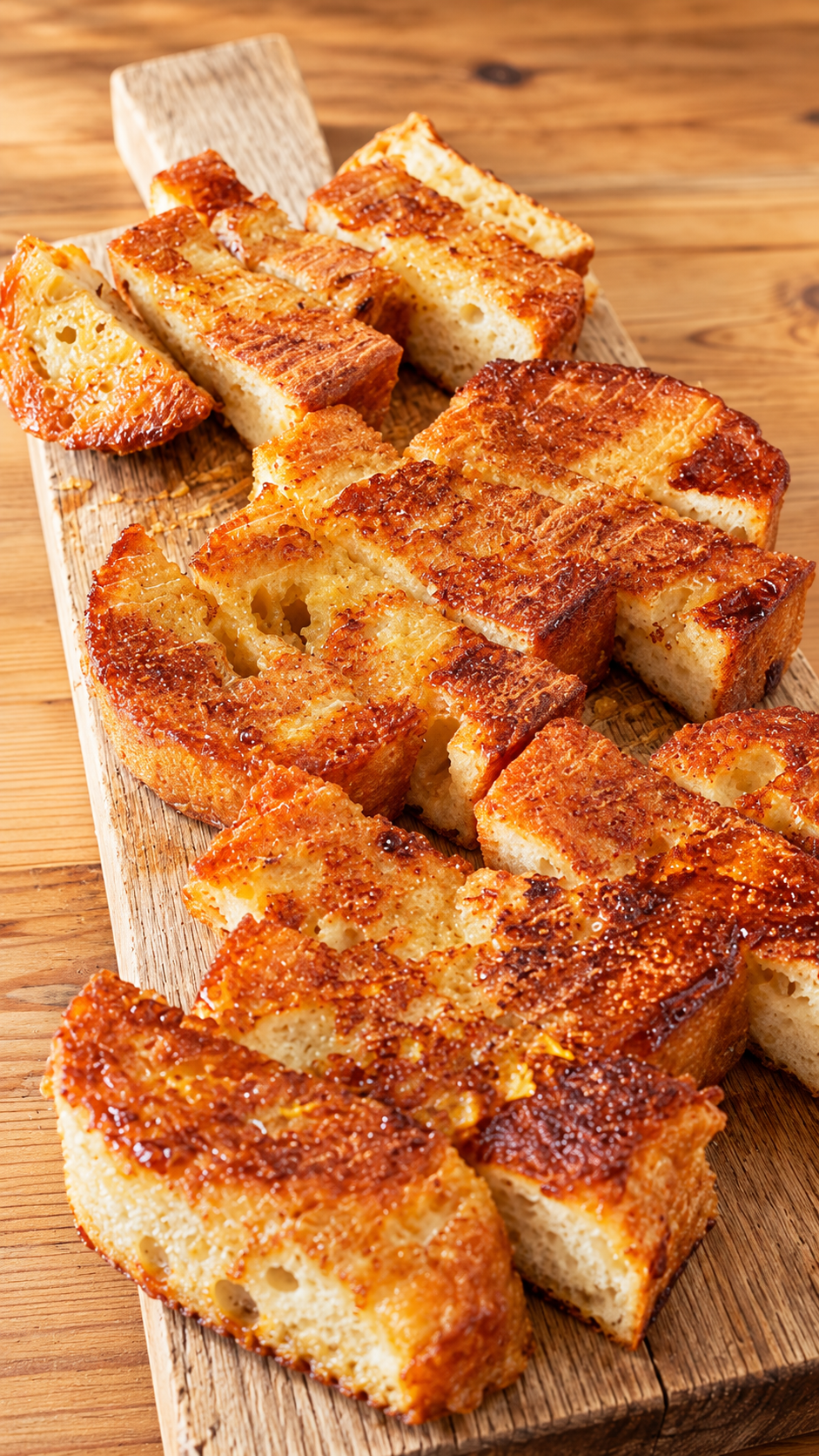
Avgofetes
Greek egg-fried bread — yesterday's loaf dipped in egg and milk, fried golden in olive oil and served with honey and cinnamon. Older than French toast.
Read the story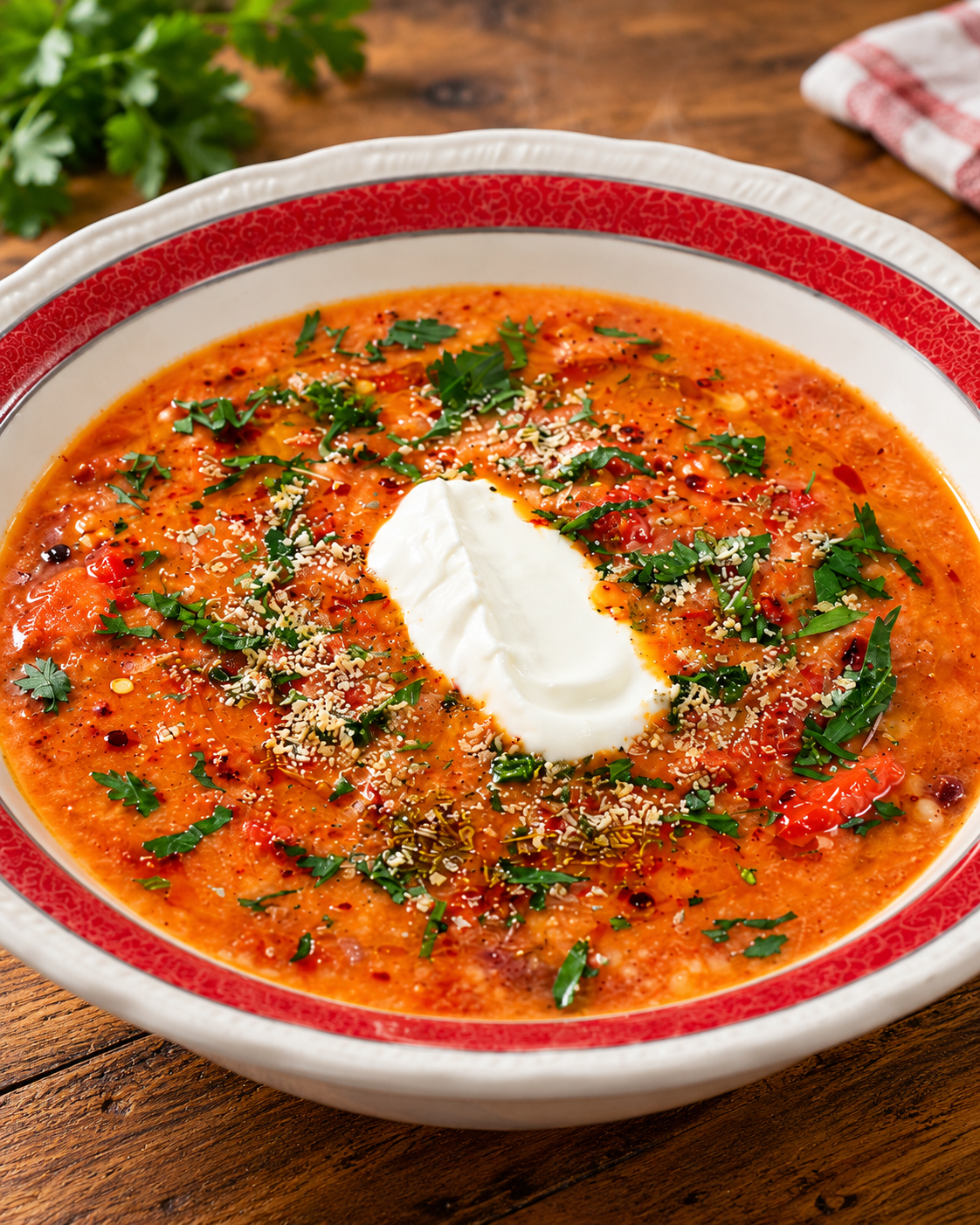
Kokkinistos Trahanas with Yogurt
Sour trahana simmered in a spicy tomato broth until creamy, served with cool Greek yogurt, boukovo and wild oregano — one humble food, countless traditions.
Read the story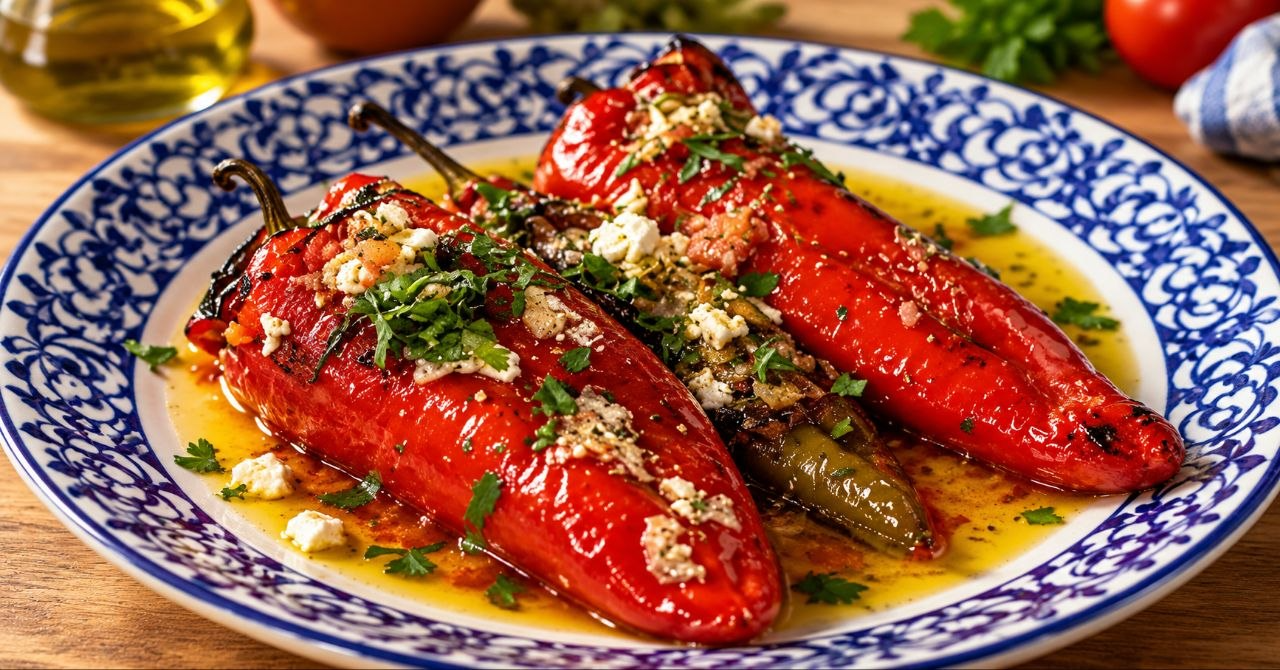
Stuffed Horn Peppers
Horn peppers stuffed with feta, tomato, garlic and wild oregano, baked until soft and caramelised — an American ingredient that became a Greek kitchen staple.
Read the story