How this dish came to life
Cultural significance
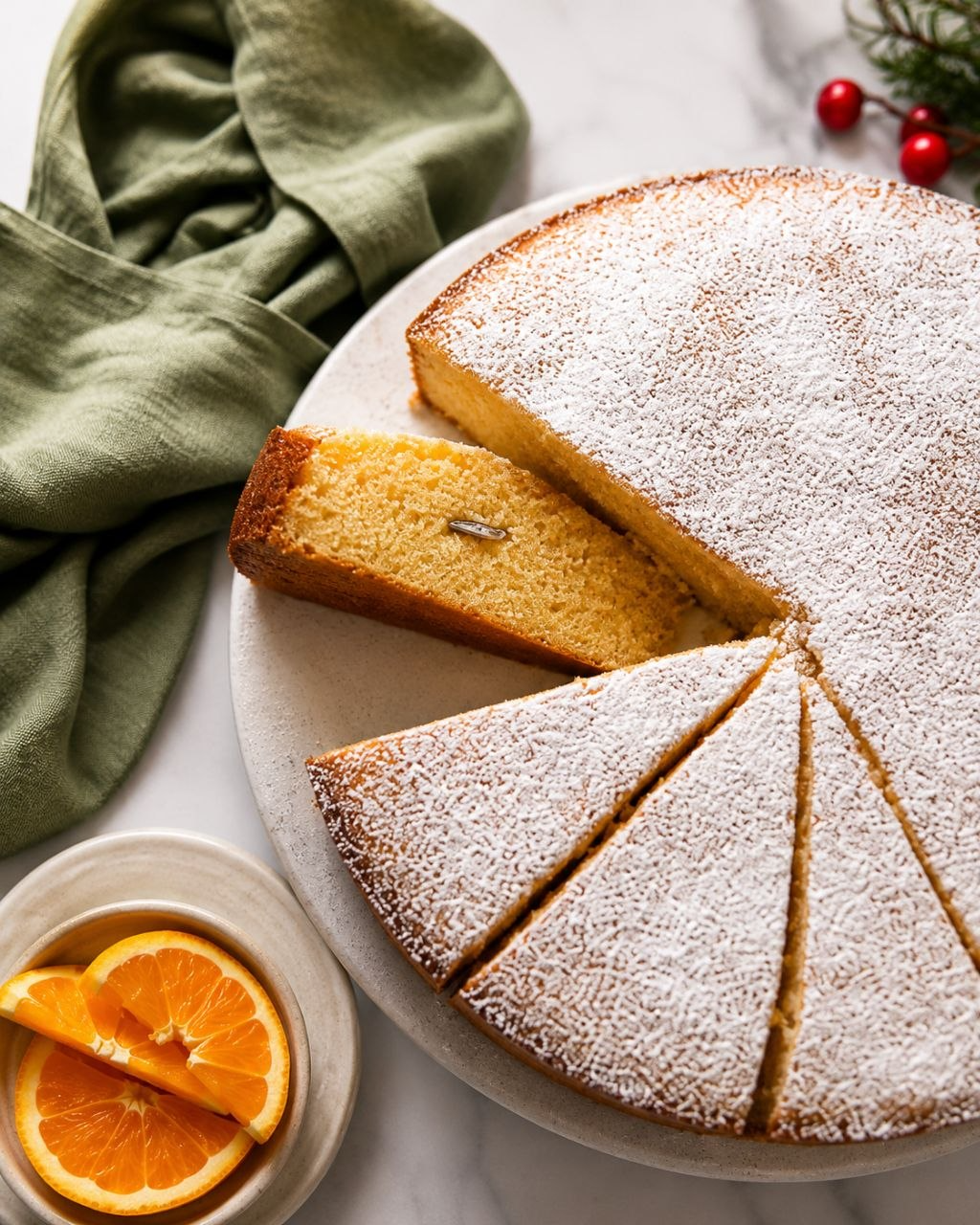
Vasilopita is the New Year's cake of Greece, a Christianised survival of one of the oldest documented winter rituals in European culture. The custom of hiding a token inside a baked good to choose the 'king of the feast' dates back at least 2,500 years, to the ancient Kronia festival and the Roman Saturnalia. The Saint Basil legend gave the ritual its modern name and meaning in the 4th century AD. The cake is cut at midnight on the 31st of December or on the morning of the 1st of January, and the order of slices follows a sacred hierarchy: Christ, the Virgin Mary, Saint Basil, the house, and then the family. The recipient of the hidden coin is believed to receive blessing and good fortune for the year ahead. It is, perhaps, the single most cherished food ritual of the Greek calendar.
step by step
Instructions
- 1
Heat the oven to 170°C / 340°F. Lightly grease a 22cm round cake tin and line the base with parchment.
- 2
Place the pitted dates in a small food processor with a splash of water and blend into a smooth, thick paste.
- 3
In a large bowl combine the date paste, honey, egg yolks, cinnamon, ground cloves, orange zest and a pinch of salt. Whisk until smooth and pale.
- 4
Slowly drizzle in the olive oil and sunflower oil in a thin stream, whisking constantly — you are building a thick, glossy emulsion almost like a mayonnaise. This is the secret to a tender Vasilopita.
- 5
In a small cup, dissolve the baking soda in the orange juice — it will fizz and foam. Pour it into the batter immediately and whisk in.
- 6
Sift in the flour and baking powder. Fold gently with a spatula just until the batter comes together — do not overmix.
- 7
In a clean, dry bowl, whisk the egg whites with an electric mixer until they form firm but not dry peaks (a soft meringue).
- 8
Add a third of the meringue to the batter and stir it through to lighten — this is your sacrifice. Then fold in the rest of the meringue in two more additions, very gently, lifting the batter from underneath with the spatula and turning it over. Stop the moment no white streaks remain.
- 9
Pour the batter into the prepared tin and smooth the surface. Press the foil-wrapped coin gently into the batter from the side, so it sinks halfway in. (Yiayia trick: mark its position with a tiny cross of egg wash on the surface so you know where it is when you cut.)
- 10
Bake for 40–45 minutes, until deeply golden, slightly domed, and a skewer inserted in the centre comes out clean. Don't open the oven for the first 30 minutes — meringue-leavened cakes hate drafts.
- 11
Let the Vasilopita cool completely in the tin, then transfer to a serving plate. Just before the cutting ritual, dust generously with powdered sugar — heavily enough that you can press a stencil of '2026' (or whatever year is just beginning) on top.
- 12
At midnight, cut the slices in the sacred order: Christ, the Virgin Mary, Saint Basil, the house, the eldest, the youngest, and then everyone in between. Whoever finds the φλουρί will have a year of blessing ahead.
tips from the village —
Wisdom from grandmothers
- 01Bake the cake the day before. Like most spiced cakes, Vasilopita's flavour deepens overnight — and it gives you time on New Year's Eve to do everything else.
- 02Wrap the coin tightly in foil so no metal touches the batter. Most Greek families use an old coin that has been passed down through generations.
- 03Don't overmix the egg whites in. This cake is leavened by air, not yeast — every fold should be gentle and slow.
- 04Wild thyme honey gives the deepest flavour. Avoid bland supermarket honey — Vasilopita lives or dies on the quality of its honey and oranges.
- 05Stencil the new year (e.g. '2026') in powdered sugar across the top, the way every Greek bakery does it. A clean sheet of paper with the numbers cut out is all you need.
Related recipes
Kokkinistos Trahanas with Yogurt
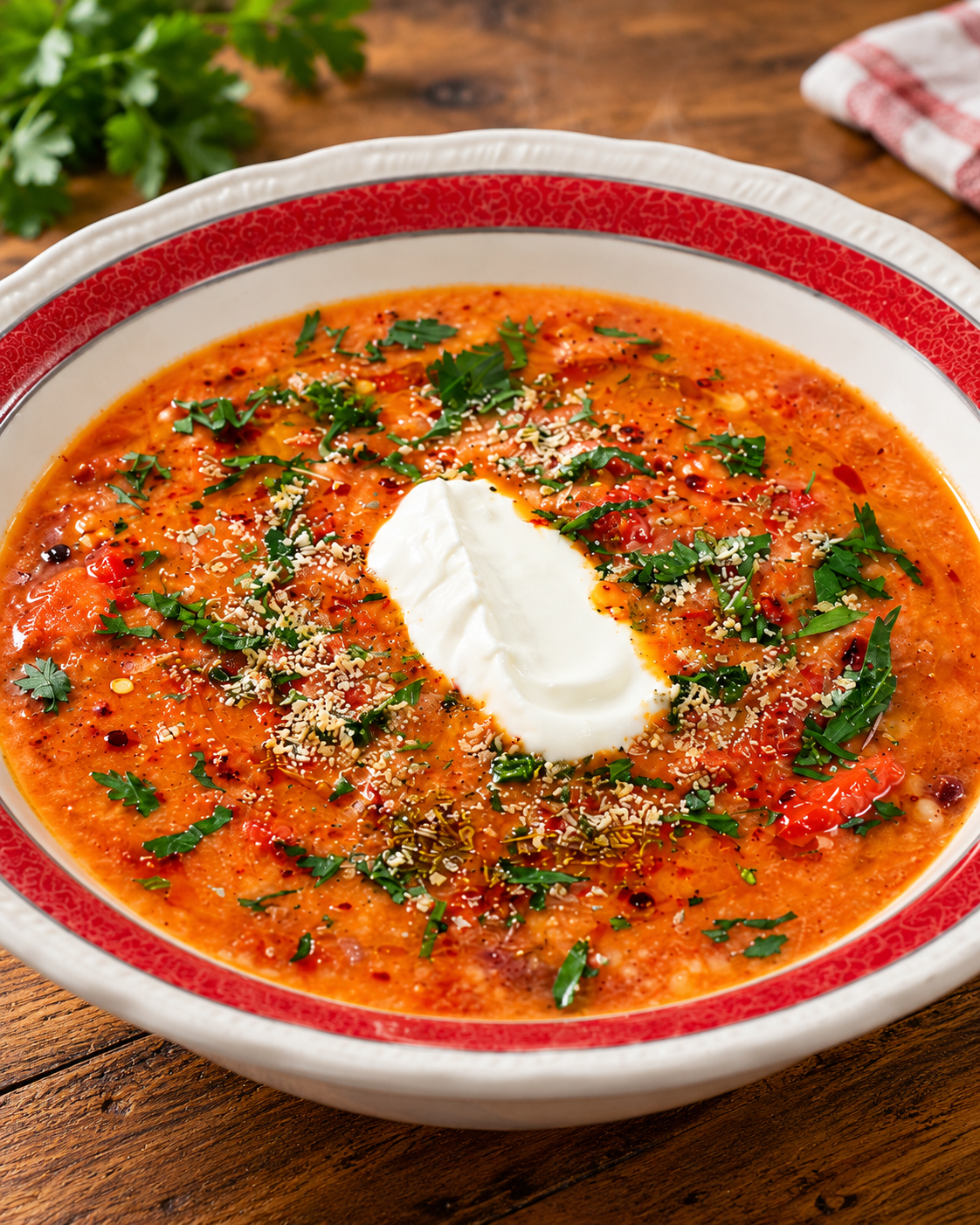
Sour trahana simmered in a spicy tomato broth until creamy, served with cool Greek yogurt, boukovo and wild oregano — one humble food, countless traditions.
Read the story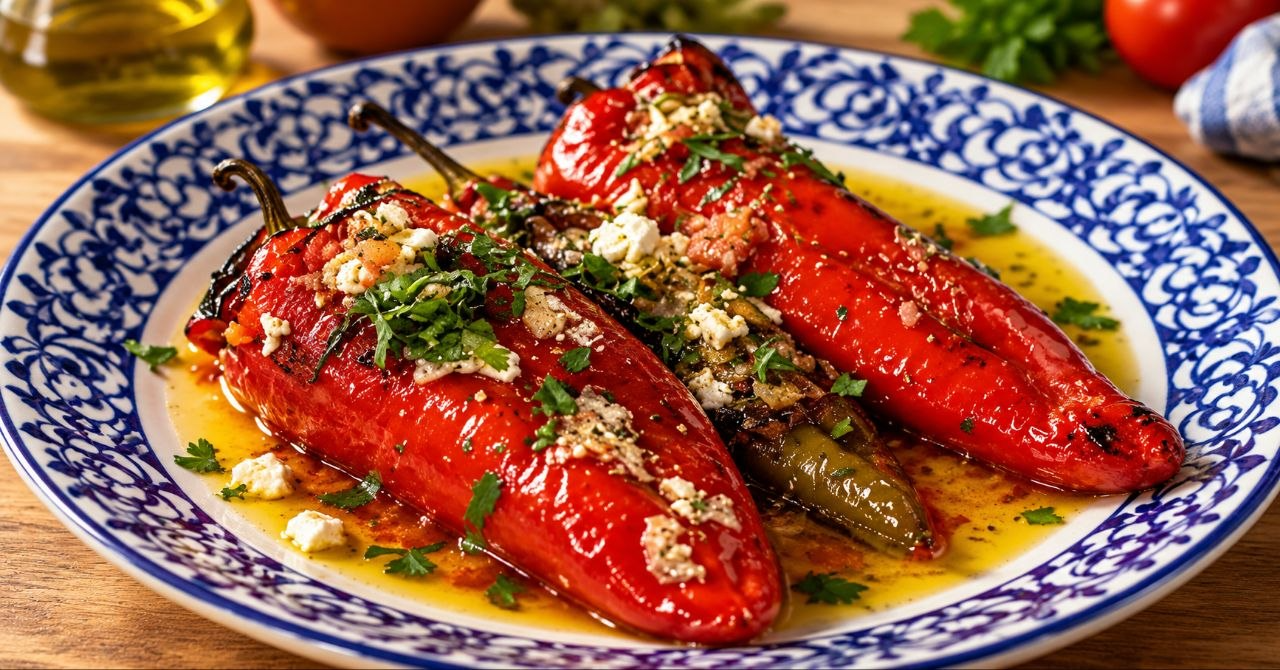
Stuffed Horn Peppers
Horn peppers stuffed with feta, tomato, garlic and wild oregano, baked until soft and caramelised — an American ingredient that became a Greek kitchen staple.
Read the story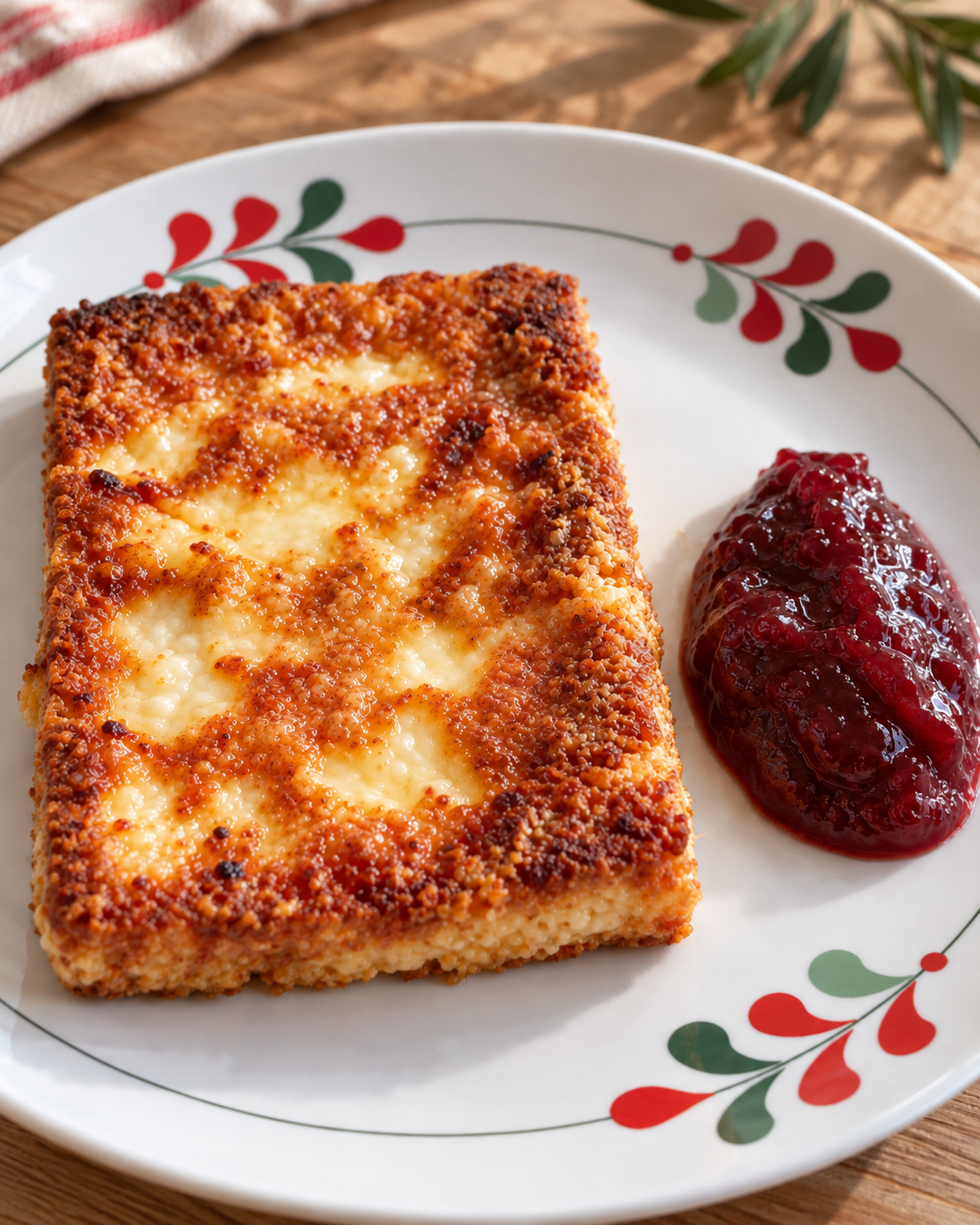
Saganaki with Grape Jam
Golden fried cheese, crisp outside and molten within, served with a slow-cooked grape jam brightened with lime — the taverna classic named after its little pan.
Read the story