
a dish from greece —
Youvarlakia (Greek Meatballs in Avgolemono)
How this dish came to life
Cultural significance
Youvarlakia (γιουβαρλάκια, also spelled yuvarlakia) — "the little round things" — is one of the cornerstone Greek comfort dishes, made in nearly every household across Greece and Cyprus. It is famously the food of recovery: the dish a Greek mother makes when a child is sick, when winter sets in, or when the family simply needs feeding without fuss. Its sauce, avgolemono, is the great Greek emulsion — egg yolks tempered slowly with hot broth and lemon juice into a silky, golden velvet that lifts every spoonful.
step by step
Instructions
- 1
In a bowl, combine the minced meat, chopped onion, rice, parsley, dill, cumin, salt and pepper. Mix well by hand for a minute until the mixture is sticky and uniform.
- 2
With wet hands, shape the mixture into small, walnut-sized meatballs. Place on a tray and refrigerate while you start the pot.
- 3
Heat a generous glug of olive oil in a wide deep pot over medium heat. Add the diced carrots and potato cubes with a pinch of salt and sauté gently for 4–5 minutes, until they take a little colour but are still firm.
- 4
Pour in the warm water (or stock) — enough to come about 3 cm above the vegetables. Bring to a gentle boil, then lower to a simmer.
- 5
Carefully drop in the meatballs one by one. Don't stir aggressively — just shake the pot gently to settle them. Lower the heat to a quiet simmer.
- 6
Simmer uncovered (or with the lid slightly ajar) for about 30–35 minutes, until the rice grains inside the meatballs have plumped up and just started to peek through the meat.
- 7
Carefully lift the meatballs and vegetables out of the pot with a slotted spoon and set aside, covered, on a warm plate. Keep the broth in the pot.
- 8
In a small bowl, whisk the flour with a few tablespoons of cold water until smooth. Whisk this slurry into the simmering broth and let it thicken for a minute, stirring. This is the light roux that will hold the sauce together.
- 9
In another bowl, whisk the egg yolks with the lemon juice until pale and frothy.
- 10
Take the broth off the heat. Slowly ladle 2–3 ladles of hot broth into the egg-lemon mixture, whisking constantly — this is the tempering, and it's the only part of the dish you cannot rush. Whisk fast and pour slow.
- 11
Pour the warmed egg-lemon mixture back into the pot, whisking. The broth will turn pale gold and silky. Do not boil — that breaks the sauce.
- 12
Slip the meatballs and vegetables back into the pot. Stir in the extra chopped dill and a final squeeze of lemon if you want it brighter. Cover and let it sit for 2 minutes off the heat.
- 13
Ladle into warm shallow bowls. Scatter spring onion over the top. Serve immediately with bread for the broth at the bottom — that last spoonful is, as always, the best part.
tips from the village —
Wisdom from grandmothers
- 01The rice goes into the meatballs raw. It cooks slowly in the broth — that's the magic. Don't pre-cook it.
- 02Don't boil the sauce after the eggs go in. The moment you boil it, the proteins seize and you get scrambled-egg broth. Off the heat is non-negotiable.
- 03Be brave with the lemon. Greeks always add more lemon than they think they need — start with two, taste, and add a third if you want it brighter.
- 04Real lemons only — bottled juice will ruin the sauce. The freshness is the whole point of avgolemono.
- 05Eat youvarlakia from a deep bowl, not a plate. The broth is the dish; let it pool.
Related recipes
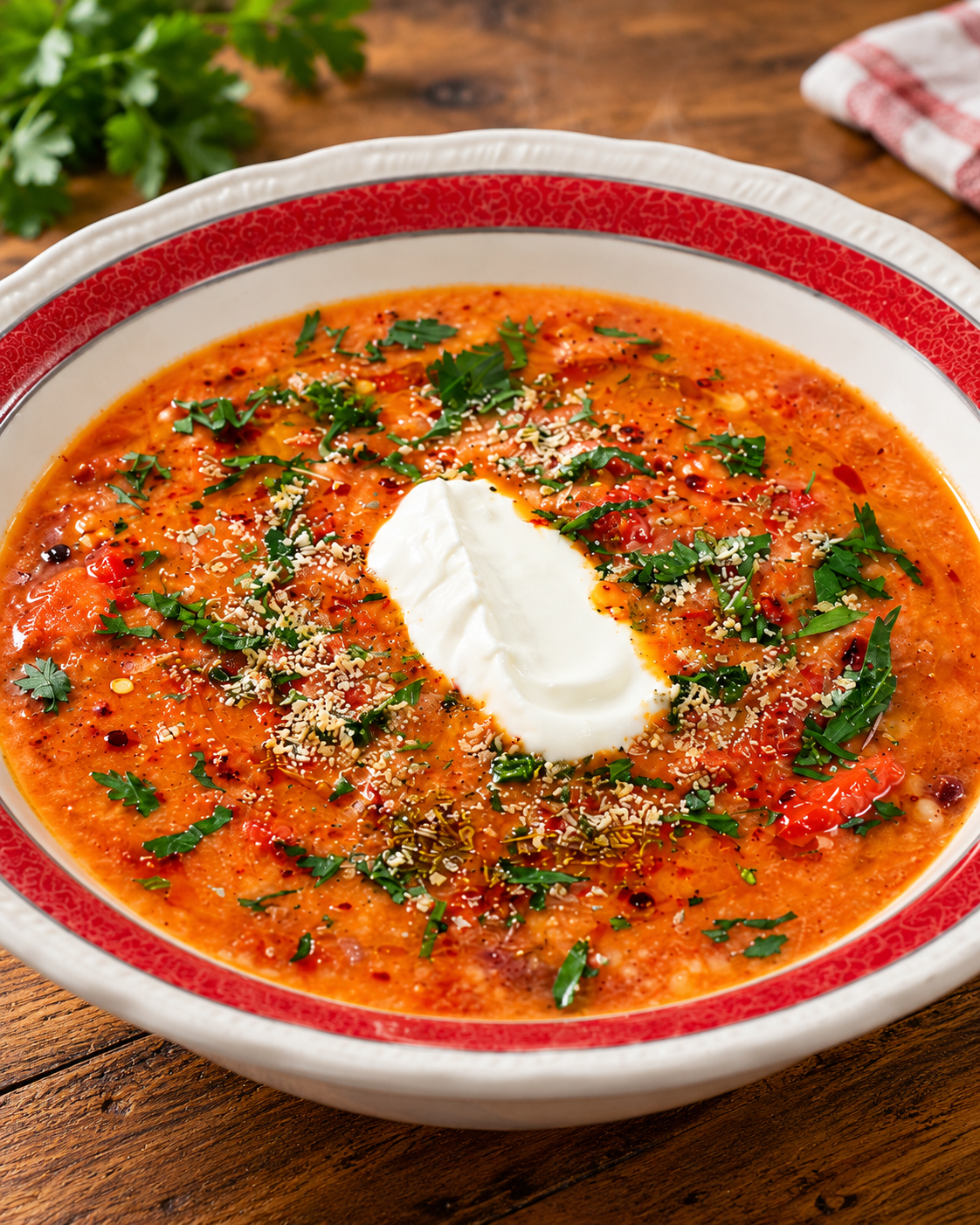
Kokkinistos Trahanas with Yogurt
Sour trahana simmered in a spicy tomato broth until creamy, served with cool Greek yogurt, boukovo and wild oregano — one humble food, countless traditions.
Read the story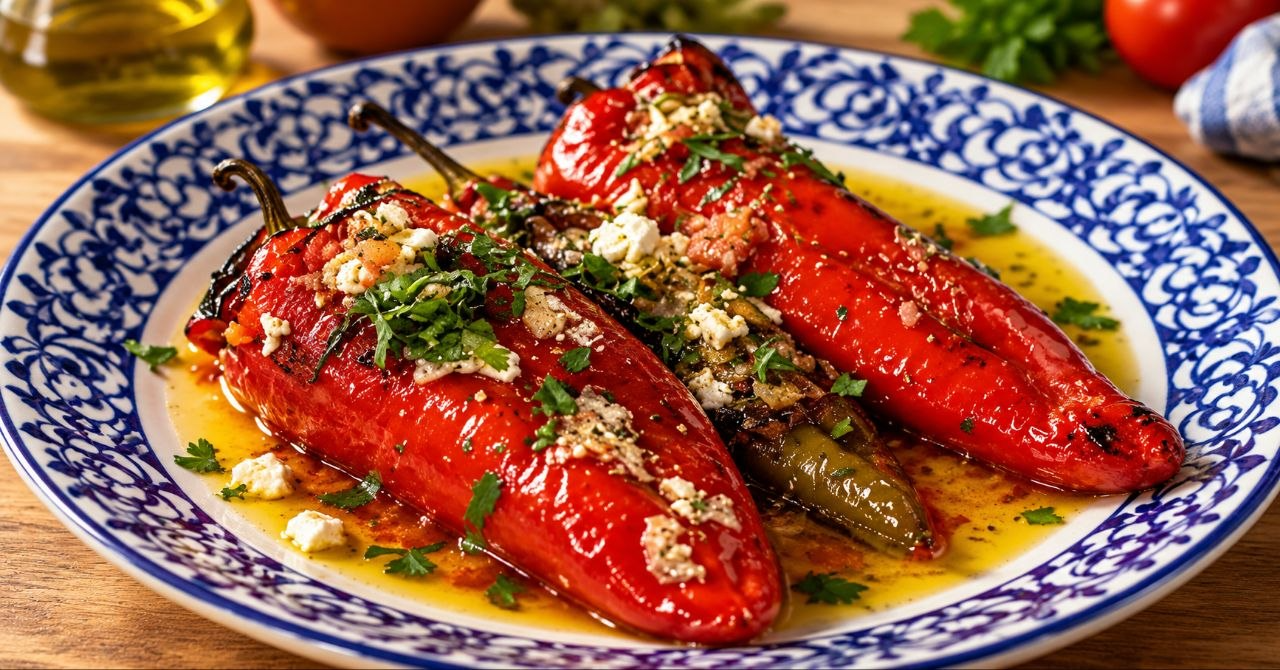
Stuffed Horn Peppers
Horn peppers stuffed with feta, tomato, garlic and wild oregano, baked until soft and caramelised — an American ingredient that became a Greek kitchen staple.
Read the story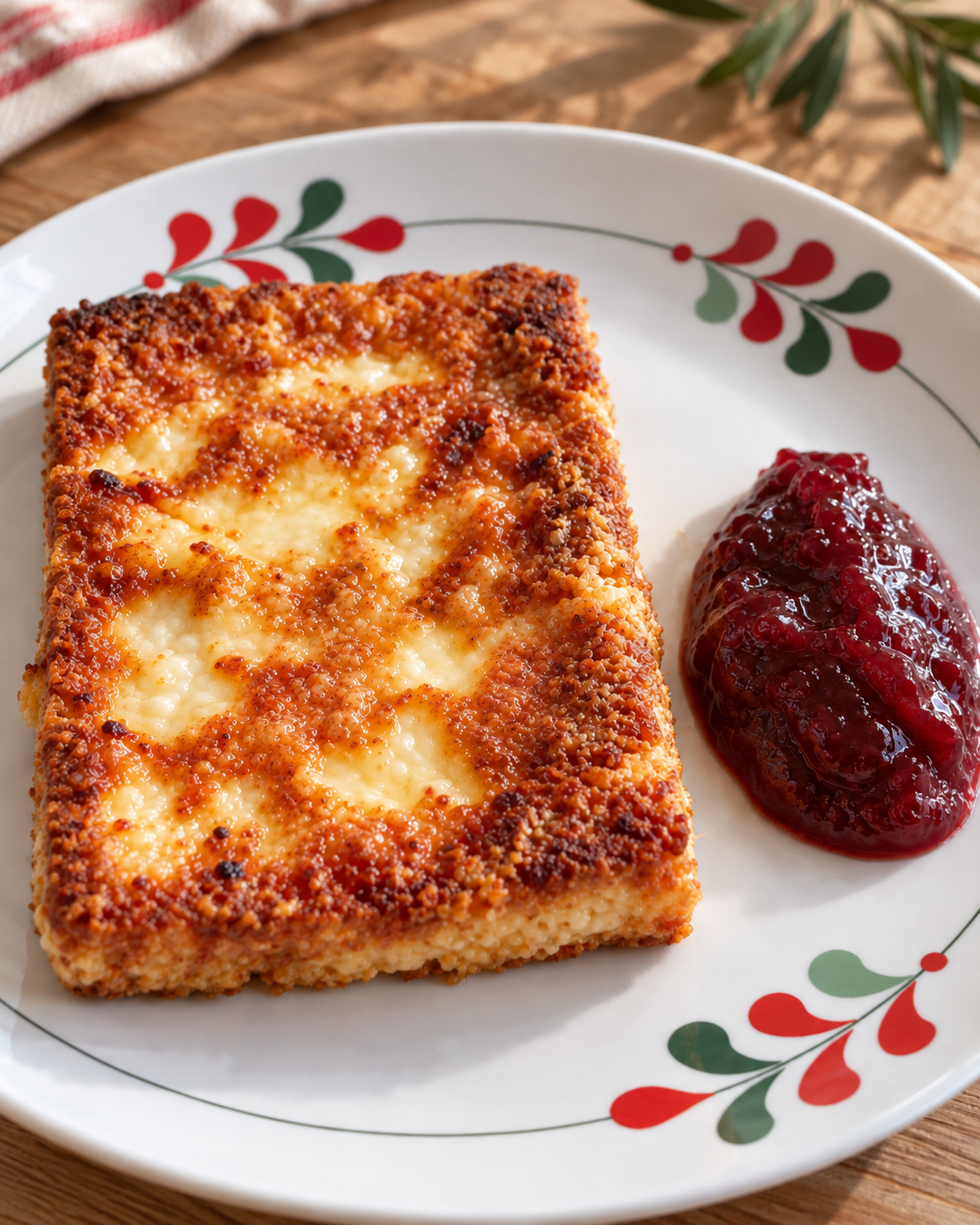
Saganaki with Grape Jam
Golden fried cheese, crisp outside and molten within, served with a slow-cooked grape jam brightened with lime — the taverna classic named after its little pan.
Read the story